HDR color space conversion varies because each operating system decides where tone mapping, gamut mapping, metadata handling, and desktop composition happen. The same HDR monitor can look accurate on one system, flat on another, and oversaturated on a third unless the signal path is configured correctly.
Does your premium HDR monitor look stunning in a game, washed out on the desktop, and oddly gray when connected to another laptop? A reliable setup can usually be improved by checking three testable points: whether HDR metadata reaches the display, whether the OS is tone mapping before composition, and whether the monitor is in a real HDR mode instead of an SDR enhancement mode.
Why HDR Color Space Conversion Is Not One Universal Thing
HDR is often sold as “brighter color,” but that shortcut causes trouble. A real HDR signal combines a wider color gamut, a different brightness transfer function, higher bit depth, and metadata that helps the display map content to its actual limits. In production terms, a stream’s color space is defined through primaries, transfer characteristics, matrix coefficients, and video range, which means an operating system has several chances to get the result right or wrong.
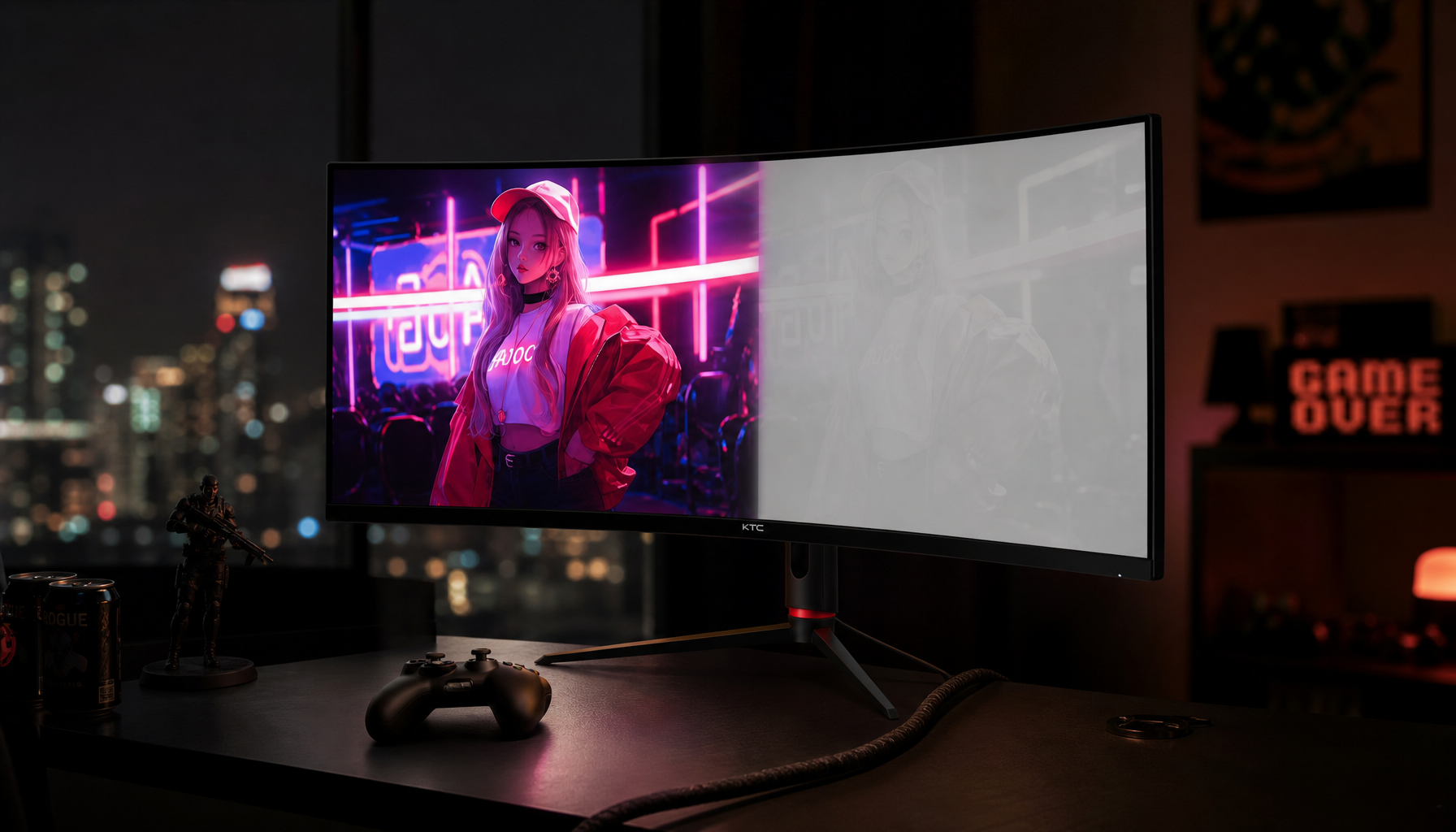
A simple example shows why this matters. If a movie is mastered for 1,000 nits but your monitor can produce only 600 nits, the system must decide how to compress highlights without turning clouds into flat white patches. That process is tone mapping. If the OS performs it, the monitor should avoid doing a second content-based conversion. If the monitor performs it, the OS should pass the signal cleanly. If both intervene aggressively, the image may look dim, clipped, or desaturated.
Color gamut adds another layer. SDR desktop work is commonly tied to sRGB or Rec.709 behavior, while HDR workflows often use DCI-P3 inside a BT.2020 container or full BT.2020 signaling. Wide color can look more vivid, but without proper conversion it can also make office documents, web graphics, and UI elements look wrong. For productivity displays, that is not a small annoyance; it affects brand colors, photo review, presentation work, and day-long visual comfort.
PC Desktop OS: GPU-Centered Tone Mapping and Mixed Desktop Composition
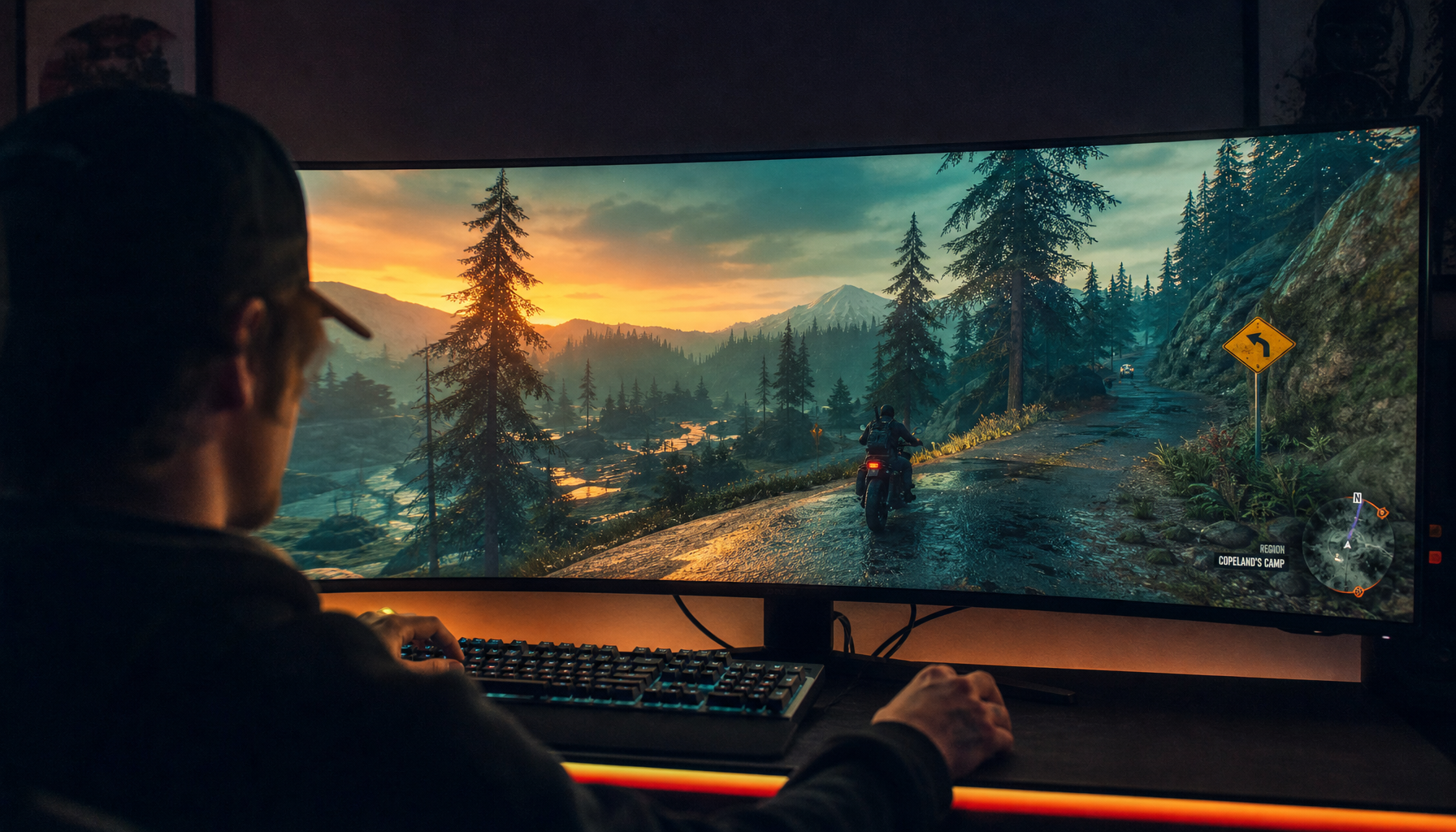
The most common PC desktop OS is the most important HDR platform for PC gaming monitors because it often has to blend HDR games, SDR desktop apps, browser video, overlays, and capture tools at the same time. In current HDR behavior, the documented model places tone mapping on the GPU before final desktop composition, including scenarios where multiple app windows use different color spaces. That design is powerful because a game, a video player, and an SDR app can coexist on the same desktop without every app needing to own the full display pipeline.
The advantage is convenience. A user with a certified HDR-capable monitor can run HDR content in a window, alt-tab to a chat app, and keep the desktop usable. For an office-and-gaming setup, that is the right strategic direction: the operating system becomes the traffic controller for color spaces.

The downside is that HDR can make ordinary SDR desktop content look off if the SDR-to-HDR mapping is not tuned to the panel and room. This is why many monitor reviewers and display enthusiasts recommend enabling HDR when consuming HDR games or video, then returning to SDR for normal desktop work if colors look less predictable. A 27-inch OLED gaming monitor in a dark room may make HDR highlights look exceptional, while a budget edge-lit IPS display on a sunlit desk may make the same mode look flat because the panel cannot deliver enough contrast.
There is also a certification-versus-brightness tradeoff. Some monitors expose certified HDR modes that preserve color accuracy but limit peak brightness, while non-certified HDR modes may unlock more brightness at the cost of precision. For a competitive gamer, extra highlight punch may feel better. For color-sensitive creative review, the certified mode is usually the smarter starting point.
Mac Desktop OS: Display-Led Polish, but External Monitors Need Care
A Mac desktop OS tends to feel more controlled when the display is part of the same hardware stack, but external HDR monitors are less automatic. The practical failure mode is familiar: HDR mode turns on, yet the image looks dull, gray, or less vibrant than expected. In a support discussion about an external monitor, the recommended troubleshooting path points toward display brightness, contrast, calibration, monitor mode, and the monitor’s own on-screen controls, especially when HDMI behavior makes the display act more like a television than a computer monitor.
That difference matters because color management is strong only when the display is being described and driven correctly. If the external monitor reports the wrong mode, applies TV-range processing, or sits in a poor preset, the OS may be doing reasonable color conversion while the final image still looks wrong.
For a Mac productivity user, the practical workflow is to check the physical display mode first, then calibrate or select the right color profile in display settings. If the monitor supports both a TV-style HDMI mode and a true PC or monitor mode, the monitor mode is usually the better choice for sharp text, predictable levels, and clean chroma. A portable smart screen used over USB-C can be easier because it often presents itself as a display-first device rather than an HDMI television sink, but brightness limits still decide whether HDR looks meaningful.

The strength is consistency in managed creative apps. The weakness is that external display behavior varies widely, and some fixes are not in the OS at all; they live inside the monitor’s on-screen display.
Linux: Rapid Progress, but HDR Still Depends on the Stack
Linux HDR is improving, but it remains the least predictable path for mainstream monitor buyers. The hard part is not the idea of HDR conversion; it is coordinating the compositor, graphics driver, color management, protocol support, app output, and monitor metadata. Community discussions around HDR on EndeavourOS describe the current state as messy, with particular interest in better high-bit-depth display support and stronger driver implementation.
That makes Linux a platform where the details matter more than the marketing badge on the monitor box. A Wayland session, a modern compositor, and current GPU drivers may expose capabilities that an older X11 workflow does not. GPU and desktop environment paths can also vary in how quickly they adopt HDR protocols and color-management features.
A Linux user trying to correctly map an HDR-enabled monitor is dealing with exactly this gap: the display may support HDR, but the path from app pixels to panel output may not yet be clean or obvious. A Manjaro forum thread focused on correctly mapping an HDR-enabled monitor shows how common this practical problem has become, even if the available excerpt does not provide a complete setup recipe.
The upside is control. Linux users who work with video tools, compositors, and explicit color pipelines can often build highly intentional workflows. The downside is time. If you need reliable plug-and-play HDR for games and streaming today, a mainstream PC desktop OS is usually easier. If you need a stable SDR office environment with occasional HDR experimentation, Linux can be excellent as long as expectations are realistic.
Apps and Pro Tools Can Override the OS Story
Operating systems matter, but professional apps often add their own color pipeline. In color-grading workflows, forum discussions around HDR Color Space Transform and color management emphasize that the output color space is the critical signal for what a connected TV receives, not merely the timeline color space. A Rec.2020 ST2084 output can trigger HDR mode on a compatible TV, while the mastering target helps the display interpret the HDR signal more appropriately.
This is where display buyers should separate content creation HDR from desktop HDR. A game monitor may accept HDR10 and look exciting, but grading or proofing HDR requires a more disciplined chain. The app must know the source color space, the output transform, the mastering target, and the monitor’s limits. A practical mastering target around 600 to 1,000 nits makes more sense for many consumer HDR displays than pretending every screen can reproduce 4,000-nit highlights.
Professional transcoders show the same principle in a more explicit form. Technical documentation describes HDR10 as BT.2100/PQ with BT.2020 primaries and matrix coefficients, and it treats conversion as a set of named properties rather than a vague HDR-on switch. It also notes that external LUTs do not carry output metadata by themselves, so the output color space must still be specified when using an external LUT.
Quick Comparison: What Changes by OS
Platform |
Typical HDR Strength |
Common Weak Point |
Best Practical Move |
PC desktop OS |
Strong mixed desktop and gaming HDR composition |
SDR desktop can look inaccurate or washed out |
Use HDR for HDR games and video, then calibrate or toggle for SDR work |
Mac desktop OS |
Strong system color management, especially with well-described displays |
External monitors may need on-screen mode, brightness, and profile fixes |
Confirm monitor mode, then calibrate per display |
Linux |
High control and fast-moving compositor work |
Driver and desktop stack inconsistency |
Verify compositor, driver, bit depth, and HDR support before buying for HDR-first use |
What to Check Before Blaming the Monitor
Start with the signal. HDR metadata has to travel from the app through the OS, GPU driver, cable, and display. If one link fails, the monitor may fall back to an SDR-like mode, which can make a wide-gamut panel look disappointingly ordinary.
Then check the panel’s real capability. HDR certification does not guarantee great HDR image quality. For immersive gaming, OLED and Mini LED displays usually have the strongest foundation because contrast and black levels matter as much as peak brightness. For office productivity, a monitor that holds accurate SDR color and offers a usable HDR mode may be more valuable than a spec sheet claiming extreme peak brightness only in small highlight windows.

Finally, match the mode to the job. Use SDR for long spreadsheet sessions, document work, and color-critical web design unless you have a known managed HDR workflow. Use HDR for HDR games, movies, and mastered video review. For creators, keep source, timeline, output, and display settings aligned; otherwise, the OS becomes only one piece of a broken chain.
FAQ
Why does HDR look dull on my desktop?
HDR may be mapping SDR desktop content into an HDR container, and that conversion can reduce the punch you are used to from a bright SDR mode. The monitor may also be in a low-brightness certified HDR mode, a poor HDMI mode, or a preset that changes contrast and color.
Is dynamic HDR always better than static HDR on a monitor?
Not automatically. Dynamic HDR can provide more advanced metadata behavior, but monitor implementation matters. If one HDR mode limits brightness while another looks more vivid, you are choosing between accuracy, brightness, and how the OS handles tone mapping.
Should I leave HDR on all the time?
For most mixed-use monitor setups, no. Leave HDR on when the content is HDR and the app or game benefits from it. For office work, SDR is often more stable, more comfortable, and more predictable.
The best HDR experience is not created by one setting. It comes from a matched chain: capable panel, correct OS behavior, clean metadata, sensible tone mapping, and a mode that fits the job in front of you. For a monitor that has to handle gaming, work, and portable-screen duty, that practical discipline is what turns HDR from a checkbox into a real visual upgrade.