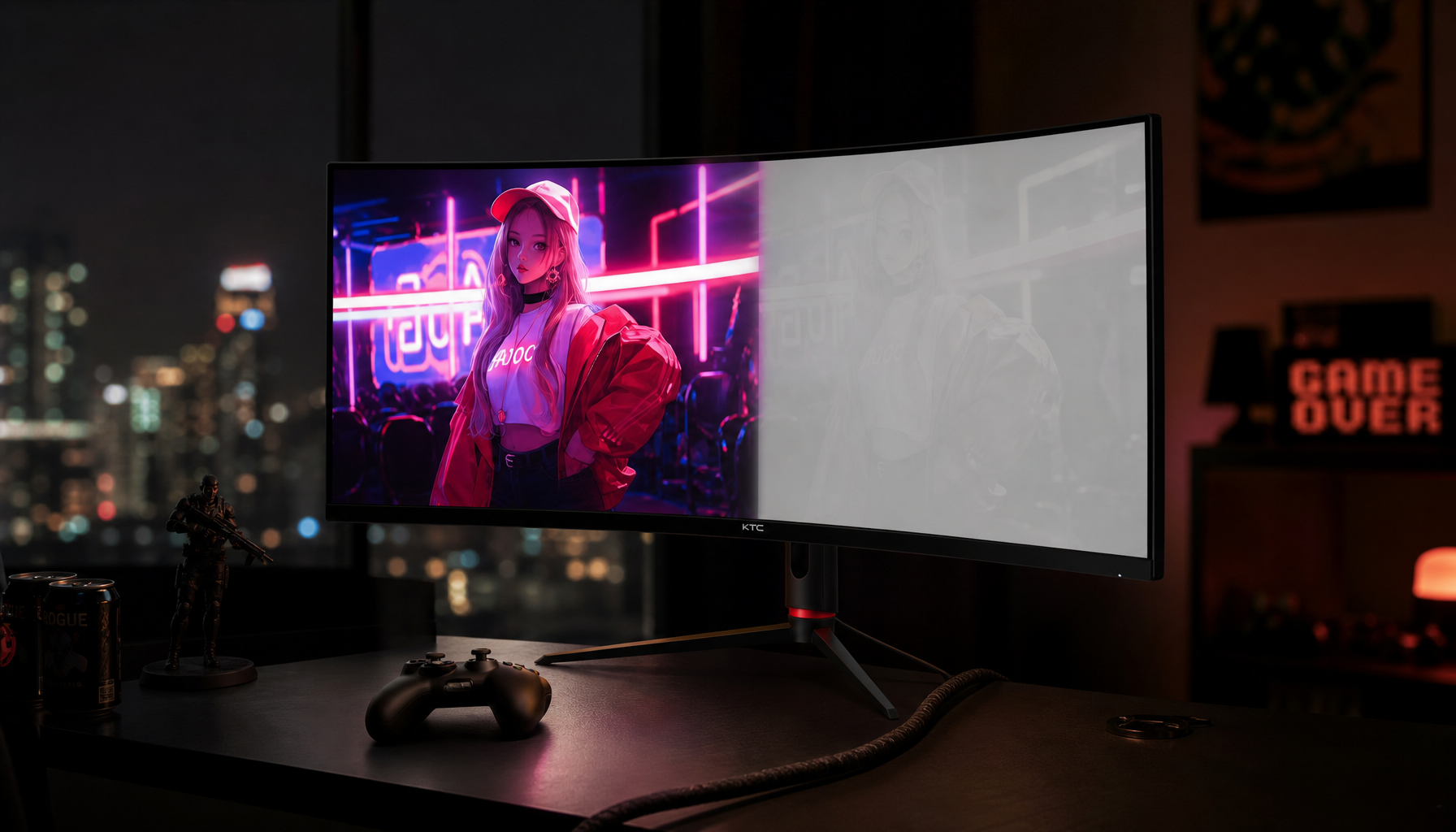
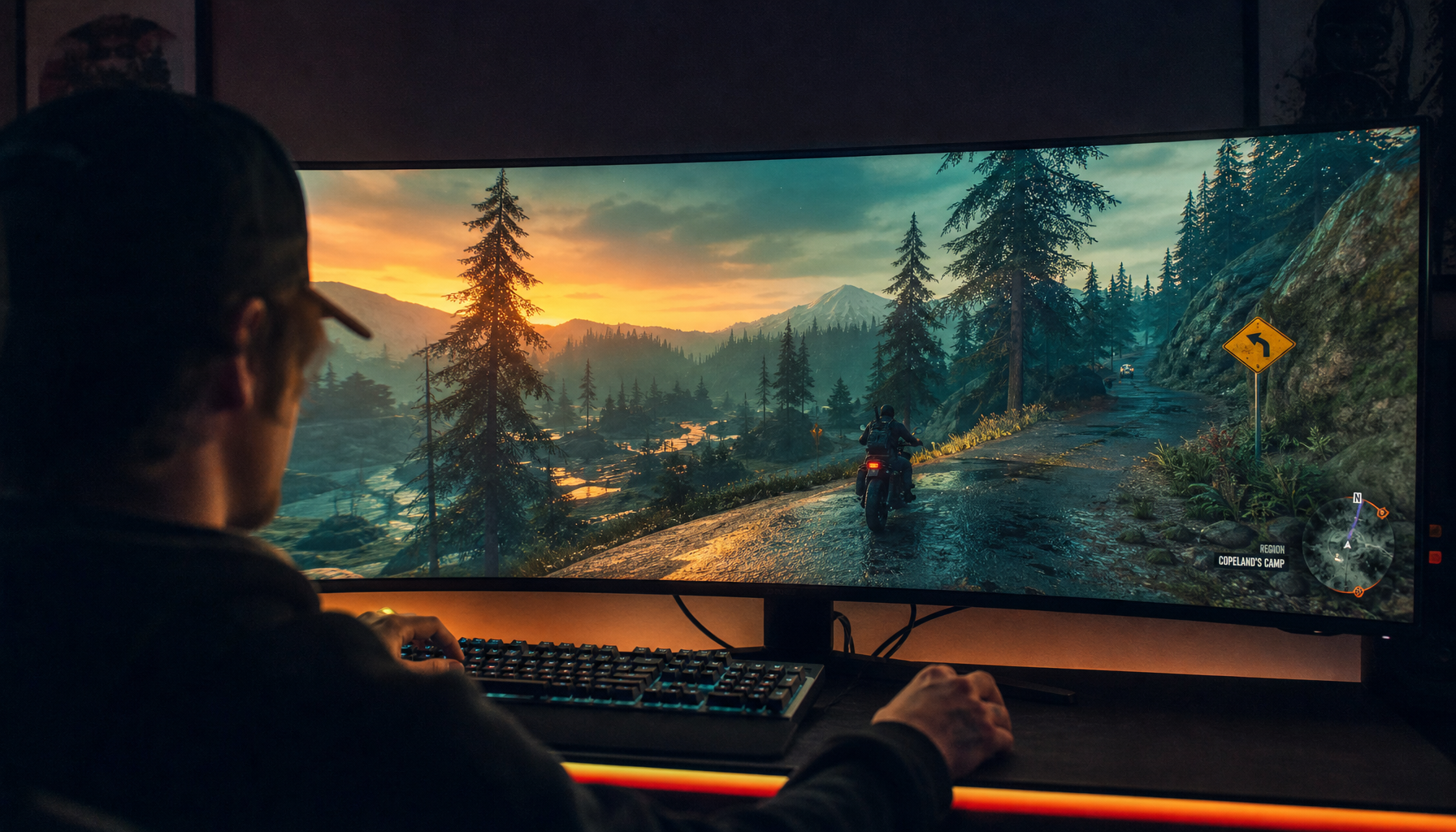
Static desktop icons can contribute to OLED burn-in if they sit in the same place for long periods, especially at high brightness, but mixed gaming and productivity use is usually much safer than leaving one static desktop layout on screen all day.
Ever alt-tab out of a game and notice the same taskbar, browser tabs, and desktop shortcuts staring back for hours? Long-term mixed-use reports are more useful than panic: one OLED monitor used for office work, gaming, and video for 2,656 screen-on hours showed only faint marks on greyscale tests, with little to no issue in normal viewing. This guide explains where the real risk comes from and how to set up an OLED gaming monitor so desktop work does not undermine its strengths.
Why Static Desktop Icons Matter on OLED Monitors
OLED monitors create the image with self-lit pixels, so burn-in is not caused by “icons” as objects; it is caused by the same pixels being asked to display the same bright shapes repeatedly. Static desktop icons, a platform taskbar, browser toolbars, game HUDs, stream overlays, and watermarks are higher-risk elements because they keep wearing the same pixel zones while the rest of the panel changes less predictably. This is why static elements such as logos, taskbars, desktop icons, chat boxes, and overlays are called out as burn-in risks for OLED screens.

That does not mean an OLED monitor immediately burns in from a few shortcuts on the desktop. The risk depends on time, brightness, contrast, color, and whether the screen regularly shows varied content. A static white shortcut label on a bright wallpaper is more demanding than the same icon hidden behind a dark mode workflow, a rotating wallpaper, or a screen saver that activates after a short idle period.
Image Retention vs. Permanent Burn-In
Temporary image retention can fade after varied content or a panel maintenance cycle. Permanent burn-in is different: it reflects uneven pixel aging, where some areas of the panel have lost brightness or color performance faster than nearby pixels. For monitor buyers, the practical question is not “Can OLED burn in?” but “Does my daily layout repeatedly stress the same pixels enough to matter during the years I expect to own the display?”
LCD monitors have an advantage here because they do not rely on the same per-pixel organic material behavior. For people who keep spreadsheets, dashboards, coding tools, and desktop icons fixed in the same places for eight or more hours per day, LCD monitors remain more forgiving for static desktop use.
Mixed Gaming and Productivity Use Changes the Risk Profile
Mixed use is generally friendlier to OLED than pure static office use because games, video, and varied windows spread wear across more of the screen. A high-refresh OLED used for two hours of gaming, several hours of browser work, and some video playback is not stressing the panel the same way as a monitor parked on a bright spreadsheet, CMS dashboard, or browser homepage all day.
A useful real-world benchmark comes from a full-time OLED monitor setup used from October 2024 for office work, gaming, and video. The owner reported roughly 10 to 15 hours of gaming per week, with most screen time spent on static desktop work, and after 2,656 screen-on hours, faint marks were mainly visible on greyscale tests at high brightness rather than in normal content.
What That Means for a Gaming Monitor Owner
If your OLED monitor is mostly used for games, movies, and rotating desktop work, static icons are a manageable risk. If your monitor is used like an office display, with the same taskbar, shortcuts, browser tabs, a chat-app-like sidebar, spreadsheet grid, and code editor layout visible every weekday, those fixed UI zones matter more.
This distinction shows up in user concerns around large OLED gaming displays. One productivity-focused buyer considering a 48-inch OLED gaming monitor liked its gaming features, including adaptive sync support and low refresh-rate support, but worried that mostly browser-based work and video windows might challenge the advertised lifespan or make built-in dimming features annoying during daily use. That kind of productivity concern is reasonable, especially for buyers replacing an LCD monitor that previously tolerated static layouts without much thought.
The Highest-Risk Static Elements Are Often Not Desktop Icons
Desktop icons get attention because they are easy to see, but the taskbar is often the bigger practical risk. It is always in the same position, often bright, and visible across most workflows unless auto-hide is enabled. In a nine-month QD-OLED stress-oriented mixed-use test discussed by viewers of a monitor-review channel, visible burn-in was reportedly limited mainly to the taskbar area and was most noticeable on large flat grey backgrounds, not typical game or video content. That result points to the taskbar area as a more important daily target than a handful of desktop shortcuts.
Gaming overlays can be just as important. FPS counters, minimaps, health bars, static quest logs, game-launcher overlays, platform game-bar widgets, chat-app-like voice indicators, and stream chat boxes can sit in fixed positions for multi-hour sessions. High refresh rate does not protect against this: a 240 Hz or 360 Hz OLED can still repeatedly illuminate the same pixels if the overlay is fixed.
Common Risk Scenarios
A low-risk scenario is a mixed evening of full-screen games, web browsing, video playback, and a screen saver after idle periods. A moderate-risk scenario is a workday with the same browser window, taskbar, desktop dock, or code editor visible for several hours, interrupted by meetings, video, and window movement. A higher-risk scenario is a bright desktop with visible icons and taskbar left idle every day, or a streamer layout with fixed logos, chat panels, and camera frames running for long sessions.
Brightness makes each scenario more demanding. OLED panels can advertise high peak HDR brightness, sometimes around 1,000 nits, but that usually refers to small HDR highlights rather than sustained full-screen desktop brightness. For static desktop work, high peak HDR brightness is less useful than controlled brightness, dark mode, and varied content.
Settings That Reduce Burn-In Risk Without Hurting Gaming
The best OLED setup separates desktop behavior from gaming behavior. For normal productivity, lower brightness, use dark mode, hide static UI, and let the monitor’s protection features run. For HDR games or movies, enable HDR and use proper calibration so highlights look impressive without keeping the entire desktop in a high-output mode all day.
One practical approach is to run desktop brightness around 45% to 50%, enable pixel shift or pixel move, keep the screen saver active, auto-hide the taskbar, and avoid leaving the desktop idle. In the 2,656-hour long-term example, the owner used 50% brightness for normal desktop work, enabled a pixel-move feature, and used the monitor’s screen saver to dim static content before brightening again when the image changed.

HDR Should Be a Mode, Not a Habit
HDR is one of the reasons people buy OLED gaming monitors: black levels, contrast, and bright highlights can make games and movies look dramatically better. But leaving HDR enabled for ordinary desktop use can push OLED pixels harder without making static icons, documents, or CMS pages meaningfully better. For everyday desktop work, HDR enabled all the time can add unnecessary pixel stress compared with enabling HDR only for HDR games and movies.
The same applies to 100% brightness. Full brightness may make sense for a specific game, a bright room, or a calibrated HDR session, but it is not a sensible default for writing, browsing, spreadsheets, or managing game libraries. If you can comfortably read at 45% to 60% brightness, that is a better daily baseline for an OLED monitor.
OLED vs. LCD: Which Is Better for Your Desktop?
OLED is usually the more exciting choice for gaming. Users moving from TN, VA, or IPS panels often point to color quality, black levels, HDR impact, and motion clarity as the reasons they prefer OLED. One OLED TV owner using OLED at 120 Hz said they would mainly consider upgrading for much higher refresh rates, such as 300 Hz or more, because the overall image quality was already compelling. That kind of OLED preference is common among gamers who value contrast and HDR more than static desktop tolerance.

LCD still has the edge for static productivity and sustained brightness. If your day is dominated by white documents, spreadsheets, finance dashboards, coding windows, or fixed browser-based tools, an IPS or VA gaming monitor may be the lower-maintenance option. That does not make OLED wrong for productivity, but it means the buyer should be willing to manage brightness, taskbar behavior, idle time, and panel maintenance.
A Practical Buying Rule
Choose OLED if gaming, HDR video, contrast, motion clarity, and black levels are your top priorities, and productivity is mixed with varied content. Choose LCD if you want maximum set-and-forget tolerance for static desktop layouts, bright full-screen documents, and long unattended sessions.
If you like the OLED gaming-monitor idea but know your desktop sessions are long and static, it can also be useful to compare it with a Mini LED option such as a Mini LED 27-inch 4K 160Hz HDR gaming monitor, which stays in the 27-inch 4K high-refresh category while taking a different panel approach.
For ultrawide OLED buyers, the same rule applies with more screen real estate. A 34-inch or 49-inch OLED ultrawide can be excellent for games and multitasking, but pinned window zones can create repeated wear patterns if the same panels live in the same places every day. For portable OLED monitors, the risk is usually tied less to icons and more to brightness, travel use, and whether the display is left showing a static laptop desktop for long idle stretches.
Action Checklist for Mixed-Use OLED Owners
- Set desktop brightness around 45% to 60% for normal work, then raise it only when the room or content requires it.
- Auto-hide the platform taskbar or move it periodically if you spend long hours in desktop mode.
- Hide desktop icons, use dark mode, and choose a rotating or low-contrast wallpaper.
- Enable OLED protection features such as pixel shift, pixel move, screen dimming, screen saver, and panel refresh.
- Turn HDR on for HDR games and movies, then turn it off for normal desktop work.
- Disable or move static gaming overlays, FPS counters, stream logos, and chat boxes during long sessions.
- Take a short break or move windows every 30 to 60 minutes during heavy productivity work.
FAQ
Q: Can static desktop icons cause burn-in on an OLED gaming monitor?
A: Yes, they can contribute to burn-in if they remain visible in the same location for long periods, especially at high brightness. In normal mixed use, the taskbar, browser UI, and game overlays are often bigger risks than the icons themselves because they stay visible across more workflows.
Q: Is mixed gaming and productivity use safe for OLED?
A: Mixed use is safer than leaving static office content on screen all day, but it does not eliminate risk. The strongest setup is varied content plus lower desktop brightness, hidden static UI, screen savers, pixel shift, and completed panel refresh cycles.
Q: Do high-refresh OLED monitors handle static icons better?
A: Not because of refresh rate. A 240 Hz or 360 Hz OLED can make games feel smoother, but a static icon, taskbar, HUD, or stream logo still loads the same pixels repeatedly. Refresh rate improves motion; it does not cancel uneven pixel wear.
Practical Next Steps
If you already own an OLED gaming monitor, treat static desktop icons as a layout problem, not a reason to avoid using the display. Hide the taskbar, reduce desktop brightness, let protection features run, and reserve HDR and maximum brightness for games and movies that actually benefit from them.
If you are still shopping, be honest about your daily screen time. OLED is a strong choice for mixed gaming, video, and productivity when you want premium contrast and HDR. LCD remains the more practical choice for long static workdays where you want a bright, fixed desktop with almost no maintenance habits.
References
- Hidden mistakes that are ruining your OLED monitor
- Using an OLED panel for productivity, screen burn in?
- Do you folk like OLED for gaming? Or regular LCD tech?
- Stream Overlays & Logos: OLED Burn-In Risk
- I’ve been using an OLED monitor for 2,656 hours
- 3 things LCD monitors still do better than OLEDs
- Monitors Unboxed QD-OLED burn-in discussion