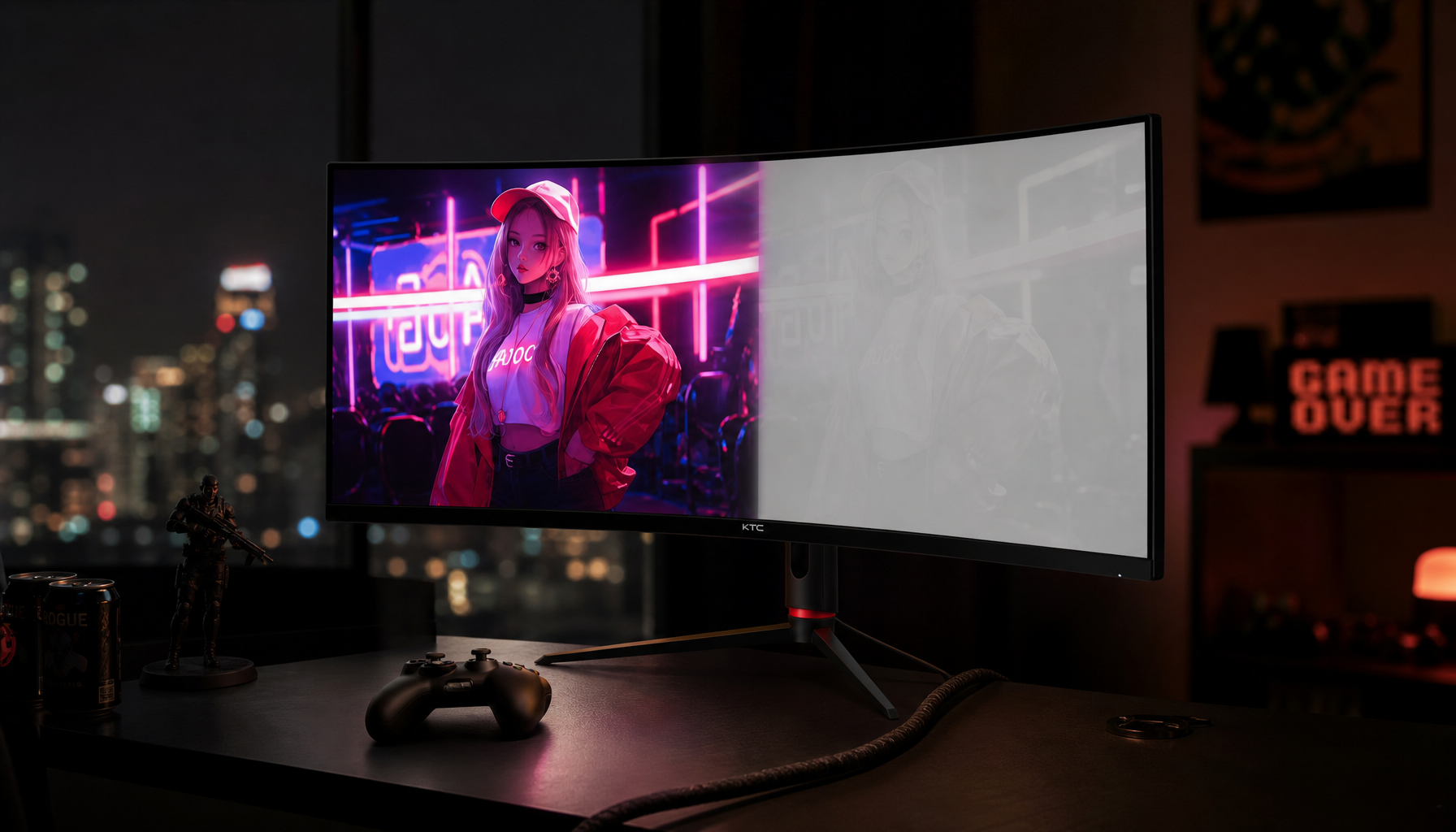
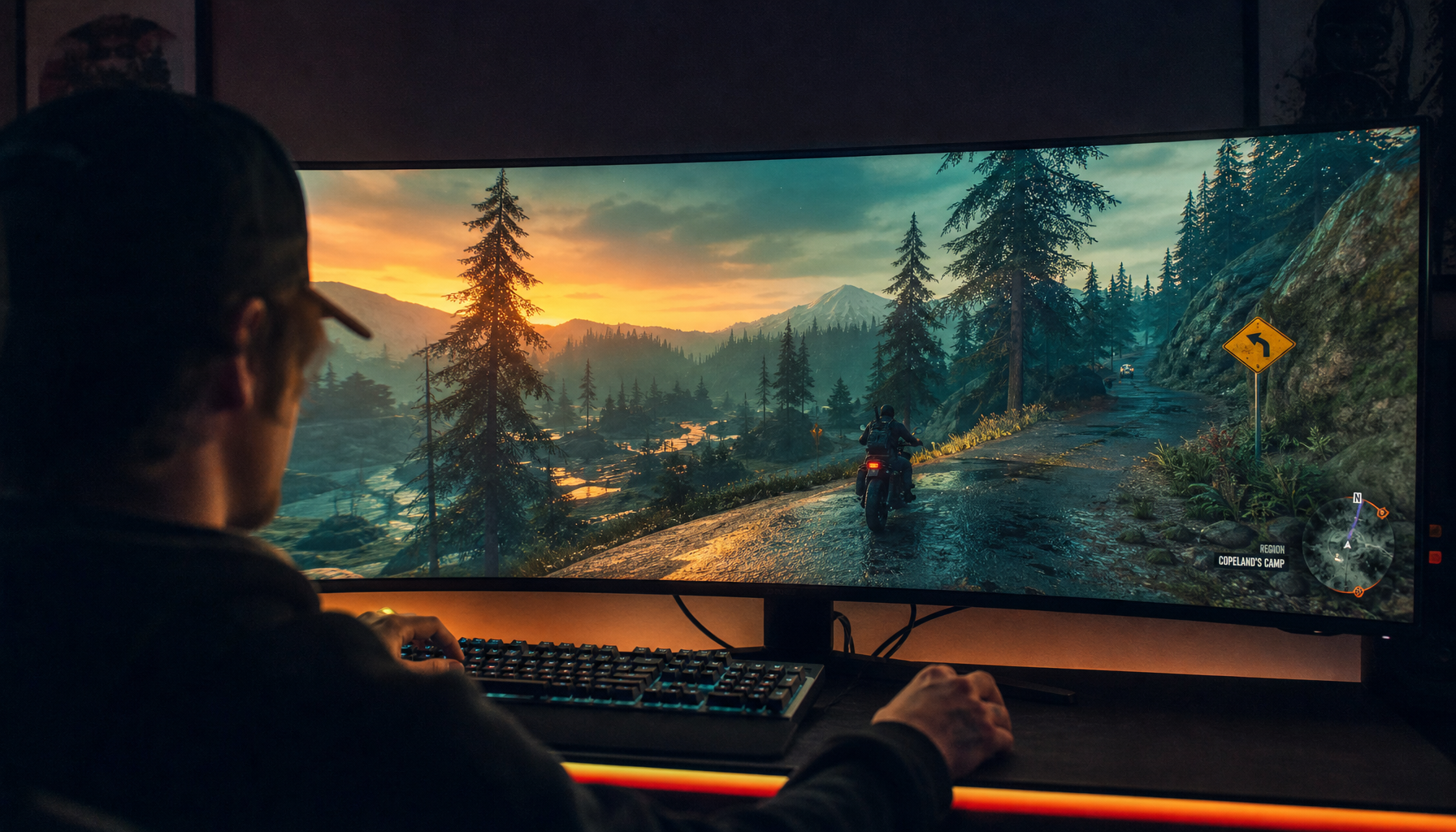
OLED technology stands out as the premium choice for gamers who want one display that delivers both cinematic immersion on consoles like the PS5 and razor-sharp competitive performance on PC. Its self-emissive pixels produce infinite contrast and near-instantaneous response times that Mini-LED and IPS panels struggle to match, especially in dark or controlled lighting. For many dual-platform users, this makes OLED worth the higher price once budgets reach the $600–$700 range, provided burn-in risks are managed through sensible daily habits.

Why OLED is the Premium Choice for Modern Gaming in 2026
The shift from Mini-LED to OLED often happens at the $600–$700 price bracket for serious gamers. Below this range, Mini-LED frequently offers better brightness for sunlit rooms or mixed productivity work. Above it, OLED’s advantages in contrast and motion clarity become the default recommendation for most gaming-focused buyers.
Self-emissive pixels allow each individual dot on an OLED screen to turn completely off, delivering true black levels that no local-dimming LCD technology can replicate without visible halos. This pixel-level control meets VESA DisplayHDR True Black standards, which require black levels up to 100 times deeper than standard LCD-based HDR tiers.
The response time advantage is equally decisive. OLED panels typically achieve 0.03 ms gray-to-gray transitions, eliminating the ghosting and inverse artifacts that even 1 ms LCD monitors can show when overdrive is applied aggressively. This makes fast-moving objects in competitive titles appear cleaner, especially at high refresh rates.
The Technical Edge: Why OLED Contrast Redefines the Premium Tier
OLED’s picture quality stands above Mini-LED because it avoids the blooming and halo effects common even in high-zone-count local dimming displays. When bright objects appear against dark backgrounds in games like Cyberpunk 2077 or Elden Ring, OLED maintains perfect separation without light bleed.
VESA’s DisplayHDR True Black certification was created specifically for emissive displays such as OLED. This official performance criteria page explains that the standard demands black levels 100 times deeper than typical LCD HDR, creating the “infinite” contrast that makes HDR content transformative in dark viewing environments.
Mini-LED panels rely on hundreds or thousands of dimming zones, yet still show some blooming around bright UI elements or explosions. OLED’s pixel-level control removes this compromise entirely, giving cinematic scenes the depth filmmakers intended.
Many gamers also appreciate that the technology pairs naturally with high refresh rates. The near-instant response time multiplies the benefit of 240 Hz or higher, reducing motion blur in a way that sample-and-hold LCD designs cannot fully achieve.

One Monitor, Two Identities: The Power of Dual-Mode OLED
A single premium OLED monitor can behave like two different high-end displays depending on the game and platform. Dual-mode designs let users switch natively between 4K at 240 Hz for immersive titles and 1080p at 480 Hz for competitive esports without scaling artifacts or added blur.
This flexibility matters for dual-platform owners. On PS5 or Xbox Series X, the 4K mode delivers smooth, high-detail HDR gaming. On a capable PC, the 1080p mode provides the motion resolution competitive players need in Valorant or Counter-Strike 2.
The 0.03 ms response time further enhances these high refresh rates. As discussed on Blur Busters motion clarity forums, OLED’s pixel response is fast enough that 480 Hz content looks noticeably cleaner than the same refresh rate on even the best overdriven LCD panels.
Native resolution switching avoids the softness introduced by GPU scaling, giving PC players a true zero-compromise experience across genres.
The Dual-Purpose Setup: Bridging the Gap Between PC and PS5
Modern OLED monitors work seamlessly with both high-end PCs and current-generation consoles when equipped with the right connections. HDMI 2.1 is essential for taking full advantage of 4K at 120 Hz, Variable Refresh Rate (VRR), and Auto Low Latency Mode (ALLM) on PS5 and Xbox Series X.
This HDMI 2.1b feature guide details how the specification supports the bandwidth needed for these next-gen console features without compromising picture quality.
USB-C with KVM switching adds further convenience for users who move between a gaming PC and a work laptop on the same desk. A 32-inch 4K OLED often strikes the best balance for desk setups, providing enough screen real estate for immersive play while remaining practical for close-range viewing.
For gamers building a single-display solution, look for models that combine HDMI 2.1 ports, high refresh rates, and ergonomic stands that allow easy adjustment between seated console sessions and competitive PC play.
For more on panel differences that affect gaming, see our guide to MiniLED vs. OLED: Which Display Technology Wins for Gaming in 2025?.
The Reality Check: Managing Burn-in and Brightness in 2026
While OLED technology has improved significantly, burn-in remains a manageable risk rather than a fully eliminated concern. Modern panels include pixel cleaning cycles, logo dimming, and better heat management, yet static user interface elements like taskbars or persistent HUDs can still cause gradual wear over many thousands of hours.
Long-term testing by RTINGS shows that careful usage habits greatly reduce the likelihood of visible burn-in for typical gaming and media consumption.
Brightness represents another practical tradeoff. OLED panels generally peak lower than high-end Mini-LED models in full-screen bright scenes, making Mini-LED preferable in very sunny rooms. In controlled or evening setups, however, the deeper blacks of OLED often deliver a more satisfying overall picture.
The daily friction also differs between technologies. Mini-LED users sometimes face a “toggle tax,” manually adjusting local dimming settings for comfortable desktop use to avoid blooming around text. OLED users instead adopt habits such as using dark mode and hiding taskbars, while relying on the panel’s automated maintenance routines.
Users who spend eight or more hours daily on spreadsheets or coding in bright environments may still prefer Mini-LED for its combination of brightness and lower long-term image retention risk.
Choosing Your Path: OLED vs. Mini-LED for Your 2026 Setup
The $600–$700 price point often serves as the practical boundary where OLED becomes the stronger recommendation for most gamers. Below this range, Mini-LED typically provides better value through higher sustained brightness and lower burn-in concern. Above it, the motion clarity and contrast advantages of OLED justify the premium for dark-room or cinematic play.
When OLED’s Motion Clarity Beats Mini-LED Value
A tiered view of the setup decision: the OLED case strengthens as budget rises into the $600–$700 range, while Mini-LED stays the safer value pick below that band for brightness-first buyers.
View chart data
| Category | Mini-LED value fit | OLED motion-clarity fit |
|---|---|---|
| Budget tier | 3.0 | 1.0 |
| <$400 | 3.0 | 2.0 |
| $400–$599 | 2.0 | 3.0 |
| $600–$699 | 1.0 | 3.0 |
| $700+ |
Room lighting and primary game genre should guide the final choice. Competitive PC players in darker spaces benefit most from OLED’s motion clarity. Console-focused users who prioritize HDR impact and deep blacks also gain significantly from the technology.
KTC’s OLED lineup, including the G27P6 and similar 4K models, offers a strong entry into this premium tier with dual-mode capabilities, HDMI 2.1 support, and thoughtful features for both PC and console use. Check current specifications to confirm compatibility with your exact setup.
If your room receives significant daylight or you use the display heavily for static productivity work, explore the All-Mini-LED Monitors collection for brighter, more forgiving alternatives.
For additional motion clarity insights, read What Is Sample-and-Hold Blur and Why Higher Refresh Rates Don't Eliminate It?. Gamers concerned about text clarity on OLED may also want to review our IPS vs VA Panels: Which is Right for Your Playing Style? for broader panel context.
Is OLED Worth the Premium Price in 2026?
Yes for dedicated gamers in controlled lighting who value contrast and motion clarity over maximum brightness. The technology’s self-emissive nature provides a visible upgrade in most modern titles, and mitigation features have reduced burn-in risk for typical mixed gaming and media use. Heavy productivity users or those in very bright rooms should still consider Mini-LED.
Does OLED Work Well With Both PS5 and High-End PCs?
Most premium OLED monitors with HDMI 2.1b ports support 4K 120 Hz, VRR, and ALLM required by current consoles while also delivering 240 Hz or higher on PC. Dual-mode models further enhance versatility by offering native resolution switching for different game types.
How Serious Is the Burn-in Risk on Gaming Monitors in 2026?
Burn-in risk has been mitigated through pixel cleaning, logo dimming, and improved panel materials, yet it has not been eliminated. Users who keep static elements visible for many hours daily should enable dark modes and screen savers. For typical gaming sessions of a few hours per day, the risk remains low.
What Screen Size Is Best for a Dual PC and Console Setup?
A 27- to 32-inch 4K OLED often provides the best balance. It delivers immersive detail at typical desk distances without feeling overwhelming, while offering enough real estate for both competitive PC work and cinematic console play.
Should I Choose OLED or Mini-LED if I Game in a Bright Room?
Mini-LED usually performs better in bright environments due to higher peak brightness and less susceptibility to reflections. OLED remains excellent in dimmer rooms where its infinite contrast can be fully appreciated.
Are Dual-Mode OLED Monitors Future-Proof for Next-Gen Consoles?
Current dual-mode OLEDs already support the bandwidth and features required by PS5 and Xbox Series X. As long as the monitor includes HDMI 2.1, it should remain compatible with future console refreshes that maintain similar resolution and refresh rate targets.