Older games often need community patches on 21:9 monitors because their cameras, menus, HUDs, and cutscenes were built around narrower display assumptions. A good patch does more than fill the screen: it preserves correct proportions, widens the field of view when appropriate, and keeps important interface elements usable.
Ever launched a classic computer game on a 34-inch ultrawide monitor and watched characters look too wide, the HUD slide into the wrong place, or cutscenes snap back to black bars? The practical win is straightforward: with the right fix, a game that would otherwise stretch a 2560x1440 image across a 3440x1440 panel can keep its geometry correct and use the extra side space more intelligently. This guide explains why the problem exists, what community patches actually change, and how to judge whether an older game is worth playing on a 21:9 display.
Why Older Games Break on 21:9 Monitors
Older games were usually designed for display targets that were much narrower than today’s ultrawide gaming monitors. Many computer titles assumed 4:3, 5:4, 16:10, or later 16:9 output, while console-era and early computer graphics could also involve non-square pixels, overscan, underscan, and other display behaviors that do not map cleanly to modern flat panels. A modern ultrawide monitor uses square pixels, so a legacy image that expected a different pixel shape or display area can look stretched, squashed, cropped, or incorrectly framed; older systems did not fully standardize around square pixels until roughly the late 1990s, as summarized in this history of computer game aspect ratios.
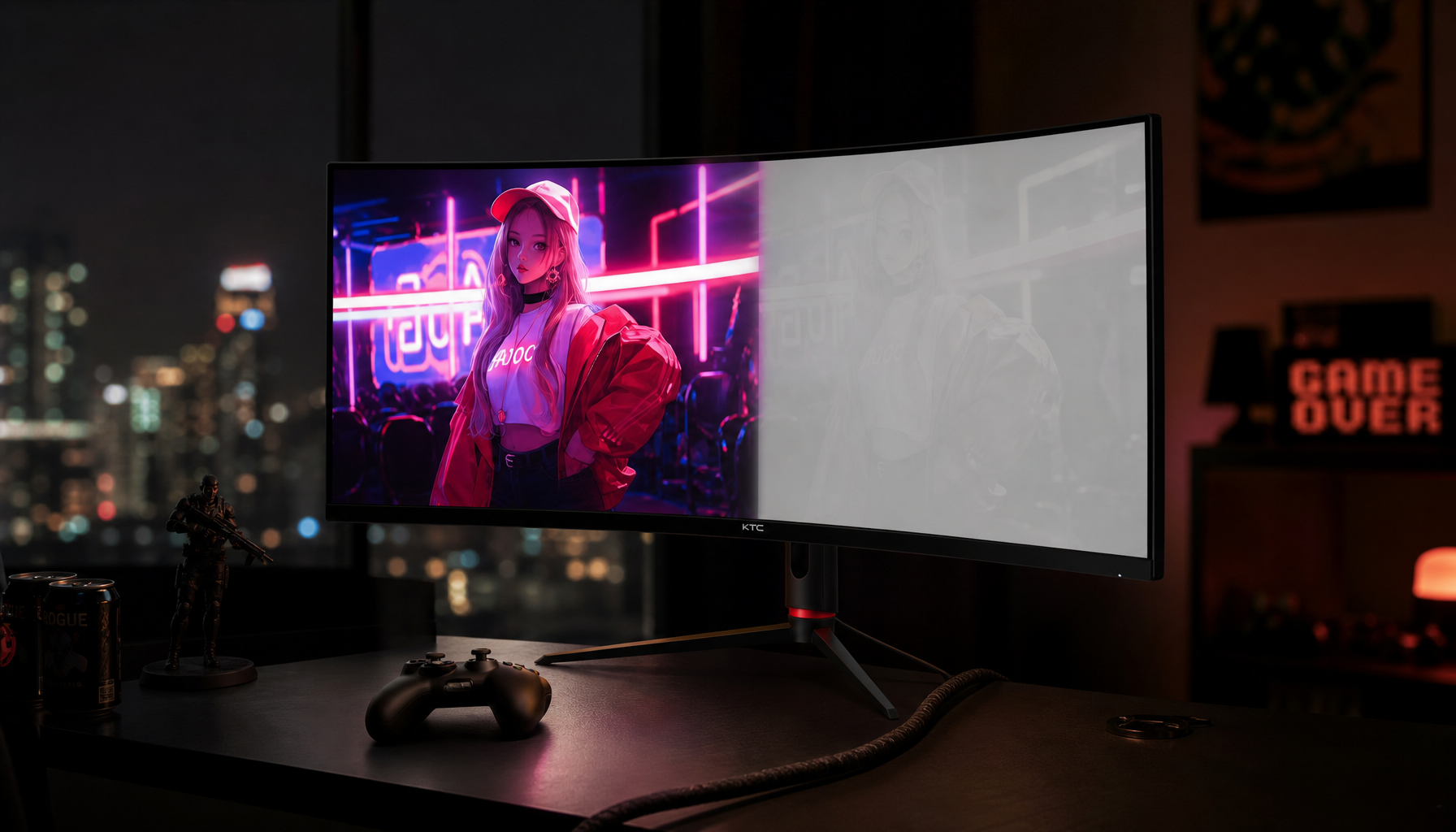
The issue is not just “old game, new screen.” A 21:9 display changes the horizontal canvas, and older engines often decide what to render based on hard-coded assumptions rather than true aspect-aware logic. If a game expects 16:9 and your monitor is 3440x1440, the panel has the same vertical pixel count as 2560x1440 but much more width; forcing the narrower image to fill the full panel makes circles look like ovals and characters look wider than intended.
Stretching, Cropping, and Black Bars Are Different Problems

Black bars are often the least harmful failure mode. They mean the game is preserving its original proportions instead of deforming the image, even if the ultrawide panel is not fully used. Stretching is worse because it changes geometry; cropping can be worse still because it removes information from the top, bottom, or sides of the game view.
On a gaming monitor, this difference matters more than it first appears. At high refresh rates, motion clarity may be excellent, but if the camera is zoomed incorrectly or the HUD is misplaced, the game still feels wrong. Proper ultrawide support is a rendering and interface problem, not simply a question of whether the image reaches both edges of the screen.
What Community Patches Actually Fix
Community patches usually target the places where older engines make fixed assumptions: field of view, aspect ratio calculation, resolution detection, HUD position, menu layout, and cutscene framing. Tools such as a widescreen patching tool were created specifically to help games function correctly at ultrawide, multi-monitor, and wide-display resolutions, using game-specific plugins rather than a single universal switch. That plugin approach matters because two games can fail in different ways even when they run at the same resolution.
A typical patch may change memory values while the game is running, adjust configuration files, override resolution limits, or modify how the camera scales horizontally. Some fixes are simple: enabling 3440x1440 in a menu that only lists 1920x1080. Others are deeper: preventing a first-person camera from zooming in, moving the HUD away from the far corners, or stopping a pause menu from stretching across the entire panel.
Field of View Is Usually the Core Fix

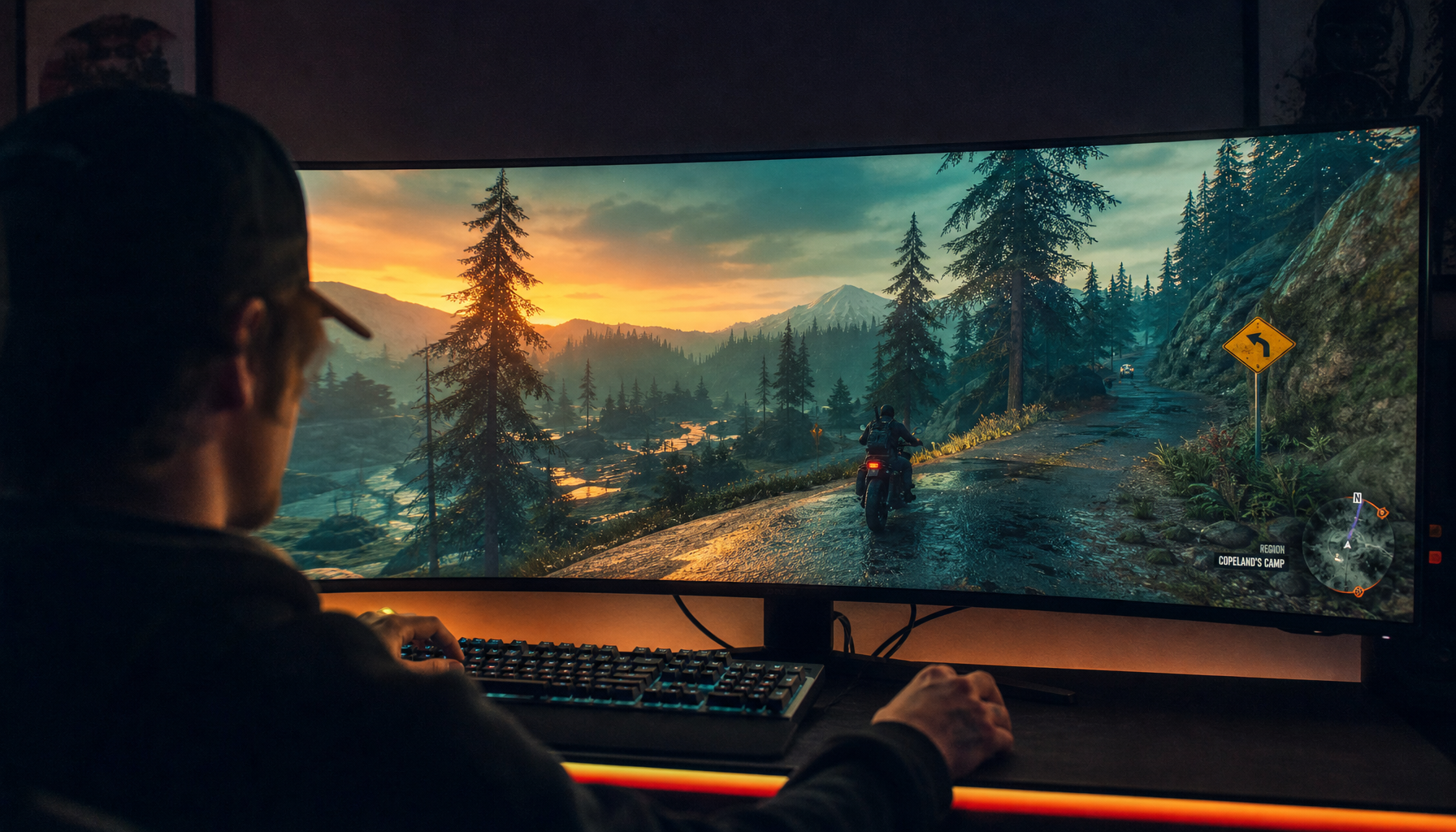
For many 3D games, the most important change is field of view. A bad ultrawide implementation may use the same horizontal view as 16:9 and then crop the top and bottom, which makes the game feel zoomed in. A better implementation keeps the vertical view stable and expands the horizontal view, so the ultrawide monitor shows more peripheral space without making the image look distorted.
This is why “the game launches at 3440x1440” is not enough evidence of proper support. A game can accept the resolution and still have the wrong camera behavior. Before deciding a title is ultrawide-ready, check whether the player view, weapon model, aiming reticle, and camera transitions behave correctly during actual gameplay.
HUD and Menu Fixes Matter for Playability

HUD scaling can be just as important as camera scaling. Some older games pin interface elements to positions designed for 4:3 or 16:9, which can push health bars, minimaps, subtitles, or button prompts too far from the center of attention on a 21:9 display. Others stretch 2D interface art until text and icons look soft or distorted.
A useful community patch often keeps gameplay wide while leaving menus, maps, or videos in a safer aspect ratio. That may sound like a compromise, but it is often the correct one. If a game’s menu art was authored for 16:9, forcing it to 21:9 can make the experience look less polished than centered 16:9 presentation with black side bars.
Native Support, Manual Fixes, and Partial Support Are Not the Same
Ultrawide compatibility exists on a spectrum. A compatibility database groups games by categories such as native support, limited native support, always on, requires manual fix, and no native support; its ultrawide list has reported thousands of tracked computer games, including older titles like 1990s and 2000s releases, in a database of ultra-widescreen support. For monitor buyers, that classification is more useful than a store page that only says “supports high resolutions.”
Native support usually means the game can run at 21:9 without third-party tools, but it does not guarantee perfection. Some games support ultrawide gameplay while keeping cutscenes at 16:9. Others offer 21:9 rendering but have edge warping, awkward HUD spacing, or resolution caps that miss common monitor formats.
Support Type |
What It Usually Means |
What to Check on a 21:9 Monitor |
Best User Action |
Native support |
The game offers ultrawide resolutions by default |
FOV behavior, HUD position, cutscenes, menu scaling |
Use native resolution and test gameplay, not just menus |
Limited native support |
Gameplay may work, but some elements remain 16:9 or flawed |
Subtitles, cinematics, map screens, weapon viewmodels |
Accept minor limits or look for a targeted fix |
Manual fix required |
The game needs a config edit, mod, patcher, or memory fix |
Patch version, game version, anti-cheat risk, reversibility |
Read recent user reports before installing |
Aspect-preserved 16:9 |
The game shows black bars instead of filling the panel |
Whether bars are preferable to distortion |
Use monitor or GPU aspect scaling |
Forced stretch |
The image fills the screen by deforming proportions |
Wider characters, oval UI elements, incorrect aiming feel |
Disable full-panel scaling immediately |
No reliable support |
Fixes are unavailable, outdated, or unstable |
Crashes, broken UI, unpatched cutscenes |
Play at 16:9 or choose another title for ultrawide |
Even Modern Examples Show Why Labels Can Mislead
Partial ultrawide support is not limited to old games. A gaming publication’s ultrawide game coverage notes examples where games support wide formats in gameplay but still show limitations, such as 16:9 cutscene behavior, resolution caps, blurry side fill, or edge warping in some titles on an ultrawide monitor. That is a useful warning for anyone buying a 21:9 monitor mainly to revisit a large backlog.
For older games, the risk is higher because official updates may have stopped years ago. If a game’s final patch predates ultrawide popularity, community work may be the only path to a usable experience. The better question is not “does it support 21:9?” but “which parts of the game support 21:9, and which parts still fall back to 16:9?”
How Monitor Scaling Settings Affect the Result
Before installing a community patch, check the basic display path: operating system resolution, in-game resolution, GPU scaling mode, and monitor scaling mode. Ultrawide stretching often happens when a 16:9 image is forced to fill a 21:9 or 32:9 panel instead of preserving its shape, and practical troubleshooting starts with the monitor’s native resolution and highest supported refresh rate, then moves to aspect-preserving modes such as Maintain Aspect Ratio. This step is simple, but it prevents misdiagnosing a display-scaling problem as a game-engine problem.

For a common 3440x1440 ultrawide monitor, a game outputting 2560x1440 should not be stretched to fill the full width unless you deliberately want distortion. The correct fallback is usually centered 16:9 or aspect-ratio scaling with black bars. Once the game is no longer being stretched by the monitor or GPU, you can judge whether a community fix is actually needed.
The Practical Scaling Order to Try
Start with the game set to the monitor’s native resolution. If that fails or looks wrong, try the game’s highest 16:9 resolution that matches your monitor height, such as 2560x1440 on a 3440x1440 panel, and force aspect-preserving scaling. If the game then looks geometrically correct but boxed, the display path is fine and the missing piece is true ultrawide rendering.
Next, test a known community fix if one exists for your exact game version. Do not evaluate the fix only from the main menu. Load a mission, move the camera, open the map, trigger a cutscene, check subtitles, and verify that mouse aim or controller targeting still feels consistent.
How to Decide Whether an Older Game Is Worth Patching
A good ultrawide candidate has three traits: the game renders real-time 3D scenes, the engine exposes or can be patched for FOV and aspect-ratio behavior, and the UI remains readable after adjustment. Games with pre-rendered backgrounds, fixed 2D art, hard-coded menus, or old anti-cheat systems are often harder to patch cleanly. In those cases, black bars may be the most accurate and stable presentation.
For display buying guidance, this matters if your backlog is a major reason for choosing an ultrawide monitor. A 21:9 screen is excellent for many modern computer games, simulators, racing titles, strategy games, productivity, and timeline-based creative apps. But if most of your favorite games are older competitive titles, fixed-camera classics, or games with heavy pre-rendered cinematics, a high-refresh 16:9 monitor may provide a more predictable experience.

Action Checklist for 21:9 Owners
- Confirm the monitor is running at native resolution, such as 3440x1440, and at its highest stable refresh rate.
- Set GPU or monitor scaling to an aspect-preserving mode before testing the game.
- Check a compatibility database for whether the game is native, limited, manually fixable, or unsupported.
- Match any community patch to the exact game version, storefront version, and update build.
- Test gameplay, HUD, menus, subtitles, maps, and cutscenes before committing to a long playthrough.
- Keep a backup of original config files before applying manual edits.
- Prefer correct geometry with black bars over full-screen stretching when a reliable 21:9 fix does not exist.
Common Misconceptions About Ultrawide Patches
One misconception is that 21:9 support is just a resolution unlock. Resolution is only the container. Proper support also depends on projection math, camera behavior, UI anchoring, cutscene handling, and whether the engine treats horizontal space as useful gameplay area.
Another misconception is that community patches always make a game “better than native.” They can be excellent, but they are still built around the limits of the original engine. A patch may fix gameplay FOV while leaving cutscenes at 16:9, or it may work in single-player but be inappropriate for online modes where memory injection or modified files can trigger anti-cheat concerns.
When Black Bars Are the Right Answer
Black bars can feel disappointing on an expensive ultrawide gaming monitor, but they are sometimes the cleanest solution. A 16:9 presentation with correct proportions is better than a 21:9 image with stretched UI, cropped gameplay, or distorted art. This is especially true for older games with hand-authored 2D scenes or pre-rendered video.
Think of ultrawide support as a quality target rather than a checkbox. The best outcome is full 21:9 gameplay with correct FOV and a readable HUD. The next-best outcome is aspect-correct 16:9. The worst outcome is forced full-screen stretching that uses every pixel but makes the game look and play incorrectly.
FAQ
Q: Why does my older game look wider on a 21:9 monitor?
A: The game is probably outputting a narrower image, often 16:9 or older, while your monitor or GPU is scaling it to fill the full ultrawide panel. Set scaling to “Aspect Ratio,” “Maintain Aspect Ratio,” “No Scaling,” “Original,” or “1:1,” then retest before applying patches.
Q: Is a community ultrawide patch safe to use?
A: It depends on the game and patch method. Config-file edits are usually lower risk and easy to reverse; memory injection or runtime patchers can be more sensitive, especially with multiplayer games or anti-cheat systems. Use fixes that match your exact game version and avoid unofficial patchers in protected online modes.
Q: Should I buy a 21:9 monitor if I mostly play older games?
A: Yes, if you are comfortable checking compatibility and accepting occasional 16:9 fallback. If your main library is older fixed-camera games, competitive titles with strict FOV rules, or games with no reliable manual fixes, a high-refresh 16:9 display may be the more consistent choice.
Practical Next Steps
If you already own an ultrawide monitor, fix scaling first, then research the game, then apply a patch only when the display path is confirmed correct. The clean testing sequence is: native monitor settings, aspect-preserving fallback, compatibility lookup, patch installation, and real gameplay verification.
If you are shopping for a monitor, treat ultrawide compatibility as part of the buying decision, not an afterthought. A 21:9 gaming monitor can make supported games feel more spacious and immersive, but older titles still need case-by-case checking because proper support depends on the engine, UI, cutscenes, and community maintenance.