Native HDR content is created and delivered with real high-dynamic-range brightness and color information, while SDR-to-HDR upconversion expands a standard-range image through software estimation. Upconversion can make older content look livelier, but it cannot recover highlight or shadow detail that was never preserved in the source.
Have explosions in a game looked brilliant with one HDR setting, while a favorite older movie suddenly appeared washed out or overly bright? A simple side-by-side check on the same display can reveal whether bright details, shadow texture, and colors remain believable instead of merely becoming more intense. Here is how to choose the right HDR mode for movies, gaming, work, and portable-screen viewing.
Native HDR and Upconversion Solve Different Problems
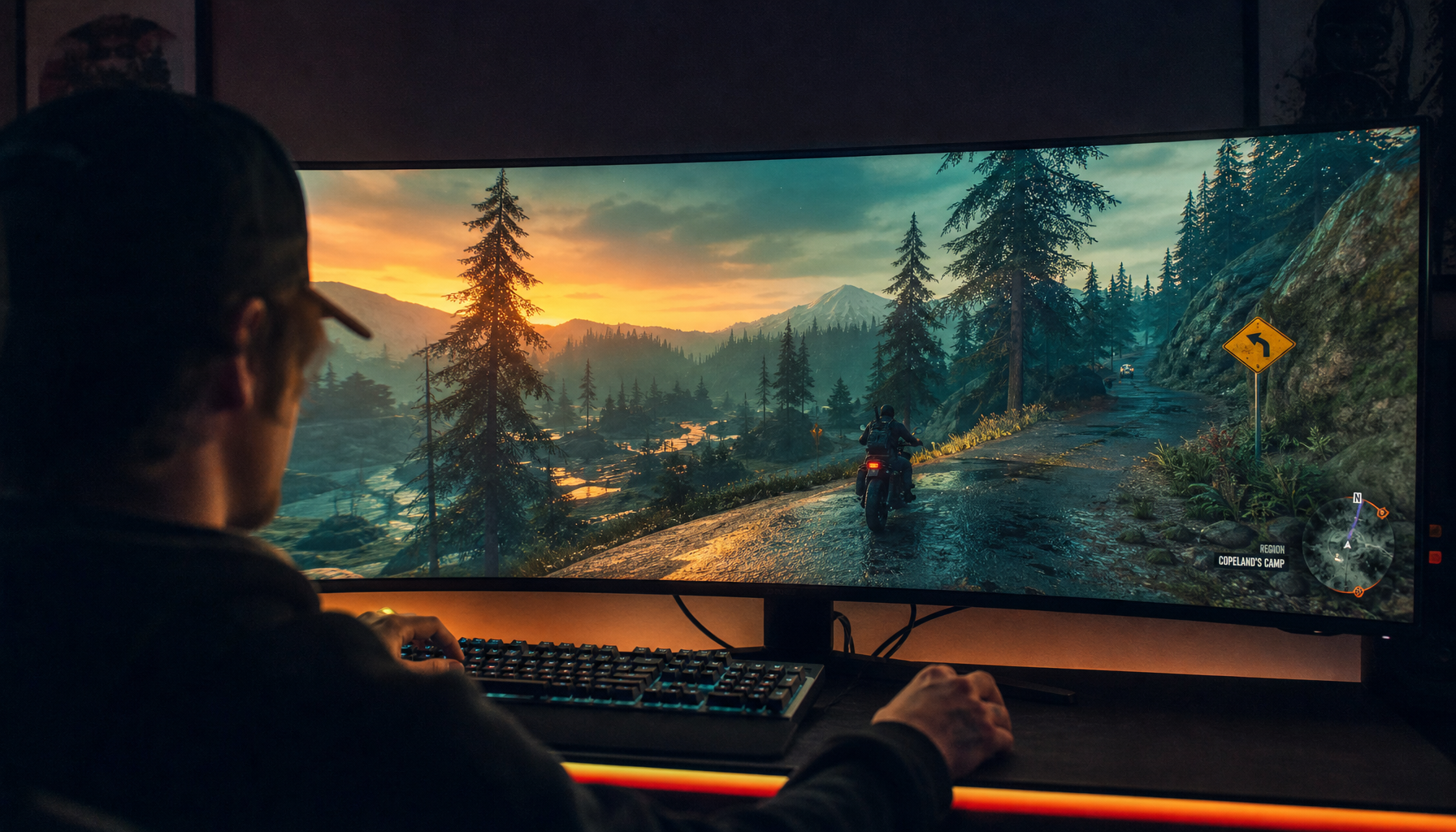
Native HDR content belongs to an end-to-end image workflow: the scene is captured or rendered with expanded brightness information, graded for HDR, encoded in an HDR format, delivered through compatible playback hardware, and mapped onto an HDR-capable display. It can preserve details such as sunlight reflecting from chrome, sparks against a night sky, or subtle texture in a dark jacket without forcing the entire image brighter.
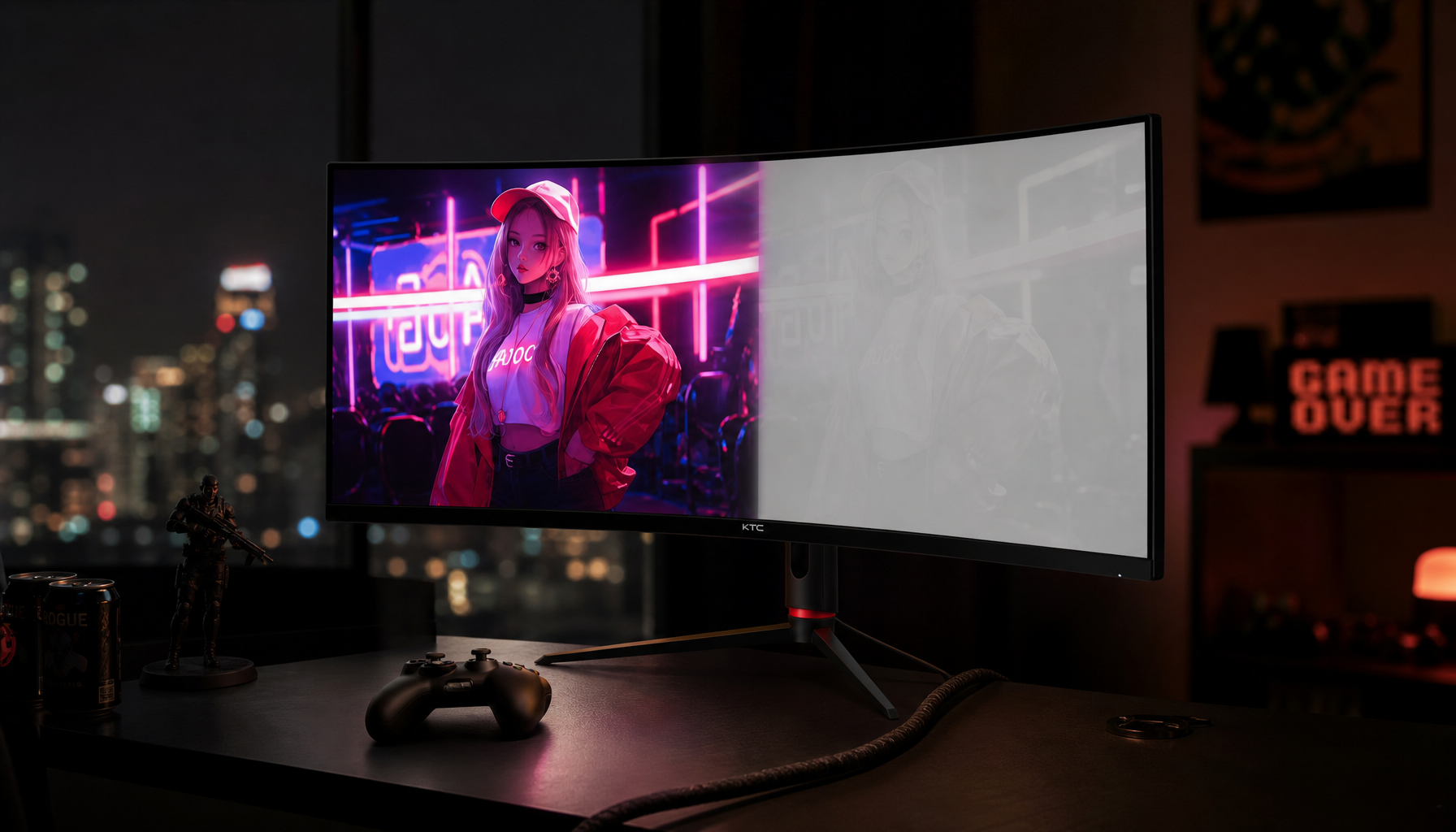
SDR-to-HDR upconversion begins with standard dynamic range content designed for a narrower brightness and color range. Software then analyzes the SDR image and increases apparent contrast, brightness, and sometimes color intensity to produce an HDR-like output. In gaming, automatic HDR features can apply this processing to games originally rendered for SDR.
The practical difference is source authority. Native HDR tells the monitor how bright and colorful key image elements were intended to appear. Upconversion makes an educated guess from a more limited picture.
Viewing Factor |
Native HDR Content |
SDR-to-HDR Upconversion |
Source image data |
Created or mastered for HDR |
Derived from SDR content |
Highlight detail |
Can contain genuine bright-detail information |
Can emphasize existing highlights but cannot restore clipped detail |
Color treatment |
Usually designed for HDR color handling |
May stretch SDR colors beyond their intended look |
Creative intent |
Closest to the creator’s HDR grade when correctly displayed |
Depends on the conversion algorithm and settings |
Best use |
Modern HDR games, HDR movies, premium streaming, HDR photography |
Older SDR games or video when the result looks convincing |
Main risk |
Poor tone mapping on weak displays |
Overbright highlights, altered colors, crushed shadows, or inconsistent results |
What Makes Content Truly Native HDR?
A video does not become HDR simply because it is 4K, uses a modern codec, or appears bright. HDR video is most reliably identified by its transfer characteristics, typically PQ, also known as SMPTE ST 2084, or HLG. Supporting clues may include 10-bit color, wider color information, and HDR metadata, but resolution alone proves nothing.
Native HDR formats include HDR10, HDR10+, and HLG. HDR10 commonly combines PQ, 10-bit color, and wide-color signaling, meaning one set of brightness guidance generally applies across an entire title. Dynamic HDR formats can adjust tone-mapping guidance by scene or frame so a moonlit sequence and a sunlit explosion do not have to share one brightness compromise.
Consider a science-fiction movie with a dark spacecraft interior followed by a bright window revealing a star. In native HDR, the control panels can remain readable in shadow while the star retains piercing brightness. With a capable Mini-LED or OLED gaming monitor, that distinction creates depth rather than simply raising the backlight.

Production standards reinforce this difference. Professional mastering workflows treat HDR as a primary image grade for HDR originals, with SDR and other HDR deliverables created through managed processes. Those workflows exist because native HDR is not merely a display effect; it is authored image information.
How SDR-to-HDR Upconversion Works
SDR-to-HDR upconversion takes an image created for a more limited presentation and maps it into a broader display range. The software may brighten highlights, deepen selected dark areas, expand contrast, or adjust color so an SDR title makes stronger use of an HDR monitor.
For older games, this can be genuinely useful. A fantasy game rendered in SDR may gain more visual separation between torchlight and stone corridors, or a racing game may show brighter headlights against a dusk track. Automatic HDR processing can convert SDR games into HDR-like output in real time, which can extend the visual life of a library that never received native HDR support.
However, upconversion cannot reconstruct information already lost in SDR mastering. If a bright cloud is stored as a flat white patch with no visible texture, making it brighter does not reveal missing cloud structure. If a dark area has already collapsed into black, lifting or reshaping it may expose gray haze rather than real shadow detail.
That limitation matters on performance displays. A 240 Hz gaming monitor with excellent response time can still show a less convincing converted HDR image if the game’s SDR art direction was deliberately restrained. A stealth game’s dim, muted visual language may become less readable or less atmospheric when an algorithm aggressively lifts highlights and color.
Why the Same HDR Mode Can Look Excellent or Disappointing
HDR does not increase a display’s physical capability; it supplies a richer signal for a capable screen to reproduce. A monitor that accepts an HDR signal but lacks meaningful peak brightness, deep black levels, wide color coverage, or effective local dimming may display native HDR with gray shadows or muted highlights. Upconverted HDR can exaggerate those weaknesses further.
Tone mapping is central to the result. Because no consumer display reproduces the entire possible HDR range, each device must fit the content into its actual brightness and color limits. A 1,000-nit highlight mastered into a film will be treated differently on an OLED portable screen, a 600-nit productivity display, and a brighter Mini-LED desktop monitor.
Desktop HDR handling adds another practical variable. Operating systems may perform tone mapping through the GPU for desktop composition using monitor capability information and content metadata. This means two monitors connected to the same PC can produce visibly different HDR results, even with the same game or movie.
Viewing environment also changes perception. Dark-scene HDR quality depends on black level and contrast. A desk lamp reflecting from the screen can erase the subtle shadow advantages that made native HDR worth enabling. For late-night cinematic gaming, controlled room lighting often provides a larger perceived improvement than simply pushing brightness higher.

Native HDR Versus Upconversion for Gaming
Story-Driven and Cinematic Games
A well-implemented native HDR mode is usually the strongest choice for games built around lighting, atmosphere, and environmental detail. Sunlight across wet pavement, neon signs in rain, fire inside a dark ruin, and bright spell effects against a night landscape benefit from authored luminance relationships.
Upconversion remains valuable when a favorite older title has no HDR support. The right test is not whether the image becomes brighter; it is whether you gain readable detail and believable lighting without disturbing the game’s mood. In a role-playing game, check bright skies, fire effects, inventory text, and dark interiors before deciding.
Competitive Games
For competitive play, image clarity and responsiveness take priority over spectacle. Real-time SDR-to-HDR processing may create uneven brightness or add system overhead on weaker configurations, while heavily boosted highlights may make bright effects distracting during fast movement. For a high-refresh esports monitor, SDR or carefully validated native HDR is often the more reliable competitive configuration.
A practical comparison takes only a few minutes. Load the same map or training area, view a dark corner, a bright effect, colored UI elements, and motion during input-heavy play, then compare native HDR, upconversion, and SDR. Keep the mode that improves target visibility and tonal separation without introducing obvious delay, blooming, or color distortion.
Native HDR Versus Upconversion for Movies and Streaming
Native HDR movies and series are the clearest case for letting the original signal drive the display. A properly mastered HDR stream can maintain bright specular highlights while retaining detail in faces, fabrics, windows, and dim interiors. Dynamic formats can further refine scene-by-scene presentation on supported hardware.
Streaming quality also depends on bandwidth. Major services commonly associate 4K HDR streaming with high sustained connection speeds, with several recommendations around 25 Mbps. If the connection repeatedly drops to a lower-quality stream, the advantage of an HDR-capable display may be reduced by compression or resolution changes.
Upconverting an SDR movie can be appealing on a bright portable smart screen in a hotel room or apartment, especially when the source material otherwise looks dull. Yet films with careful low-light cinematography can suffer when conversion raises black levels, clips lamp highlights, or gives skin tones an unnatural intensity. For movies, native HDR should generally be preferred when available, while converted HDR should be treated as a viewing preference rather than an upgrade in source quality.
What to Use for Office Productivity Displays
HDR is not automatically the best everyday desktop mode. Office applications, browser pages, spreadsheets, email, and most presentation materials are commonly built around predictable SDR rendering. An HDR desktop may alter the apparent brightness relationship between white documents, UI panels, SDR video windows, and HDR media.
For an office productivity display that doubles as an entertainment monitor, SDR is typically the stable default for long work sessions. Switch to HDR for native HDR media, HDR-capable creative review, or compatible games. This approach keeps text, neutral backgrounds, and shared documents visually consistent while still allowing the monitor’s premium contrast performance to matter when the content can use it.
HDR photography introduces a useful exception. Modern gain-map images can include an SDR-compatible base presentation plus additional data for HDR-capable screens. On supported hardware and software, a bright reflection or sunset highlight can appear more vivid while the same image still remains viewable on an SDR display. That is a managed compatibility workflow, not the same as automatically boosting any SDR photograph.
How to Choose the Right Mode on Your Screen
Start by confirming the content type. For a local video file, inspect metadata for PQ or HLG transfer characteristics rather than trusting an HDR label in a filename. For a game, check whether HDR is built into the game’s display settings or being applied externally by an operating-system or GPU feature.
Next, evaluate the display rather than the badge on the box. An HDR monitor should deliver meaningful contrast, credible black levels, stable tone mapping, and sufficient brightness for your room and content. Wide color performance also matters; a bright but poorly controlled image does not create convincing immersion.
Finally, calibrate and compare with real scenes. Use a bright highlight, a dark scene with visible texture, natural skin tones, saturated interface colors, and fast motion if you play games. Native HDR should look more dimensional and controlled than SDR. Upconversion earns its place only when it enhances an SDR title without making the image look processed.
Is SDR-to-HDR Upconversion Ever Better Than Native HDR?
Usually, well-authored native HDR offers the most faithful result. Still, implementation quality matters. User reports in game communities have documented cases where official native HDR modes were perceived as worse than third-party or GPU-based alternatives, although those observations are not controlled measurements. The practical conclusion is limited but important: do not keep a native HDR mode enabled solely because it is labeled native if its actual output is washed out, clipped, or less readable on your setup.
This is especially relevant for gaming monitors, where firmware behavior, operating-system settings, display tone mapping, GPU processing, and the game’s own HDR controls all influence the final image. Native HDR has the stronger foundation, but the display decision should be made from visible performance in the title you actually play.
The Better Viewing Decision
Native HDR is the premium signal path: it carries authored brightness, color, and tone-mapping guidance that a capable gaming monitor, entertainment display, or portable smart screen can turn into more convincing depth and impact. SDR-to-HDR upconversion is a useful enhancement tool for legacy games and selected older media, but it remains an interpretation of a limited source.
Choose native HDR first for HDR-mastered films, modern cinematic games, and supported creative content. Keep SDR as the reliable mode for productivity and accuracy-sensitive everyday use, and enable upconversion selectively when it delivers visibly better immersion without sacrificing natural color, detail, or responsiveness.