









Viewing-angle specs show how far off-center a screen remains viewable, but they do not guarantee accurate color, contrast, or clarity at those extremes. The real question is how much image quality you lose before the change becomes noticeable.
Viewing-angle numbers tell you how far off-center a screen stays viewable, but they do not guarantee that color, contrast, or text will still look correct at those extremes. The useful test is not “Can I still see an image?” but “How much picture quality have I lost before I notice it?”
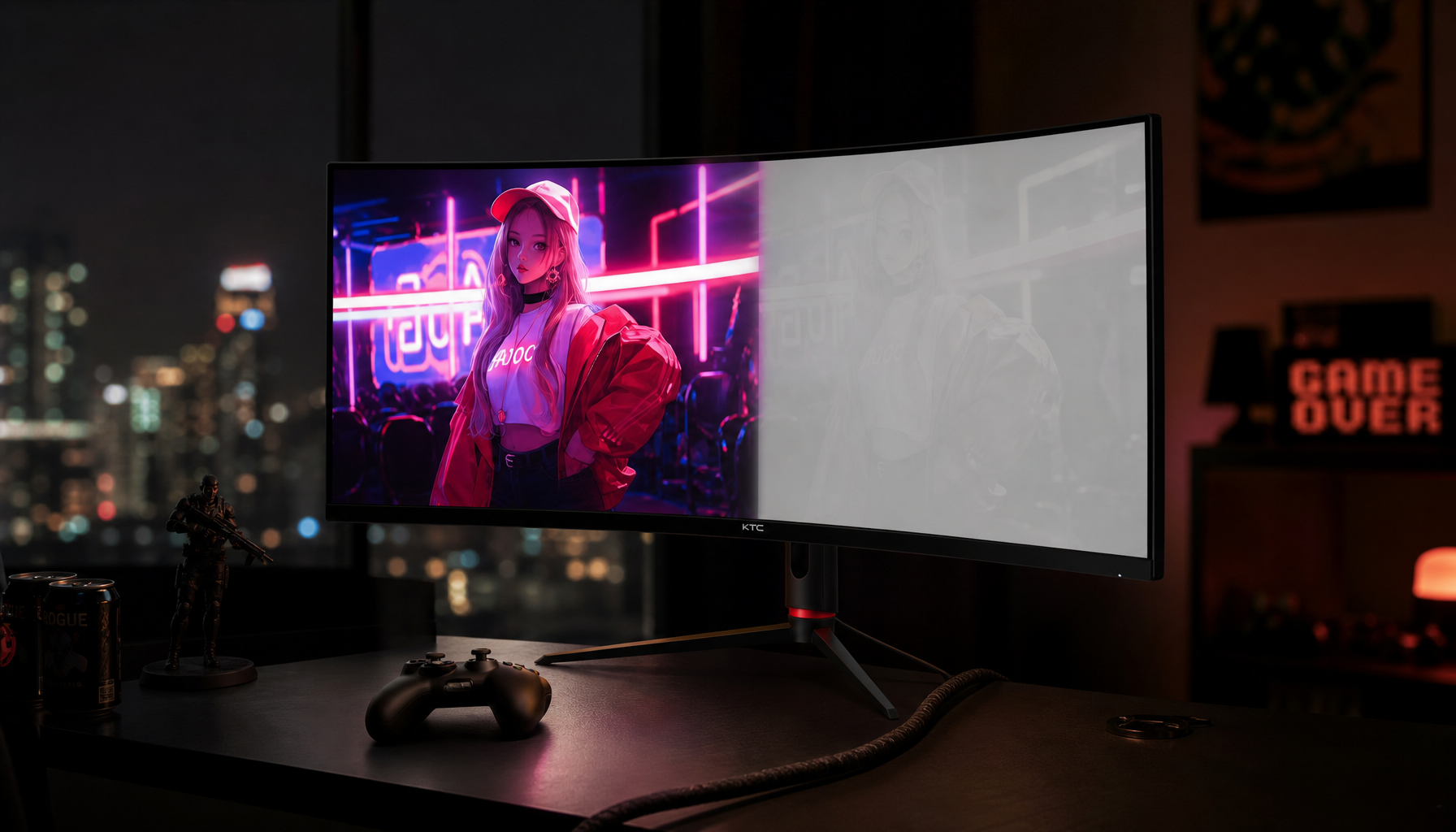
A monitor may look perfect in the middle but turn washed out at the edges, or make an off-center seat on the couch feel like a downgrade. In real screen checks, a plain gray window, a white document, and a dark game scene expose angle problems faster than the box spec ever will. A practical test helps you read the degree numbers, check a display yourself, and choose the right panel for gaming, office work, or portable use.
What a Viewing Angle Spec Is Actually Describing
A viewing angle is the range where a display still delivers acceptable image quality, usually meaning the image remains readable without severe contrast loss, color shift, or distortion. That sounds straightforward, but “acceptable” hides the real story. A panel can remain visible far off-center and still look bad long before it becomes unreadable.

That is why big degree numbers can mislead buyers. A common claim like 178°/178° usually means the screen is still visible from extreme left-right and up-down positions, but it does not mean the picture is still accurate there. In practice, the screen may hold together for casual viewing while already losing black depth, shadow detail, and neutral color balance.
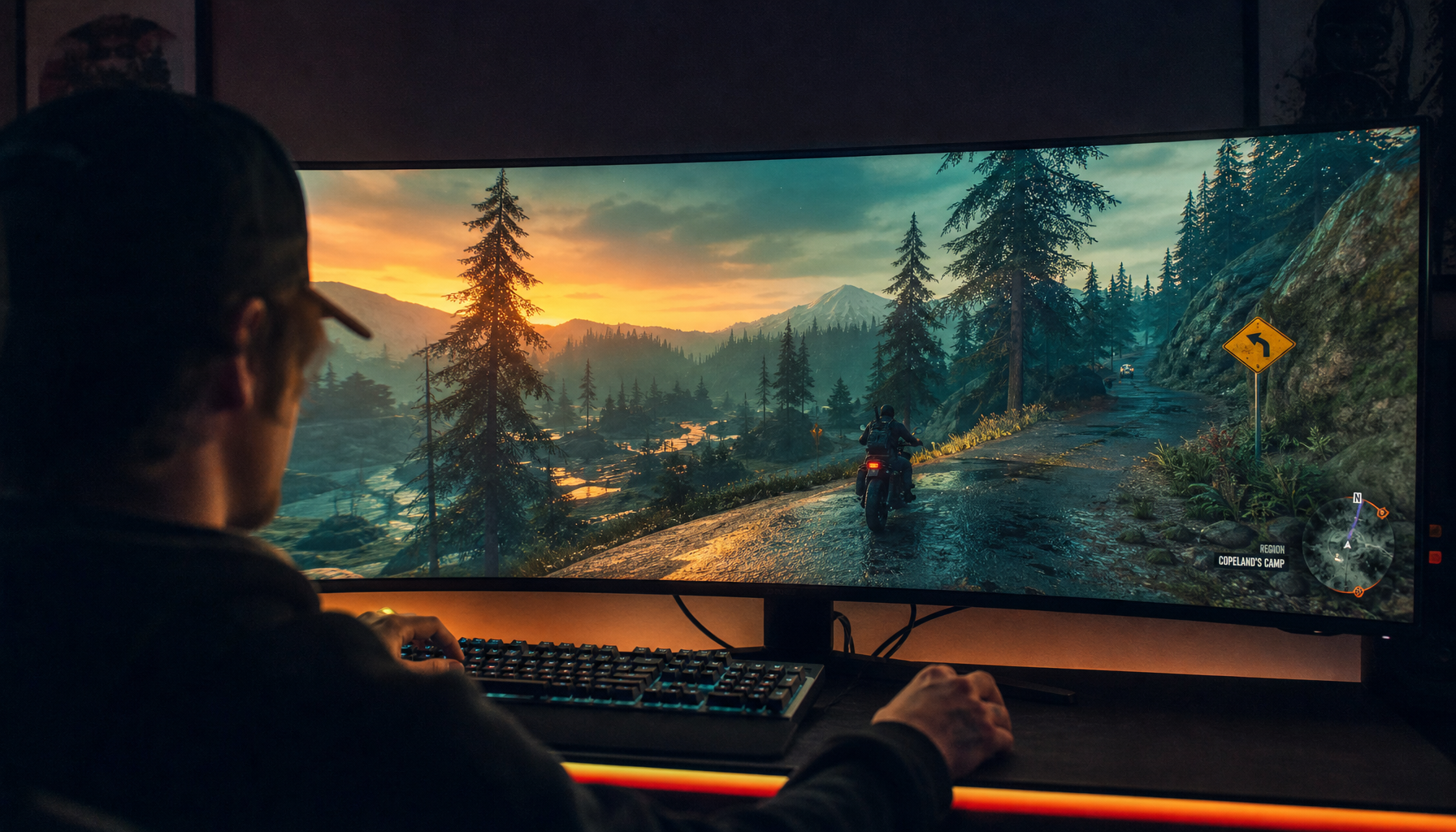
The distinction matters even more on large desktop displays and ultrawides. Real-world angle behavior affects what you see even from directly in front because you are never viewing the whole screen from exactly the same angle. On a wide monitor, the center is nearly straight on while the edges are naturally more off-axis, so a weaker panel can make side UI, spreadsheet columns, or dark game corners look less stable than the middle.
How Viewing Angles Are Tested
Lab Testing vs. Real Desk Testing
Manufacturers usually measure viewing angles by moving away from the panel’s centerline and checking when the image falls below a threshold for contrast or image stability. The problem is that this threshold is often generous enough to keep the image technically visible while no longer looking good for serious use.
That is why simple monitor tests remain valuable even for experienced buyers. A proper visual check uses neutral fills, gradients, solid colors, and geometric patterns. If circles stretch, gradients break up, or a flat gray field changes tone as you move your head, the panel is telling you more than the headline spec ever will.
In bench-style checks, three screens reveal most issues quickly. A white document shows brightness falloff and tint. A neutral gray background shows gamma shift and warmth changes. A dark game or movie scene shows whether blacks stay convincing or turn milky. If the image changes before you leave your normal seat, that is a usability problem, not a lab curiosity.
The Most Useful DIY Tests
A gamma-sensitive viewing-angle test is one of the best ways to judge real performance because it shows whether tones stay even across the screen. If a uniform image looks different at the top, bottom, or corners while you sit centered, the monitor has angle-dependent gamma behavior. That is especially common on weaker TN designs and still appears, to a lesser extent, on some VA panels.
Another practical method comes color-consistency checks. Open a neutral gray window and a white page, let the monitor warm up, sit in your normal posture, and then lean slightly left, right, up, and down. If whites go warmer or cooler, if gray loses neutrality, or if contrast shifts visibly, the panel or its placement is working against you.

What the Degree Numbers Really Mean
Why 178° Does Not Mean “Perfect From Anywhere”
An advertised 178° angle usually means the display still produces a visible image near an edge-on position under a low performance threshold. It does not mean color-critical accuracy remains intact. That gap between “visible” and “faithful” is where many buyers get burned.
For gaming, that difference shows up as faded shadow detail, grayish blacks, and muted side-view color during dark scenes. For office work, it appears as uneven white backgrounds, softer-looking text at the edges, and a screen that feels less clean than its resolution suggests. The sharper your eye, the more quickly you notice it.
A useful way to think about the number is this: it is a survivability spec, not a premium-quality spec. If you want a display for single-seat competitive play, the degree number alone is not enough. If you want a display for design review, dual-monitor coding, shared couch play, or a portable screen viewed from awkward positions, the number matters more, but panel type matters even more.
Horizontal and Vertical Angles Are Not Equally Harmless
Directional viewing behavior is often different vertically and horizontally, and some displays are designed with a preferred viewing direction. That is more obvious on embedded and specialty LCDs, but the same principle explains why a screen may look fine side to side yet shift badly when viewed from above or below.
This is also why setup matters. A centered monitor position and slight backward tilt reduce the angle mismatch between your eyes and the panel. On a normal desk, sitting about 20 to 28 inches away with the top of the screen at or slightly below eye level often improves perceived consistency before you touch a single picture setting.
Panel Type Changes the Meaning of the Spec
The broad ranking is consistent across the available sources. IPS panels usually give the most reliable LCD viewing angles for color consistency, VA panels tend to look strong from the center but shift more off-axis, and TN panels remain the weakest for angle stability even when they are fast.

Panel type |
What you usually get |
Where it works best |
Main drawback |
IPS |
Wide angles, stable color, solid all-around image |
Productivity, shared viewing, dual monitors, immersive gaming |
Lower native contrast than VA |
VA |
Deep blacks, strong center contrast, decent overall value |
Solo gaming, movies, darker-room use |
More off-axis gamma and color shift |
TN |
Fast response and lower cost |
Competitive play on a tight budget |
Noticeably weaker viewing angles and color consistency |
That ranking also matches real buyer experience. A user comparison of IPS and TN described IPS as dramatically better for viewing angles and picture quality after multiple TN returns. That kind of anecdote is not a lab standard, but it lines up with repeated desktop testing: angle stability is one of the first differences people notice when moving from TN to a better panel.
How to Judge the Spec for Gaming, Work, and Portable Screens
If you play on a centered 24-inch monitor, modest viewing-angle weakness may be tolerable because your head stays fairly fixed. But larger and ultrawide monitors amplify off-axis issues, so IPS is usually the safer choice when immersion matters and you do not want the edges of the game world to lose consistency.
For office and creator-style work, stable color from normal seating matters more than the marketing degree. A spreadsheet stretched across a wide panel, a browser with side tabs, or a coding setup with two displays will expose uneven whites and tonal drift quickly. In that situation, IPS usually delivers the cleaner and more trustworthy experience.
Portable screens add another twist. They are often viewed from changing heights, couch angles, kitchen counters, and shared positions, so the full viewing cone matters more than it does on a fixed desktop monitor. A screen that only looks right from one sweet spot feels cheap no matter how bright or sharp it is.

The Smart Buying Rule
Do not treat viewing-angle degrees as a quality score. Treat them as a rough boundary, then verify what happens well before that boundary with gray, white, and dark-content checks. If you want reliable performance rather than box-driven optimism, prioritize panel behavior first, screen size second, and the published angle number last.
A monitor earns its value when the image stays convincing in the way you actually use it, not at the angle where the picture barely survives.


%20and%20simple%20tests%20reveal%20true%20performance.
)