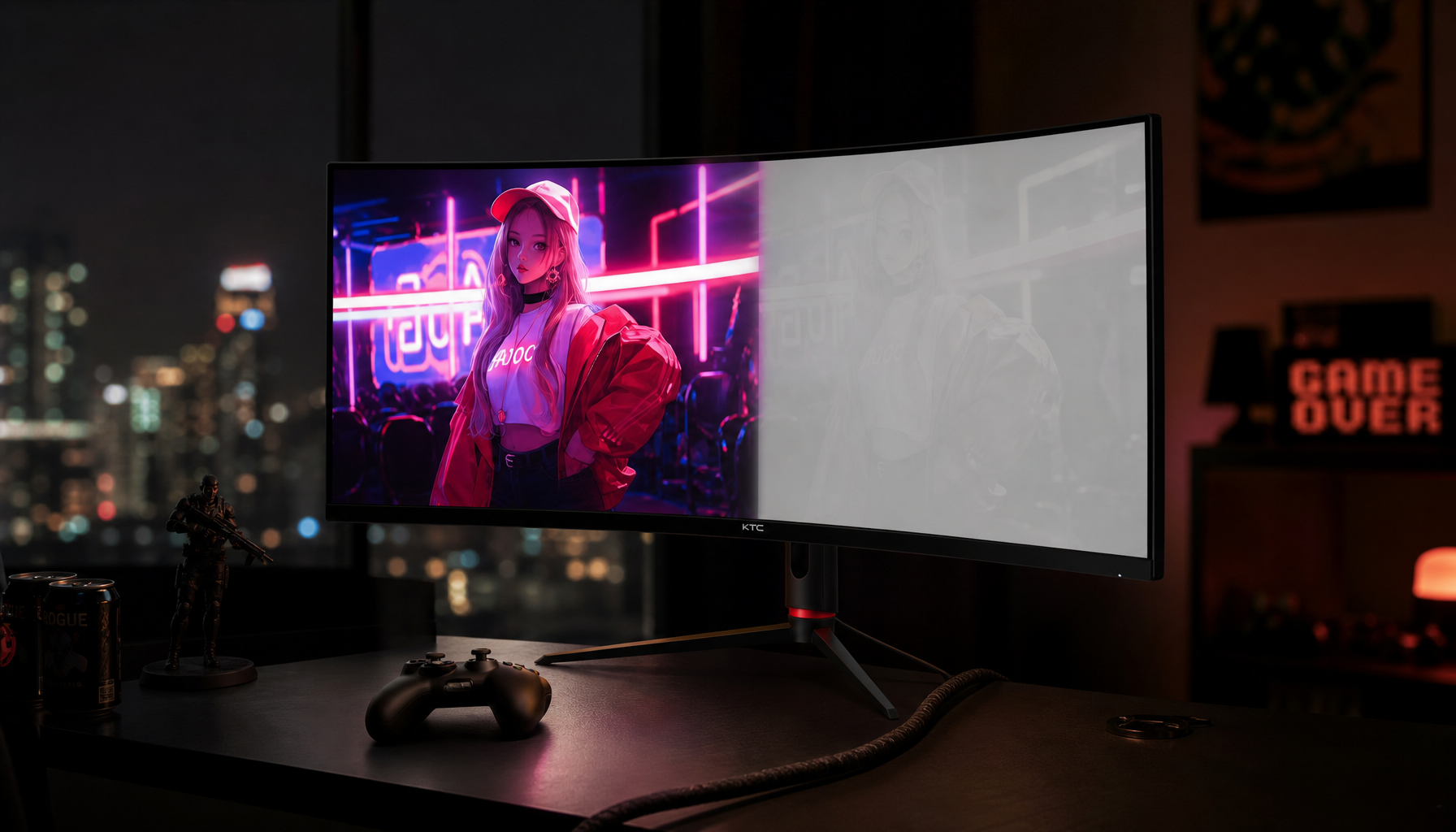
Color shift happens when a display’s light path, color filters, and panel structure look different off-center, causing brightness, contrast, gamma, and hue to drift.
Why Angle Changes Color
Most LCD monitors use a backlight shining through liquid crystals. Those crystals act like tiny shutters, and they are optimized for a viewer sitting near the center of the screen.
Move to the side, above, or below the display, and that light path changes. The result can be lower brightness, weaker blacks, reduced contrast, and visible hue shifts, especially in darker video scenes.

This is why viewing angle specs matter. A monitor listed around 178°/178° viewing angles is designed to stay more consistent from the sides and vertically than a narrow-angle panel.
Panel Type Is the Biggest Factor
TN panels are fast and affordable, which is why they still appear in budget esports displays. The tradeoff is visible color and brightness shift when you are not centered.
VA panels usually deliver stronger contrast, so dark movie scenes and atmospheric games can look richer head-on. Side viewing, however, may still wash out color or lift blacks.
IPS panels are the practical sweet spot for most gaming, productivity, and portable smart screen users. They typically hold color and brightness better off-axis, making them stronger for multi-monitor desks, shared video viewing, and creative review.

Self-emissive panels go further because each pixel emits its own light instead of relying on a backlight. That design gives them excellent off-angle performance, although some panels can still show mild tint at extreme angles.
Why It Shows Up More in Video
Video makes color shift easier to spot because motion, skin tones, shadows, and gradients expose small changes quickly. A spreadsheet may only look slightly dimmer from the side, but a face can suddenly look too red, gray, or flat.
HDR and wide-gamut video can make this more obvious. A wide color gamut is valuable, but accurate color also depends on calibration, uniformity, gamma behavior, and viewing-angle stability.
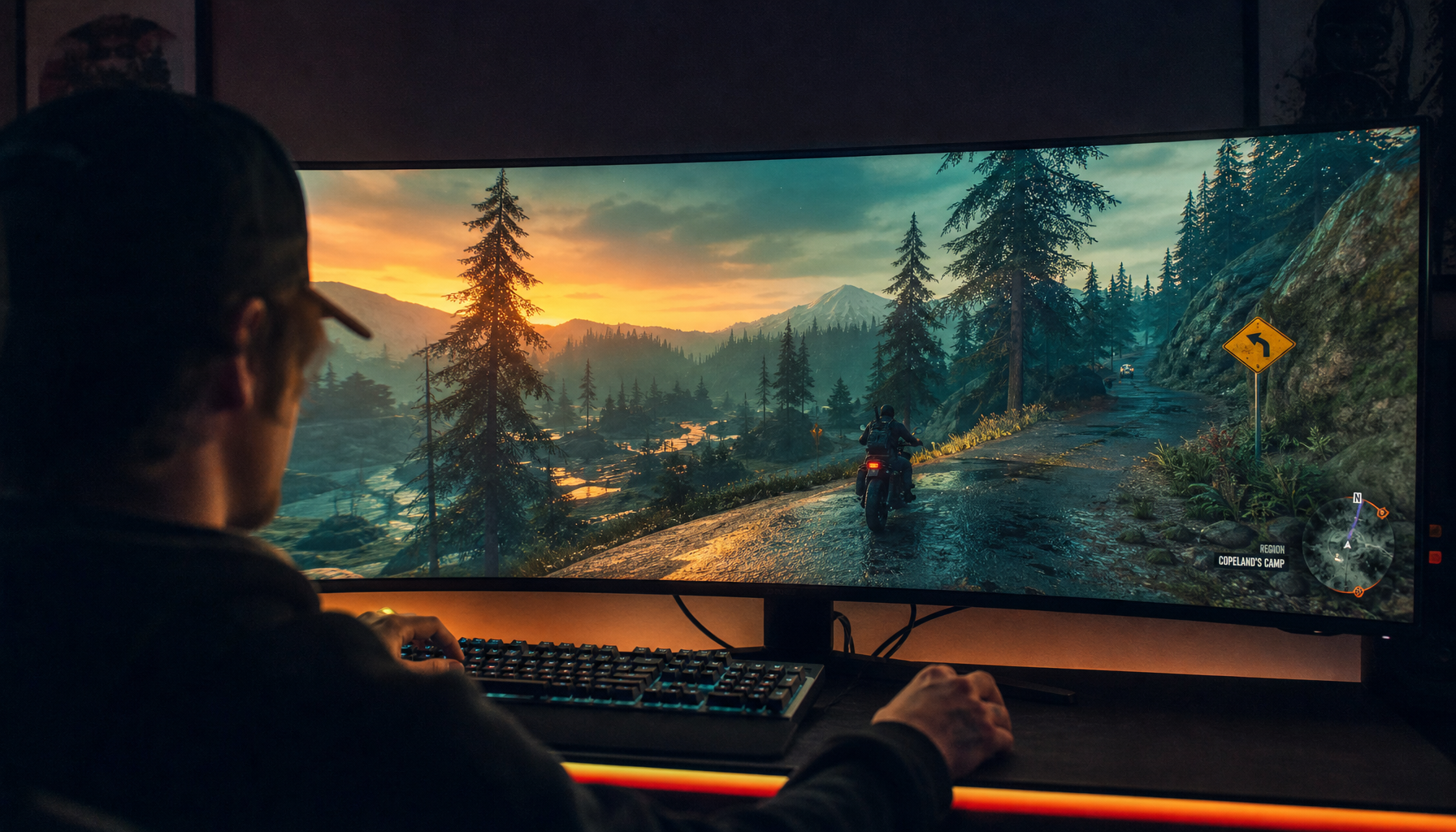
Large screens add another challenge. On a 32-inch monitor or ultrawide, even a centered viewer sees the left and right edges at a slight angle. Sit too close, and the edges can look different from the center.

Setup Fixes That Actually Help
You cannot fully fix weak panel viewing angles with settings, but you can reduce the problem with better positioning and consistent display modes.
- Sit centered, about 2 to 2.5 ft from a typical desk monitor.
- Keep the top bezel at or slightly below eye level.
- Tilt the screen slightly upward if it sits low on the desk.
- Use one fixed color mode for video review or editing.
- Avoid glare from windows, lamps, or glossy wall reflections.

For shared viewing, choose a wide-angle LCD or self-emissive panel when possible. For portable smart screens and side monitors, wide viewing angles matter even more because the screen is often angled away from your direct line of sight.
What to Check Before Buying
Do not judge by resolution alone. A 4K screen can look sharp, but sharp pixels do not guarantee stable color from the side.
Look for a panel type suited to your use case: IPS for reliable value, self-emissive panels for premium immersion, VA for high contrast when viewed head-on, and TN only when speed and budget matter more than off-angle color.
For video work, gaming, and office collaboration, prioritize wide viewing angles, solid factory calibration, sRGB or DCI-P3 coverage, and stable brightness. A monitor that preserves color from real seating positions feels better every day, not just in a spec sheet.