Yes, but usually indirectly. When brightness is too high for the room, visual cues become less comfortable to read, dark-scene detail can wash out, and consistency tends to drop over longer sessions.
Do your eyes feel sharp in the first match, then oddly tired by the third even though your aim-trainer numbers looked fine earlier? A few small monitor changes can make enemy outlines easier to catch, reduce glare, and help you stay consistent in both competitive play and late-night sessions.
Why brightness affects reaction time in the real world
Screen brightness should match ambient room light, because a display that is much brighter than its surroundings forces your eyes to keep adapting. In gaming, that matters less as a textbook eye-health issue and more as a performance issue: if your vision feels strained, your ability to pick up motion, read shadows, and hold focus through a full session drops. Reaction time is not just hand speed. It starts with how quickly your eyes can interpret what is on screen.
In practice, this usually shows up in two situations. The first is a dark room with a monitor still set near daytime brightness, where bright HUD elements and white menus feel harsh and the entire image becomes tiring. The second is a player who lowers brightness too far to reduce strain, then loses shadow detail and misses movement in darker parts of the map. Both mistakes cost time.

What “too bright” really means
Brightness is the amount of light a monitor emits, measured in nits, but your monitor’s 0-to-100 slider is not a universal scale. A setting of 35 on one display can be dimmer than 15 on another, which is why copying someone else’s number is unreliable.
A more useful definition is this: excessive brightness is any setting that makes the screen look noticeably brighter than the room around it or makes a white webpage feel more like a lamp than paper. Comfortable dark-room brightness is usually much lower, while general-use guidance often places many office-style displays in the 250-to-350-nit range for ordinary home and office conditions. The main point is simple: the right setting depends on the room, not just the monitor.
How too much brightness can slow you down in games
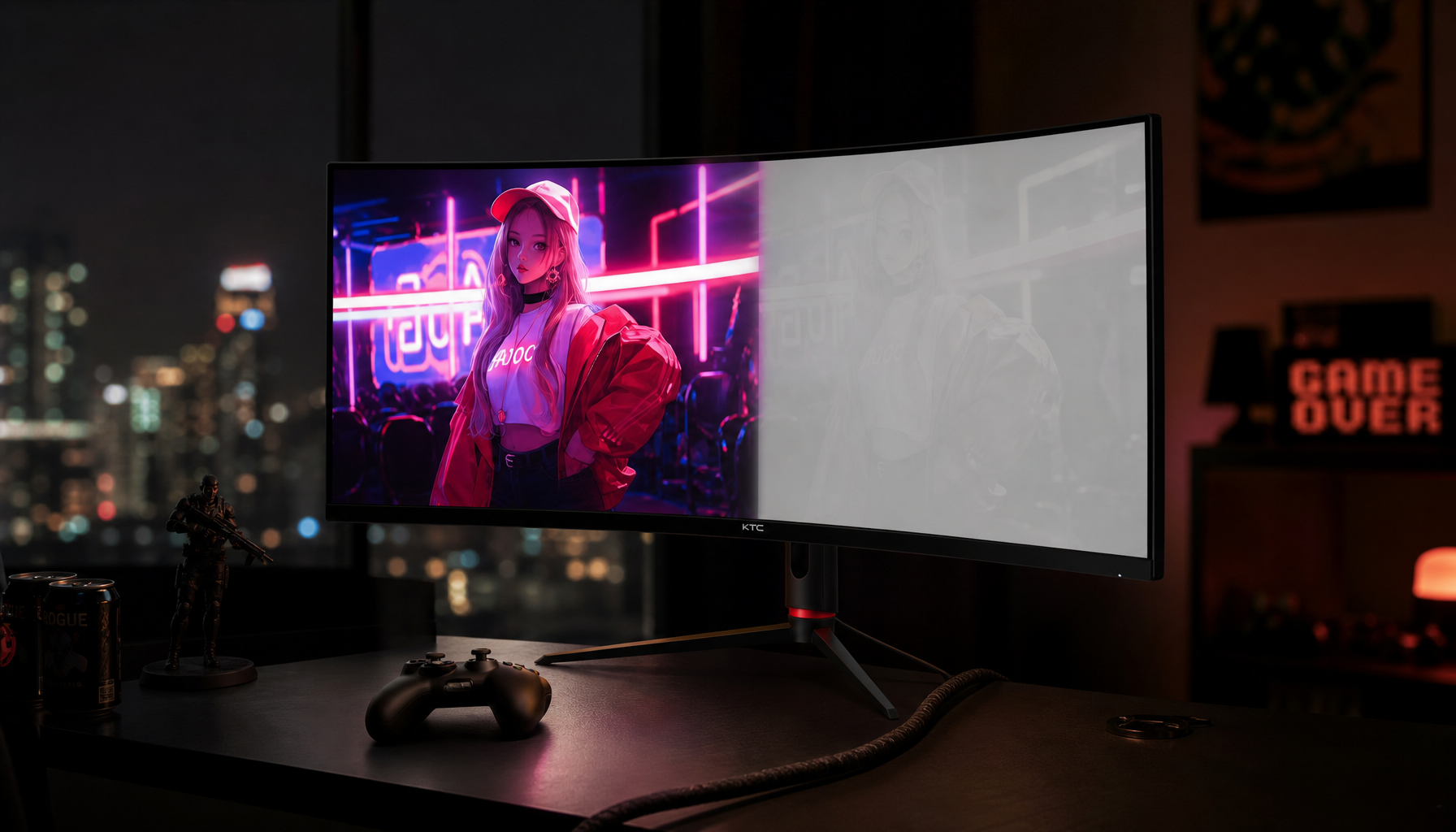
Excessive backlight can wash out dark-scene contrast. That matters in shooters, extraction games, and horror titles where the first cue is often a silhouette, a shoulder peek, or movement in a dark corner. If black areas lift too much, you do not gain more useful visibility. You usually get flatter image depth and more visual noise.

There is also the fatigue problem. KTC’s night-use recommendations emphasize that overly bright screens are more tiring, and the same article connects relief to reducing the luminance gap between the screen and its surroundings. Over one short match, that may seem minor. Over two or three hours, it becomes a consistency issue. You may not notice a dramatic one-moment delay, but you do notice slower target acquisition, more squinting, and a stronger urge to look away between rounds.
The tradeoff: too bright hurts, but too dim hurts too
Brightness should be adjusted for room conditions, while black level and contrast need separate tuning. This is where many players get the setup wrong. They lower brightness until the image feels comfortable, but never check whether dark gray tones are still distinct from black. The result is a calmer-looking screen that actually hides information.
That is why there is no single best gaming brightness. Test patterns can help you preserve both highlight and shadow detail. In practice, that means lowering brightness first for comfort, then adjusting contrast only enough to preserve bright detail, and finally checking a dark test image so near-black objects do not disappear.

Brightness is not the only speed setting
The biggest performance gains usually come from refresh. That is an important reality check. If your monitor is accidentally stuck at 60 Hz instead of 144 Hz or 240 Hz, fixing brightness will not recover the responsiveness you are leaving on the table.
Still, brightness supports those settings rather than replacing them. A high-refresh monitor with poor brightness tuning can feel smooth but visually tiring. A well-tuned image with the wrong refresh rate can feel clean but sluggish. The best setup combines both: the highest correct refresh rate, moderate overdrive, VRR when appropriate, and brightness matched to the room so visibility stays high without glare.
A practical setup that works for most players
Start with the room, not the monitor. Balanced workspace lighting reduces the harsh contrast between, and a small lamp or bias light behind the display often helps more than another round of OSD tweaking. Once the room is stable, lower brightness until a white browser window stops feeling glaring, then bring contrast up only enough to keep whites bright without clipping detail.
If you mostly play at night, keep the image neutral or slightly warm rather than aggressively cool. If you play competitive shooters during the day in a bright room, a somewhat brighter setting can help, but only if it improves readability without washing out dark areas. Across IPS and VA panels, the strongest results usually come from a setting that feels comfortable but clear, not from maximum output. VA panels often hold dark detail better at lower perceived brightness, while IPS panels may need more care in dark rooms because black depth is naturally weaker.
Where HDR changes the conversation
Good HDR depends on implementation, not raw brightness alone. That matters because some players assume brighter is always faster or better. It is not. A well-implemented HDR game on a modest-brightness display can still look excellent if the monitor handles color and metadata properly, while a brighter but poorly tuned setup can look blown out and distracting.
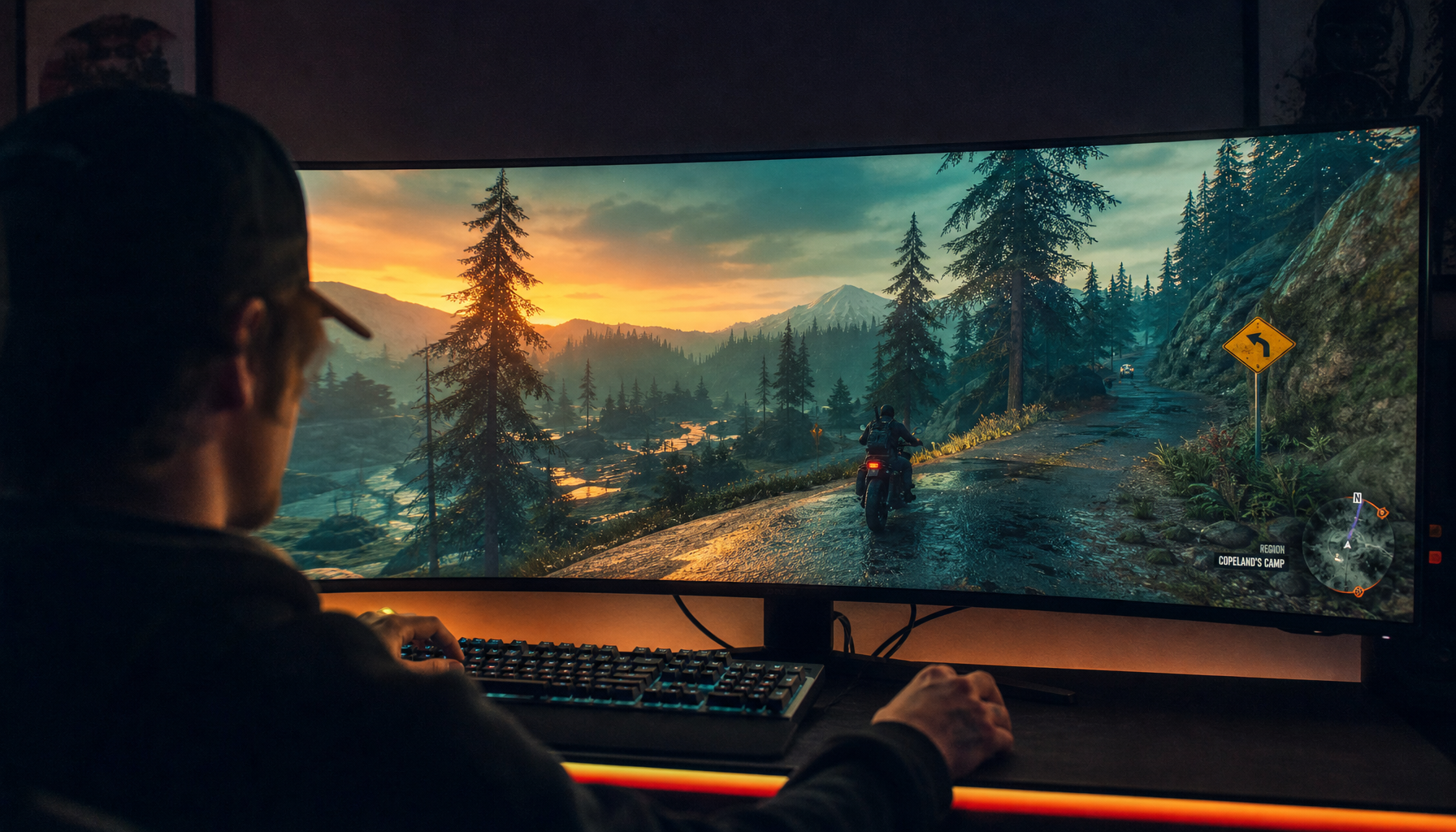
For competitive play, SDR often remains the safer choice unless your monitor has genuinely strong HDR hardware and the game’s HDR implementation is known to be good. For immersive single-player gaming, extra brightness headroom can add impact, but it still needs to fit the room.
So, can excessive brightness hurt reaction time?
Yes, especially when it creates glare, fatigue, and washed-out contrast that make visual cues slower to read. The smarter goal is not the brightest image your monitor can produce, but the brightest image you can use comfortably while preserving both dark and bright detail.
A fast screen should help you react, not fight for your attention. Set brightness to the room, keep contrast disciplined, and let clarity do the work instead of brute-force luminance.