More mini LED zones usually improve monitor uniformity, but the gain depends on zone layout, dimming tuning, and the content on screen.
If you have ever noticed a cursor trapped in a bright halo on a dark desktop, or subtitles that seem to glow against black bars, you have already seen the real tradeoff. Practical testing from local-dimming demos and display reviews shows that zone count helps, but it does not erase blooming by itself. This article explains what changes across entry, mid, and high zone-count monitors so you can judge the right tier for gaming, ultrawide, and portable use.
What Zone Count Actually Changes
More zones mean smaller bright spill
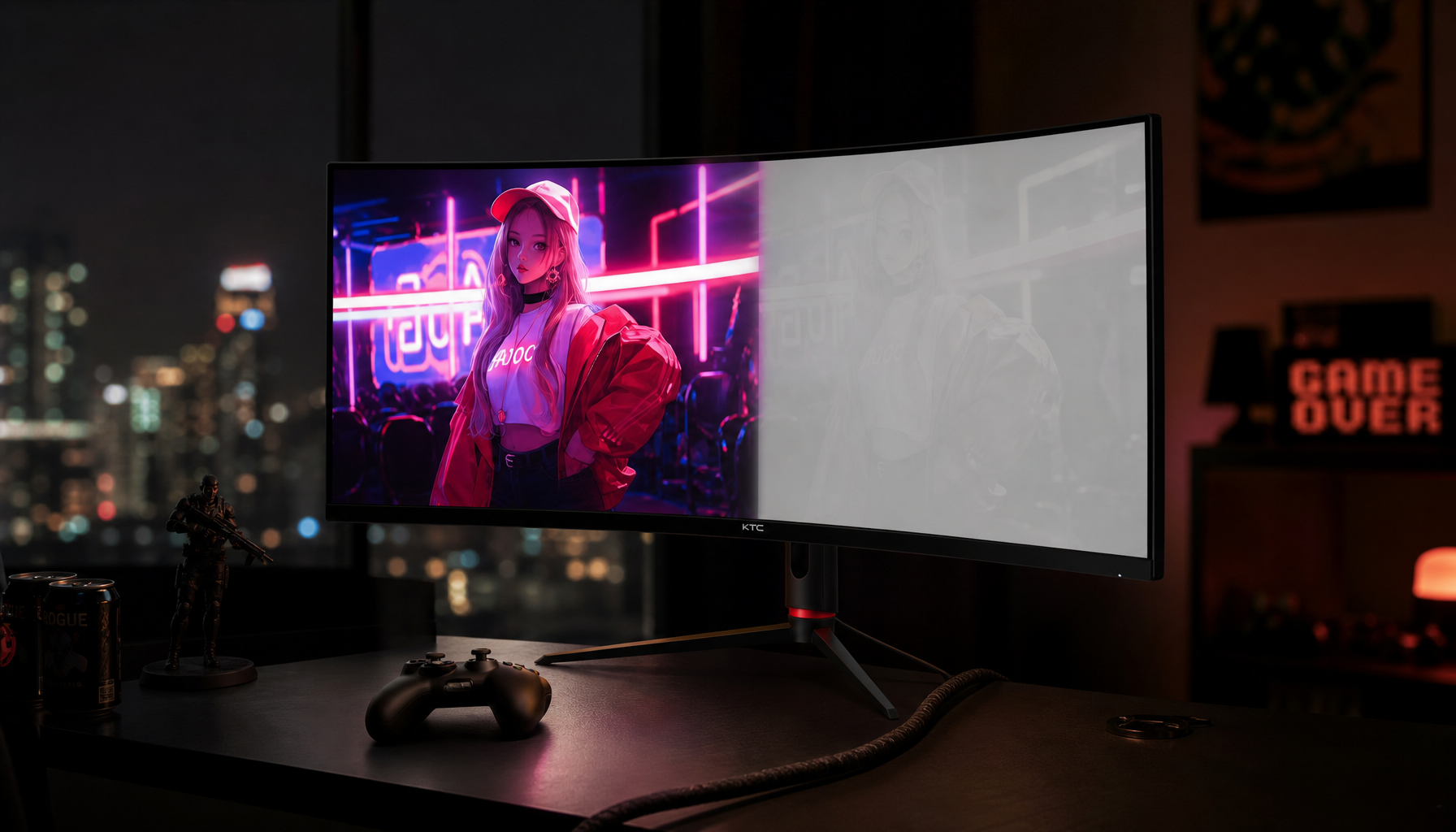
Mini LED backlights dim in groups, not per pixel. When a white subtitle, HUD element, or cursor lands in one zone, that whole zone brightens, and some light leaks into nearby dark pixels through the LCD stack. That is why higher zone counts usually reduce haloing and improve dark-scene uniformity, as outlined in mini LED blooming.

Uniformity is not just about the number
Two monitors with the same zone count can still look different. The dimming algorithm, optical stack, and zone layout all matter, and grid-style layouts tend to behave more consistently than messy clusters. That is why a well-tuned mid-tier display can sometimes look cleaner than a poorly tuned higher-tier one, even if the spec sheet says otherwise. The engineering tradeoff is also clear in Mini LED trade-offs and local dimming basics.
How Uniformity Changes By Tier
Entry tier: 8 to 96 zones
This tier often behaves more like a basic full-array LCD than a true high-end mini LED display. With only 8 to 16 zones, halos are coarse and obvious; with 48 to 96 zones, the image gets better, but bright objects can still light a large patch of the screen. For gaming monitors, this is the tier where you most often see glow around UI elements in dark rooms.
Mid tier: about 400 to 966 zones
This is the practical sweet spot for many buyers. You get noticeably better dark-scene control, less bloom, and more stable HDR than low-zone designs, but the panel can still show some clouding or flashlighting in very dark scenes. In this range, uniformity usually feels good enough for gaming and mixed desktop use without pushing into premium pricing.
High tier: 1,000+ zones
Higher zone density makes a clear difference in monitor uniformity, especially for HDR, subtitles, and star fields. Top performers use more than 1,000 zones with very tight spacing, which helps preserve detail around bright objects on dark backgrounds. Even then, it is still an LCD system, so it can never behave like OLED at the pixel level. A platform’s local dimming test is a good reminder that more zones generally mean less visible blooming, not zero blooming.
What Matters Most For Gaming Monitors
Dark-room play exposes flaws fast
High-refresh-rate gaming monitors make uniformity problems easier to notice because fast motion pulls your attention to edges, cursors, and HUD elements. In a dark room, brightness makes blooming more obvious, so a monitor that looks fine at a retail demo brightness can feel much worse at home.

Ultrawide screens magnify the tradeoff
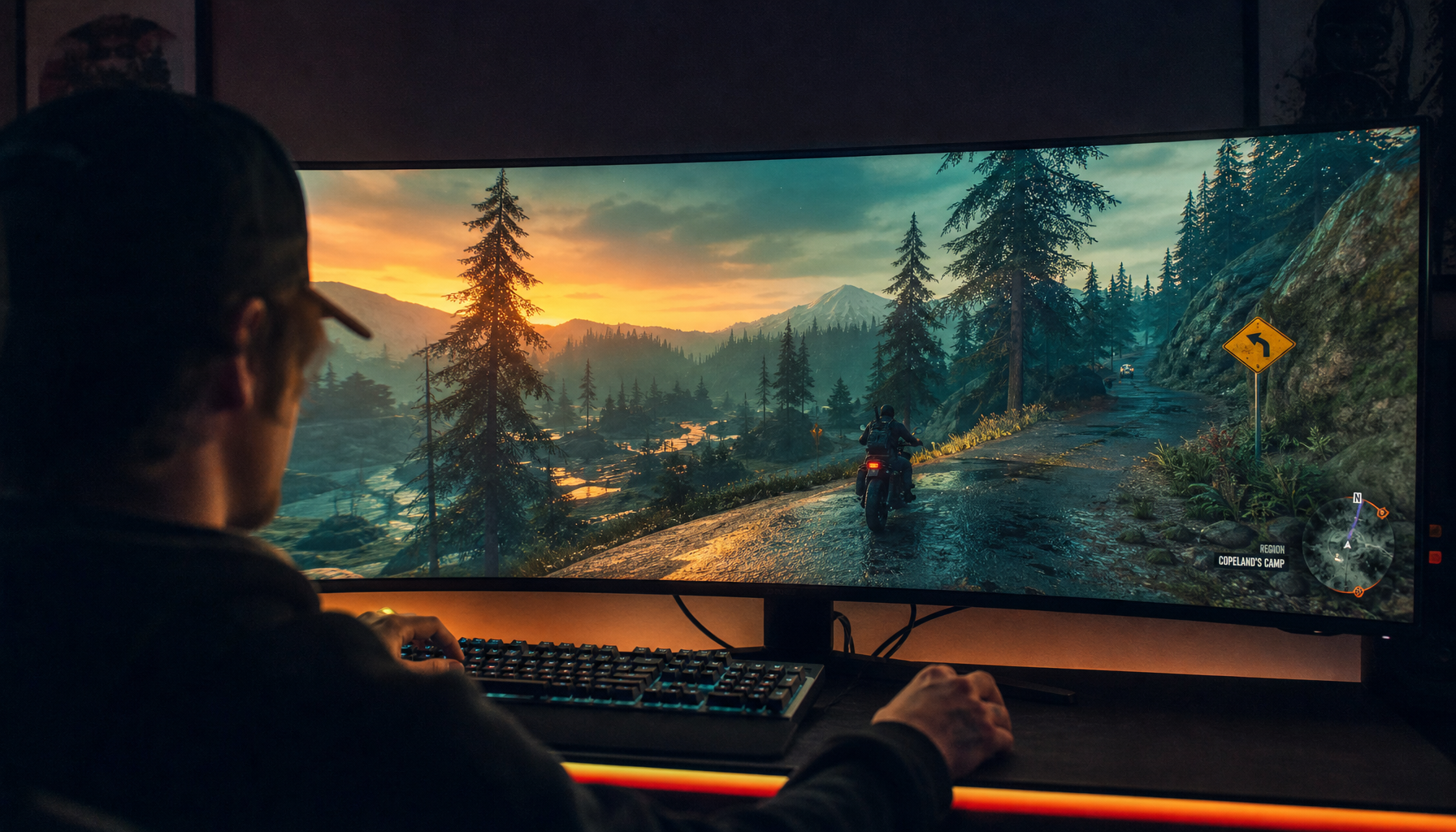
Ultrawide monitors give you more screen space, but they also give halos more room to show up around bright objects. That matters in games with dark scenes, side HUDs, and small map markers. If you use an ultrawide mainly for immersion, a stronger local-dimming system matters more than raw screen size alone.

Portable monitors need realistic expectations
Portable monitors rarely have enough zone density to hide haloing well, so the best result is usually cleaner overall brightness control rather than dramatic HDR performance. If portability is the priority, uniformity stability matters more than chasing a spec-sheet zone count.
How To Judge A Monitor Before Buying
Check the zone count, then check the tuning
Zone count is only the first filter. Review history, firmware maturity, thermal design, and dimming behavior matter just as much. A monitor with 1,152 zones can still disappoint if its response timing or calibration is sloppy.
Look for content-specific testing
Use cases matter. White subtitles on black, cursor movement on a dark desktop, and HUD-heavy games are much better bloom tests than a bright showroom video. If possible, test the monitor with dark-room content before deciding.
Use brightness wisely
Higher brightness makes blooming more visible. Mild room lighting, lower backlight settings, and a less aggressive local-dimming mode can improve perceived uniformity without changing the panel itself.
Action Checklist
- Compare zone count and not just peak brightness.
- Read reviews that show dark-room HUD and subtitle tests.
- Favor higher zone density for ultrawide and HDR gaming.
- Expect more blooming on low-zone portable monitors.
- Test local dimming at your normal brightness, not showroom brightness.
- Check firmware notes if the monitor has a history of dimming issues.
Common Misconceptions
More zones always fix uniformity
They do not. More zones usually help, but the dimming algorithm, LCD stack, and layout can still produce uneven results.
Blooming means the monitor is broken
Usually it does not. Blooming is a normal side effect of zone-based local dimming, especially on bright highlights in dark scenes.
Calibration alone can solve it
Calibration can improve tone and gamma, but it cannot fix poor backlight uniformity.
FAQ
Q: How many local dimming zones are enough for a gaming monitor?
A: For most buyers, 400 to 966 zones is the practical sweet spot. If you care a lot about HDR and dark-scene clarity, 1,000+ zones is better.
Q: Does more zone count always improve mini LED uniformity?
A: No. More zones usually reduce blooming, but dimming algorithm quality and zone layout can matter just as much.
Q: What matters most on an ultrawide monitor?
A: Zone density and tuning. Ultrawide screens make halos and dark-edge issues easier to see, so a well-tuned mid- or high-zone display is the safer choice.
Final Takeaway
Mini LED uniformity improves as zone count rises, but the jump is not linear. For gaming monitors, the best buying signal is usually a mix of zone density, firmware quality, and real dark-scene reviews rather than spec-sheet zone count alone.