Mini-LED HDR mixed lighting performance is less about a single spec and more about how the screen behaves in your room. If you have windows, a desk lamp, or overhead lighting, the same monitor can look punchier, flatter, or less contrasty depending on reflections, eye adaptation, and how the backlight is controlled.
That is why the right question is not just, "How bright is it?" It is, "How will it look on my desk, with my lighting, for work and gaming?"
Why Mixed Lighting Changes HDR Perception
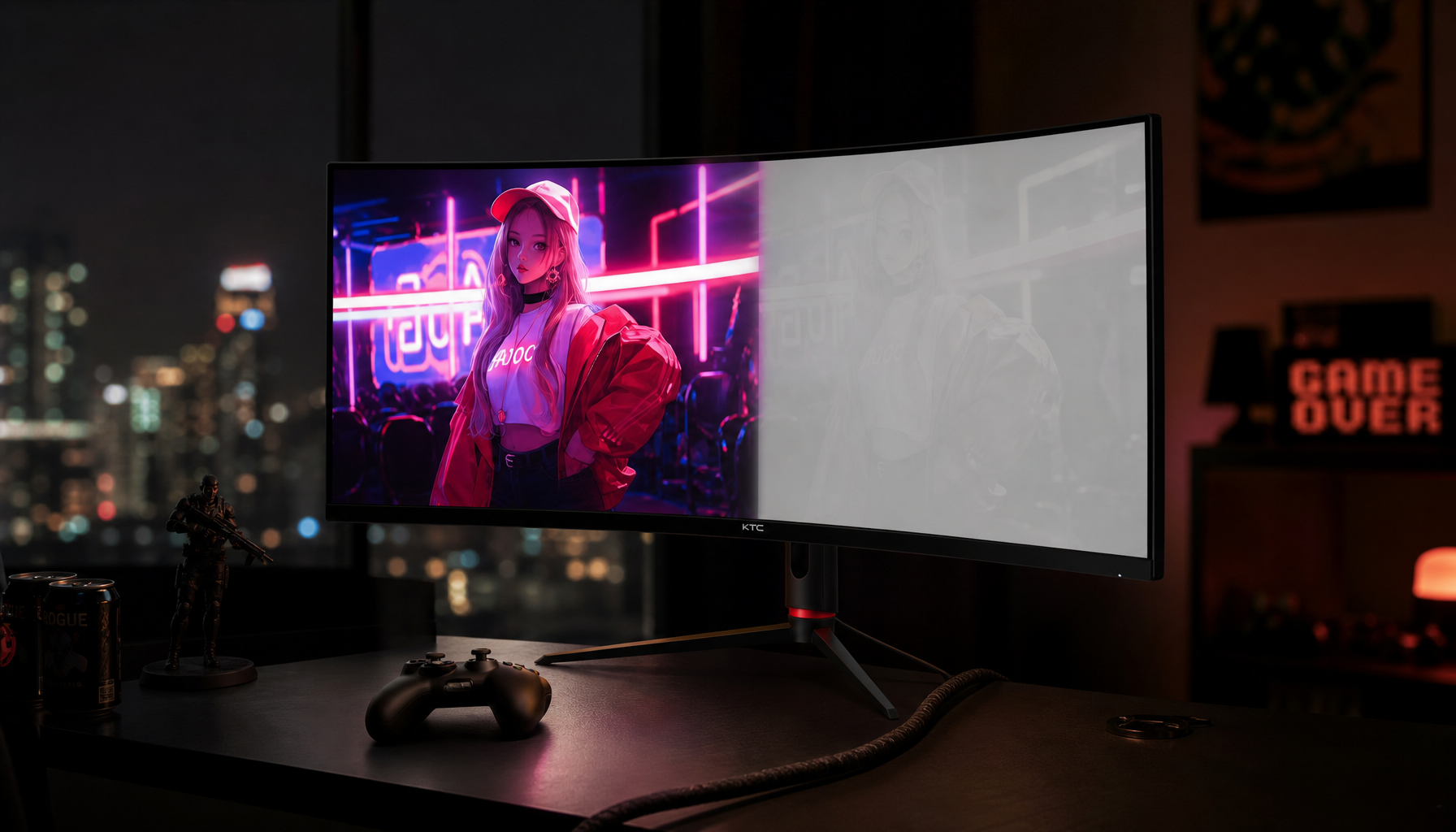
A bright room can make Mini-LED blooming harder to notice, but it can also lift the perceived black level and add reflections. In plain terms, the room can hide some halos while also making blacks look less deep. RTINGS' lighting-zone testing shows why those effects are easiest to judge in context, not from a spec sheet alone: ambient room light can mask blooming by changing how your eyes see the screen.
For a desk with changing daylight, that matters more than many shoppers expect. HDR scenes with bright highlights may still look convincing, but dark UI bars, subtitles, and shadowy game scenes can feel less dramatic when the room is already bright. The result is not always better or worse HDR, just a different balance.
A useful decision sentence is this: if your room stays bright most of the day, Mini-LED can still work well, but you should judge it by reflections, black-level lift, and UI haloing, not by peak brightness alone. If you are sensitive to washed-out blacks, room light control may matter as much as the panel itself.
How Local Dimming Zones Affect Real-World Blooming
Local dimming is the backlight control layer that tries to keep bright and dark parts of the image separate. In a Mini-LED display, that means the backlight can dim some areas while lighting others more strongly. The practical goal is simple: keep highlights bright without turning the whole screen into one big light source.

More zones can help with that precision, but they do not guarantee a clean image. Zone layout and control logic still matter, because the monitor has to decide how quickly and how broadly to react. A good plain-English rule is that more zones usually give the display more room to work, while tuning decides how gracefully it uses that room. For a deeper look at the mechanism, local dimming zone count affects black-level quality by changing how finely the backlight can separate bright and dark areas.
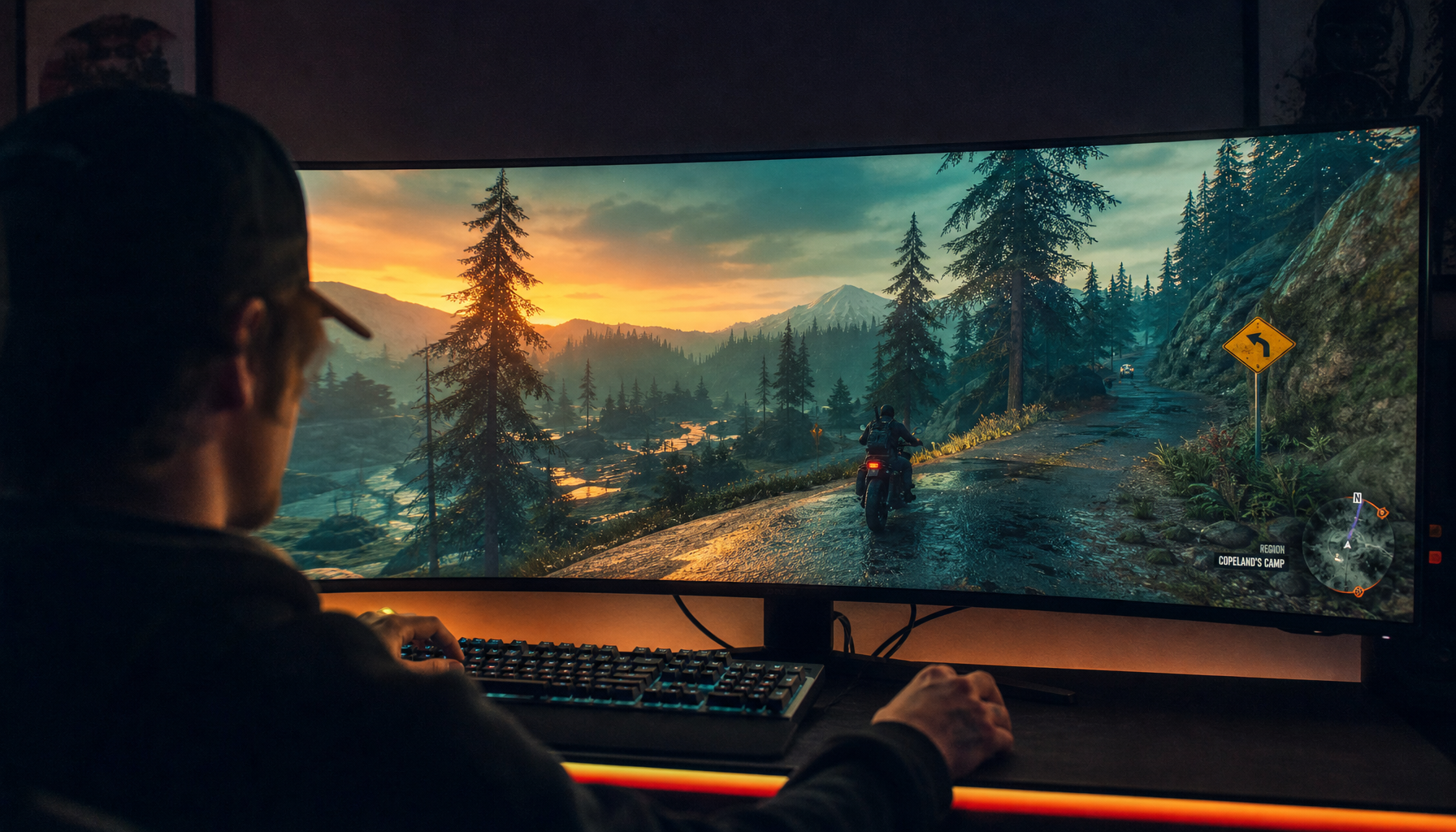
That tradeoff shows up most clearly on mixed-use desks. Bright taskbars on dark apps, subtitles over night scenes, and HUD elements in games are the places where blooming gets noticed first. If the backlight is too aggressive, halos can become obvious. If it is too cautious, shadow detail can look compressed. That is why more zones can help, but the algorithm still sets the tone of the result.
If you want one quotable shortcut: more local dimming zones can reduce broad light spill, but zone layout and control logic still decide how clean the image feels in real use.

What Tone Mapping Changes in Desk Use
Tone mapping is the part that fits HDR content into the display's brightness range. In simple terms, it is the translation layer between what the content asks for and what the monitor can actually show. RTINGS describes HDR tone mapping as a way to preserve highlight detail without clipping it off, which is why HDR tone mapping matters even when two monitors share similar peak specs.
On a desk, tone mapping becomes more noticeable when the room light changes. A bright room can make HDR feel more restrained, while a darker room can make the same setting look more vivid. That is not necessarily a fault. It usually means the monitor is balancing highlights, midtones, and shadow detail against its own limits and the surrounding light.
Display-referred and scene-referred mapping are different ways to make that tradeoff. Display-referred behavior adapts more directly to the screen's limits, while scene-referred behavior tries harder to preserve the creative intent of the source. Neither is universally better. The better fit depends on the content you watch, the games you play, and how bright your room is. Display-referred versus scene-referred HDR tone mapping is best treated as a choice between different tradeoffs, not a winner-takes-all ranking.
A good desk-side test is to look at bright skies, specular glints, and dark UI elements with the room lights on, then again with them slightly lowered. If highlights clip too soon, blacks go gray, or menus feel too bright, tone mapping may not match your setup. For more on the difference between small glints and larger bright surfaces, specular highlights and diffuse bright areas behave differently, so one scene can look great while another looks restrained.
If you are choosing with real-room use in mind, the takeaway is simple: tone mapping decides whether HDR feels balanced on your desk, not just how bright the panel can get.
Which Mini-LED Features Matter Most
The best Mini-LED monitor for variable room light usually comes down to five things: local dimming precision, tone mapping behavior, glare control, your work-versus-game split, and how adjustable the stand is. The table below shows how each feature changes the buying decision in a mixed-light room.
| Feature | What It Changes In Mixed Light | Best Fit If You Care About | Watch For |
|---|---|---|---|
| Local dimming zones | How tightly the backlight can separate bright and dark areas | Cleaner halos and better dark-scene control | More zones help, but they do not guarantee perfect blooming control |
| Tone mapping behavior | How HDR brightness is distributed across highlights and shadows | Better balance when room light changes during the day | Too conservative can feel dim, too aggressive can clip highlights |
| Glare and reflection control | How much the room itself interferes with contrast | Windowed desks and lamp-lit rooms | Reflections can make HDR look flatter even on a strong panel |
| Work and game balance | Whether the monitor feels comfortable for desktop use and HDR play | Mixed-use desks that switch between apps and games | A gaming-first setting may be annoying for text-heavy work |
| Ergonomic adjustability | How easily you can align the panel with your seating and light sources | Desks where glare changes with posture or time of day | Limited stands make it harder to optimize viewing angle |
For buyers comparing options, the most useful filter is this: if your room is bright and your desk is used for both work and gaming, prioritize glare control and tone mapping before chasing the biggest zone number on the box. If your use is mostly games in a controlled room, local dimming precision may matter more than stand flexibility.
If you want a wider browse path, All-Mini-LED Monitors is the category page to compare the current lineup.
Where the M27P6 Fits a Mixed-Use Desk
The KTC Mini LED 27" 4K 160Hz HDR1400 Gaming Monitor | M27P6 is a reasonable fit example for buyers who want a higher-end mixed-use Mini-LED desk display without treating it like a universal best pick. Its 27-inch 4K panel, 1152 local dimming zones, HDR1400 peak brightness, and 160Hz refresh rate line up well with the kind of setup where one screen has to handle desktop work, streaming, and games.
That said, the fit still depends on the room. If you are very sensitive to blooming, the extra zones help but do not eliminate halos in every scene. If your desk stays bright during the day, the anti-glare coating and full ergonomic adjustment matter because they help you place the screen, not just power it on. The stand's tilt, swivel, pivot, and height range can make the difference between a comfortable setup and a frustrating one.
As a working example, the M27P6 makes sense if you want 4K desktop sharpness plus HDR impact in the same monitor and you are willing to manage room light rather than expecting the panel to solve it alone. It is less compelling if you only want a cheap office display or if you dislike any local-dimming tradeoff around captions, taskbars, and HUDs.
For buyers who want to check the broader lineup first, Mini-LED monitor buying guide is a useful next step before you commit.
Buying Checklist for Mixed Lighting
- Check your room first. If you sit near a window or use a bright lamp, treat glare and reflection control as a core spec, not an afterthought.
- Decide what matters more day to day. If the monitor spends more time on work, favor comfort, readability, and flexible positioning. If it spends more time on games, favor local dimming precision and HDR behavior.
- Look for the tradeoff you notice most. If captions, taskbars, and bright UI halos bother you, do not shop only by peak brightness.
- Compare the feature mix, not one number. Zone count, tone mapping, and stand adjustability all shape Mini-LED HDR mixed lighting performance.
- Choose Mini-LED when you want HDR impact plus bright-room flexibility, but keep a non-Mini-LED option in mind if you value absolute simplicity more than local dimming.
If you want help with dimming behavior itself, reduce local dimming issues is the most practical follow-up path.
FAQs
How Does Mixed Lighting Change Mini-LED HDR Perception?
Ambient light can make blooming less obvious, but it can also lift black levels and add reflections, so the same monitor may look more subdued in one room and more dramatic in another. That is why HDR should be judged in the room where it will actually be used.
What Matters More for Blooming, Zone Count or Tone Mapping?
Both matter. Zone count changes how finely the backlight can react, while tone mapping changes how brightness is distributed across highlights and shadows. If either one is poorly matched to your room or content, the result can still feel off.
Can a Mini-LED Monitor Work Well With Windows or Lamps On?
Often yes, but only if glare control, brightness balance, and local dimming behavior fit the room. A bright desk can make HDR easier to live with for some people and harder for others, especially if reflections or gray-looking blacks bother you.
Why Does HDR Sometimes Look Too Dim at a Desk?
Tone mapping may be preserving highlight detail, the room may be lifting your perceived black level, or the content may simply ask for a different brightness balance than the monitor chooses. That does not always mean the display is broken. It often means the mapping style and room conditions do not line up.
What Should I Check Before Buying Mini-LED for Mixed Use?
Start with room lighting, then check whether you care more about work comfort or gaming impact. After that, compare local dimming precision, tone mapping behavior, glare handling, and stand flexibility. Those four checks usually matter more than a single peak-brightness number.