Mini-LED halo reduction gaming works best when you treat blooming as a trade-off, not a defect you can fully erase. In most HDR games, the fastest wins come from choosing a sensible local dimming mode, avoiding overly aggressive picture presets, and keeping some room light on so black backgrounds do not exaggerate the halo effect.

Why Haloing Shows Up in HDR Games
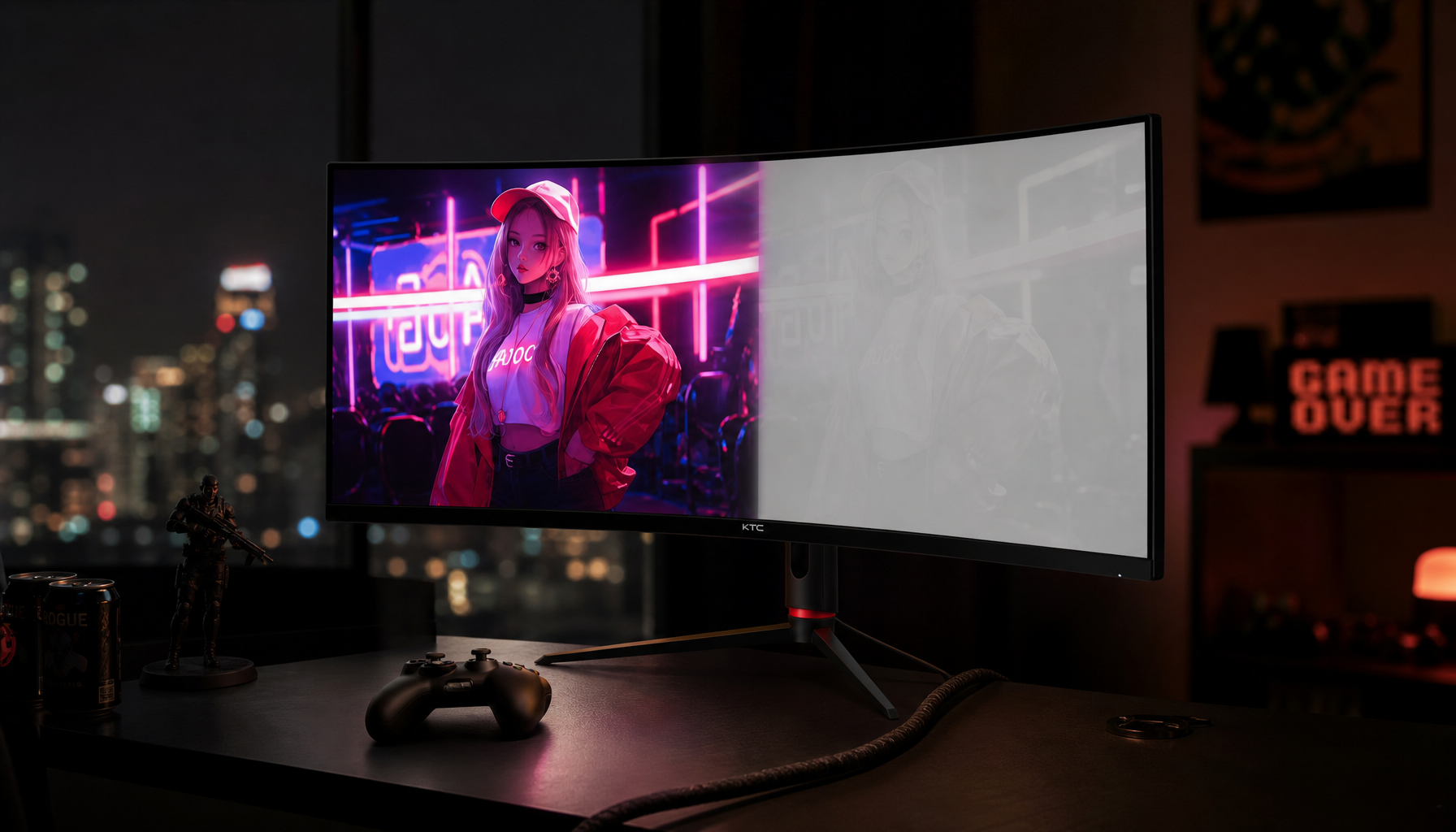
Mini-LED blooming is easiest to notice when a bright object sits on a very dark background. That is why subtitles, HUDs, menu text, muzzle flashes, and space scenes often reveal it first. In those moments, even a good panel can show some glow around bright edges, especially if the scene is otherwise dark.
This is why mini-LED halo reduction gaming is less about chasing a perfect setting and more about reducing the situations that make halos stand out. Background explanations of mini-LED halation note that the issue is most visible where bright highlights meet deep black areas.
For a broader overview of how Mini-LED backlights behave, see the KTC Mini-LED technology guide.
Settings That Usually Reduce Blooming
Start with the setting that changes how the backlight reacts, then move outward to picture mode and brightness. That order matters because it keeps you from overcorrecting with contrast or shadow controls before you know what actually helped.
Local Dimming Levels to Test First
If your monitor offers multiple local dimming options, begin with the mode that feels balanced rather than the most aggressive one. Aggressive dimming can make highlights punchier, but it can also create pumping, visible halos, or uneven shifts when UI elements move across the screen.
A good rule is simple: if the game is mostly dark with small bright objects, a stronger local dimming mode may help; if the scene is busy or changes rapidly, a calmer mode often looks more stable.
For reference, RTINGS' Mini-LED guidance shows why there is no universal winner here. Local dimming behavior changes with zone count, algorithm tuning, and content type, so the best-looking mode can flip from one game to another.
HDR Picture Modes and Game Presets
Use the cleanest game preset you have before you touch advanced controls. In practice, a gaming mode that keeps highlight behavior steady is often easier to live with than a vivid or cinema preset that may look punchier but also exaggerates halos.
If the image looks cleaner in one preset, keep that as your base. A practical decision sentence is: if a mode reduces blooming but also makes the image look dull or unstable, it is not the right default for fast action games.
Brightness, Shadow Detail, and Contrast
Brightness controls can reduce glare and make halos less distracting, but pulling brightness too far down can flatten HDR. That is usually the wrong trade if you still want specular highlights to look convincing.
Keep shadow detail and contrast changes conservative. Heavy changes can lift blacks, crush detail, or make halos easier to spot in the next scene. If a control changes the overall picture more than the halo itself, back it off.
For a deeper look at how firmware can refine the local-dimming response without changing the hardware, see this local-dimming firmware guide. It is useful because it clarifies the boundary: software can improve behavior, but it cannot replace zone count or backlight design.

Room Light Changes What You See
Room lighting changes the way haloing feels, even when the monitor settings stay the same. A completely dark room tends to make bright UI edges and subtitles pop harder against black backgrounds. Moderate ambient light can soften that contrast and make blooming feel less intrusive.
That does not mean you should flood the room with light. It means you should avoid a pitch-dark setup if haloing is already bothering you. A small bias light or a dim lamp behind the monitor is often enough to reduce perceived bloom without washing out the image.
This is one of the clearest mini-LED halo reduction gaming shortcuts: if the same monitor looks cleaner with a little room light, the problem is partly perceptual, not just panel-related. Bias lighting guidance supports that basic idea by tying halo visibility to screen-to-room contrast.
Console players in a living room often have an easier time here than PC players in a dark desk setup. If you game in a bright room with glare, though, you may end up raising brightness again, and that can bring blooming back into view.
Compare Your Panel and Game Type
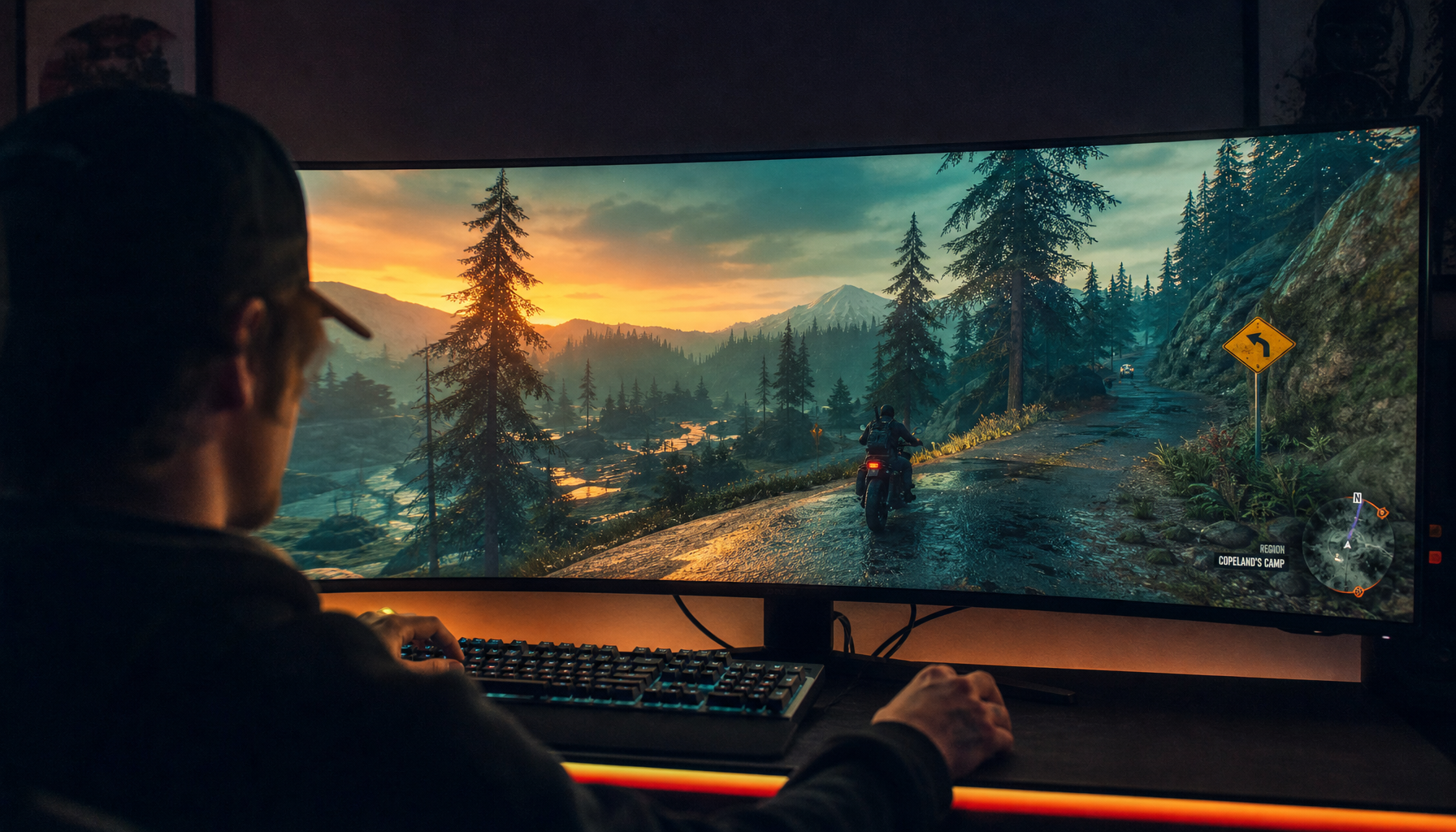
This is where the recommendation flips depending on what you play. Cinematic HDR games usually expose halo more than fast competitive shooters because they use larger dark areas, more subtitle boxes, and more static UI overlays. Fast motion can hide some of the artifact because your attention stays on movement.
| Setup Factor | Halo Visibility Tendency | Why It Matters | Best Adjustment Priority |
|---|---|---|---|
| 4K HDR cinematic games | Higher | Large dark scenes and bright highlights make halos easier to spot | Use the most stable dimming mode first |
| 1440p competitive shooters | Lower to medium | Motion can hide some edge glow, but HUDs still matter | Protect highlight punch and keep latency-friendly game mode settings |
| Console HDR on a desk monitor | Medium to higher | TV-style HDR often looks different on a monitor-sized panel | Start with conservative brightness and dimming |
| Bright-room living room play | Medium | Reflections may force higher brightness, which can make halos more visible | Control glare before changing too many picture settings |
| Dark-room story games | Higher | Static UI, subtitles, and black backgrounds make blooming stand out | Favor halo control over maximum peak punch |
That table is not a ranking of monitor quality. It is a decision filter. If your main games are slow and dark, halo reduction should get priority. If your main games are competitive and bright, small amounts of halo may be a fair trade for a clearer, more energetic image.
The same logic applies when you shop. A Mini-LED with more zones and better tuning is usually easier to live with, but no panel class removes blooming everywhere. KTC's HDR certification comparison is useful background if you want to understand why brighter HDR tiers can look more impactful while still keeping halo control in play.
When to Tolerate Halo and When to Tune Harder
Use a stable preset first, then change one setting at a time. That is the fastest way to tell whether the halo improved because of local dimming, brightness, or a different HDR mode. If you change everything at once, you lose the ability to judge the result.
- Identify the scene that annoys you most, such as subtitles, menus, or a bright cursor on black.
- Pick one baseline game preset and leave it alone for a few minutes.
- Change local dimming before you touch contrast or shadow detail.
- Lower brightness only enough to reduce glare or glow.
- Re-test the same scene in another game or menu.
- Stop when the image feels balanced, not "perfect."
A practical mini-LED halo reduction gaming rule is this: if the halo is only noticeable in a few worst-case scenes, stop tuning once the picture stays stable in normal play. If it is visible everywhere, check the room and settings again before blaming the panel.
If the display still looks inconsistent after normal tuning, firmware may refine the behavior a bit, but it will not overcome hard hardware limits. That is why one setting rarely fixes every monitor.
For readers who want to browse Mini-LED options after narrowing their preferences, the All-Mini-LED Monitors collection is the cleanest category starting point. If you are looking for broader gaming display options, the Gaming Monitor collection is a better general browse path.
When the monitor itself matters, the KTC Mini LED 27" 4K 160Hz HDR1400 Gaming Monitor | M27P6 is a strong example of the higher-end Mini-LED class discussed here. It uses a 1152-zone Mini-LED backlight and HDR1400 support, which can help with dark-scene contrast when the rest of the setup is dialed in.
For buyers who prefer a 1440p Mini-LED balance, the KTC Mini LED 27" 180Hz 2K HDR1400 Gaming Monitor | M27T6 and the KTC Mini LED 27" 200Hz 2K HDR1000 Gaming Monitor | M27T6S are the more direct comparisons. Both sit in the same general Mini-LED category, so the key question is whether you want to prioritize 1440p speed, HDR impact, or how much blooming you are willing to tune around.
Quick Fix Checklist Before You Give Up
Before you assume the monitor cannot be improved, run this quick check in the same game scene:
- Test at least two picture presets, one of them conservative.
- Make sure HDR is actually enabled in both the game and the system menu.
- Try the room with a little ambient light instead of total darkness.
- Reset any aggressive contrast or black-level changes.
- Review firmware notes if an update is available, but do not expect a software patch to solve a hardware limit.
If those checks do not change the result, the issue is probably the panel's tuning ceiling rather than a missed setting. At that point, the right move is to accept the trade-off or choose a different display class for your favorite games.
Mini-LED Halo Reduction Picks by Use Case
If you are shopping rather than tuning, match the monitor class to the games you actually play. The 4K HDR path usually makes sense for cinematic single-player use, while 1440p Mini-LED often feels more forgiving for mixed gaming and desktop use.
Among the featured models, the M27P6 makes the most sense when you want 4K detail and HDR punch in one place. The M27T6 is the more balanced 1440p option if you care about Mini-LED contrast but do not want to jump to 4K pricing or GPU demands. The M27T6S is the speed-leaning 1440p choice if your priority is smoother motion with HDR capability still in the mix.
Related Resources
These deeper reads cover zone behavior, firmware effects, and ambient-light interactions that influence halo visibility:
- 1152 local dimming zones
- zone overlap design
- ambient light sensor behavior
- SDR versus HDR performance
FAQs
Q1. How Can I Reduce Mini-LED Halo Without Killing HDR Brightness?
Start with the local dimming mode, then adjust brightness only enough to reduce glare. If you cut brightness too much, HDR can look flat. The best result usually comes from a stable preset, conservative shadow controls, and a room that is not completely dark.
Q2. What Local Dimming Setting Is Usually Best for Gaming?
There is no universal best setting. A balanced mode is usually the safest starting point because it tends to keep highlights visible without making halos or pumping too obvious. For dark story games, you may prefer stronger dimming. For competitive play, stability often matters more.
Q3. Why Does Blooming Look Worse in Some Games Than Others?
Scene structure matters. Games with subtitles, bright HUDs, or lots of dark space usually show halo more clearly than fast shooters or bright outdoor games. Camera motion also changes how visible the effect feels, which is why one title can look clean and another can look distracting.
Q4. Can Room Lighting Make Mini-LED Halos Less Noticeable?
Yes. Moderate ambient light can reduce the contrast that makes haloing stand out. A small bias light or soft lamp is often enough. A totally dark room, on the other hand, tends to make subtitles, cursors, and UI edges look more pronounced.
Q5. Will Firmware Updates Fix Mini-LED Blooming Completely?
Usually not. Firmware can refine the dimming algorithm and improve the way a monitor behaves, but it cannot change the backlight design or add more dimming zones. Treat updates as a possible improvement, not a replacement for hardware limits.
Keep Halo Under Control Without Chasing Perfection
Mini-LED halo reduction gaming is mostly about choosing the right compromise for your room and your games. Tune local dimming and brightness conservatively, avoid over-adjusting contrast, and keep modest ambient light. The artifact often becomes far less distracting. When it still stands out after these steps, you have likely reached the panel's hardware limit rather than missing a magic setting.