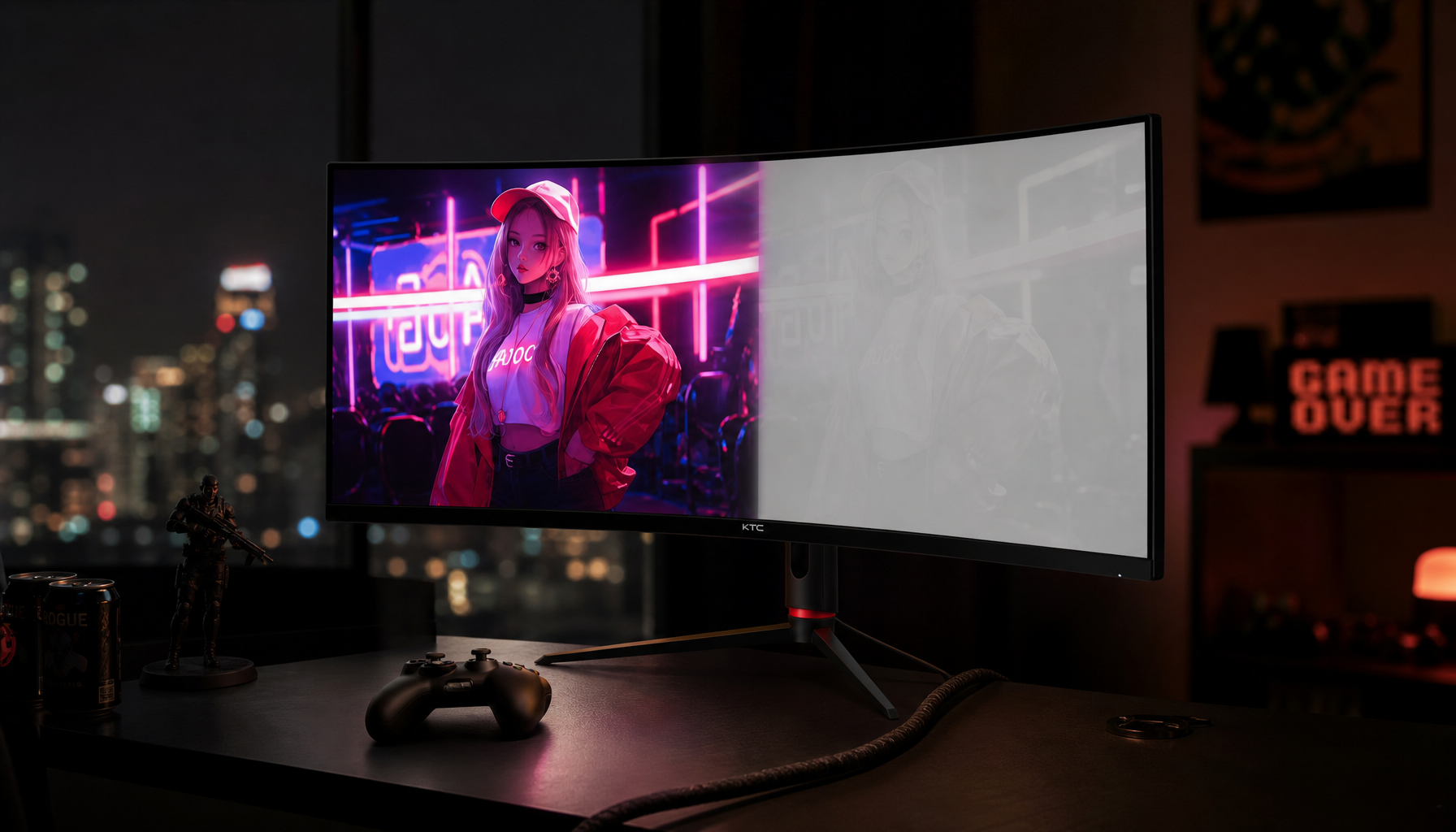
You can judge some parts of HDR performance at home, but you cannot confirm true HDR accuracy without a meter. Software patterns and careful viewing help with setup and buying decisions, while instrumented testing is still required for trustworthy validation.
What Measuring HDR Really Means
DisplayHDR performance criteria make one point clear: HDR is not a single number. A real HDR evaluation looks at peak brightness on specific test windows, sustained full-screen brightness, black level, color gamut, bit-depth handling, response behavior, and luminance and color accuracy.
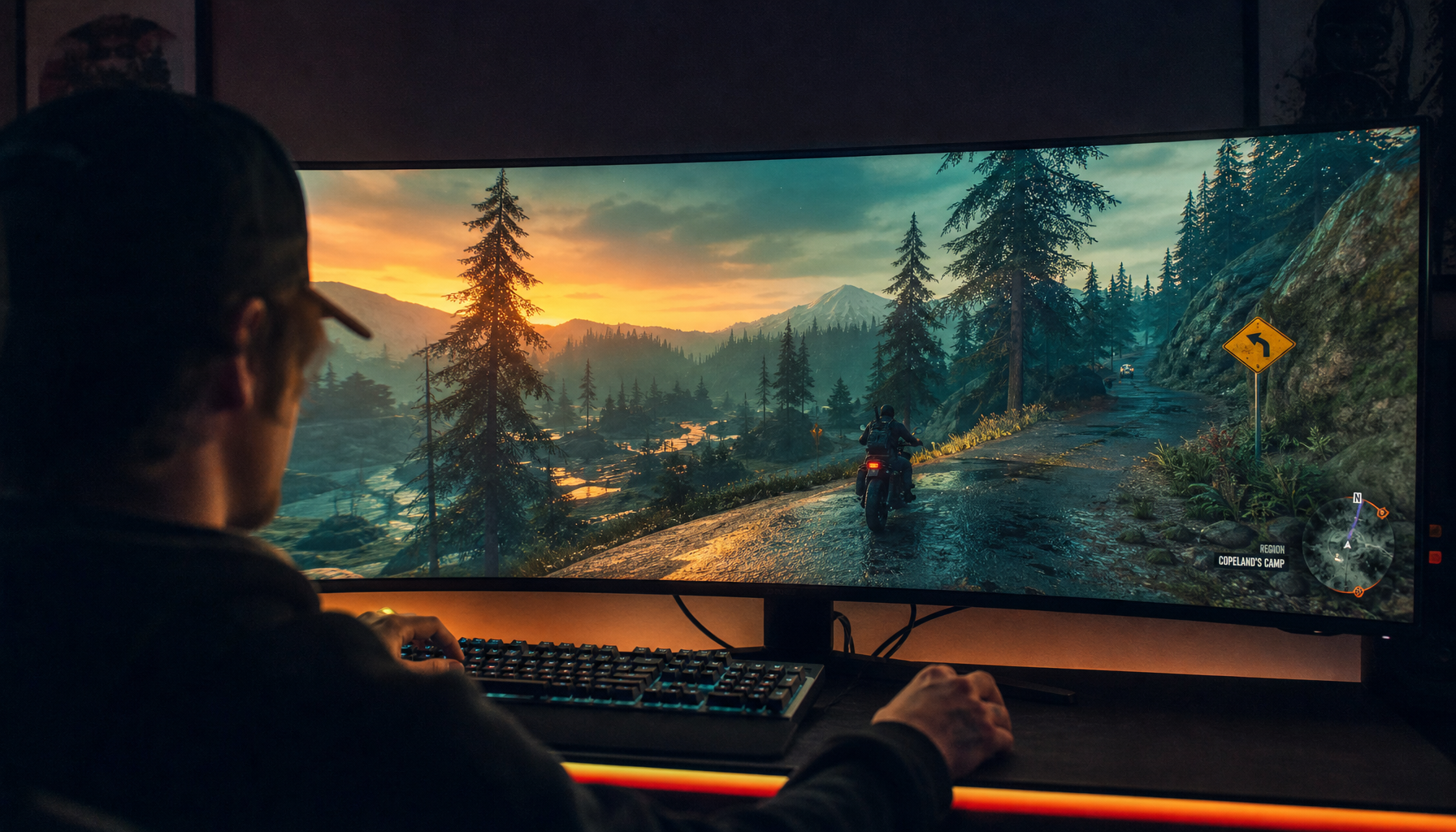
That distinction matters because a monitor that briefly hits 1,000 nits on a tiny highlight is not automatically a strong HDR display in everyday use. Full-screen brightness and black level often matter more for immersion. A bright explosion in a dark game tests highlight behavior, while a snow-covered scene filling the screen reveals whether the panel can maintain brightness across the full image without collapsing.

This is where many buyers get misled by the label. The same VESA criteria separate short peak tests from sustained full-screen tests for a reason. If you only look at the box or a single dramatic clip, you are not measuring HDR performance so much as watching one narrow slice of it.
What You Can Check Without a Professional Meter
You can evaluate visibility, clipping, and consistency
Microsoft’s HDR Calibration app helps you set darkest visible detail, brightest visible detail, and maximum usable brightness under your normal room lighting. That is not lab measurement, but it is still a meaningful performance check. If the darkest pattern disappears too early, shadow detail is being crushed. If the brightest pattern vanishes too late, the system may assume the display is brighter than it really is, which can make HDR look dimmer overall.

In practice, this is often the fastest way to catch a bad HDR chain. Put the monitor in its most accurate HDR mode first, disable flashy post-processing, run the app full-screen on the actual HDR display, and then revisit one familiar game and one familiar movie scene. If both preserve more highlight detail without turning gray or dull, the setup improved even though you did not measure nits directly.
You can compare hardware classes in a practical way
KTC’s DisplayHDR tier comparison is useful because it translates specs into visible behavior. An entry-level HDR 400 display may reach about 400 nits peak with much weaker blacks, while higher tiers such as HDR 1000 and HDR 1400 combine stronger brightness with lower black levels and better sustained output. In a space game or horror title, that difference shows up less as extra sparkle and more as whether stars, UI, and shadow detail can coexist without the whole screen turning milky.
That kind of comparison is not precision metrology, but it is still meaningful testing. If one monitor blooms heavily around subtitles, lifts blacks in dark scenes, or dims the whole image when a bright HUD appears, you are seeing real HDR weaknesses. You are not measuring exact black level to four decimal places, but you are detecting the behavior that affects day-to-day use.

You can judge some artifacts better than a meter summary can
SMPTE’s discussion of perceived brightness adds an important nuance: two displays with similar luminance can still appear different in brightness because saturated colors can look brighter to human vision. Your eyes are valuable, just not sufficient on their own.
That is why a monitor can impress you with a demo reel and still miss the mark in accurate HDR playback. Wide-gamut, vivid color can increase perceived punch, especially in reds and blues, even when measured luminance does not change. If one display looks brighter, that impression may be real from a viewing standpoint, but it does not replace instrumented brightness and color readings.
Where Visual Testing Breaks Down
Human vision is adaptive, not objective
HunterLab’s explanation of color measurement gets to the core limitation: instruments turn subjective color perception into objective data because people do not see color and luminance consistently enough to serve as measurement devices. Your eyes adapt to room light, screen white point, surrounding colors, fatigue, and expectation.
That is exactly why “looks neutral to me” is weak evidence for HDR accuracy. A dark room can make blacks seem deeper than they are. A very vivid panel can seem brighter than a better-calibrated one. After 20 minutes, your vision may normalize a color cast that a meter would catch instantly.
HDR on Windows adds another trap
DisplayCAL forum guidance on HDR calibration highlights a practical problem many enthusiasts run into: SDR ICC workflows do not map cleanly into HDR mode on Windows. SDR correction data does not describe HDR behavior across the full luminance range, so reusing it in HDR can create visibly wrong grayscale and gamma.
That means you can spend an hour tuning HDR by eye and still be fighting the operating system rather than the panel. For many desktop setups, the reliable move is to keep accurate ICC color management in SDR, then treat HDR as a separate mode and avoid dragging SDR corrections into it. If HDR desktop color suddenly looks odd after loading a familiar profile, that is often a workflow problem rather than a failure of visual judgment.
When You Actually Need a Colorimeter
VESA’s DisplayHDR test tool announcement draws the line clearly: formal HDR verification is built around standardized test patterns plus an off-the-shelf calibration colorimeter. If your goal is to confirm compliance, compare monitors rigorously, validate manufacturer claims, or set up a screen for color-critical HDR review, a meter is not optional.

The reason is simple. Peak luminance, full-screen luminance, black level, color gamut coverage, and accuracy thresholds are numeric targets. Your eyes can tell you that one screen feels punchier; they cannot tell you whether the display is holding the required full-screen brightness or whether near-black tracking remains smooth instead of crushing detail.
The practical threshold is straightforward. If you just want HDR to look better for gaming, streaming, and mixed-use desktop work, software calibration and careful pattern viewing are worthwhile. If you need to know whether the monitor is truly delivering the HDR performance you paid for, or whether it is suitable for critical grading or client review, buy, borrow, or rent a meter.
A Practical Home Workflow That Helps
Start by treating your monitor’s HDR mode as a separate environment, not an extension of SDR. Use the monitor’s most accurate HDR preset, then run the Windows HDR Calibration app in full-screen mode under your normal room lighting. After that, test three scenes you know well: a dark scene with small highlights, a bright full-screen scene, and mixed UI content such as a game menu over a bright background.
If the dark scene loses shadow detail, go back and recheck the black-detail pattern. If the bright scene looks dimmer after calibration, your maximum-brightness setting may be too aggressive. If desktop colors look strange with HDR enabled all day, separate your SDR and HDR usage instead of forcing one compromise across both. This matters especially on office productivity displays and portable displays, where HDR support often exists but hardware limits keep the result closer to compatibility than reference-grade performance.
Goal |
No meter needed? |
What you can trust |
Make HDR games look better |
Yes, partly |
Visibility, clipping, consistency |
Compare two monitors casually |
Yes, partly |
Blooming, black depth, full-screen dimming |
Verify DisplayHDR-class performance |
No |
Requires instrumented testing |
No |
Requires a colorimeter or a stronger lab workflow |
HDR is worth pursuing when the hardware is real and the setup is disciplined. Use your eyes for experience, software tools for alignment, and a meter when the question changes from “does this look better?” to “is this actually correct?”