LUT-based calibration uses lookup tables to correct how a monitor displays color, brightness, gamma, and grayscale. Some creator-focused monitors can store those corrections in hardware, but most gaming monitors rely on factory tuning, ICC profiles, GPU adjustments, and manual OSD settings instead.
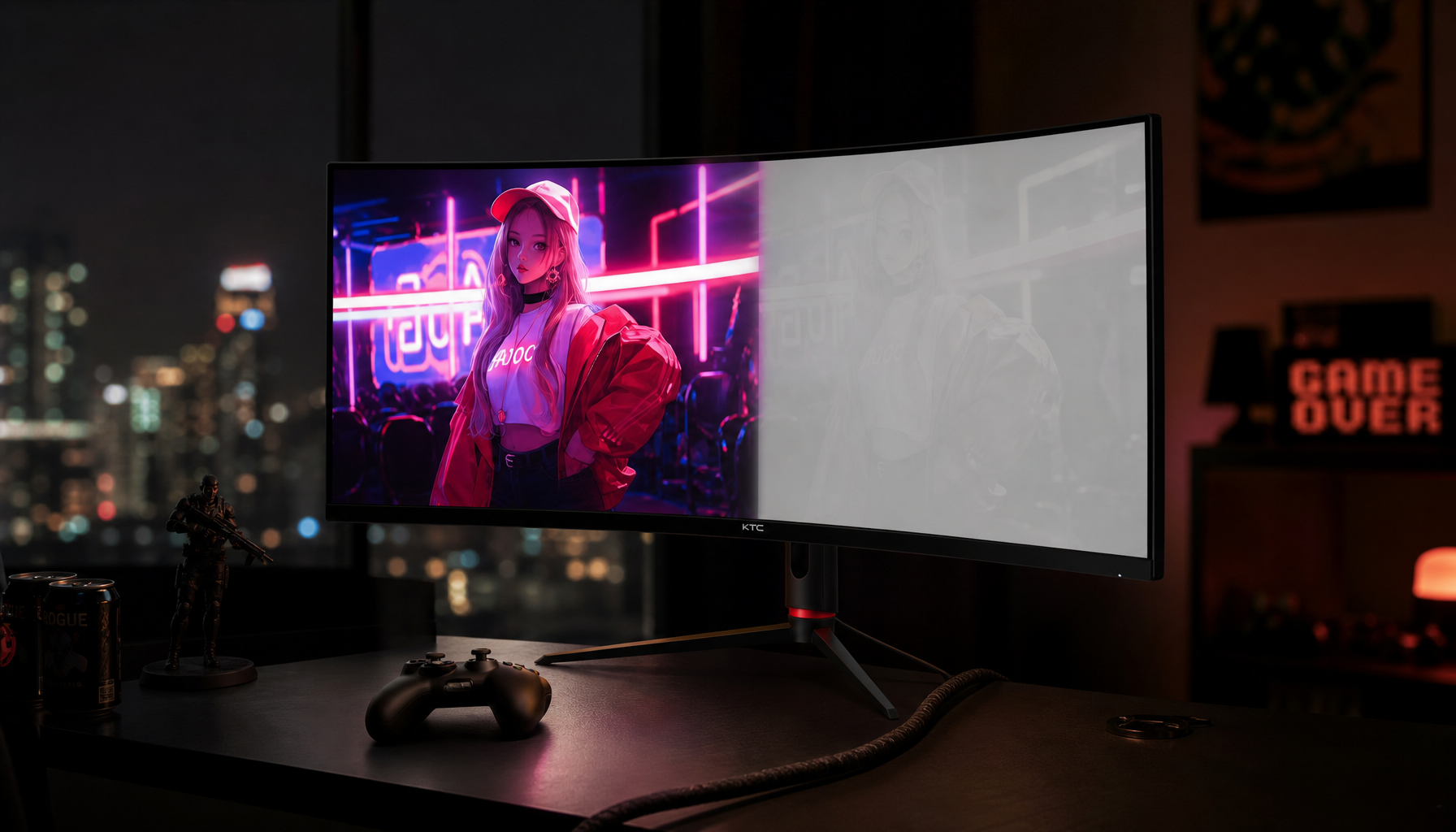
Ever set a new gaming monitor to “Standard” or “Vivid” and notice that reds look too loud, skin tones look sunburned, or the same screenshot looks different on every screen you own? In practical display work, matching the right monitor mode with the right profile can be the difference between accurate color and an oversaturated mess. This guide explains what LUT-based calibration actually does, when it matters, and how to tell whether a gaming monitor really supports it.
What LUT-Based Calibration Means for Monitors
A LUT, or lookup table, is a correction map that tells a display system how one color or tone value should be transformed into another. In monitor calibration, LUTs are used to correct grayscale tracking, gamma response, white point, brightness behavior, and color output so the screen gets closer to a target such as sRGB, a wide-gamut RGB standard, Rec.709, or a custom editing setup.
The key distinction is where the correction lives. With hardware-calibrated monitors, the LUT is stored inside the display itself, so the monitor applies the correction before the image reaches your eyes. With software calibration, corrections are usually applied through the operating system, graphics card LUT, or an ICC profile workflow.
Hardware LUT vs GPU LUT vs ICC Profile

A hardware LUT is part of the monitor’s internal color processing. A GPU LUT is applied by the graphics card or operating system. An ICC profile describes how the display behaves so color-managed apps can translate colors correctly.
That last point is important: calibration and profiling are related, but not the same. Calibration changes display behavior, while profiling describes that behavior. A hardware-calibrated display still needs an ICC profile because the operating system and color-managed apps need to know the calibrated monitor’s gamut and tone response.
1D LUT and 3D LUT in Plain Terms
A 1D LUT usually adjusts single-channel tone behavior, such as gamma and grayscale balance. A 3D LUT can map color relationships across red, green, and blue together, which is more powerful for complex color correction. In video workflows, a LUT box may sit between the computer and monitor, storing a 3D LUT in the signal chain rather than applying the correction inside software.
For example, one calibration-tool workflow discussed a LUT box with a maximum 33x33x33 3D LUT resolution, targeting Rec.709 gamma 2.4 at about 100-110 nits for broadcast work. Final validation results showed average delta E values below 1 and maximum values below 3 in several tests, which is strong enough for serious color review when the signal chain is configured correctly.
Do Gaming Monitors Support Hardware LUT Calibration?
Some gaming monitors support good color controls, factory calibration, sRGB modes, wide color gamuts, and ICC profiles. Far fewer support true hardware LUT calibration where calibration data is written directly into the monitor’s internal LUT using dedicated software.
This is the practical buying distinction. A product page that says “factory calibrated,” “99% sRGB,” or “Delta E < 2” does not automatically mean the monitor supports user hardware calibration. True hardware LUT calibration usually requires the monitor maker’s calibration software, a supported colorimeter or spectrophotometer, and onboard calibration slots that can store targets such as Native, sRGB, a wide-gamut RGB standard, DCI-P3, or Rec.709.
Where Support Is Most Common
Hardware LUT calibration is most common on creator, photography, print, and video-reference displays. For example, hardware calibration stores adjustments in the monitor rather than relying on operating-system software, and some displays can save multiple modes such as Native, a wide-gamut RGB standard, and sRGB.
Among gaming displays, support is less predictable. High-refresh-rate monitors often prioritize speed, low input lag, adaptive sync, HDR brightness, and motion clarity. Ultrawide gaming monitors may add wide-gamut panels and creator modes, but many still stop at preset color modes and ICC profile support. Portable monitors are even less likely to include true hardware LUT calibration because they usually have tighter cost, power, and processing constraints.
How to Read the Spec Sheet
Look for phrases like “hardware calibration,” “internal LUT,” “3D LUT,” “calibration software,” “calibration slots,” or “write calibration to monitor.” Also check whether the brand lists support for specific calibration tools or colorimeters.
Be cautious with vague claims. “10-bit color,” “wide gamut,” and “factory calibrated” are useful, but they do not prove that you can recalibrate the monitor’s internal LUT later. A gaming monitor can have excellent out-of-box color and still lack hardware LUT support.
LUT Calibration vs ICC Profiles and OSD Settings
ICC profiles matter even when a monitor has hardware calibration. The monitor may be corrected internally, but operating systems, photo editors, video editors, browsers, and other color-managed software still need the matching ICC profile to interpret color correctly.
A common failure point is mixing the wrong monitor mode with the wrong ICC profile. If you switch from an sRGB calibration slot to a wide-gamut mode, the matching ICC profile should change too. In one real-world example, a wide-gamut monitor user found the default Standard mode highly oversaturated and was unsure whether to use the monitor’s installed ICM profile, operating-system sRGB, or no profile at all.

Why OSD Settings Are Not Enough
The OSD can adjust brightness, contrast, color temperature, gamma, and RGB gain, but it does not create a full measured profile of your specific panel. A calibration tool’s interactive adjustment process, for instance, guides users to set monitor OSD RGB gain and brightness before creating an ICC profile, because those physical monitor settings affect the measured result.
An ICC profile also does not restore your monitor’s OSD settings. If profile A was created with one brightness, white point, and gamma setup, but the monitor is still using the OSD settings for profile B, the result can be wrong. This is why serious users label monitor modes clearly and keep matching ICC profiles for each target.
When Brightness Changes Are Safe
Changing only display brightness usually does not require a new ICC profile if the monitor’s color behavior remains otherwise stable. That is useful for gaming monitors because many users lower brightness at night or raise it during the day.
However, changing gamut mode, white point, gamma preset, HDR mode, or color temperature is different. Those changes can alter the display response enough that you should use a matching ICC profile or recalibrate.
When LUT-Based Calibration Matters for Gaming and Content Creation
For pure gaming, LUT-based hardware calibration is usually not mandatory. A good gaming monitor with a reliable sRGB mode, reasonable gamma tracking, and a usable factory calibration can be more than enough for competitive play, casual streaming, browsing, and everyday use.
Hardware calibration becomes more valuable when color mistakes cost time or money. Hardware calibration is recommended for photography, design, digital art, print prep, video grading, HDR review, product color inspection, and multi-monitor creator setups. If your monitor is used for both high-refresh gaming and paid creative work, calibration support becomes a buying feature rather than a luxury.
Gaming Scenarios
If you mostly play esports titles, prioritize refresh rate, response time, input lag, overdrive quality, and motion clarity first. Color still matters, but a locked-down sRGB mode and decent factory accuracy are usually enough.
If you play cinematic HDR games, edit clips, and post screenshots or videos, color control matters more. HDR modes often bypass or change normal SDR calibration behavior, so check reviews for HDR accuracy, tone mapping, color volume, and whether the monitor allows useful calibration in HDR.
Creator-Gamer Scenarios

A creator-gamer setup has different requirements. You may want a 144 Hz or faster panel for games, but also an accurate sRGB or DCI-P3 mode for editing. In that case, a monitor with hardware calibration slots can reduce friction because you can keep separate targets for gaming, web work, and video review.
For paid work, a practical recalibration schedule is monthly for color-critical jobs, every few months for serious enthusiast editing, and after major hardware or room-lighting changes. A common editing target is D65 white point, 2.2 gamma, and room-appropriate luminance around 100-120 nits.

Comparison: Calibration Options for Gaming Monitor Buyers

Option |
Where Correction Lives |
Best For |
Strengths |
Limitations |
Factory calibration |
Monitor preset from manufacturer |
General gaming and casual creation |
Works out of the box; no tools required |
May vary by unit; may not match your room or workflow |
OSD adjustment |
Monitor menu |
Quick brightness, gamma, and color tweaks |
Easy and available on most gaming monitors |
Not a measured profile; easy to mismatch settings |
ICC profile |
Operating system and color-managed apps |
Photo editing, design, browser color management |
Describes the display for accurate rendering |
Does not fix non-color-managed apps by itself |
GPU LUT calibration |
Graphics card or OS pipeline |
Budget calibration with a colorimeter |
Works with many monitors |
Can be reset by apps, drivers, games, or HDR modes |
Hardware LUT calibration |
Inside the monitor |
Color-critical work and multi-PC workflows |
Corrections stay in the display; supports calibration slots |
Less common on gaming monitors; needs supported tools |
External LUT box |
Hardware in video signal chain |
Video grading and broadcast-style monitoring |
Can apply 3D LUTs independent of apps |
Adds cost and setup complexity; level matching is critical |
Buying Checklist for LUT-Aware Gaming Monitors
- Confirm the monitor explicitly supports hardware calibration, internal LUT writing, or 3D LUT calibration.
- Check whether the brand provides calibration software and lists supported colorimeters.
- Look for separate sRGB, wide-gamut, Rec.709, DCI-P3, or custom calibration slots.
- Verify whether each calibration mode can be paired with a matching ICC profile.
- Read independent reviews for grayscale, gamma, gamut coverage, HDR behavior, and delta E results.
- For creator work, choose a monitor with strong uniformity controls and stable brightness, not just a high refresh rate.
- For gaming-first use, do not overpay for hardware LUT calibration unless you also need reliable color work.
Common Mistakes to Avoid
The first mistake is assuming an ICC profile fixes everything. ICC profiles help color-managed apps, but games, launchers, video players, and desktop interfaces may not all handle color the same way. On a wide-gamut monitor, non-color-managed content can look oversaturated unless you use a good sRGB clamp or sRGB monitor mode.
The second mistake is switching monitor modes without switching profiles. If you use sRGB mode for web work and Native or DCI-P3 mode for editing, each mode should have its own profile. Some calibration systems can automatically load the right ICC profile when you change monitor slots, but many gaming monitor workflows require manual discipline.
The third mistake is ignoring signal levels in LUT box or video workflows. If a LUT is built for limited video levels, the monitor and signal chain should match that range. Mismatched levels can crush blacks, wash out contrast, or make calibration results look wrong even when the LUT itself is valid.
FAQ
Q: Is LUT-based calibration better than an ICC profile?
A: It is not a direct replacement. LUT-based calibration changes the monitor’s output, while an ICC profile describes that output for color-managed software. The best setup often uses both.
Q: Can I use a calibration tool with a gaming monitor?
A: Yes, if you have a supported measurement instrument. A calibration tool can calibrate and profile displays, and it can also create video 3D LUTs for advanced workflows, but most gaming monitors will use GPU or ICC-based correction rather than true internal hardware LUT writing.
Q: Should I buy a hardware-calibrated monitor for gaming?
A: Not for gaming alone. Buy one if you also edit photos, grade video, prepare design work, manage brand colors, or need multiple displays to match closely. For gaming-only use, prioritize panel speed, motion clarity, usable sRGB mode, and good factory accuracy.
Key Takeaways
LUT-based calibration is most useful when you need predictable, repeatable color, especially across creative apps, multiple monitors, or multiple computers. A true hardware LUT monitor stores correction data inside the display, but it still needs the right ICC profile on each computer.
Most gaming monitors do not offer full hardware LUT calibration. They usually provide presets, manual OSD controls, factory calibration, ICC profile support, and sometimes wide-gamut or sRGB clamp modes. That can be enough for gaming, but creators should look for explicit hardware calibration support before buying.
For a practical gaming-and-creation setup, choose a monitor with a good sRGB mode, accurate factory calibration, strong review data, and clear profile handling. Step up to hardware LUT calibration when color accuracy affects paid work, client approval, print matching, video grading, or multi-monitor consistency.