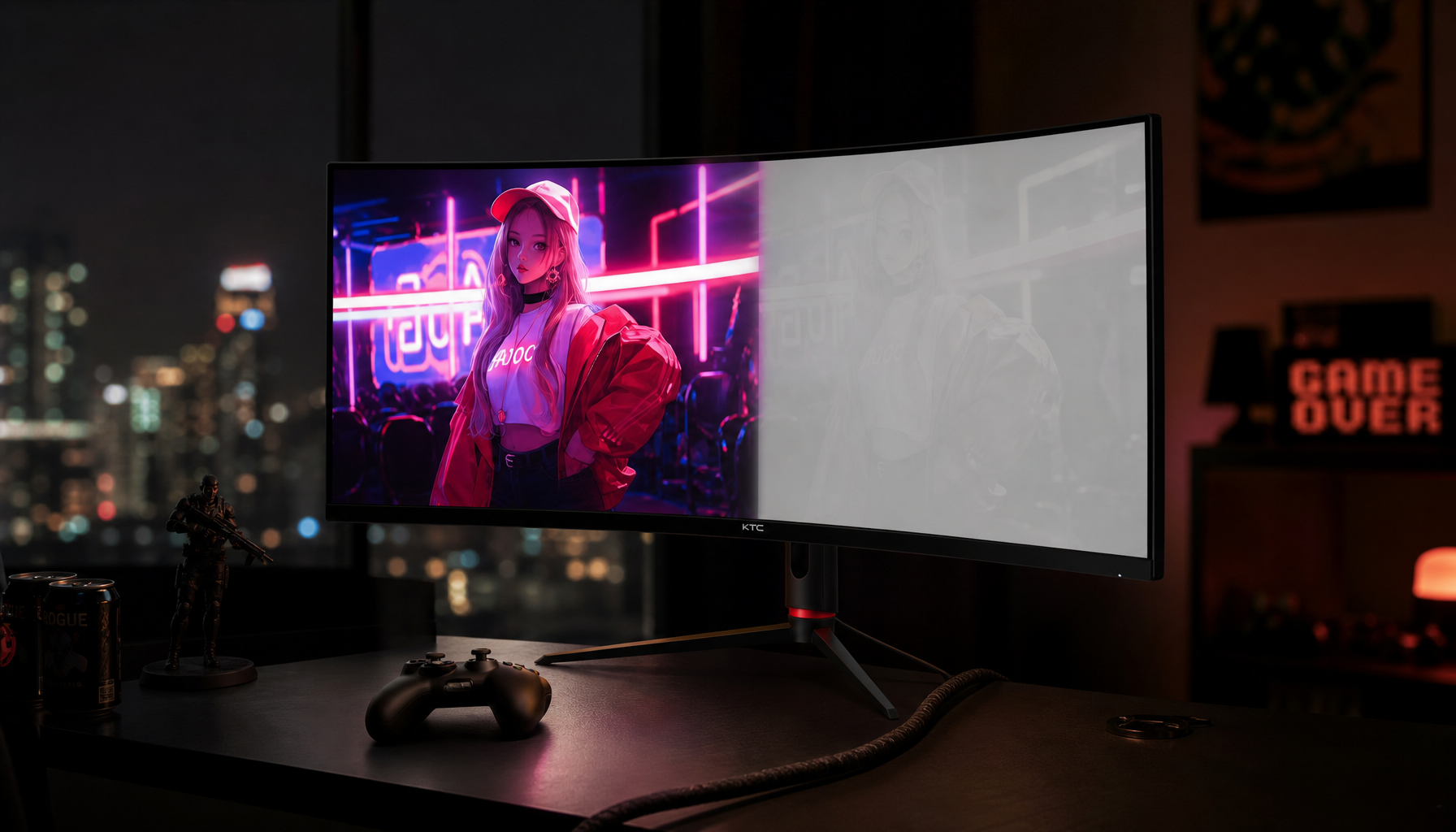
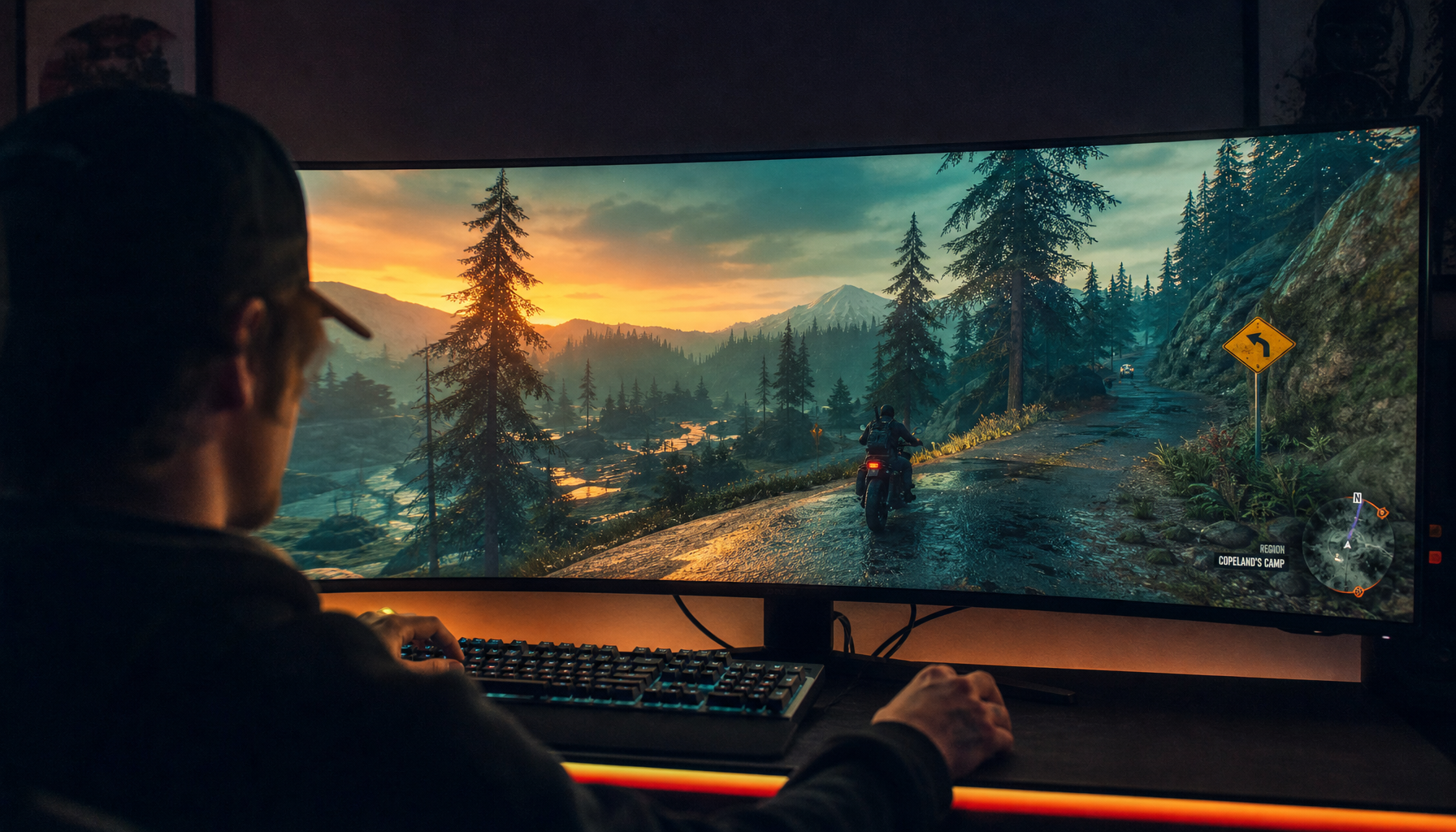
Local dimming can create a trailing glow because the monitor’s backlight zones cannot always brighten, dim, and reposition as fast as a small, high-contrast object moves across the screen. In FPS games, that delay can look like a soft halo chasing a crosshair, muzzle flash, enemy outline, or HUD marker.

The Core Cause: Zones Are Bigger Than Pixels
Mini-LED and full-array local dimming displays do not control brightness pixel by pixel. They divide the backlight into groups, and each group brightens or dims behind part of the image.
That works well for HDR contrast. A dark hallway can stay deep while a flashlight or explosion cuts through with high brightness. But one dimming zone still covers many pixels, so a tiny bright object forces a larger backlight area to illuminate.
That is why local dimming zones can improve contrast while also creating blooming around bright objects on dark backgrounds. In a slow movie scene, the halo may be subtle. In a 240 Hz shooter, it becomes easier to notice because your eyes track motion aggressively.

Why It Trails in Fast FPS Motion
The trailing effect happens when three timing systems do not line up perfectly: the game frame, the LCD pixel response, and the local dimming algorithm.
In a fast flick shot, a bright object may cross several zones in a fraction of a second. The monitor has to predict which zones should brighten, how much they should brighten, and when they should fade back down.
If the algorithm holds brightness too long, you see a glow behind the object. If it reacts too conservatively, the bright object may look dim or smeared. If it overreacts, the image can pulse as zones chase the action.
This is not the same as classic pixel ghosting, although both can appear together. Pixel ghosting comes from slow LCD transitions. Local-dimming glow comes from backlight behavior, especially around bright-on-dark edges.
Why Dark Maps Make It Worse
FPS games are a stress test for local dimming because they combine black backgrounds, bright UI, rapid camera pans, and tiny target details.
Think of a white nameplate moving across a shadowy corridor. The display may need to light a whole zone for that small label. As the camera pans, the label leaves the zone, but the zone may fade down a moment later instead of instantly.
Common triggers include white crosshairs over dark rooms, enemy outlines in night maps, muzzle flashes, tracer rounds, bright HUD icons near black letterbox areas, flashlights, sparks, and scope glints.

More dimming zones usually help because each zone covers a smaller area, but zone count is not the whole story. Firmware tuning, panel speed, overdrive, refresh rate, and HDR tone mapping all affect how clean the final motion feels.
Settings That Reduce the Glow
Start by separating competitive play from cinematic HDR play. For ranked FPS, motion clarity and target readability matter more than maximum black depth.
Try these quick adjustments:

- Lower local dimming strength one step if halos linger.
- Use a balanced HDR mode instead of the most aggressive black-level preset.
- Reduce peak brightness slightly for dark competitive maps.
- Disable local dimming for SDR desktop or esports use if the glow distracts you.
- Keep overdrive at a balanced setting to avoid adding LCD inverse ghosting.
Some monitor makers expose halo controls directly; halo dimming can reduce blooming, though stronger suppression may trade away some peak brightness.
A useful nuance: the best setting is not always the darkest setting. The most immersive HDR preset may be ideal for single-player worlds, while a less aggressive dimming mode can feel faster and cleaner in competitive FPS.
What to Look for in a Gaming Monitor
If you want Mini-LED impact without obvious trails, prioritize the whole motion system, not just the zone count.
Look for a high refresh rate, fast gray-to-gray response, well-reviewed local dimming behavior, and multiple dimming presets. A monitor with fewer zones but smarter transitions can feel cleaner than a higher-zone model with slow or aggressive backlight logic.
For value-focused buyers, the practical win is flexibility. The right display should let you run deep HDR contrast for cinematic games, then switch to a cleaner SDR or balanced dimming profile for competitive shooters. That gives you immersion when you want it and precision when the round depends on it.