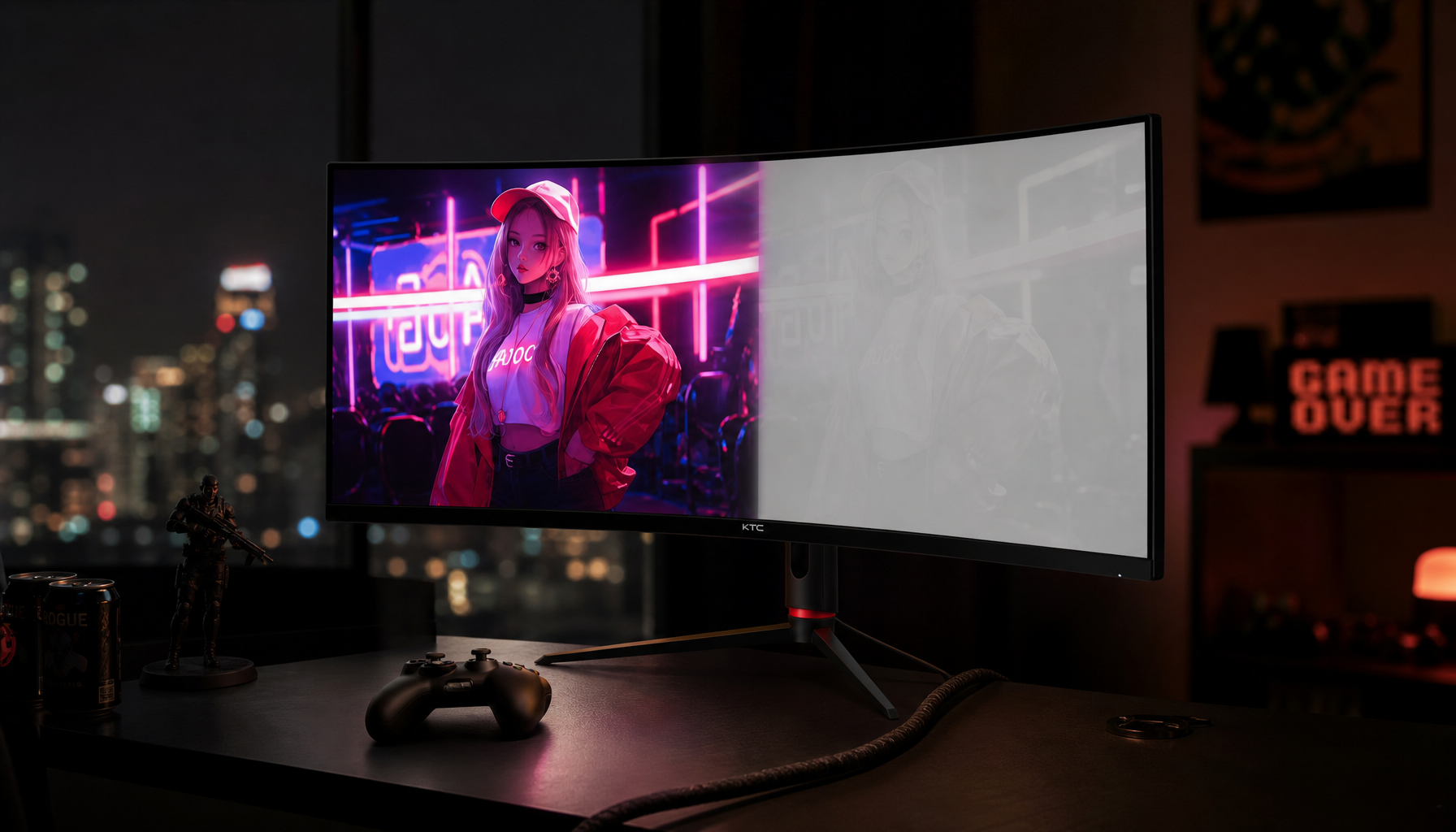
Local dimming behaves differently on IPS, VA, and OLED screens. IPS needs more help from the algorithm, VA gives the algorithm a stronger contrast base, and OLED mostly avoids the problem with pixel-level light control.
Ever notice a white mouse cursor glowing in a dark game menu, or subtitles lighting up a gray cloud around them? The right panel and dimming match can reduce that distraction while keeping HDR highlights bright and readable. Here is how to choose a display that feels immersive in games, steady for work, and honest about its tradeoffs.

What Local Dimming Actually Controls
Local dimming is a backlight control system for LCD monitors. Instead of lighting the whole panel evenly, the display divides the backlight into zones that brighten or dim based on the image. That is why local dimming can make dark areas darker while keeping bright areas bright.
The key limitation is simple: a dimming zone is much larger than a pixel. If a tiny star, cursor, crosshair, or subtitle sits inside one zone, that whole zone may brighten. The result is blooming, where light spills into nearby dark pixels. Full-array Mini-LED improves this by placing many small LEDs behind the panel, and Mini-LED backlighting can use hundreds or thousands of controlled zones for finer contrast.
The algorithm decides how aggressively each zone reacts. A conservative setting preserves stable desktop brightness but leaves blacks more gray. An aggressive setting deepens blacks and boosts HDR punch, but it can crush shadow detail, create halos, or make brightness pulse during motion.
IPS With Local Dimming: Fast, Color-Stable, But Blooming-Prone
IPS is popular because it keeps color and gamma more consistent from different viewing angles. That matters for productivity, design review, streaming setups, and wide desks where you are not always centered. The tradeoff is native contrast: IPS-type contrast is usually similar to TN, often near 1000:1, so blacks can look lighter before any dimming algorithm gets involved.
That lower native contrast makes the local dimming algorithm work harder. When a bright HUD element appears over a dark game scene, the LCD layer itself does not block as much backlight leakage as VA. The algorithm may dim the zone to protect black level, but then the highlight loses impact. Or it may raise the zone for the highlight, making the surrounding dark area glow.
A practical example is a 27-inch 4K IPS Mini-LED monitor used for both spreadsheets and HDR gaming. In a spreadsheet, local dimming can make white cells, gridlines, and the cursor change the brightness of nearby zones, which feels distracting over an eight-hour workday. In a dark RPG or space game, the same dimming system can dramatically improve depth compared with a standard edge-lit IPS display, but the halo around small bright objects will be more visible than on a high-contrast VA panel with similar zone density.

IPS local dimming works best when you value wide viewing angles, color consistency, high refresh performance, and occasional HDR. It is less ideal if you want to leave local dimming enabled all day across code editors, documents, white web pages, and dark-mode apps.
VA With Local Dimming: The Algorithm Gets a Better Starting Point
VA panels are natural allies of local dimming because they block light more effectively. VA panels commonly reach much higher static contrast, often around 2000:1 to 5000:1, which means the backlight algorithm does not have to fight as much panel leakage.
That stronger native black level reduces the visible penalty when a zone brightens. If a small torch appears in a dark hallway, a VA Mini-LED monitor can let the torch pop while the panel’s own light blocking helps keep surrounding shadows more convincing. The same zone count that looks merely acceptable on IPS may look cleaner on VA because the LCD layer is doing more of the contrast work before the backlight changes.

The weakness is motion, especially dark transitions. Some VA monitors can show smearing in shadow-heavy movement, where dark objects trail or blur more than expected. Modern high-refresh VA panels have improved, but panel tuning still matters. For gaming, the best VA local dimming experience comes from a monitor with strong overdrive control, low input lag, and enough zones to prevent large glowing blocks around HUD elements.
For mixed use, VA is often the most value-oriented Mini-LED choice. It can handle movies, atmospheric games, and office work better than its reputation suggests, especially if the monitor offers quick switching between local dimming modes. The main watchouts are viewing-angle shifts on wide screens, black crush in poorly tuned modes, and dark-scene motion artifacts.
OLED and Local Dimming: Different Game, Different Risks
OLED does not need local dimming in the LCD sense. Each pixel emits its own light and can turn off independently, so it gets pixel-level black control instead of zone-level backlight control. That is why OLED panels deliver excellent contrast and avoid Mini-LED-style blooming around small bright objects.
For dark-room gaming, movies, and cinematic single-player titles, OLED is still the cleanest solution. A starfield does not force a large backlight zone to illuminate. A subtitle does not create the same broad halo. Fast pixel response also helps motion look crisp, which is why OLED feels so immediate in high-frame-rate games.
The tradeoff is not image drama; it is ownership fit. OLED can be vulnerable to burn-in from long-term static elements such as taskbars, health bars, editing panels, browser tabs, or spreadsheet ribbons. Text clarity can also vary because many OLED monitor subpixel layouts do not match the standard RGB structure that desktop operating systems expect. For a gaming-first setup with varied content, OLED is compelling. For a work-only monitor showing static UI for long hours, Mini-LED IPS or VA remains the safer long-term tool.

Brightness is another key difference. Monitor testing often shows that LED monitors, especially full-array Mini-LED models, can get brighter in bright rooms than OLED. In plain terms, OLED wins black precision; Mini-LED often wins sustained brightness.
The Panel and Algorithm Relationship in One View
Panel type |
How local dimming behaves |
Best fit |
Main compromise |
IPS Mini-LED |
Needs aggressive zone control to overcome weaker native blacks |
Color work, wide viewing angles, fast gaming, bright rooms |
More visible blooming and desktop brightness shifts |
VA Mini-LED |
Uses strong native contrast to hide more backlight leakage |
HDR gaming, movies, immersive dark scenes, mixed use |
Possible dark smearing and viewing-angle shifts |
OLED |
Uses per-pixel light control instead of backlight zones |
Dark-room gaming, cinematic HDR, premium motion clarity |
Burn-in risk, text clarity concerns, lower sustained full-screen brightness |
Zone Count Matters, But It Is Not the Whole Story
More zones usually mean smaller illuminated areas, which reduces blooming. A 32-inch monitor with 1,152 zones can control highlights more precisely than a similar 32-inch monitor with 384 zones, assuming the algorithm and optical stack are equally strong. But that assumption is the trap.
The same zone count can perform differently across panel types. On IPS, each zone’s leakage is more visible because native contrast is lower. On VA, the panel blocks more light, so the same algorithm may appear cleaner. On OLED, zone count is irrelevant because every pixel is its own light source.
The diffuser layer also matters. A diffuser spreads light to avoid harsh grid patterns, but too much spread softens local contrast and can make halos wider. Driver speed matters as well. If the backlight reacts too slowly, bright objects can drag a light trail behind them. If it reacts too aggressively, shadow detail can disappear.
For a real buying decision, compare displays by screen size class, panel type, HDR brightness, and measured behavior, not just the biggest zone number on the box. A smaller 27-inch monitor with 1,152 zones has denser control than a much larger screen with the same count.
Practical Settings for Gaming, Work, and Portable Screens
For HDR games and movies, enable local dimming and start with the medium or balanced mode. This usually gives the best tradeoff between black depth, highlight brightness, and artifact control. If the game has many dark scenes with small UI elements, test the high setting, then watch for halos around maps, subtitles, and crosshairs.
For SDR office work, coding, web browsing, and spreadsheets, consider turning local dimming off or using the lowest setting. White windows on dark backgrounds, mouse cursors, and text blocks are exactly the patterns that reveal zone changes. A stable backlight is often more comfortable for long productivity sessions.
For portable smart screens, prioritize consistency over peak drama. Many portable displays have limited brightness and thinner thermal envelopes, so aggressive dimming can look unstable if the hardware cannot sustain it. If you use a portable monitor for travel work and occasional console gaming, an IPS panel may be the practical choice for viewing angles, while OLED is better for premium media if you manage static content carefully.
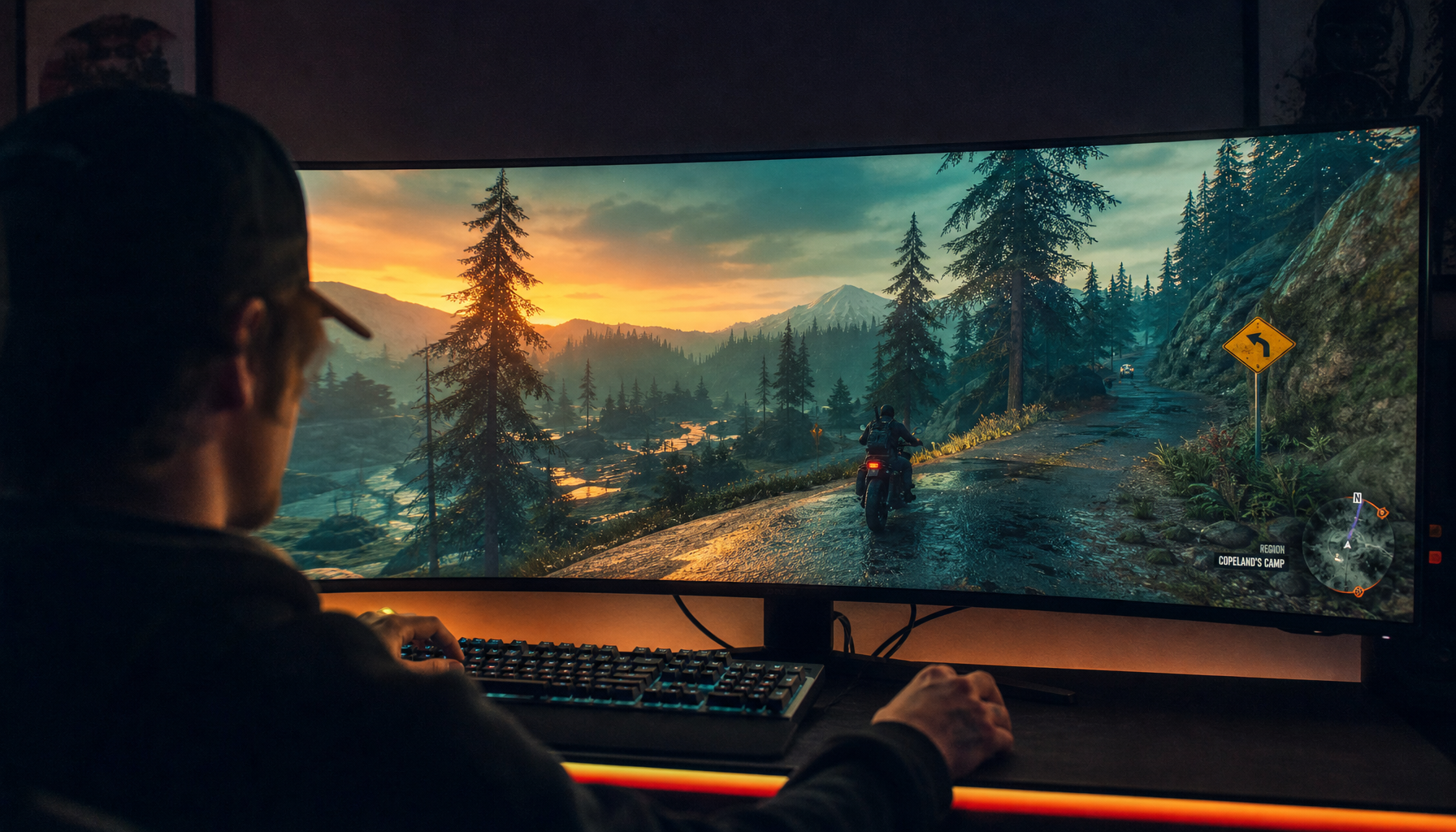
For competitive gaming, local dimming is optional. Motion clarity, refresh rate, response tuning, and input lag matter more than black depth in fast esports play. For immersive gaming, especially horror, night racing, open-world exploration, and HDR action titles, local dimming becomes much more valuable.
Which Should You Buy?
Choose IPS Mini-LED if you want a dependable all-rounder for work, creation, and gaming, and you can tolerate some blooming in exchange for color stability and wide viewing angles. It is the practical pick for shared desks, multi-monitor setups, and users who move between documents and games.
Choose VA Mini-LED if contrast and immersion matter most, but you still want strong brightness and no OLED burn-in concern. It is a strong value play for HDR gaming, streaming, and dark-room entertainment, provided the specific monitor handles motion well.
Choose OLED if you want the cleanest blacks, fastest perceived pixel response, and the least haloing. It is the premium visual choice for varied gaming and media, but less reliable for static, all-day productivity unless you are disciplined with brightness, screen savers, taskbar behavior, and content rotation.
The smartest display is not the one with the flashiest spec sheet. It is the one where the panel, backlight hardware, and dimming algorithm fit your actual day: hours of work, minutes of competitive play, and the moments when HDR is supposed to feel alive.