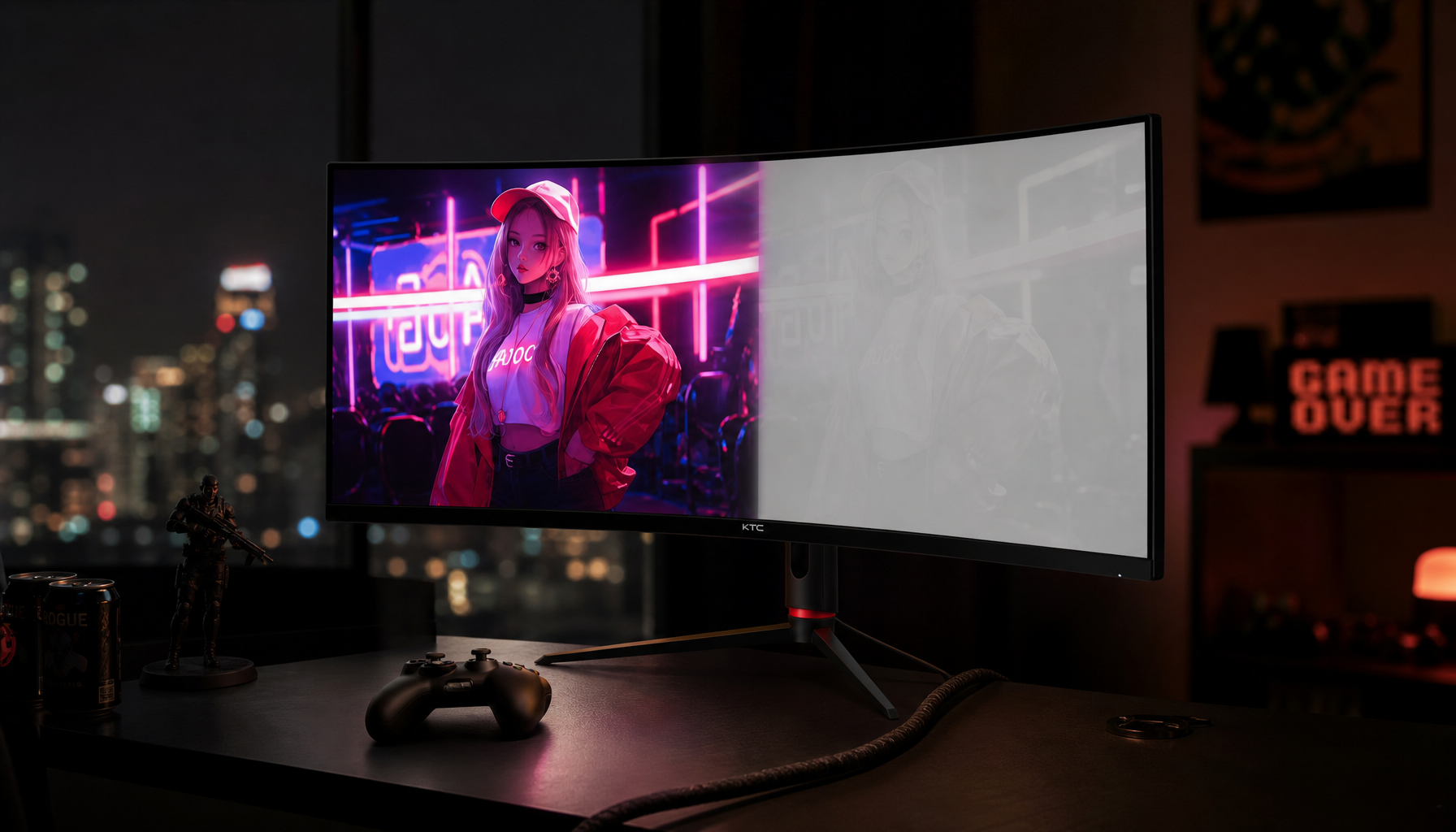
Inverted halos happen when a local dimming zone darkens to protect a small dark object, but the zone is larger than the object. The result is a shadow-like patch around dark text, UI elements, crosshairs, or silhouettes on a bright background.
The Core Cause: Zones Are Bigger Than Pixels
On an LCD monitor or TV, local dimming controls the backlight in zones, not individual pixels. A Mini LED display may have hundreds or thousands of zones, but each zone still covers many pixels, so a black cursor on a white document can force the display to compromise.

That compromise is simple: keep the bright background bright and the dark object looks lifted, or dim the zone and the nearby white area looks gray. Because each backlight zone adjusts independently, the algorithm can create a darker aura around the object instead of a bright bloom.
This is the inverse of the classic halo problem. Blooming is bright spill around light objects in dark scenes; inverted haloing is dimming spill around dark objects in bright scenes.
Why Bright Desktop Content Makes It Obvious
Inverted halos are easiest to see in office and productivity use because the content is high contrast, flat, and static. Think black text on a white spreadsheet, a dark mouse pointer on a bright browser page, or a small dark icon on a light toolbar.

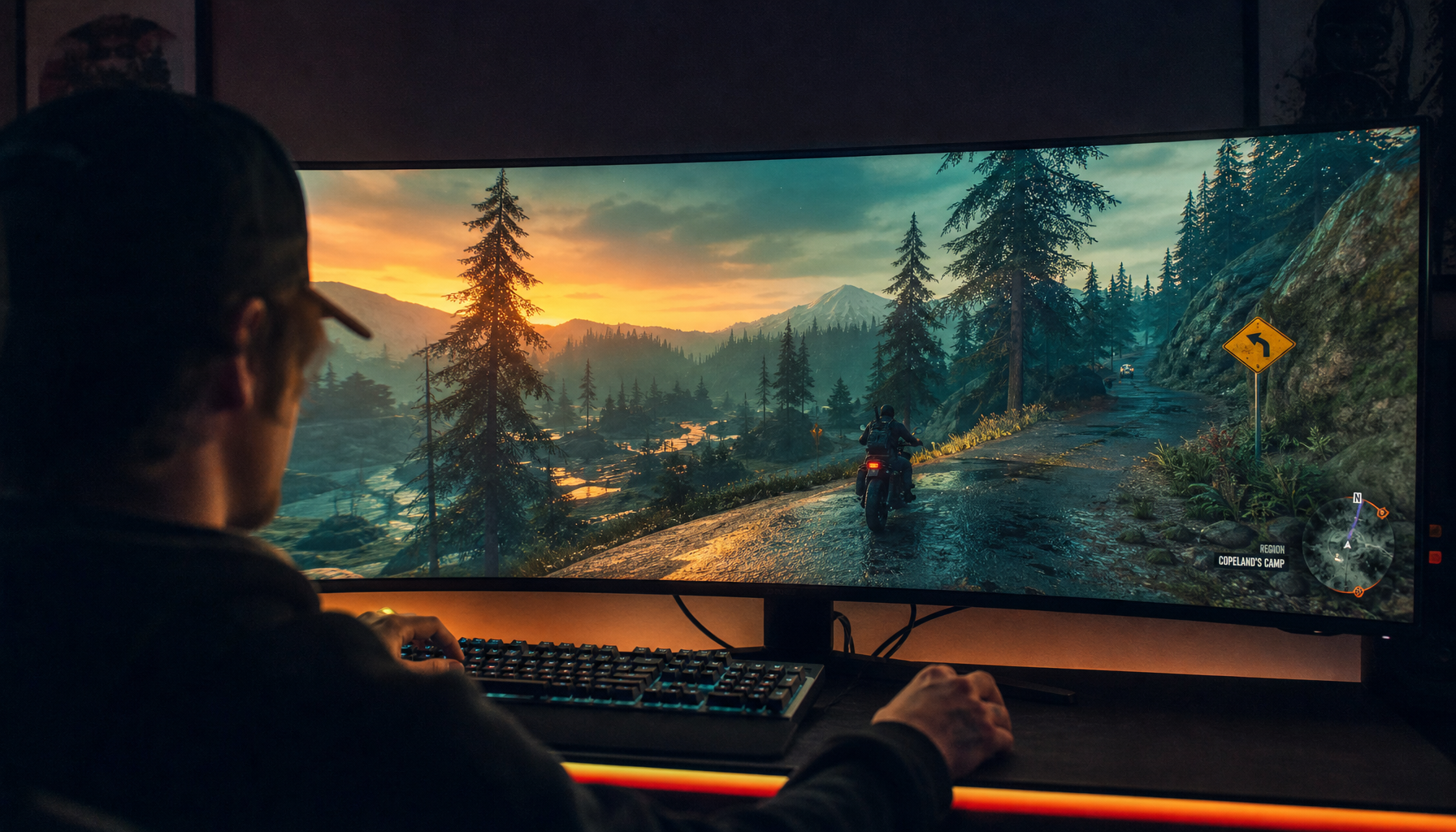
Gaming can reveal it too. A dark weapon sight, HUD marker, or character silhouette against snow, sky, or a bright wall may look like it has a faint gray shadow around it. For competitive players, that can make the display seem to soften edge clarity even when resolution and sharpness are fine.

The issue becomes more visible when local dimming is set aggressively. Higher dimming modes often deepen blacks, but they can also make local dimming problems such as blooming, trailing, or black crush more noticeable.
The Algorithm Is Trying to Avoid a Worse Artifact
A good local dimming system is not just counting zones. It is constantly deciding how much light to send through the LCD layer, how fast zones should react, and how much contrast to preserve without distracting artifacts.
Some displays dim surrounding areas more than expected because the processor is trying to stop a dark object from turning gray. Others keep the zone brighter, which preserves the white background but weakens the dark object. Neither choice is perfect because LCD pixels still depend on a shared backlight.
This is why zone count matters, but it is not the whole story. More zones reduce the size of the affected area, while better processing improves how smoothly those zones respond. Full-array and Mini LED systems usually outperform edge-lit dimming because they can control smaller regions with more precision, as explained in full-array local dimming.
A monitor with fewer zones but smarter tuning can look cleaner than a higher-zone model with slow or overly aggressive dimming behavior.
How to Reduce Inverted Halos
For productivity, the fastest fix is often to turn local dimming off in SDR. That gives up some perceived contrast, but it usually makes text, documents, code editors, and web pages look cleaner.
For HDR games and movies, keep local dimming on, but avoid the most aggressive mode if dark outlines become distracting. Some Mini LED monitors also include a halo control or custom dimming level; a middle setting often gives the best balance between contrast and edge stability.
Quick settings to try:
- SDR desktop: Turn local dimming off.
- HDR games: Use medium or custom local dimming.
- Halo control: Reduce it from maximum if bright detail looks dull.
- Brightness: Lower it slightly in dark rooms.
- Sharpness: Avoid high settings that add edge halos.
Picture controls can interact, so adjust in small steps. A practical calibration flow is to set black level so shadow detail remains visible, then set contrast so bright detail is not clipped, following the same logic used for black level and white level tuning.
What It Means When Buying a Display
If you work all day in white-background apps, do not buy a Mini LED monitor only for zone count. Look for reviews that test desktop behavior, local dimming modes, game mode dimming, and motion transitions.
For HDR-first gaming and media, Mini LED remains a strong value because it offers high brightness, strong contrast, and no OLED burn-in risk. For precise dark objects on bright backgrounds, OLED still has the structural advantage because each pixel controls its own light.

The best choice depends on your workload. Mini LED is the power-and-brightness pick, OLED is the per-pixel precision pick, and a well-tuned LCD with local dimming off can still be the cleanest everyday office display.