Quantum dot film changes an IPS monitor’s color by reshaping the light spectrum before it reaches the LCD layer. The backlight can stay blue LED-based, while the film converts part of that light into cleaner red and green for wider, richer color.
The Backlight Stays Put, the Spectrum Changes
In a typical IPS LCD, the LED backlight shines through optical layers, liquid crystals, and color filters. The IPS panel still controls brightness per pixel and preserves the wide viewing angles people expect from productivity and creator displays.
Quantum dot enhancement film sits between the backlight and the LCD stack. When blue LED light hits the film, the quantum dots emit narrow red and green wavelengths while some blue passes through, creating a more precise RGB light source for the filters to shape.

That is why a quantum dot IPS monitor can look more saturated without becoming a different panel type. The display is still IPS; the light feeding it is cleaner and more targeted.
Why Quantum Dots Improve Color
Quantum dots are tiny semiconductor particles, and their size affects the color they emit. Smaller dots push toward shorter wavelengths, while larger dots produce longer-wavelength light, which is the core reason quantum dot displays can create highly pure color.
For an IPS panel, that matters because the LCD color filters no longer need to carve red, green, and blue out of a broad, messy white-light source. They start with narrower spectral peaks, so less color energy is wasted.
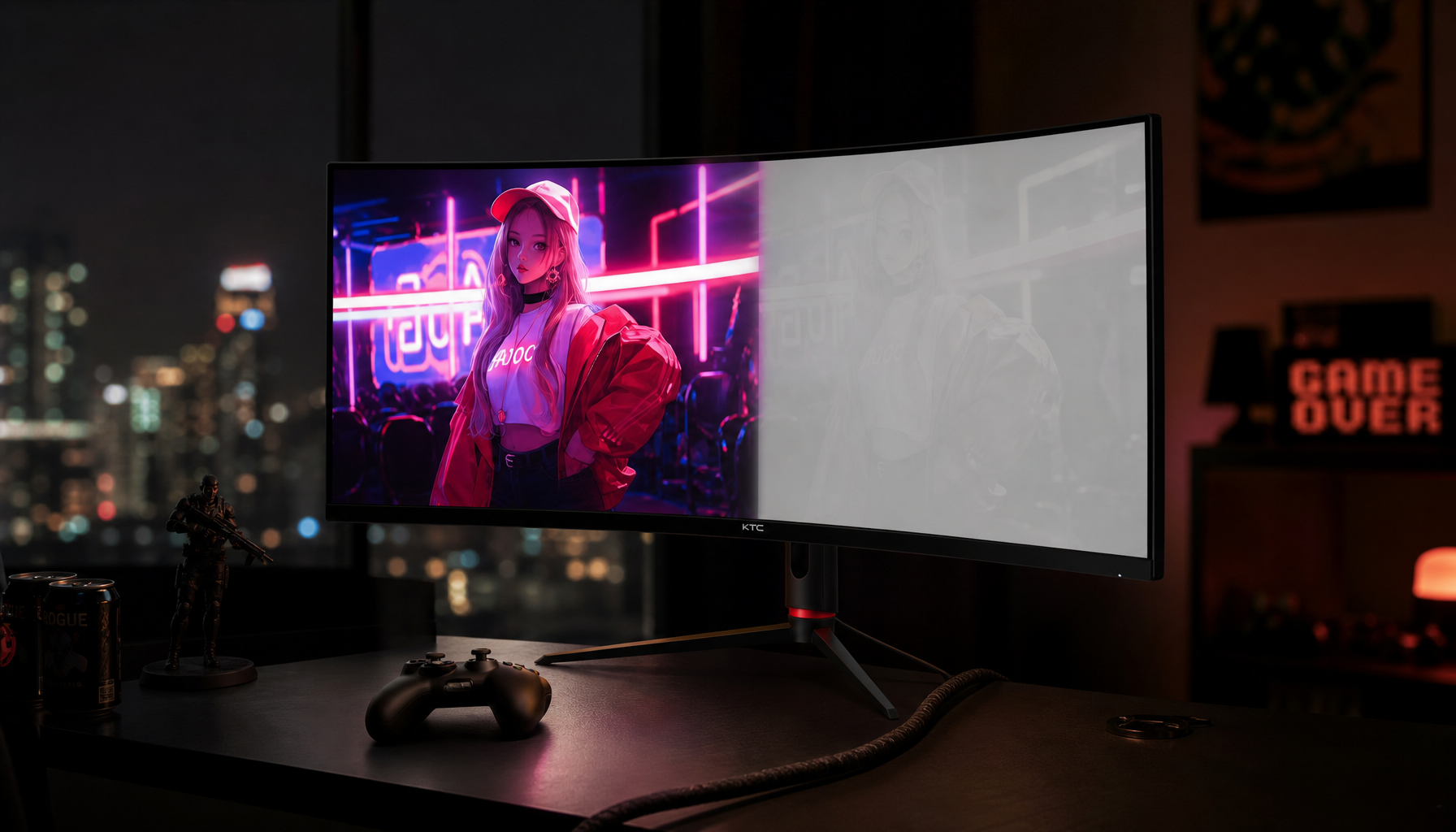
The practical result is wider gamut. Many quantum dot LCDs target strong DCI-P3 coverage, while some implementations can go far beyond standard sRGB. For gaming, that means brighter spell effects, cleaner neon signage, and more convincing HDR color. For office and creative work, it means richer charts, sharper brand colors, and more headroom for color-managed workflows.

What Changes on an IPS Monitor
Quantum dot film does not make IPS behave like OLED, VA, or Mini LED by itself. It mainly improves the color quality of the light source.
When the implementation is good, a quantum dot IPS monitor can deliver wider color gamut for HDR games, movies, and creative apps; better color volume in bright saturated scenes; more vivid reds and greens without simply boosting saturation; and potential brightness-efficiency gains compared with heavily filtered white light.
IPS strengths remain intact. You still get stable off-angle color and consistency across shared desks, dual-monitor layouts, and wide workstations. That matters because IPS monitors are already valued for broad viewing angles and reliable color behavior.
The limitation is contrast. Quantum dot film does not create pixel-level black control, so an IPS panel can still show IPS glow or grayish blacks in dark rooms.
Why It Matters for Gaming, Work, and Portable Screens
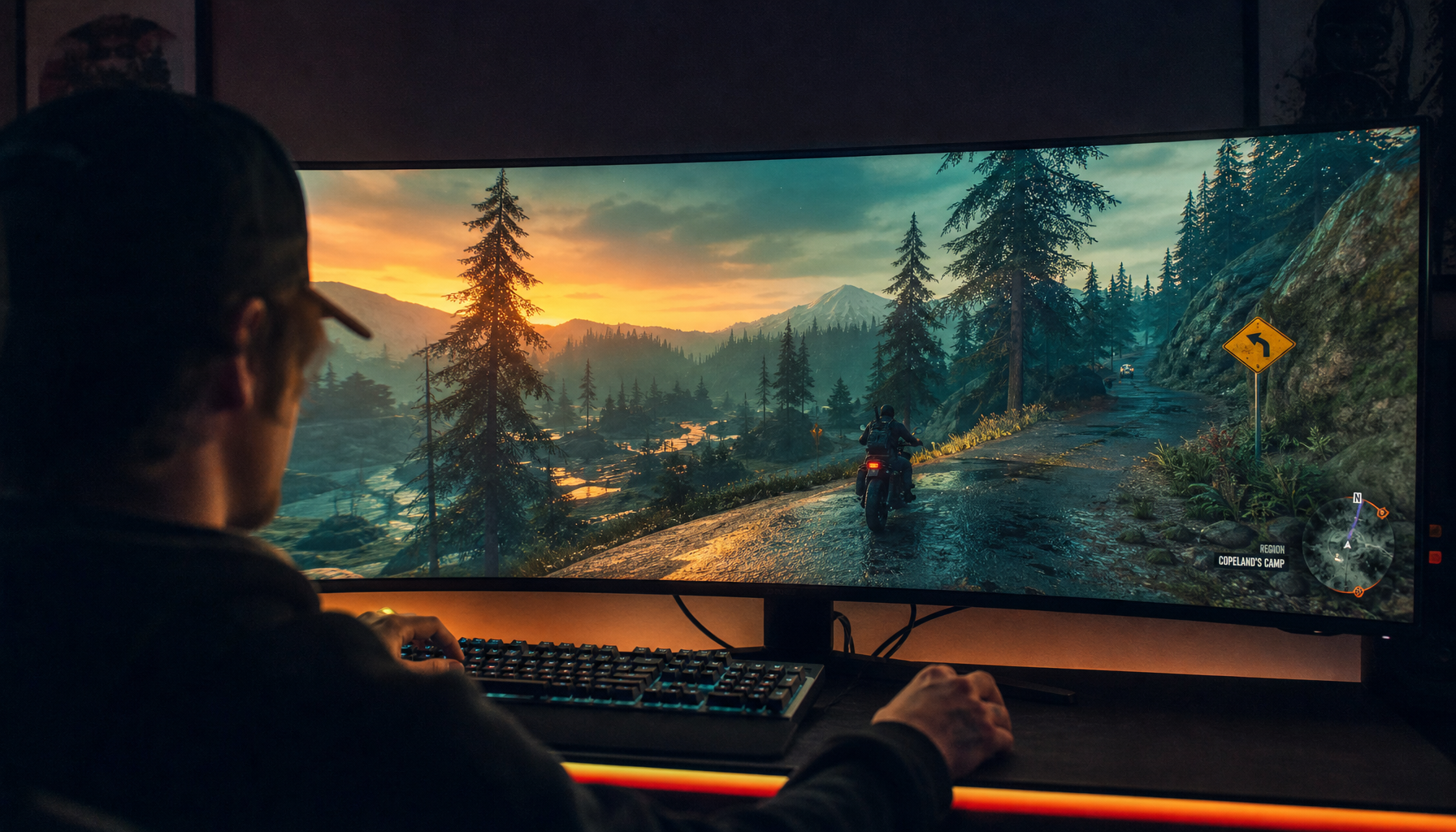
For gaming, quantum dot IPS is about speed plus spectacle. A fast IPS panel can keep motion clear, while the film gives explosions, skies, armor, and UI highlights more punch than a basic sRGB-class LCD.
For productivity, the benefit is subtler but still valuable. Spreadsheets, dashboards, slide decks, and browser work look cleaner when whites are balanced and colors are distinct without becoming cartoonish.

For portable smart screens, quantum dot film can be especially useful because small displays often have to balance brightness, battery life, and color performance at the same time. A more efficient color-conversion layer can help a compact screen feel premium without switching to a self-emissive panel that may be more susceptible to burn-in.
One nuance: wide gamut is not the same as accuracy, so a quantum dot IPS display still needs a good sRGB mode or calibration for color-critical work.
How to Judge a Quantum Dot IPS Display
Do not buy only because the spec sheet says “quantum dot.” Judge the whole display system.
Look for DCI-P3 coverage, sRGB mode quality, HDR brightness, factory calibration, contrast ratio, refresh rate, and response-time behavior. A strong quantum dot layer cannot rescue poor tuning, weak overdrive, or bad uniformity.
For creators, prioritize gamut coverage and calibration controls. For competitive players, prioritize refresh rate, response time, and input behavior first, then color. For hybrid users, quantum dot IPS is compelling because it adds immersion without giving up the familiar reliability of an LCD workspace.