Local dimming can make motion look punchier by improving contrast, but it does not directly fix sample-and-hold blur. In some scenes, slow or aggressive dimming can add halos, brightness pumping, or light trails that your eyes read as worse motion clarity.
Does your 4K monitor look razor-sharp on the desktop, then turn soft the moment you pan across a dark game map or scroll a dense spreadsheet? A practical motion test can show where blur, ghosting, or halo trails begin across horizontal, vertical, diagonal, and bouncing movement. You’ll leave with a clear way to decide when local dimming helps, when to turn it down, and which specs matter more for clean motion.
The Short Version: Local Dimming Changes Contrast, Not Pixel Persistence
Sample-and-hold displays, including most LCD and OLED monitors, hold each frame on screen until the next refresh. Your eyes keep tracking the moving object while the frame stays fixed, so the image smears across your retina. Local dimming works in a different layer: it changes the brightness of backlight zones behind an LCD panel, so dark areas can dim while highlights stay bright.
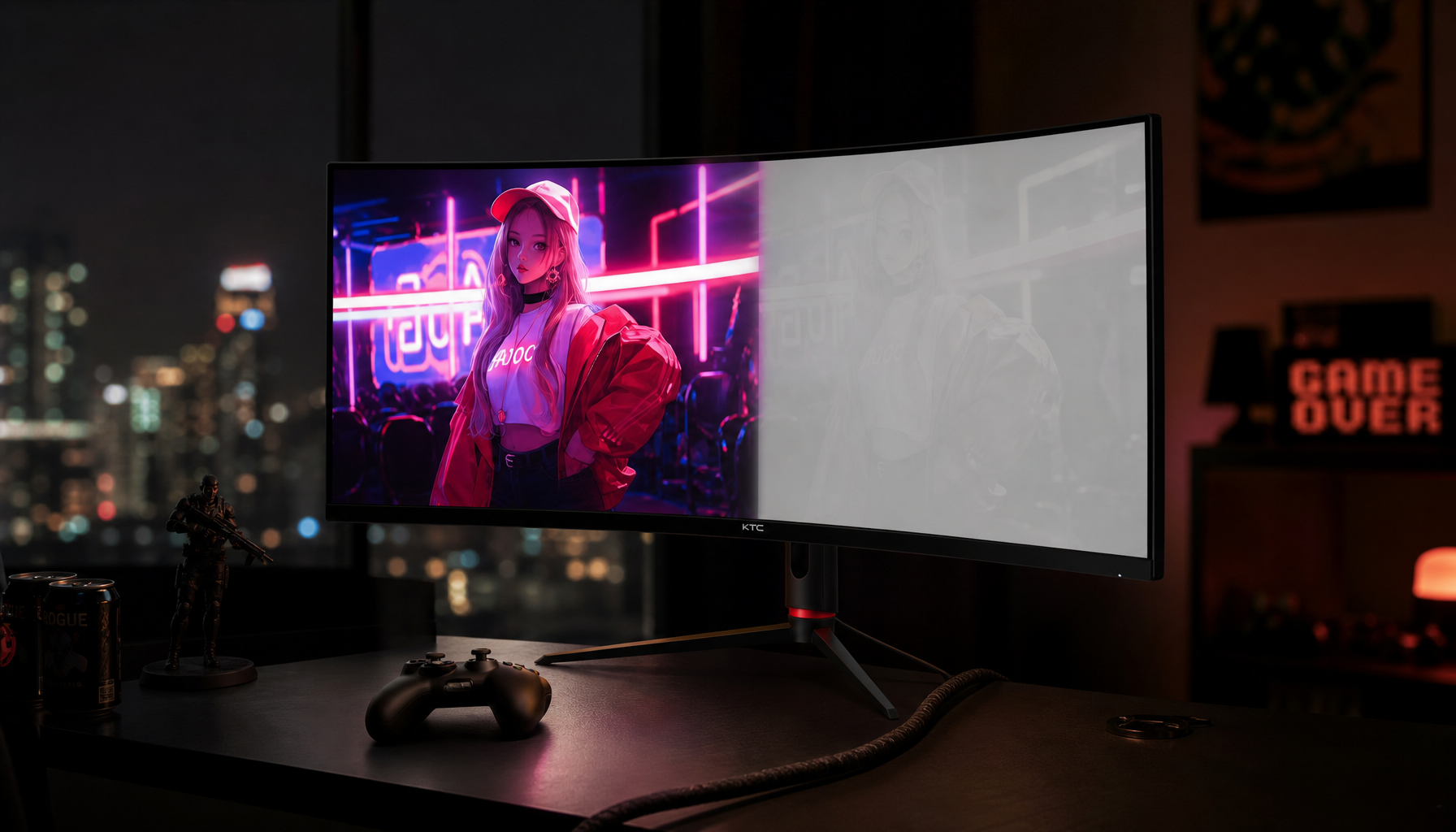
That means local dimming can improve perceived image separation, especially in HDR games, movies, and dark UI scenes. A bright muzzle flash against a black corridor may look more dimensional on a Mini-LED display than on a basic edge-lit LCD. But the backlight zones are not drawing new motion detail between frames. If a 60 Hz sample-and-hold image is blurry during a fast pan, local dimming alone will not make it behave like a CRT or a well-tuned strobe mode.

What Local Dimming Actually Does
Local dimming divides an LCD backlight into controllable zones rather than lighting the whole panel evenly. Mini-LED improves this approach by using many smaller LEDs, which lets manufacturers build displays with hundreds or thousands of zones for more precise brightness control; Mini-LED backlighting is valued because it can raise luminance, improve contrast, and preserve bright HDR highlights while dimming darker regions.
The visual upside is real. Black scenes look less gray, HDR highlights hit harder, and dark content gains depth. For gaming, that can make enemies, HUD markers, headlights, stars, explosions, and spell effects feel more separated from the background. For productivity, it can make high-contrast media editing or HDR footage review more convincing.
The drawback is that each zone still covers many pixels. When a small bright object moves across a dark background, the display has to decide which backlight zones to brighten, how fast to brighten them, and how much nearby darkness to sacrifice. If the algorithm is slow or the zone is too large, the moving object can drag a glow with it.

Why Sample-and-Hold Blur Still Dominates Motion Clarity
Motion clarity is mostly governed by frame time, pixel response, overdrive behavior, and whether the display uses blur reduction such as backlight strobing. At 60 Hz, each frame lasts about 16.67 ms; at 240 Hz, each refresh interval is about 4.17 ms. A high-refresh discussion makes the key point: 60 FPS content does not automatically become clearer just because the monitor can refresh at 240 Hz, unless a feature such as strobing changes visible persistence.
Local dimming sits beside those motion systems, not above them. It can make a moving object easier to see because the object has stronger contrast against the background. Yet if the frame is held too long, eye-tracking blur remains. If the pixels transition slowly, ghosting remains. If overdrive is too aggressive, inverse ghosting remains. If the backlight zones transition late, a new artifact is added on top.
A simple example makes the distinction clear. Imagine a white cursor moving quickly across a black desktop on a Mini-LED monitor. Good local dimming can make the black desktop look genuinely dark. Poor local dimming can create a soft halo around the cursor. Neither case changes the cursor’s actual frame persistence; the difference is whether the backlight behavior makes the moving cursor easier or harder to track.
How Local Dimming Can Improve Perceived Motion
Local dimming helps most when motion clarity is limited by low contrast rather than by persistence. In a dark HDR game, a monitor with stronger backlight control can reveal the edge of a moving torch, reflection, or vehicle light more clearly. The moving object may still have sample-and-hold blur, but the brighter highlight and deeper surrounding black can make its shape feel better defined.
This is especially valuable on LCD panels with weaker native black levels. Standard LCD backlights illuminate broad areas, so dark parts of the image can look gray; local dimming improves dark scenes by dimming specific backlight areas instead of treating the whole screen as one uniform light source. In practice, that can make nighttime driving games, space scenes, and cinematic single-player titles feel more immersive.
There is also a power and brightness management angle. In one 55-inch digital signage example, a local-dimming model used 0.2 kWh under the same conditions where a conventional outdoor unit used 0.41 kWh, framing local dimming digital signage as both a contrast and efficiency tool. For monitors, the exact numbers depend on the model, but the principle is useful: smarter backlight control can deliver brighter highlights without always blasting the whole panel.
How Local Dimming Can Hurt Perceived Motion
The main risk is zone lag. If the backlight does not follow a moving object quickly enough, you may see a glow that trails behind it or a dim leading edge before the zone catches up. Your brain may interpret that as motion blur even when the LCD pixel response is acceptable.
Aggressive dimming can also crush shadow detail during motion. A dark enemy moving through a dim corridor may become harder to track if the algorithm prioritizes deep blacks over low-end detail. On the desktop, the same behavior can appear as brightness pulsing when moving windows, dragging a white cursor, or scrolling pages with mixed dark and bright blocks.
Zone count helps, but it is not a guarantee. Local dimming is zone-based brightness control, while Mini-LED enables finer control than conventional LED backlights; separate screen zones are the foundation, but the final result still depends on processing speed, diffuser design, thermal control, and firmware choices. A high-zone monitor with sluggish dimming can look worse in motion than a lower-zone monitor with restrained, well-tuned dimming.
Scene |
Local Dimming Benefit |
Possible Motion Problem |
Best Setting to Try |
HDR game at night |
Deeper blacks and brighter highlights |
Halo trails around HUDs or weapons |
Medium local dimming |
Office work in SDR |
Better contrast in dark themes |
Brightness shifts while scrolling |
Off or Low |
Movie subtitles |
Stronger dark-room contrast |
Blooming around white text |
Low or Medium |
Fast esports |
Higher visual pop in dark maps |
Added processing artifacts |
Test Off versus Low |
Better perceived depth if supported |
Battery and brightness behavior may vary |
Balanced brightness |
Testing It Yourself Without Guesswork
Use motion tests before deciding that local dimming is helping. A motion blur tool with animated cars and multiple movement directions can help you spot blur, ghosting, and artifacts during fast-moving objects. Run it with local dimming Off, Low, Medium, and High, then compare where the car starts to smear, whether a glow follows it, and whether dark backgrounds pulse.

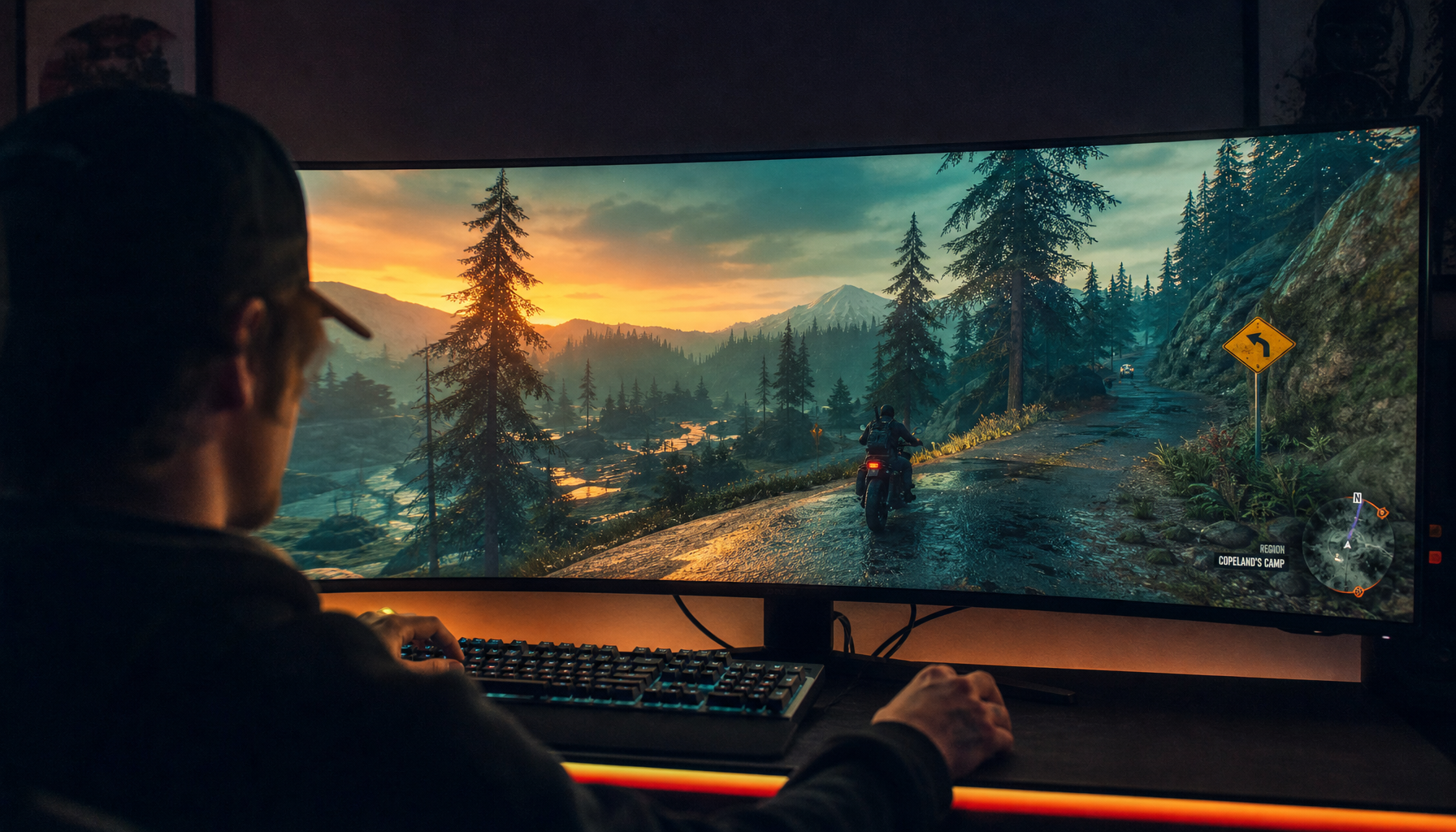
Do the same with real content. In a game, use a dark scene with a bright crosshair, lamp, subtitle, cursor, or HUD marker. Pan slowly, then quickly. If the object stays clean but the glow follows behind, that is local dimming transition behavior. If the whole object turns soft equally with local dimming on or off, you are seeing sample-and-hold blur or pixel response limits.

For a more technical check, display measurement practice matters. Slanted-edge patterns are recommended for display sharpness testing because pixel-aligned edges can produce misleading best-case results; display sharpness is best evaluated with controlled patterns, proper exposure, and a camera setup that avoids saturating the display. Most buyers do not need a lab rig, but the principle still applies: use repeatable patterns and change one setting at a time.
Buying Advice for Gaming, Office, and Portable Screens
For competitive gaming, prioritize refresh rate, measured response behavior, input lag, overdrive quality, and usable blur-reduction modes before local dimming. Local dimming is a contrast feature first. It can make HDR games look more powerful, but it will not rescue a slow panel or a low frame rate.
For immersive HDR gaming, Mini-LED local dimming is worth considering. Look for strong zone density in your chosen screen size, not just a big zone number in isolation. A 27-inch display with the same zone count as a much larger screen has finer zone density, which usually gives the algorithm more precise control. Then confirm that the monitor offers adjustable dimming levels, because Medium often gives a better real-world balance than the most aggressive mode.
For office productivity, local dimming is usually optional in SDR. Spreadsheets, code editors, browser windows, and document work often benefit more from uniform brightness than dramatic contrast. If your monitor shifts brightness as you scroll, turn local dimming off for work and reserve it for HDR games or video.
For portable smart screens, be especially practical. Local dimming can improve contrast and reduce unnecessary backlight output, but small displays are often used in mixed lighting, on battery power, and with varied sources such as laptops, consoles, and cell phones. A stable 120 Hz panel with clean response can feel better for everyday movement than a flashier panel with inconsistent dimming behavior.
Pros and Cons in Plain Terms
Pros |
Cons |
Improves perceived contrast in dark scenes |
Does not directly reduce sample-and-hold blur |
Makes HDR highlights more impactful |
Can create halos around moving bright objects |
Can improve black levels on LCD monitors |
May cause brightness pumping in desktop use |
Helps separate objects from dark backgrounds |
Higher zone counts can raise cost and complexity |
Can improve energy efficiency in suitable content |
Firmware quality matters as much as hardware |
Practical Settings That Usually Work
Start with the highest stable refresh rate your monitor and GPU support. Then choose the overdrive setting that reduces trailing without adding bright inverse halos. After that, enable local dimming for HDR content and compare Low, Medium, and High in a dark scene with moving highlights. If High creates visible glow trails or crushes dark detail, Medium is usually the smarter performance setting.
For SDR work, disable local dimming if brightness shifts distract you. For 60 FPS games on a high-refresh monitor, use the high-refresh output mode for latency and VRR benefits, but do not expect it to erase 60 FPS persistence blur by itself. For motion-critical play, a higher actual frame rate, better response tuning, or a good strobing mode will matter more.
Local dimming is a powerful immersion tool, not a motion-clarity cure. Use it when contrast and HDR depth make the experience better, turn it down when zone behavior adds trails, and judge motion with repeatable tests instead of spec-sheet promises.