HDR10 defines how content carries HDR brightness and color information; DisplayHDR indicates how much of that HDR experience a monitor can reproduce. Tone mapping sits between them, translating HDR content into the real brightness, contrast, and color limits of your screen.
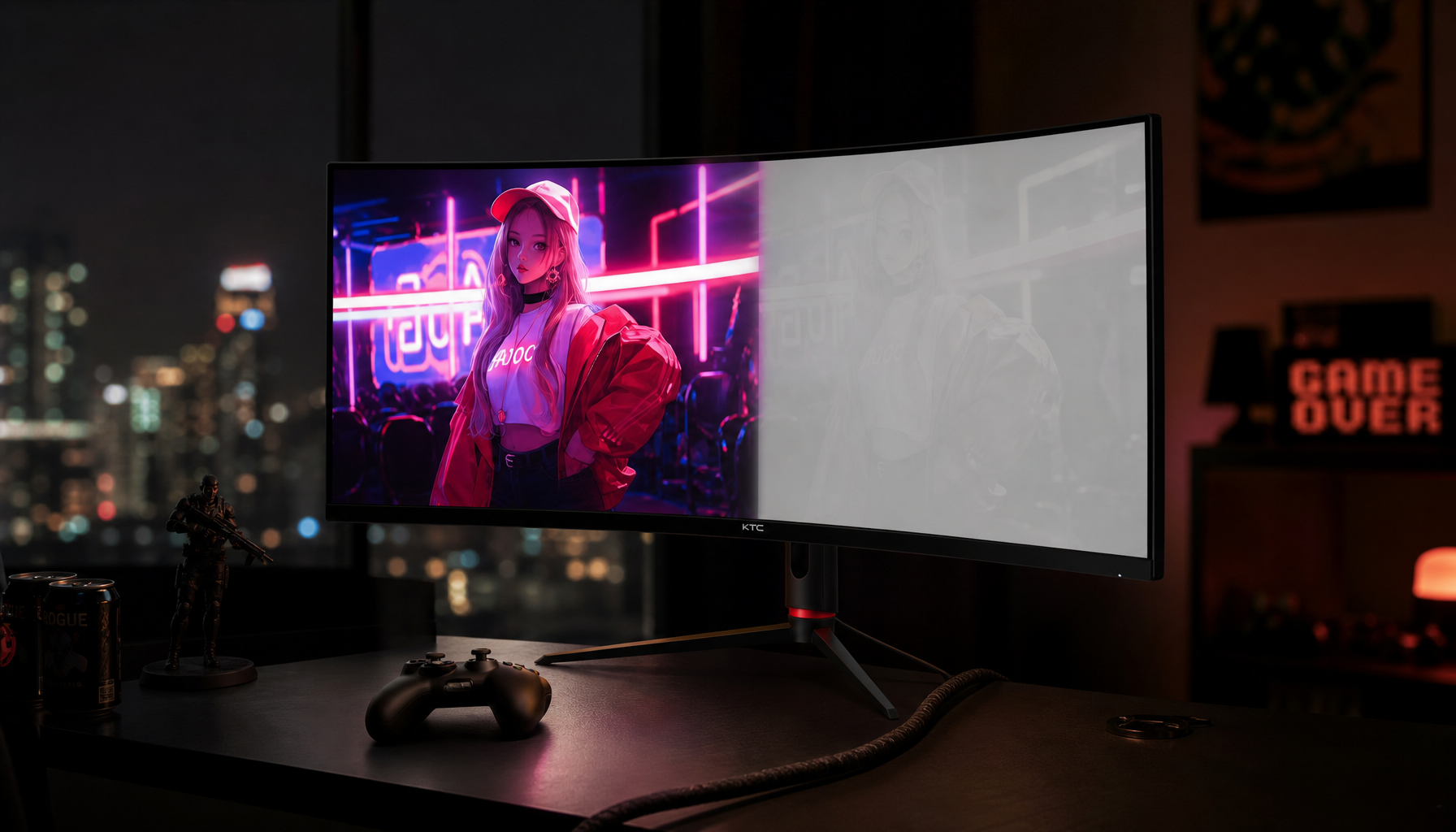
Ever launch a game or movie expecting blazing highlights, only to get a dim desktop, washed-out shadows, or explosions that look like flat white blobs? A practical monitor check can reveal the issue fast: compare a dark corner, a bright sky, and a small highlight after changing HDR mode, and you can often spot clipping or over-compression immediately. Here is how to read the logos, understand tone mapping behavior, and choose the right screen for gaming, office work, and portable setups.
HDR10 vs. DisplayHDR: The Core Difference
HDR10 is the most widespread HDR format, and its job is to define how HDR video data is packaged and interpreted. It uses 10-bit color and static metadata, meaning the brightness guidance applies across the whole movie, episode, or game output rather than changing scene by scene.
DisplayHDR is an open compliance test standard for measuring HDR performance in PC monitors and displays. Instead of being a content format, it evaluates hardware traits such as luminance, color gamut, bit depth, and rise time, then groups displays into tiers such as DisplayHDR 400, 600, 1000, 1400, and True Black variants.
That distinction matters because an HDR10-compatible monitor may accept the signal but still lack the backlight power, black level, local dimming, or color volume to make HDR look convincing. In real use, HDR10 is the language; DisplayHDR is closer to the display’s driving capability.
Standard |
What It Describes |
Tone Mapping Impact |
Buyer Meaning |
HDR10 |
Content and signal format |
Uses static metadata, so the display decides how to compress bright and dark scenes |
Confirms HDR compatibility, not HDR quality |
DisplayHDR |
Monitor performance certification |
Higher tiers usually need less aggressive compression and can preserve more highlight detail |
Helps estimate real HDR impact before purchase |
DisplayHDR True Black |
HDR certification for emissive displays |
Prioritizes deep blacks, fast response, and strong contrast in dark rooms |
Useful for OLED and future microLED-style displays |
What Tone Mapping Actually Does
Tone mapping is the process of adapting high dynamic range video to a display that cannot reproduce every brightness, contrast, and color level encoded in the content. Without it, bright clouds may blow out, neon signs may lose texture, and dark interiors may collapse into muddy gray or crushed black.

The practical reason is simple: HDR content can be mastered far beyond what many monitors can show. Some HDR workflows target 1,000 nits or 4,000 nits, while many consumer and portable screens operate much lower. A 400-nit portable monitor receiving a 1,000-nit HDR10 signal has to compress the top end heavily, so sunlight, sparks, or reflections may lose the extra detail that made HDR exciting in the first place.
HDR expands perceived image quality by representing luminance and color differently from SDR, but it does not magically upgrade a weak panel. If the display cannot get bright, dim locally, or hold color at high brightness, tone mapping becomes damage control rather than performance enhancement.
How HDR10 Tone Mapping Behaves
HDR10 relies on static metadata. That means the monitor receives one set of brightness and color instructions for the whole piece of content, then applies its own tone mapping strategy across scenes that may vary widely.
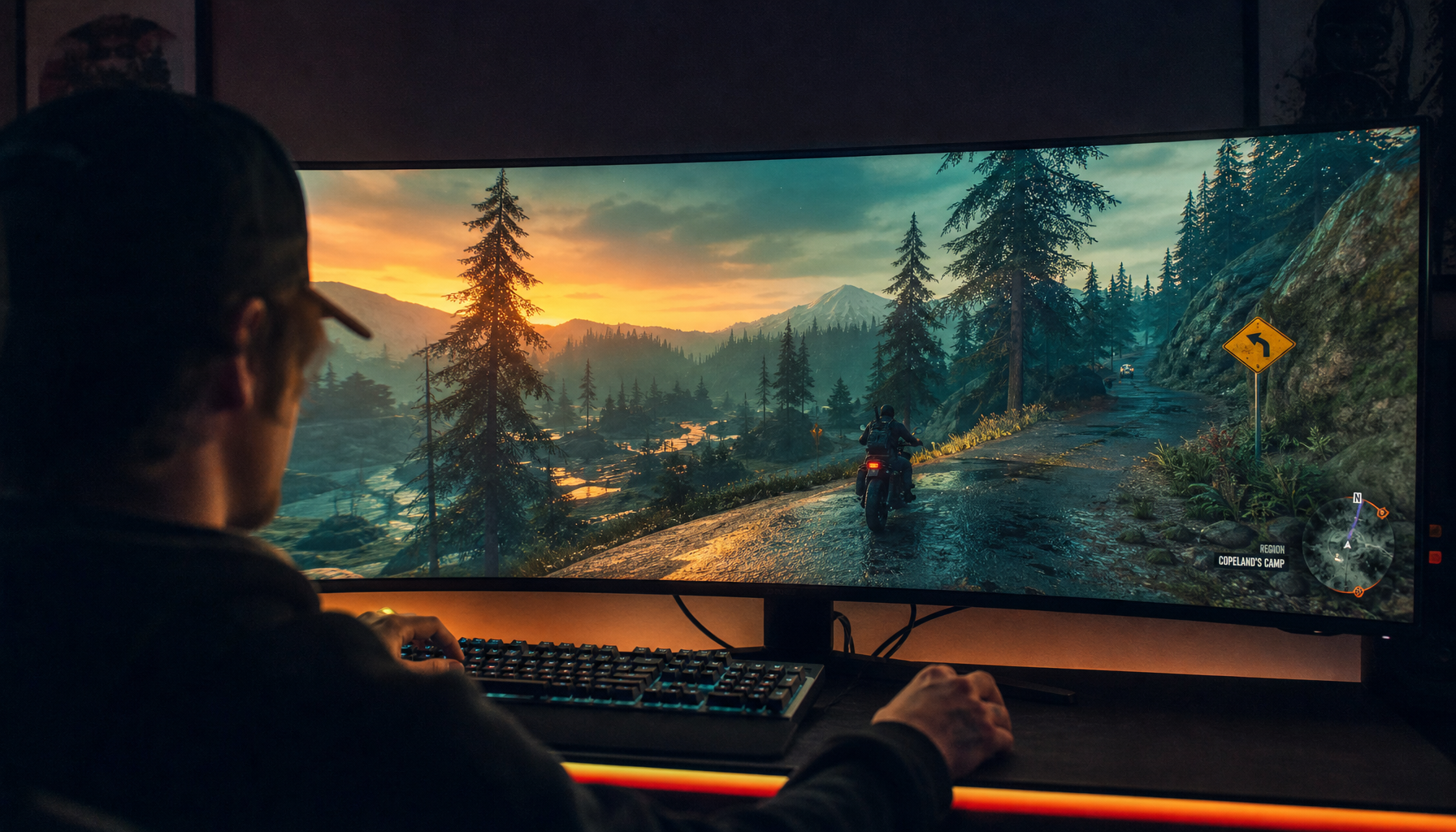
Imagine a sci-fi game with a dark spaceship corridor followed by a sunlit landing zone. On an HDR10 display with limited brightness, the screen may protect the bright outdoor scene by compressing the overall image, which can make the corridor look too dim. Another monitor might lift the shadows for visibility but flatten highlights, making the sunlit area less dramatic.
HDR10 is open and widely supported, which is its biggest advantage. It works across many monitors, consoles, streaming devices, and PCs. The tradeoff is that static metadata leaves more judgment to the display’s own processing. Two HDR10 monitors can behave very differently even with the same content and cable.
For gaming, that variability is especially visible because the image is rendered in real time. A competitive shooter may benefit more from stable visibility and low input lag than theatrical highlight impact. A single-player RPG, racing game, or cinematic adventure can benefit far more from stronger HDR if the monitor has enough brightness and dimming control.

How DisplayHDR Changes the Tone Mapping Expectation
DisplayHDR does not replace HDR10. In fact, many DisplayHDR monitors still need HDR10 support to receive common HDR content. What DisplayHDR changes is the confidence level around the monitor’s physical ability to perform tone mapping well.
DisplayHDR 400 is an entry-level HDR monitor level centered around basic brightness improvement. It can make HDR signals readable and slightly punchier, but it often relies on aggressive tone mapping because there is not much brightness or contrast headroom. On an office monitor, that may be acceptable for occasional HDR video, but it should not be mistaken for a premium HDR gaming experience.
Higher DisplayHDR tiers reduce the compromise. A DisplayHDR 1000 or 1400-class monitor can hold brighter highlights, retain more separation between dark and bright areas, and avoid pushing the entire scene into a dull middle range. DisplayHDR 1400 is positioned around much stronger real-world HDR capability, including high peak luminance, wide color coverage, and effective local dimming.

A useful mental model is compression ratio. If content peaks at 1,000 nits and your monitor peaks near 400 nits, tone mapping must squeeze highlights hard. If your monitor can approach 1,000 nits with competent local dimming, less compression is needed, so specular details such as sparks, headlights, and sun glints look more dimensional.
Pros and Cons for Real Buyers
HDR10’s strength is compatibility. It is the baseline HDR format you want for consoles, PCs, streaming devices, and UHD media. Its weakness is that it tells you very little about the display’s actual HDR quality. A budget HDR10 office monitor and a high-end Mini-LED gaming display may both accept the same signal, yet one may look flat while the other shows clear highlight depth.
DisplayHDR’s strength is measurable expectation. It gives you a faster way to separate basic HDR acceptance from more serious HDR performance. Its weakness is that the logo still needs context. Peak brightness alone is not the whole story, because local dimming behavior, black level, color volume, and panel type affect how tone mapping looks during real scenes.
Dynamic tone mapping adjusts scene by scene or frame by frame, while HDR10’s static approach depends more heavily on the display’s internal decisions. That is why dynamic-metadata HDR formats can sometimes preserve creative intent better on limited hardware, but monitor buyers still need to look at panel capability first. Better metadata cannot make a dim, globally dimmed panel behave like a premium Mini-LED or OLED screen.
Practical Buying Advice for Gaming, Office, and Portable Screens
For immersive gaming, prioritize DisplayHDR 1000 or higher, strong local dimming, low input lag, and a useful HDR calibration mode. HDR10 support should be treated as the entry ticket, not the destination. If you play competitive esports, HDR may be less important than refresh rate, response time, and consistent visibility, and some players may prefer SDR for predictability.
For office productivity displays, do not leave HDR enabled all day unless the monitor handles SDR desktop content cleanly. Many desktop workflows can look dim or uneven when SDR apps are mixed into an HDR output path. A calibrated SDR mode is often better for spreadsheets, coding, writing, and web work, while HDR can be reserved for video review, games, or HDR content checks.

For portable smart screens, be more skeptical. Portable monitors often have lower peak brightness, limited local dimming, and tighter power constraints, so HDR10 support may mainly mean that the screen can accept the signal. If you want a portable display for HDR content, look for clear brightness figures, wide color support, and user controls for HDR tone mapping rather than relying on the logo.
Quick FAQ
Is DisplayHDR Better Than HDR10?
They are not direct competitors. HDR10 is a content and signal standard, while DisplayHDR is a monitor performance certification. The best setup usually has both: HDR10 support for compatibility and a strong DisplayHDR tier for visible HDR impact.
Why Does HDR Look Different on Two Monitors With the Same HDR10 Content?
The same HDR content can look different across monitors because each display has different brightness limits, black levels, color behavior, and tone mapping algorithms. One monitor may preserve highlights, while another may brighten shadows or compress everything into a flatter image.
Is DisplayHDR 400 Enough?
DisplayHDR 400 is enough for basic HDR compatibility and a modest brightness lift, especially on value-oriented office displays. For obvious HDR gaming or cinematic depth, look higher, ideally toward 600, 1000, or better, with real local dimming and strong color performance.
Final Word
Treat HDR10 as the format your content speaks and DisplayHDR as the monitor’s proof of strength. For a screen that feels immersive instead of merely compatible, buy for measurable brightness, contrast control, color volume, and tone mapping behavior, not just the presence of an HDR badge.