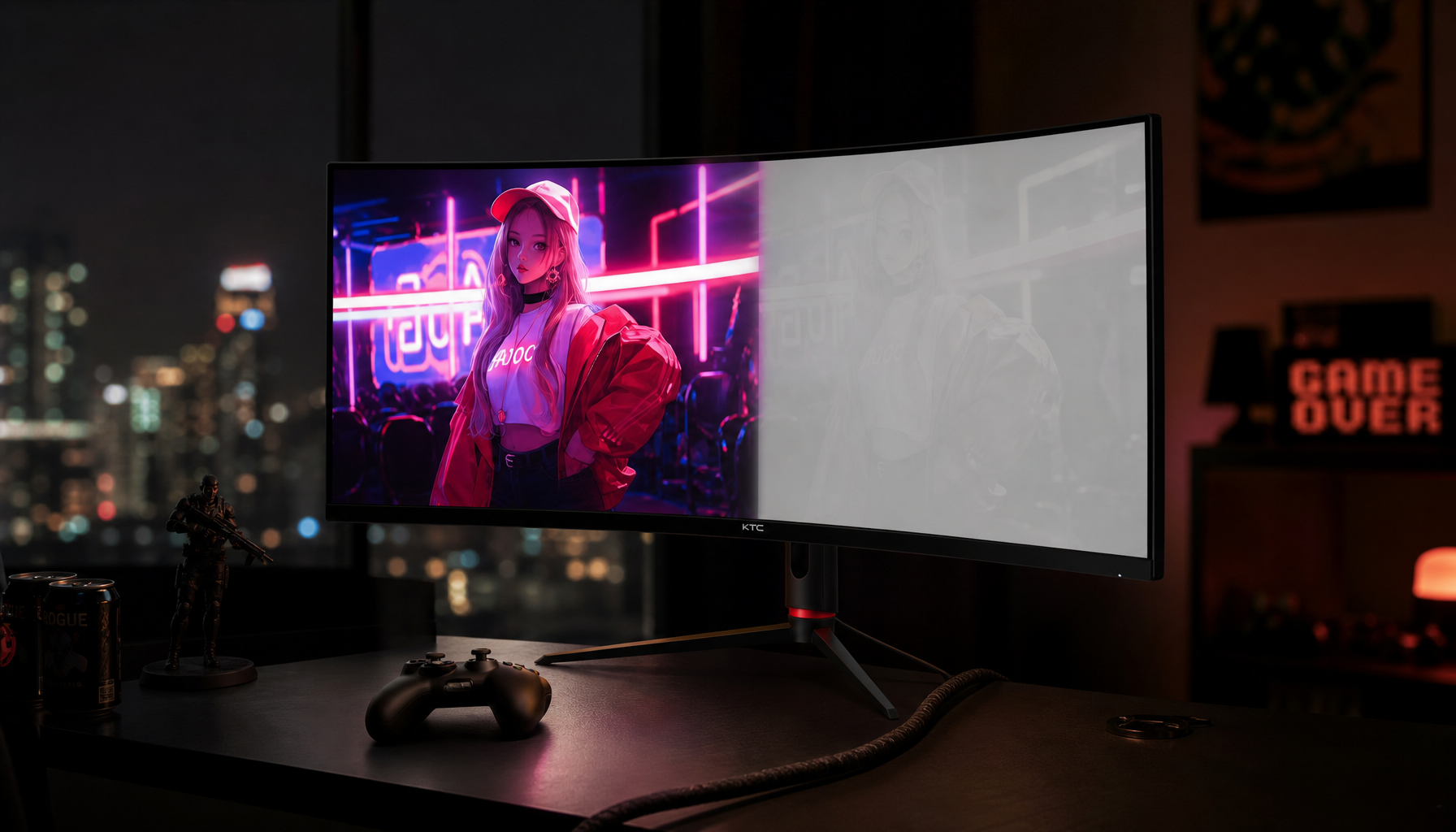
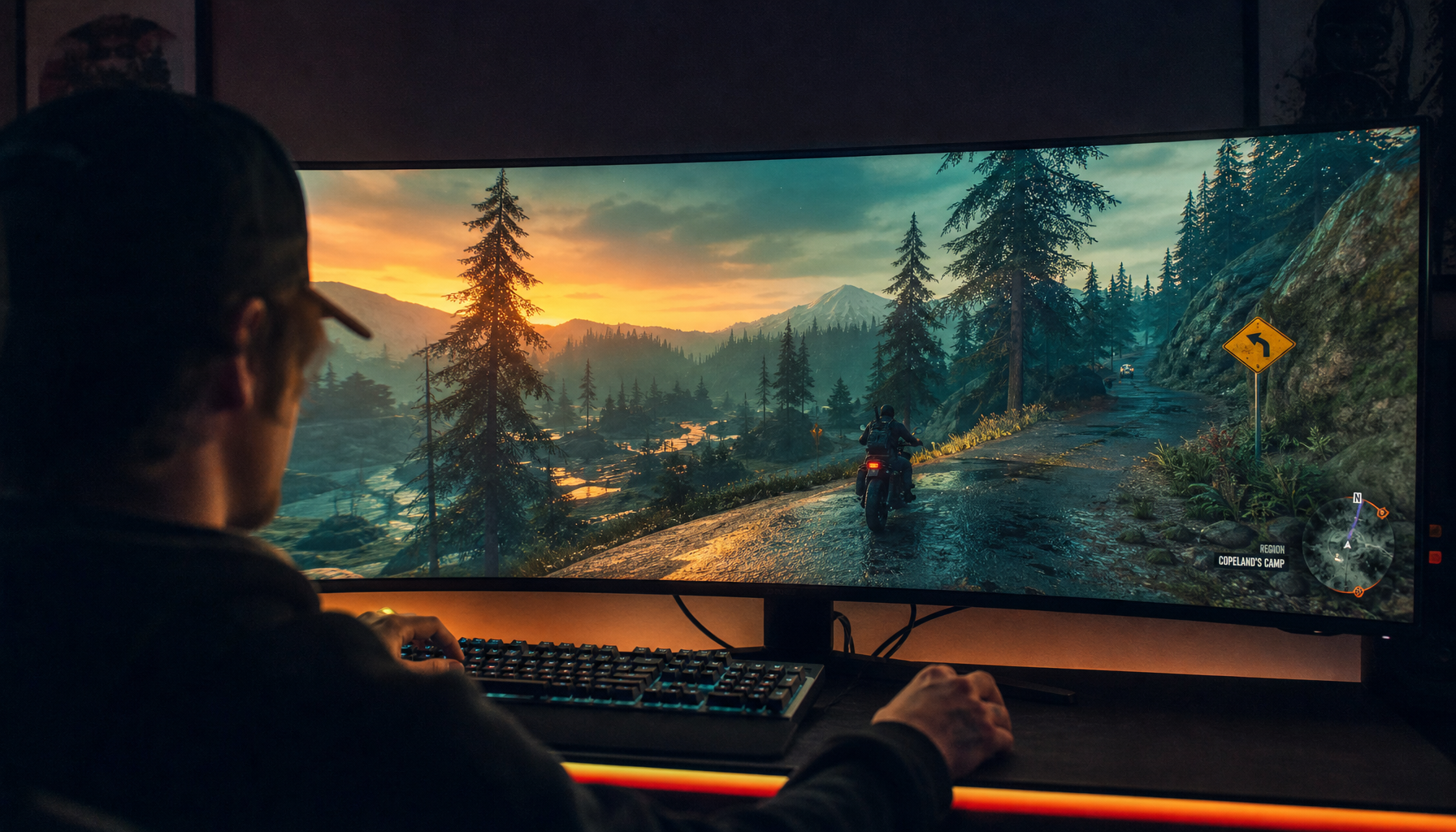
HDR400 often looks like brighter SDR, HDR600 is where HDR starts to become clearly visible, HDR1000 delivers the highlight impact many gamers expect, and HDR1400 is for users who want stronger brightness, contrast, and shadow control in demanding scenes.
Ever launch a game at night and wonder why the sunlit sky looks punchy but the cave beside it turns gray or crushed? A quick check of the HDR badge, dimming type, and peak brightness can help you avoid buying a monitor that accepts HDR but cannot show it convincingly. Here is how each certification level tends to look in real use, and where your money actually changes the image.

HDR Certification Is a Performance Floor, Not a Magic Switch
DisplayHDR exists because “HDR support” became too vague to trust. A monitor can accept an HDR10 signal and still lack the brightness, contrast, color range, or black-level control needed to make HDR look meaningfully better than SDR.
That distinction matters in gaming, content creation, and hybrid office setups. DisplayHDR certification evaluates measurable behavior such as luminance, color capability, bit depth, and response behavior, but the badge is still a minimum threshold. Two HDR1000 monitors can look different if one has better local dimming zones, tone mapping, panel contrast, coating, or factory calibration.
The Visible Difference by Tier
Certification |
What You Usually See |
Best Fit |
Main Compromise |
HDR400 |
Slightly brighter highlights, limited contrast lift |
Office, casual media, budget gaming |
Often no strong local dimming |
HDR600 |
More obvious highlight separation and better color volume |
Mainstream gaming, mixed use |
Still not always cinematic HDR |
HDR1000 |
Bright specular highlights, stronger HDR “pop” |
Premium gaming, HDR movies, Mini-LED LCDs |
Blooming, heat, cost, and sometimes fan noise |
HDR1400 |
Higher sustained brightness and deeper LCD HDR control |
Bright rooms, creators, flagship gaming |
Expensive and highly dependent on dimming quality |
HDR400: Compatibility More Than Transformation
HDR400 is the entry DisplayHDR tier, and its biggest practical value is that the monitor can handle HDR content with a defined baseline instead of relying on a vague product-page claim. In a real game, that may mean neon signs, spell effects, or reflections look a little punchier, but dark scenes often still depend on the panel’s native contrast.
The limitation is simple: many HDR400 displays lack meaningful local dimming. If an IPS panel sits around typical SDR-like contrast, the whole backlight still has to serve bright and dark areas at once. That is why a moonlit alley can look lifted and gray instead of deep and dimensional. For spreadsheets by day and occasional HDR streaming by night, HDR400 can be acceptable. For “wow” HDR, it is usually the wrong target.
HDR600: The Practical Starting Line
DisplayHDR 600 is often treated as the first meaningful HDR step because it raises brightness and usually comes with better color and dimming expectations than HDR400. The visible change is not just “brighter.” You start to see separation between a lit window and the wall around it, a fireball and the smoke behind it, or a white UI element and the darker game world.

For a 27-inch or 32-inch gaming monitor, HDR600 is the value tier to start with if HDR matters but budget still matters too. It is strong enough to make HDR games and movies feel different, yet it is less likely than extreme-brightness displays to become uncomfortable during long desktop sessions. The catch is that HDR600 still varies widely. Edge-lit dimming can help, but it will not behave like a dense Mini-LED backlight or OLED pixels.
HDR1000: The Big Jump in Highlight Impact
HDR1000-class monitors are where bright HDR moments become hard to miss. Sun glints, headlights, explosions, muzzle flashes, bright skies, and reflective metal can reach a level that feels closer to real light rather than a brighter SDR effect.
This tier is especially compelling for cinematic games and HDR movies because HDR content often encodes highlights far above normal desktop brightness. A practical example is a racing game at dusk: on HDR400, headlights may look white and visible; on a good HDR1000 Mini-LED monitor, they can look intense while the road and cockpit remain darker. That difference is the core HDR payoff.

The tradeoff is comfort and control. A monitor sits much closer than a TV, so 1,000-nit highlights can feel aggressive in a dark room. Some games include good HDR calibration sliders; others do not. If you work on the same screen all day, also consider blooming around white text, active cooling on some high-end modules, and the friction of switching HDR modes between work and play.
HDR1400: More Headroom, Not Automatically Better for Everyone
HDR1400 pushes the LCD HDR ceiling higher, with stronger peak brightness and more demanding black-level behavior than HDR1000. The visible gain is most obvious in bright rooms, high-contrast games, space scenes, horror titles, HDR video, and creator workflows where bright image areas need to stay bright without flattening the rest of the frame.
The upgrade from HDR1000 to HDR1400 is not as universally dramatic as the jump from HDR400 to HDR1000. If the HDR1400 monitor has weak dimming algorithms, too few zones, or an overly aggressive brightness curve, it can still bloom or crush detail. But when executed well, HDR1400 gives a display more room to preserve detail in clouds, snow, reflections, and bright UI overlays without making the whole image look washed out.
Brightness Is Only One Part of HDR Quality
Peak brightness matters most when paired with good dimming, because HDR is about showing bright and dark content at the same time. A single-zone backlight can raise the whole screen, but it cannot make a torch flare brightly while keeping the cave wall beside it truly dark.

That is why panel type changes the experience. Mini-LED LCDs can deliver high brightness and strong full-screen output, making them excellent for HDR1000 and HDR1400 monitors. OLED and QD-OLED displays often produce deeper blacks and cleaner dark-room contrast, but many prioritize smaller bright highlights over sustained full-screen brightness. For a dark gaming room, OLED can look more immersive than its nit number suggests. For a sunlit room or HDR photo work with large bright areas, a strong Mini-LED monitor may be more reliable.
HDR10, DisplayHDR, and True Black Are Not the Same Thing
HDR10 is a signal format, while DisplayHDR is a monitor performance certification. This is the difference between receiving HDR instructions and actually reproducing them with enough brightness, contrast, and color.
True Black tiers are designed for emissive displays such as OLED, where the advantage is extremely low black luminance rather than raw full-screen brightness. A DisplayHDR True Black 400 OLED can look excellent in a dark room because black areas are genuinely black, even if a Mini-LED HDR1000 monitor can hit brighter highlights. For gaming, the better choice depends on room lighting, static desktop use, burn-in tolerance, and how much you value bright impact versus black depth.
Which HDR Level Should You Buy?
For office productivity first, HDR400 is acceptable if the rest of the monitor is strong: sharp text, an ergonomic stand, good color, USB-C if needed, and comfortable brightness. HDR is a bonus there, not the reason to buy.
For gaming value, HDR600 is the sensible floor. It gives you a visible HDR upgrade without forcing flagship pricing, and it pairs well with 1440p or ultrawide monitors where performance and immersion matter together.
For immersive gaming and HDR movies, HDR1000 is the level that usually delivers the “this looks different” moment. Prioritize Mini-LED zone count, independent reviews, HDR calibration controls, and real-world blooming tests over the badge alone.
For bright rooms, premium console use, and demanding HDR creation, HDR1400 is worth considering. It is not just about eye-searing brightness; the value is extra headroom for highlights and sustained scenes. Still, do not buy the number blindly. A well-tuned HDR1000 or OLED True Black display can outperform a poorly implemented HDR1400 monitor in perceived contrast.
Quick FAQ
Does HDR reduce game performance?
Auto HDR improves supported SDR games by expanding color and brightness output on HDR-capable displays. The display certification level itself does not mean the GPU is rendering more geometry or higher-resolution textures. Any performance impact depends on the game engine, HDR mode, operating system pipeline, and settings, so compare frame times in the specific game rather than assuming HDR400, HDR1000, or True Black changes GPU load by itself.
Is HDR400 useless?
No. HDR400 can be useful for basic compatibility, light media use, and budget monitors that are otherwise good. It is just not the tier to buy if your goal is dramatic HDR contrast.
Is HDR1000 always better than OLED True Black?
No. HDR1000 usually wins on bright highlight punch and sustained LCD brightness, while OLED True Black usually wins on black depth, pixel-level contrast, and dark-room clarity. The better monitor is the one that matches your room, workload, and tolerance for blooming or OLED care.
The clean buying rule is simple: treat HDR400 as entry-level, HDR600 as the practical baseline, HDR1000 as the premium gaming jump, and HDR1400 as specialist-grade brightness headroom. The badge gets you into the right class; the panel, dimming system, and tuning decide whether the image earns the upgrade.