Google EDLA certification is becoming the cleaner enterprise baseline in 2026 when IT needs native Google services, fewer app-workarounds, and a display that fits managed Android workflows. If a room only needs a fixed screen with limited app use, a proprietary option can still work. The key is whether you need predictable administration across many rooms or just a simple local display.
Why Proprietary Office Displays Create Friction
For enterprise teams, the problem is usually not the screen itself. It is the mix of restricted app access, vendor-specific update paths, and device controls that do not match the rest of the fleet. That creates more exceptions for IT, especially when the same display model has to work across conference rooms, huddle spaces, and branch offices.
Google’s own EDLA licensing overview makes the basic distinction clear: certified large-screen Android devices can use Google Mobile Services, including Play Store access, while non-certified devices do not get the same Google-backed software path. In practice, that changes how much of the setup can be standardized.
Another friction point is compatibility. Heavily customized Android layers can make app behavior, update timing, and support tickets less predictable from site to site. If your rollout depends on the same conferencing, identity, or productivity tools everywhere, that inconsistency is the part that usually causes regret.

Google EDLA Certification in Enterprise Context
Google EDLA certification should be treated as a platform-baseline signal, not as a promise of complete security. It tells procurement and IT that the device is designed to run with official Google services and the Google Play ecosystem, which matters when the display is part of a managed workplace rather than a standalone gadget.

Native Google Services and Play Store Access
The practical advantage is not just app convenience. It is that the software path is more familiar to enterprise teams that already manage Android phones, tablets, or shared devices. Google’s Android Enterprise overview describes the management model around managed Google Play, work profiles, and remote device controls. EDLA does not replace those controls, but it usually fits the same operating style.
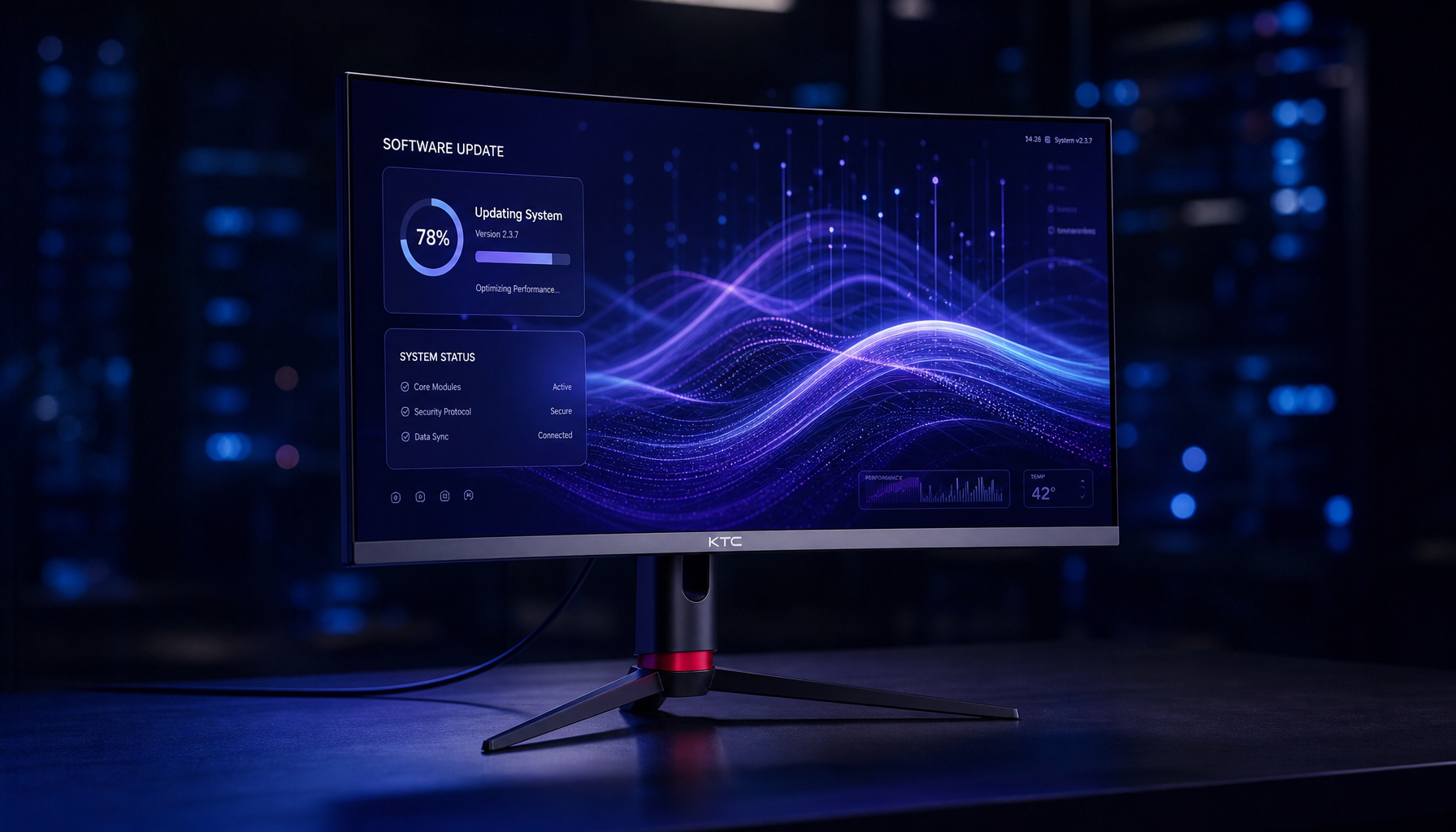
Update Path and Device Consistency
For most buyers, the real value is consistency. If one room is on a different app store, a different patch cadence, or a different forked interface, support gets harder fast. EDLA reduces that variation by aligning the display more closely with a standard Google-compatible software stack.
Why Certification Matters to IT Governance
This is why certification matters to governance teams. It gives IT a recognizable baseline for approval, rollout, and support documentation. It does not remove policy work, but it can reduce the number of one-off exceptions that make device management messy.
See the Google EDLA Security Guide: Protecting 2026 Smart Offices for a deeper walkthrough of how that baseline is usually handled in office environments.
Security and Update Control in 2026
In 2026, the security conversation is less about a single feature and more about whether the display behaves like a managed endpoint. EDLA-certified displays are easier to place inside an Android-based fleet because they use the Google service model that IT teams already know how to govern.
- Fewer sideloading workarounds usually mean fewer ad hoc approval decisions.
- A clearer update path can reduce the chance that support depends on a vendor-only interface.
- Standard Google service access makes it easier to keep app installation and account rules in one place.
- The main benefit is operational predictability, not magical security.
That last point matters. EDLA is a baseline, not a complete security program. You still need account policy, network controls, endpoint management, and room-level rules. Certification helps the device fit the program; it does not become the program.
If your current setup depends on someone manually copying APKs or maintaining a different app flow for every room, that is a sign the deployment is already paying hidden costs. In those cases, EDLA is often the better operating model.
Google EDLA vs Proprietary Office Software 2026
The question is not which one sounds more advanced. It is which one creates less support friction over time. EDLA usually wins when your priorities are app access, update predictability, and repeatable management across many rooms. A proprietary display can still be acceptable when the workflow is simple and the device stays outside your broader Android management stack.
| Dimension | Simple Proprietary Display | Google EDLA Certified Display |
|---|---|---|
| App access | Often narrower or vendor-controlled | Native Google service and Play Store path |
| Update predictability | Can vary by vendor and firmware layer | More consistent with Google-compatible expectations |
| MDM and governance fit | May require more custom handling | Usually easier to align with Android Enterprise workflows |
| Sideloading pressure | Can be higher if the app ecosystem is limited | Lower when approved apps are available through Play |
| Multi-site consistency | Can vary by model or firmware fork | Better when standardization matters across rooms |
A simple rule of thumb: if the display needs to behave like part of your enterprise endpoint stack, EDLA is usually the better fit. If it is only a local screen with limited apps and no central management expectation, the proprietary route may be easier to justify.
Play Store Access for Enterprise Workflows
Play Store access matters in offices because it removes a custom app-distribution step for shared rooms. That can save time when IT wants approved collaboration tools available quickly for meetings, huddles, or rotating users.
Conference Room App Availability
In real deployments, the issue is not entertainment. It is whether meeting apps, whiteboarding tools, or account-linked utilities can be deployed without building a special workaround for each room. EDLA helps because the device can use the same general app path that many Android-managed environments already support.
Shared Device Setup and Login Simplicity
That said, app access still needs policy controls. A standard storefront does not replace account governance, device restrictions, or approved-app lists. It only makes the approved path easier to repeat. If you want a product that sits closer to that shared-use workflow, the Smart Monitor collection is the right browsing path to start with.
For a more portable shared-display setup, the KTC MEGAPAD 32" 4K Android 14 Google EDLA Smart Touch Monitor with 8550mAh Battery is a natural example of the category, but buyers should still verify that the exact room workflow matches the device’s power, size, and management needs before choosing it.
How Procurement Teams Should Evaluate Certification
Before standardizing on EDLA, procurement should verify the model, not just the marketing line. A certification badge is only useful if it applies to the exact hardware being quoted and if the device’s operating version and management options match the deployment plan.
- Confirm that the certification is documented for the exact model, not a similar one.
- Check whether the OS version and update approach match your rollout policy.
- Decide whether the room needs native app access, remote admin, or only a fixed display.
- Review warranty, returns, and support terms as part of the commercial decision.
- If the vendor cannot show a clean certification trail, treat the offer as a check-before-buying case.
If you are comparing broader commercial options, the Mobile Touch Screen collection can help narrow the right size and deployment style before you shortlist any specific hardware.
For teams that want a room-to-room shared-display model with a documented EDLA setup, the KTC MEGAPAD 32" 4K Android 14 Google EDLA Smart Touch Monitor with 8550mAh Battery is worth checking against the room workflow, and the KTC MEGAPAD 25" FHD Google EDLA Portable Touch Monitor built in Camera is better suited when portability and video calls matter more than a larger fixed canvas.
What to Check Before You Standardize on EDLA
Use this checklist before you buy, resell, or approve a fleet.
- Verify the exact model’s EDLA status in the product documentation.
- Confirm the OS version and update policy match your support window.
- Check that the app list can be deployed through the intended management process.
- Make sure the room workflow really needs native Google services, not just a screen and HDMI.
- Ask whether sideloading would be a workaround you want to avoid.
- Review warranty, returns, and commercial support terms before rollout.
When those checks are clean, Google EDLA certification is usually the more scalable option. When they are not, a proprietary display may be simpler, but only if you are comfortable with the extra admin overhead.
FAQs
Q1. How Can Buyers Verify Google EDLA Certification on a Display?
Check the exact model documentation, not just the product family name. Buyers should match the certification record to the quoted SKU and confirm that the status applies to the device version being purchased. If the seller cannot show that clearly, treat it as a verification issue before purchase.
Q2. What Is the Main Security Difference Between EDLA and Proprietary Displays?
The main difference is usually the software path. EDLA devices use official Google services and a more standard update and app-management model, while proprietary displays often rely on vendor-controlled ecosystems. EDLA helps with governance, but it still needs MDM, account rules, and network policy.
Q3. Why Does Play Store Access Matter in Office Deployments?
Because it shortens the path from approval to deployment. IT can use a recognized app source for shared rooms instead of building a separate distribution workaround. That matters most when the same collaboration tools must work across multiple spaces with minimal support variation.
Q4. Can EDLA Certification Replace MDM or Endpoint Policy?
No. Certification can support a better baseline, but it does not replace device management, access control, or update policy. If you skip those controls, you still have an unmanaged endpoint, just one with a better software foundation.
Q5. What Should Distributors Ask Before Reselling EDLA Smart Displays?
Ask for the certification proof, the exact OS version, the support terms, and the intended deployment scenario. Distributors should also confirm whether the model is meant for shared office use, huddle rooms, or a more portable setup. If those answers are vague, the product is not ready for a clear enterprise pitch.
The 2026 Standard Is About Operational Fit
Google EDLA certification reduces the gap between a smart display and a manageable enterprise endpoint. It matters most when IT needs consistency, policy control, and a known Google software path. The certification is only a baseline, yet for shared office deployments in 2026 that baseline often separates clean rollouts from ongoing friction. Android Smart Display for Study, Streaming, and Cloud Gaming and Beyond the Smartphone: Exploring Android 13 on a Massive Monitor Format explore related use cases in more detail.