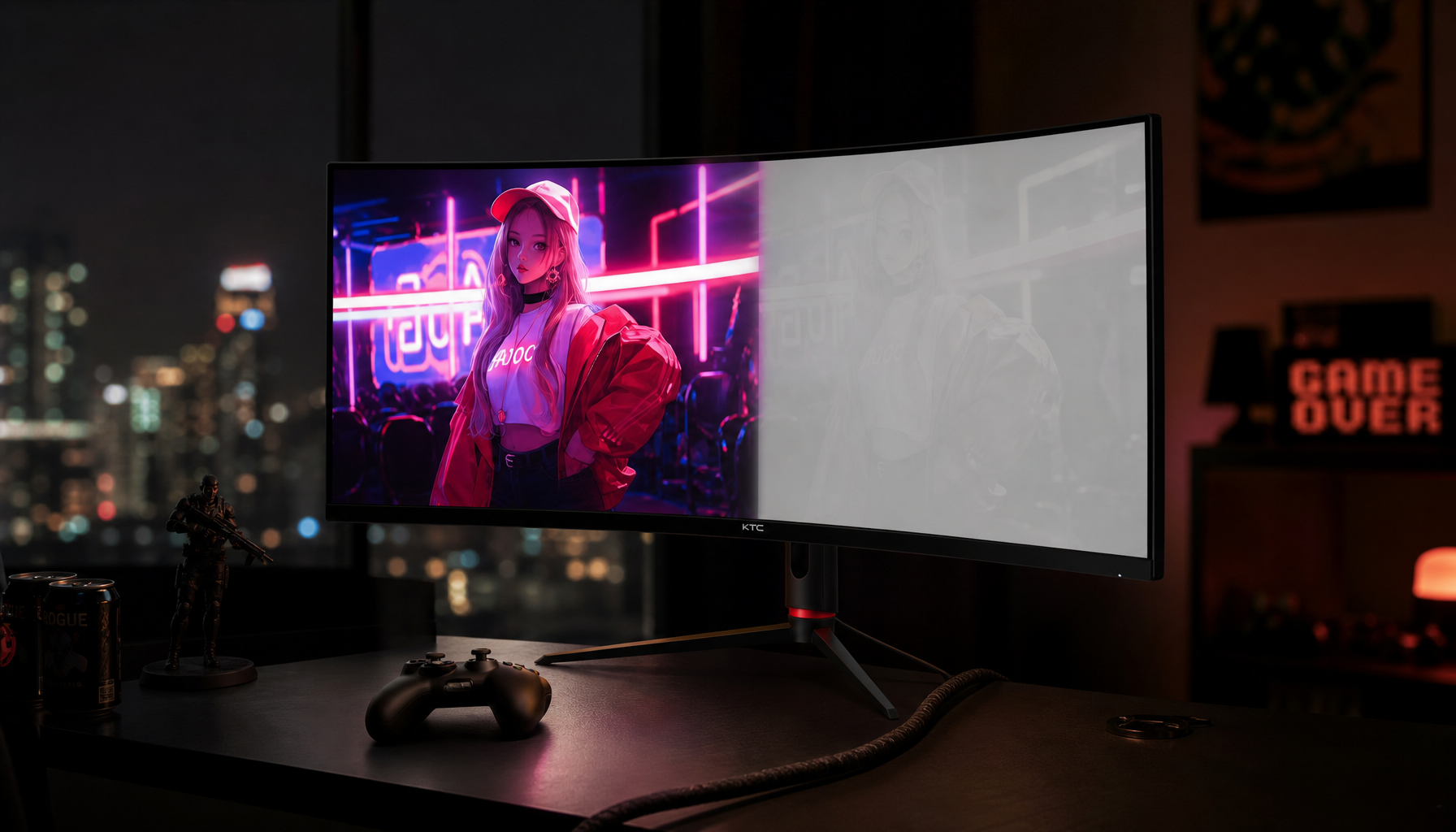
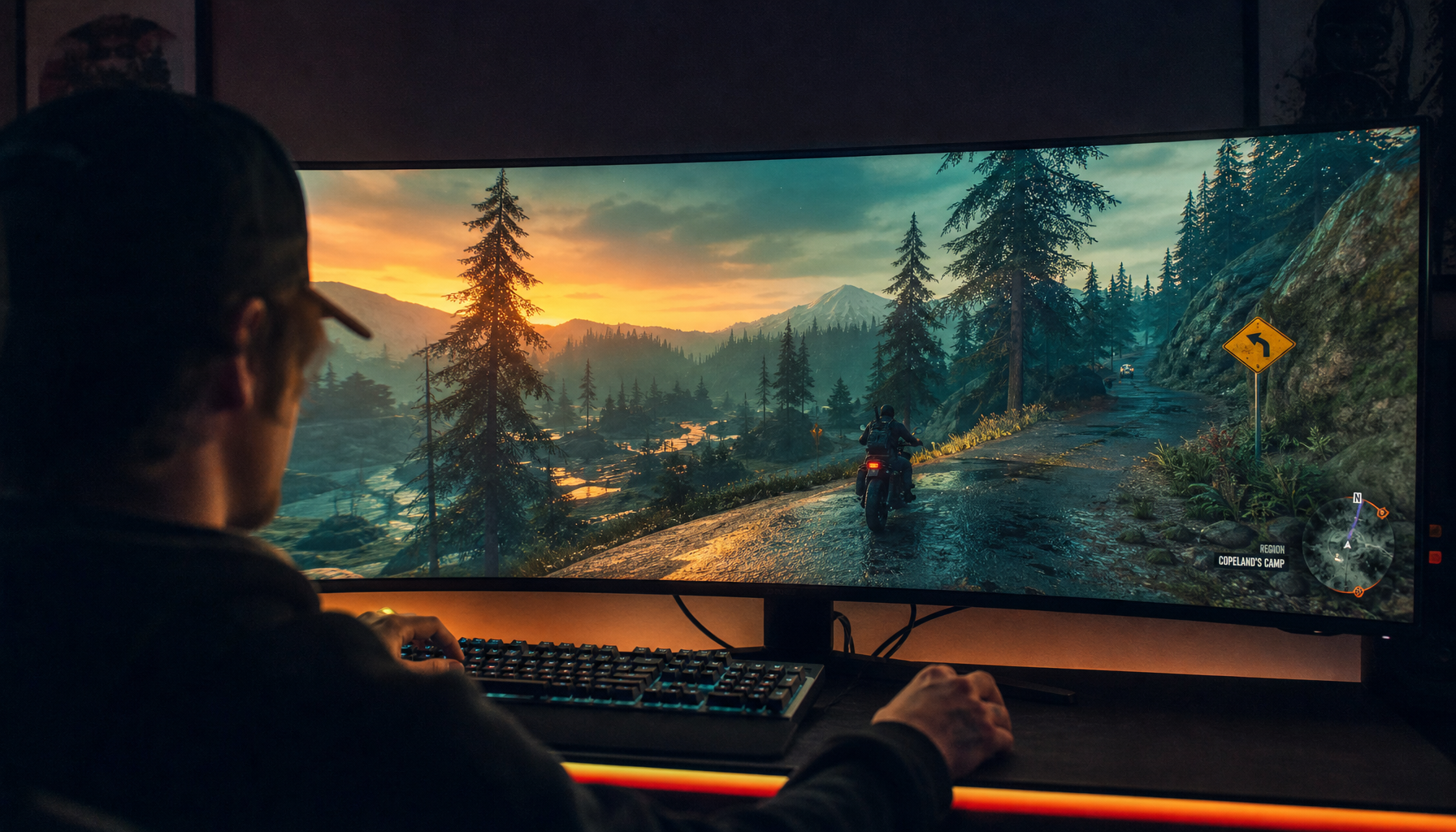
EOTF tracking accuracy determines whether HDR looks intentional, dimensional, and controlled, or merely bright and inconsistent. When a display follows the HDR brightness curve closely, you see better shadow detail, cleaner highlights, and a picture that feels closer to the creator’s grade.
Does your HDR game look punchy in one scene, washed out in the next, and oddly dark when you open a streaming app? Review labs that measure HDR performance consistently treat HDR picture quality as more than peak brightness alone. You’ll learn what EOTF tracking does, why it changes perceived quality so much, and how to choose or tune a screen for better HDR.
What EOTF Tracking Means in Plain English
EOTF stands for Electro-Optical Transfer Function. In practical display terms, it is the rule that tells a screen how bright each HDR signal level should appear. HDR uses the PQ curve for most HDR10 content, which is different from SDR gamma because it targets absolute brightness levels rather than a relative-looking curve.
That matters because high-dynamic-range television is built to represent brighter highlights, darker shadows, and richer color than SDR, but the signal alone cannot make a weak or poorly tuned screen look accurate. The display still has to translate that signal into real light. If it translates too aggressively, the image becomes boosted and artificial. If it translates too conservatively, HDR can look dim, flat, or muddy.
Think of a scene with a flashlight in a dark hallway. Accurate EOTF tracking keeps the wall texture visible, the corners dark but readable, and the flashlight intense without turning into a white blob. Poor tracking may lift the whole hallway into gray, crush the corners into black, or clip the flashlight so every bright object looks the same.

Why Accuracy Changes Perceived HDR Quality
HDR quality is often marketed with peak brightness numbers, but EOTF tracking controls how that brightness is distributed. A 1,000-nit-capable monitor can still look wrong if it over-brightens midtones or rolls off highlights too abruptly. A less powerful OLED can look more convincing in a dark room if its blacks are stable and its brightness curve is disciplined.
The most visible errors usually happen in shadows and midtones, not only in spectacular highlights. In PQ EOTF testing, measured lines above the target mean the display is too bright, while lines below the target mean it is too dim; scoring often emphasizes lower-to-mid brightness because many HDR scenes live there and errors are easier to notice. That matches real use: in an open-world night mission, over-bright tracking can make the scene look like a foggy afternoon, while under-tracking can hide enemies, doorways, and texture detail.
A gaming monitor tuned for showroom impact may deliberately brighten the image. That can help in a sunlit room or a competitive title where visibility matters more than cinematic accuracy, but it is not the same as faithful HDR. Movie-oriented modes such as Filmmaker, Theater, or Cinema usually aim closer to the reference curve, while Vivid or Sports modes often push the curve upward for instant impact.

The Core Trade-Off: Accuracy, Brightness, and Tone Mapping
No consumer display can reproduce every HDR signal exactly. HDR formats can technically represent extremely high brightness, while many real monitors peak far below that. When content is mastered at 1,000 or 4,000 nits and your display cannot hit those values, tone mapping decides how to compress the brightness range.
The HDR setup chain matters because the operating system, GPU, cable, display mode, and actual content all have to work together before you judge image quality. If system HDR is off, if the wrong monitor is selected in a multi-display setup, or if the app is playing SDR, EOTF accuracy is not even the first problem.
Here is the practical difference:
EOTF Behavior |
What You See |
Common Cause |
Best Use Case |
Tracks close to target |
Natural contrast, stable shadows, controlled highlights |
Accurate HDR picture mode or calibration |
Movies, HDR editing, story games |
Tracks too bright |
Raised blacks, exaggerated midtones, less depth |
Vivid modes, aggressive game HDR, poor factory tuning |
Bright rooms, visibility-first play |
Tracks too dark |
Lost shadow detail, dull midtones, “HDR looks broken” feeling |
Low brightness, bad tone mapping, wrong settings |
Rarely ideal unless room is very dark |
Clips highlights |
Bright detail disappears into flat white |
Limited peak brightness or hard tone mapping |
Acceptable only when clipping is minimal |
Smooth roll-off |
Highlight detail is compressed but still visible |
Better tone mapping |
Lower-brightness HDR displays |
For example, if a game sends a 1,000-nit highlight to a 600-nit monitor, the display must choose between clipping the highlight or compressing it. Smooth roll-off preserves more cloud texture, sparks, snow, or neon detail. Hard clipping makes different bright objects collapse into the same white level.

Why EOTF Matters for Gaming Monitors
For gaming, EOTF tracking affects both image immersion and practical visibility. A horror game benefits from accurate near-black handling because the tension depends on subtle shadow differences. A racing game benefits from controlled highlights because sunlight on a hood, wet asphalt, and brake lights should feel intense without masking the road.
The best gaming display depends on use case, and HDR picture quality sits alongside refresh rate, response time, input lag, resolution, and VRR as a real buying factor. A 500 Hz esports monitor can be the right tool for competitive shooters, but that does not automatically make it a strong HDR screen. Likewise, a 240 Hz OLED may deliver both speed and contrast, yet its HDR impact still depends on brightness behavior, color volume, automatic brightness limiting, and EOTF tracking.
For pro gaming setups, the decision is simple: prioritize speed and visibility for competitive play, but do not confuse boosted brightness with better HDR. For immersive single-player games, simulations, and console HDR, an accurate HDR mode usually gives a more premium image than a blown-out “HDR effect” mode.

What to Look for When Buying an HDR Monitor
The first specification to check is not just “HDR supported.” Entry-level HDR labels can mean the monitor accepts an HDR signal while delivering limited dynamic range. A meaningful HDR display should have enough peak brightness, strong contrast, competent local dimming or per-pixel dimming, wide color support, and an HDR mode that does not distort the PQ curve.
HDR certification tiers can help separate basic HDR compatibility from stronger HDR hardware, though certification still does not replace independent testing. Entry-level certification is often underwhelming for true HDR impact. Midrange certification can be a step up when paired with good local dimming. Higher tiers are where many LCD monitors start to feel convincingly bright, especially in a normal office or gaming room.
OLED monitors often win on black level, contrast, response time, and perceived depth. Mini-LED LCDs can be stronger for sustained brightness and bright-room HDR, especially when they have many well-controlled dimming zones. For portable smart screens, the challenge is harder because peak brightness, battery limits, and thermal limits can reduce HDR consistency, so accurate tone mapping and sensible brightness control become even more important.
How to Check Your Current HDR Setup
Before blaming the panel, confirm the signal path. System HDR must be enabled for the specific display, and genuine HDR content must be playing. External HDR displays also need a connection with enough bandwidth, such as a modern video or USB-C connection.
A quick practical test is to compare SDR white and HDR white using a known HDR test app or genuine HDR video. If HDR white is not visibly brighter, the chain may not be operating in HDR. If HDR is active but everything looks gray, too dark, or harsh, switch picture modes before changing random sliders. Start with the most accurate HDR mode, then adjust game-level HDR calibration screens so the logo or clipping pattern disappears exactly where the instructions say it should.
Room lighting also changes perception. HDR is easier to judge in a darker room because bright ambient light masks shadow detail and makes you raise brightness. In a sunny office, a slightly brighter tone map may feel more usable. In a dark gaming room, that same setting can look raised and cheap.
Pros and Cons of Strict EOTF Accuracy
Accurate EOTF tracking gives you creator-intent contrast, more believable depth, cleaner shadow gradation, and highlights that feel bright without looking uncontrolled. It is the best target for HDR movies, photo and video work, cinematic gaming, and anyone who wants a display to behave predictably across apps.
The trade-off is that strict accuracy may look dimmer than store-demo HDR, especially in bright rooms or on monitors with modest peak brightness. Some players also prefer lifted shadows in competitive games because it reveals opponents more easily. That is a performance choice, not an image-quality improvement.
The right move is to keep two practical modes. Use accurate HDR for content you want to experience as graded, and use visibility-focused settings only when the game or room demands it. A good monitor lets you switch without making every scene look like a brightness contest.
FAQ
Is peak brightness more important than EOTF tracking?
Peak brightness matters, but it is not enough. A bright monitor with poor EOTF tracking can crush detail, over-brighten faces, or clip highlights. The best HDR comes from brightness, contrast, color volume, dimming control, and accurate tracking working together.
Does OLED automatically have better EOTF tracking?
No. OLED often has excellent black levels and contrast, which helps perceived HDR, but it can still tone-map aggressively or reduce brightness on large bright scenes. OLED monitors should still be judged by measured HDR behavior, not panel type alone.
Should gamers use the most accurate HDR mode?
For cinematic games, yes, start there. For competitive games, use the mode that gives clear visibility without destroying contrast. If a mode makes dark scenes gray or highlights flat, it is trading immersion for visibility.
Final Word
EOTF tracking is the difference between HDR that looks mastered and HDR that merely looks bright. For a pro gaming monitor, office productivity display, or portable smart screen, choose the screen that controls light with discipline: accurate midtones, readable shadows, smooth highlight roll-off, and enough real brightness to make HDR feel alive.