In 2026, the debate around DisplayPort 2.1 UHBR20 versus DSC on 4K 240Hz monitors usually centers on whether compression visibly harms image quality. For most enthusiasts, the two deliver visually indistinguishable results in games and productivity work. The real differences appear in system stability, feature compatibility, and daily friction points such as wake-from-sleep delays or locked GPU options like DLDSR.

The Bandwidth Math: What UHBR20 and DSC Actually Do
DisplayPort 2.1 with UHBR20 mode supplies a maximum raw bandwidth of 80 Gbps (roughly 77.37 Gbps effective). This is currently the only standard that can drive a 4K 240 Hz 10-bit signal without any form of compression, according to technical certification guidance from TFTCentral.
DSC, or Display Stream Compression, is a hardware-level, visually lossless algorithm that applies a 3:1 compression ratio in real time. It squeezes the same high-bandwidth signal into a lower-bandwidth pipe so that monitors using DP 1.4 or HDMI 2.1 connections can still reach 4K 240 Hz. Importantly, this is not the same as software video compression used by streaming services; DSC operates inside the display pipeline with latency measured in microseconds.
What this means for buyers is straightforward: if your GPU and cable support full UHBR20, you get a native uncompressed path. Most 2026 4K 240 Hz monitors default to DSC when the connection cannot carry the full uncompressed load. Premium Display Signal Cables for Gaming & Productivity Monitors are often required to unlock the highest stable bandwidth without handshake errors.
The 'Visual' Myth: Why the Difference is Functional, Not Optical
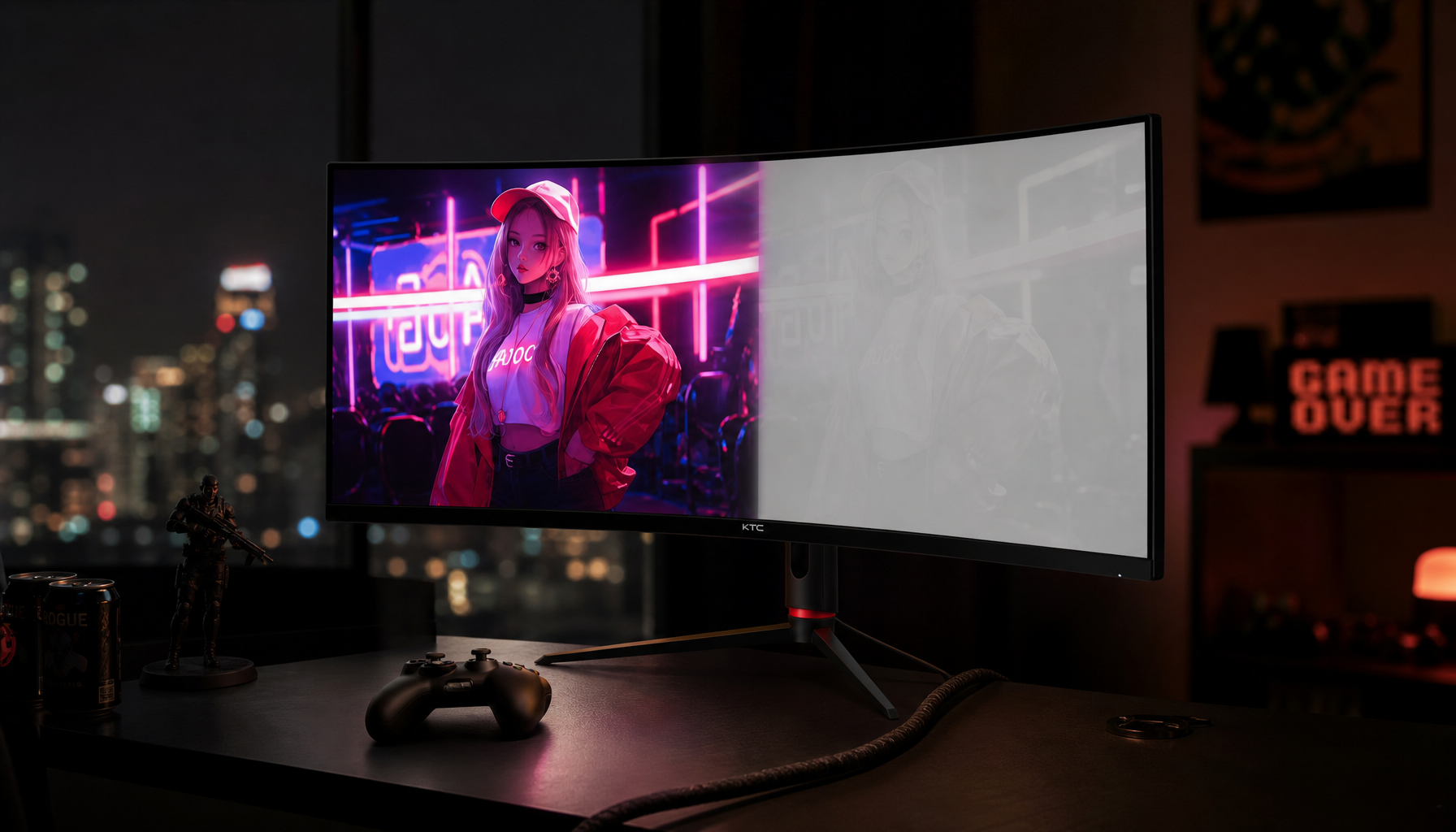
VESA certifies DSC 1.2a as visually lossless. Side-by-side expert audits on 4K 240 Hz panels confirm that even during fast-motion gaming or fine text work, the human eye cannot reliably detect artifacts without lab-grade measurement tools. This explanation of DSC from industry sources and real-world testing summarized by TFTCentral both support the same conclusion: paying extra purely for “sharper” or “better-colored” graphics because of native bandwidth is based on a misunderstanding.
In practice, the image on screen looks the same whether the signal travels uncompressed or through DSC. Subpixel layout, panel coating, and calibration matter far more for perceived sharpness and text clarity than the choice between UHBR20 and DSC. For a deeper look at why panels render text differently, see our guide on What Subpixel Layout Is and Why RGB and RGBW Panels Look Different.
If your main concern is pure visual fidelity at 4K 240 Hz, DSC is effectively transparent for the overwhelming majority of users and content.
The 'Hidden' Cost of Compression: Feature Locks vs. Native Stability
Even though the pictures look identical, enthusiasts often prefer native UHBR20 because DSC can impose functional limits inside the GPU and operating system.
Many GPUs maintain an internal “display head” budget. Running a high-bandwidth DSC stream sometimes consumes two of these heads for a single monitor. That consumption can disable or limit NVIDIA features such as DSR and DLDSR at maximum refresh rates. The limitation is not universal—newer 2026-era cards sometimes mitigate it—but it remains a common friction point documented in technical reviews.
Another practical drawback is handshake behavior. DSC connections frequently introduce a 1- to 3-second black screen when waking from sleep, switching resolutions, or alt-tabbing in certain multi-monitor setups. Uncompressed UHBR20 paths typically re-establish the signal faster and reduce the chance that waking one monitor briefly blacks out others. These delays are often reported on enthusiast forums and are usually tied to cable quality and firmware as much as the compression protocol itself.
The table below summarizes the typical pattern across common 4K 240 Hz scenarios:
| Setup | GPU feature availability | GPU head usage | Wake latency | Daily stability friction |
|---|---|---|---|---|
| DP 2.1 UHBR20 direct link | High | Low | Low | Low |
| DSC path through the link | Medium | Medium | Medium | Medium |
| Higher-friction DSC handshake / compatibility edge cases | Low | High | High | High |
For gamers who rely on DLDSR to improve clarity or who run complex multi-monitor arrays, these functional differences can outweigh the visual parity. Our guide on How to Choose the Perfect Monitor to Match Your Graphics Card explains how to audit your specific GPU before deciding on a monitor.
When to Pay for Uncompressed Bandwidth (And When to Save Your Money)
Choose a monitor that relies on DSC if your workflow is mostly set-and-forget 4K 240 Hz gaming or mixed productivity without heavy use of advanced NVIDIA scaling features. In these cases the image quality is identical, the setup cost is usually lower, and occasional handshake delays may never become noticeable.
Pay the premium for full UHBR20 support when you regularly use DLDSR, maintain multiple high-refresh displays, or find even brief black screens during alt-tab or wake irritating. Native bandwidth removes those constraints and future-proofs against bandwidth-hungry features that may arrive later.
Within the KTC lineup, the KTC 27" 4K 160Hz/320Hz 90W Gaming Monitor | H27P6 offers dual-mode flexibility and DP 1.4 ports that can run with DSC for 4K 160 Hz or switch to lower resolution at 320 Hz. For users prioritizing uncompressed paths where possible, the KTC 27" 4K 160Hz HDR400 Gaming Monitor | H27P22S also supports DSC on its DP 1.4 and HDMI 2.1 ports but pairs well with UHBR20-capable GPUs for reduced friction in daily use. Always verify the exact cable and GPU combination for your target resolution and refresh rate.
If your setup does not trigger the feature locks or handshake issues described above, saving money on a capable DSC monitor is the rational choice. The visual upgrade from native bandwidth alone is not detectable in normal use.

Frequently Asked Questions About Display Bandwidth
Does DSC Add Noticeable Input Lag for Competitive Gaming?
No. DSC latency is measured in microseconds and remains far below human reaction time or the variability already present in typical gaming setups. It does not meaningfully affect competitive play at 240 Hz or above.
Do I Need a Special Cable for Full DisplayPort 2.1 UHBR20 Performance?
Yes. Only DP80-certified cables guarantee the full 80 Gbps bandwidth without signal degradation. Standard DP 1.4 cables will usually force the monitor into DSC mode even if the GPU supports UHBR20.
Will DSC Make Text Look Worse for Office or Productivity Work?
Text clarity is determined primarily by subpixel layout, anti-glare coating, and sharpness settings rather than DSC. As long as the monitor uses a standard RGB layout and proper ClearType or macOS font smoothing, DSC does not degrade readability in normal desktop use.
Can I Use DSC with Multiple High-Refresh Monitors Without Flicker?
It depends on your GPU generation and cable quality. Some users experience brief flickering or cascading black screens when waking one DSC monitor in a multi-monitor chain. Native UHBR20 connections reduce this risk but are not a complete guarantee if other system variables are suboptimal.
Is UHBR20 Future-Proof for Upcoming GPU Features?
It offers more headroom. As GPUs add higher color depths, wider gamuts, or new upscaling techniques that increase bandwidth demand, uncompressed UHBR20 paths are less likely to force compromises in refresh rate or feature availability compared with DSC-limited connections.
When Does the Extra Cost of a UHBR20-Capable Monitor Make Sense?
Only when your specific workflow hits the functional limits of DSC—such as regular DLDSR use, complex multi-monitor wake behavior, or zero tolerance for handshake delays. For pure gaming and media consumption the visual difference is negligible, making the savings on a well-implemented DSC monitor the better value for most buyers.