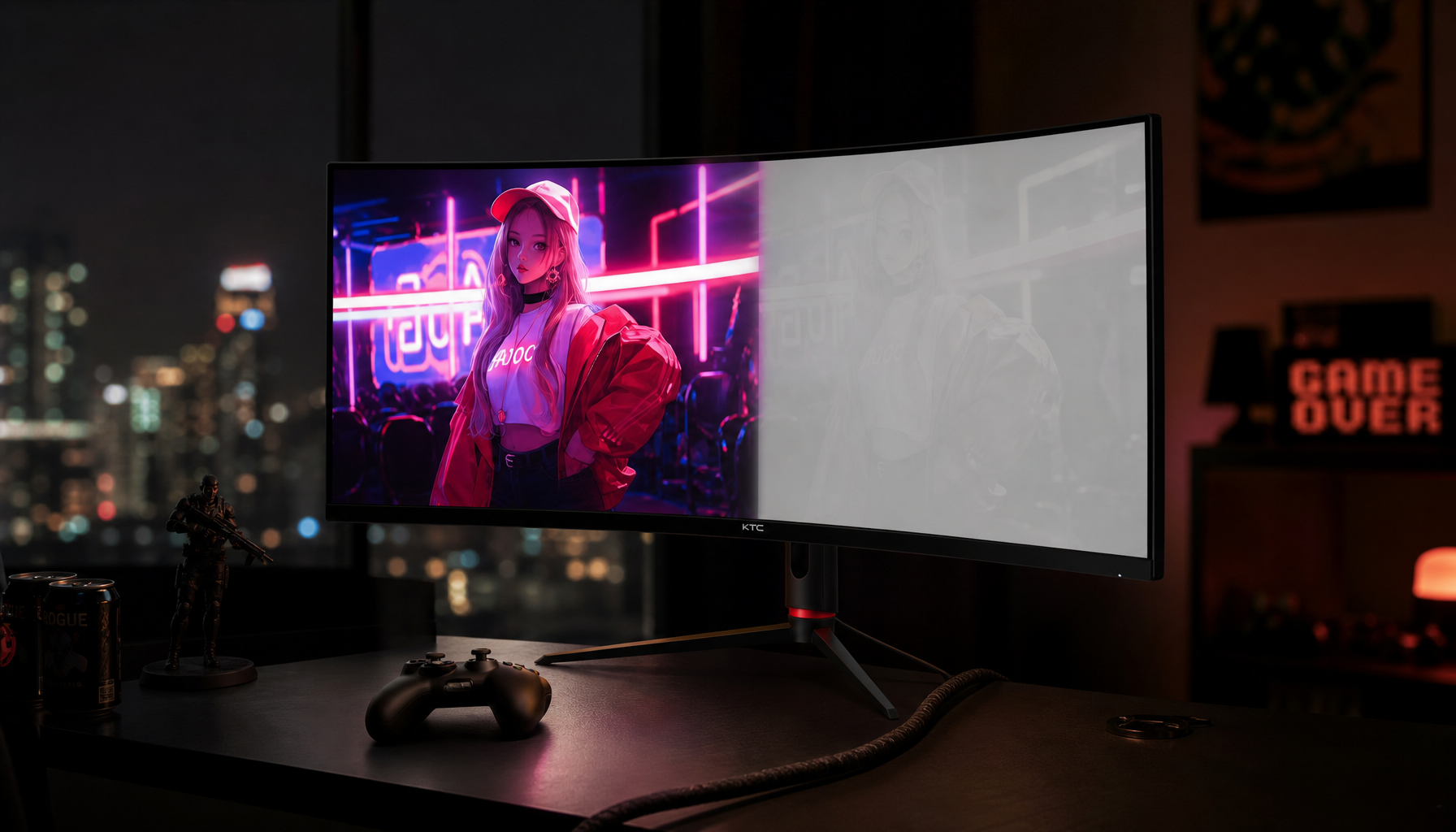
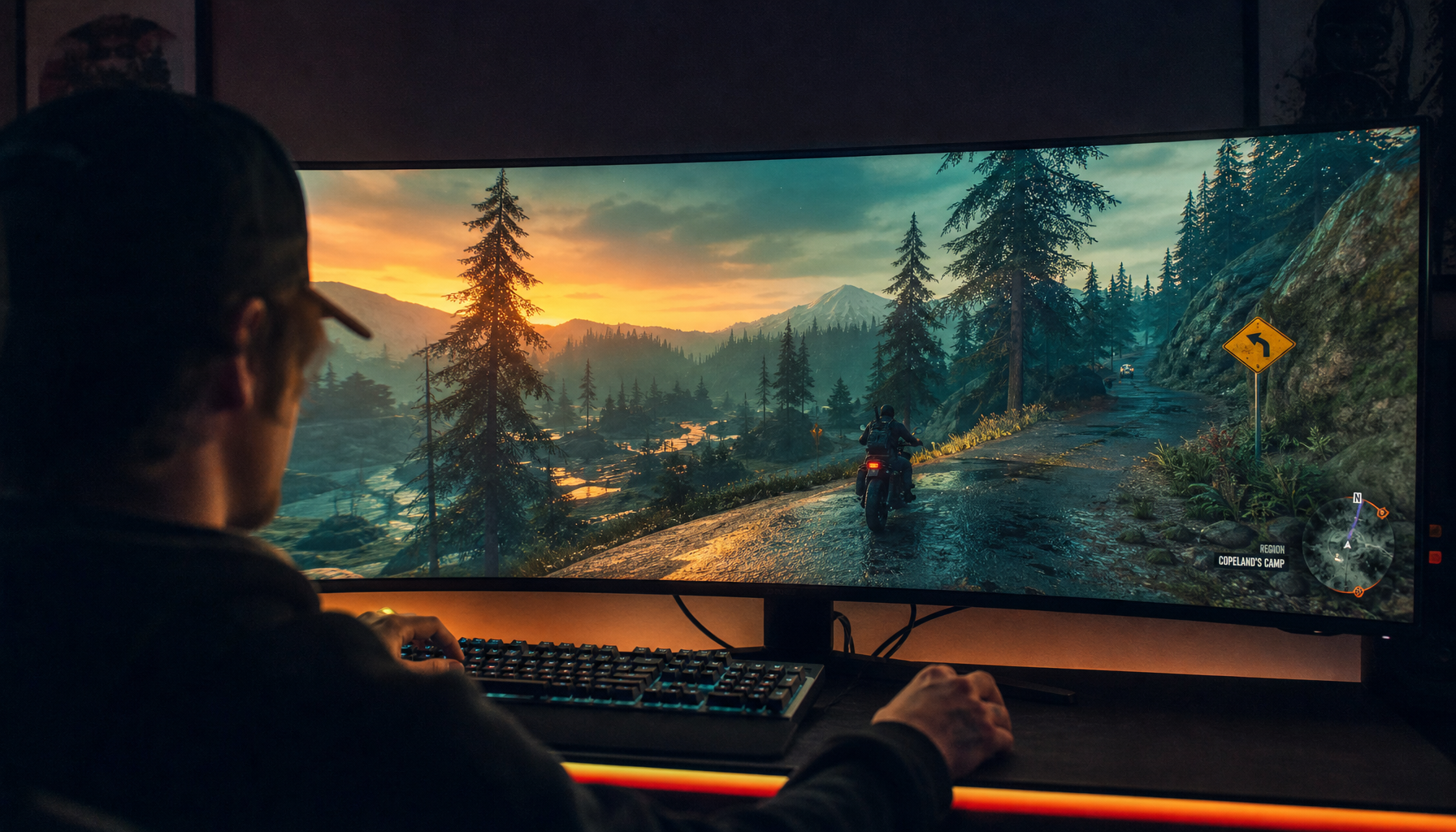
High zone counts like 1152 local dimming zones can significantly reduce the halo effect in HDR content on Mini-LED monitors, delivering deeper blacks and brighter highlights for gamers and enthusiasts who want strong contrast without OLED's burn-in risks. While not completely halo-free, this density offers enough granularity on a 27-inch screen to isolate small bright objects like subtitles or stars far better than lower-zone designs, making it a practical choice for mixed gaming, streaming, and productivity in varied room lighting.

The Halo Effect: Why Standard Mini-LED Often Falls Short in HDR
The halo effect, or blooming, occurs when light from an active backlight zone spills into neighboring dark areas, creating a distracting glow around bright objects on dark backgrounds. This is especially noticeable in HDR scenes with small highlights like stars in space or white text on black, where low-zone counts (typically 336 to 576) light up large blocks of the screen at once.
Lower zone density forces the backlight to illuminate bigger areas, which reduces overall contrast and makes fine details appear washed out. For many users researching monitors in 2026, this artifact becomes apparent after purchasing a budget Mini-LED model and noticing the blocky light halos during dark-room viewing. The frustration is common in cinematic games or movies where precise light control is essential for immersion.
As this official explanation of LCD dimming in HDR displays details, Full-Array Local Dimming (FALD) relies on independent zone control, but performance scales directly with zone count and algorithm quality.
How 1152 Local Dimming Zones Work to Master Contrast
Full-Array Local Dimming (FALD) arranges LEDs in a matrix behind the panel so each zone can independently adjust brightness. What makes 1152 zones different is the resulting granularity: on a typical 27-inch screen this delivers roughly one zone per 2,000–3,000 pixels, allowing the backlight to target small highlights without lighting up large surrounding regions.
Higher zone density reduces the “staircase” effect where bright objects appear to jump between oversized backlight blocks as they move. This precision supports stricter dimming without crushing small details, which is why many 1152-zone implementations include aggressive modes that maintain highlight pop while deepening blacks.
For most players, this means subtitles stay readable without flickering and bright UI elements in dark scenes look cleaner. Our guide on what local dimming zones mean in monitor backlight technology explains the core concepts behind FALD, Mini-LED, and how zone count affects blooming.

The Science of HDR Contrast: VESA 1.2 and the Subtitle Flicker Test
The VESA DisplayHDR 1.2 specification, updated in 2024, tightens black-level requirements and adds a subtitle flicker test specifically to address blooming and light leakage issues in high-performance HDR monitors. This test checks whether rapid luminance changes (such as subtitles appearing and disappearing) cause visible pulsing or halo artifacts.
Monitors with sufficient zone density like 1152 are better equipped to pass these tests because they can dim smaller areas independently. Another relevant measurement is the Dual Corner Box test, which evaluates how well a display maintains deep blacks in one screen region while delivering peak brightness in another.
This VESA announcement on the updated DisplayHDR specification outlines the new requirements that manufacturers must meet. RTINGS.com’s guide to VESA DisplayHDR certification further explains how the Dual Corner Box test translates to real-world contrast performance.
1152-Zone IPS vs. VA: Choosing the Right Panel for Halo Control
At the same zone count, panel type still matters greatly for perceived halo control. VA panels offer higher native contrast (roughly 3000:1 or more) that masks remaining blooming better than IPS panels (around 1000:1). This gives VA a clearer “black floor” in dark rooms, making it closer to an OLED-like experience for cinematic gaming.
IPS panels provide superior motion clarity and wider viewing angles but can show more visible glow interaction with local dimming. The “toggle tax” also feels more pronounced on IPS because turning local dimming off drops contrast dramatically, making the screen appear grey for desktop work.
Our comparison of Mini-LED IPS versus standard IPS explores whether the advanced backlight justifies the upgrade for different use cases.
VA panels may introduce some black smearing in fast dark scenes, though higher-end implementations mitigate this with improved overdrive. Choose VA for dark-room immersion and IPS for bright-room competitive play where ambient light already reduces halo visibility.
Mini-LED vs. OLED: When is 1152 Zones the Better Choice?
OLED delivers perfect per-pixel contrast with no blooming, but it comes with burn-in risk during static HUD elements common in games and lower sustained brightness in bright rooms. High-zone Mini-LED counters this with 1000+ nits peak brightness and no burn-in worry, making it preferable for mixed-use setups and well-lit environments.
1152-zone Mini-LED cannot match OLED’s pixel-level precision in extreme test patterns, yet it comes close enough for most content while offering greater longevity and brightness headroom. Our 2025 comparison of MiniLED versus OLED for gaming breaks down the practical trade-offs between the two technologies.
For users concerned about OLED longevity or who frequently play in brighter rooms, the 1152-zone Mini-LED route provides a robust alternative that avoids the burn-in maintenance cycle.
Navigating the ‘Toggle Tax’: Practical Tips for Mixed-Use Productivity
Many high-zone Mini-LED monitors require users to toggle local dimming off for SDR desktop work to prevent halos around the mouse cursor or windows. This “toggle tax” adds daily friction through OSD navigation.
Newer firmware sometimes includes a Desktop Mode that automatically adjusts behavior, though exact effectiveness varies. For competitive gaming, local dimming processing can add a small amount of input lag, which matters more in fast-paced shooters than single-player titles.
Our article on whether HDR slows gaming monitor response time clarifies the real sources of perceived delay and how local dimming fits in.
Practical tips include assigning a hotkey for quick toggling, using ambient light sensors when available, and accepting that mixed-use setups often involve some compromise between perfect blacks and clean productivity.
Choosing Your 1152-Zone Powerhouse: KTC M27P6 vs. M27T6S
Two strong 1152-zone options address different priorities. The KTC M27P6 is a 4K 160Hz IPS model with HDR1400 certification, ideal for creators and users who want maximum resolution and color volume in brighter rooms or for detailed work.
The KTC M27T6S is a 2K 200Hz VA panel with HDR1000, better suited for dark-room cinematic gaming and competitive titles where deep blacks and high refresh rate matter most.
Check your primary use case and room lighting first. For most dark-room HDR enthusiasts, the VA model delivers superior perceived contrast. Bright-room or productivity-focused users will likely prefer the IPS variant. Both represent current high-water marks for zone density in their respective resolutions.
Explore the full All-Mini-LED Monitors collection to compare current options.
FAQs
What Does the Number of Local Dimming Zones Actually Mean for Image Quality? Higher zone counts improve the backlight’s ability to isolate bright and dark areas, directly reducing halo size. However, the algorithm and panel type still influence final results.
Can 1152 Zones Eliminate Halo Effects Completely? No. While 1152 zones greatly reduce blooming compared with lower counts, extreme test patterns like starfields will still show some light leakage on current Mini-LED technology.
Is VA or IPS Better When Both Have 1152 Zones? VA panels generally provide better native contrast that masks remaining halos, making them preferable for dark-room cinematic use. IPS offers better motion clarity and viewing angles for brighter rooms or competitive play.
How Does VESA DisplayHDR 1.2 Relate to Zone Count? The 1.2 standard adds subtitle flicker and stricter black-level tests that higher zone densities help monitors pass more reliably, ensuring more consistent HDR performance across content.
Do I Need to Toggle Local Dimming for Desktop Use? In many cases yes, especially on IPS panels. The resulting “toggle tax” is a common usability consideration for mixed productivity and gaming setups.
When Should I Choose 1152-Zone Mini-LED Over OLED? Choose Mini-LED when you want higher sustained brightness, no burn-in risk, or use the monitor in brighter rooms. OLED remains superior for absolute per-pixel contrast in completely dark environments.
What Screen Size Makes 1152 Zones Most Effective? On 27-inch monitors, 1152 zones strike a strong balance between density and cost, providing enough granularity for most HDR content without the expense of even higher counts needed on larger panels.