Not in any useful sleep-protective way. You may get used to staying up with a monitor, but blue-rich light before bed can still keep you more alert and make sleep harder to start.
If you finish a late gaming session or a long stretch of work and feel tired but oddly wired, the monitor in front of you is part of that story. The most practical fix in the research is not “training” your eyes, but changing the last 1 to 2 hours of screen use and making the display easier to look at. You’ll leave with a clear way to set up a gaming monitor, ultrawide, or portable display for calmer late-night use.
Why “blue-light tolerance” is the wrong goal
Habit does not cancel biology
Light exposure within 2 hours of bedtime can disrupt melatonin release, which is why the idea of building tolerance is misleading. You may feel more mentally accustomed to late-night monitor use, but that does not mean your body has stopped reading bright, blue-heavy light as a daytime signal.
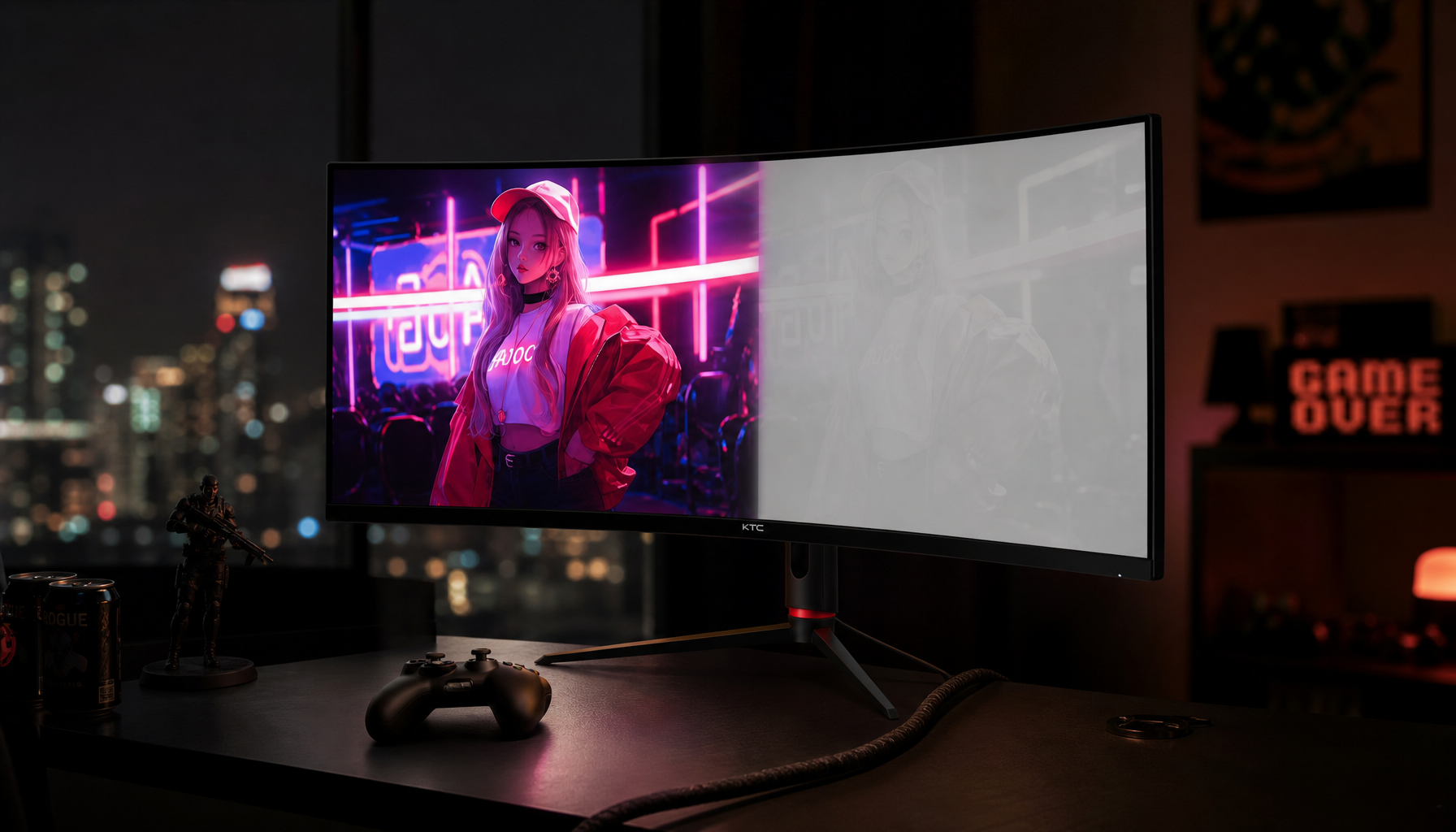
Blue wavelengths around 460 to 480 nm are closely tied to the body’s internal clock, and the effect gets stronger when the screen is bright, close, and used late. For monitor buyers, that means a premium panel does not automatically become “safe” before bed. A fast gaming monitor, a huge ultrawide, and a portable screen on a nightstand can all work against sleep if they are bright and blue-heavy at the wrong time.
Feeling fine is not the same as sleeping well
Evening screen use can increase alertness and reduce time spent in deeper stages of sleep, so the real risk is not just eye discomfort in the moment. Many people judge their setup by whether their eyes burn or their head hurts, but the sleep penalty can show up later as longer sleep latency, lighter sleep, or next-day fatigue.
That distinction matters if you often game or work after 9:00 PM. A monitor that feels visually comfortable can still be too stimulating before bed, which is why late-night display advice has to cover both eye comfort and sleep timing.
Blue light is only part of the eye-strain problem
Most nighttime discomfort is not about permanent damage
Screen blue light has not been proven to cause permanent eye damage at normal use levels, and the more immediate issue for most people is digital eye strain. Reduced blinking, constant focus at one distance, glare, and excessive brightness are often the bigger reasons your eyes feel dry, blurry, or tired. One practical detail from the notes stands out: screen use may reduce blink rate by up to 60%.
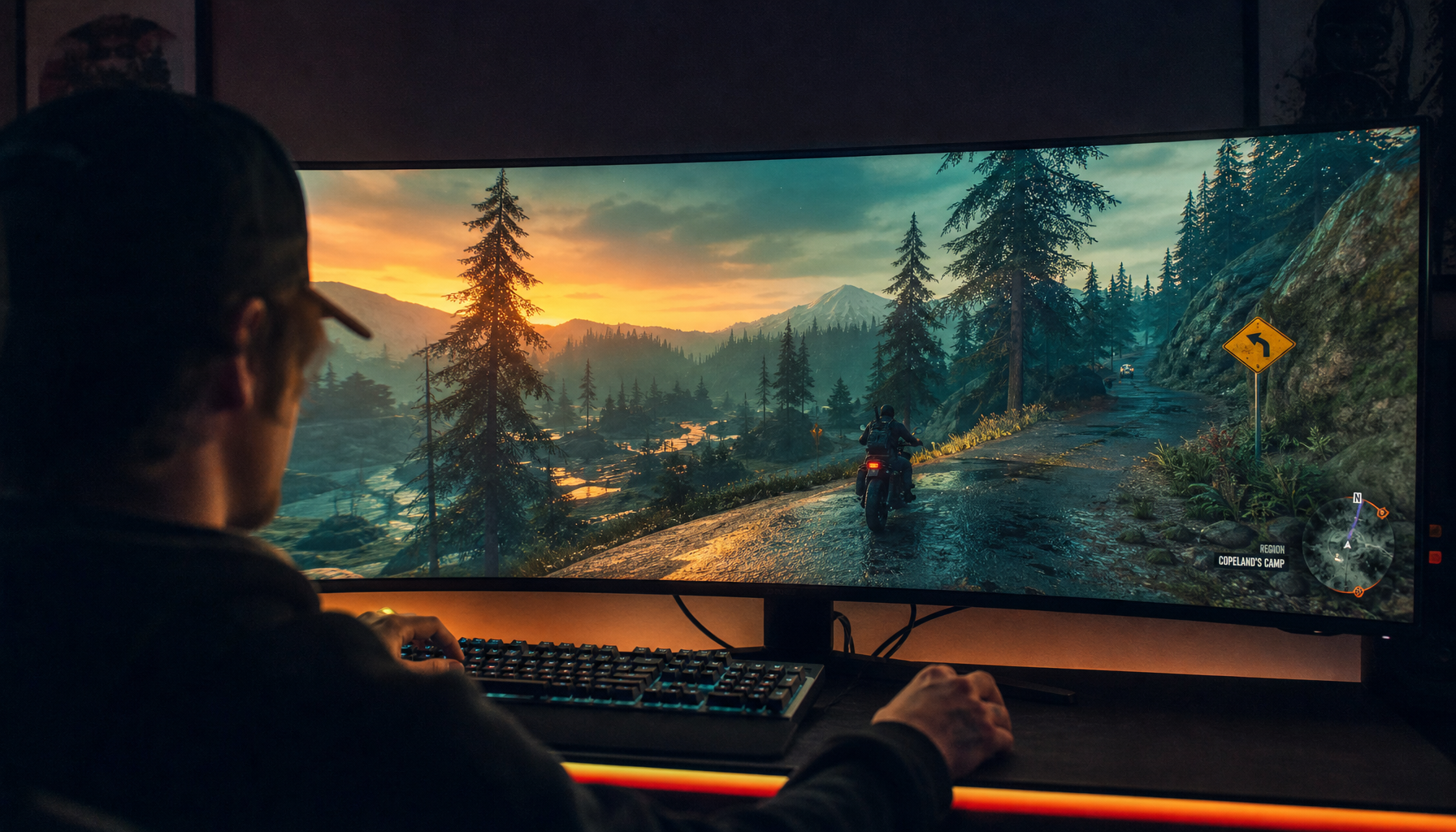
Eye strain symptoms are strongly tied to setup and viewing habits, not just the color of the light. A monitor placed about 25 inches away, with the top at or just below eye level, is usually easier to tolerate for long sessions. That advice applies whether you use a 24-inch office display, a 34-inch ultrawide, or a portable monitor that tends to sit too low on a desk.

Why blue-light glasses are not the main answer
A professional ophthalmology organization does not currently recommend blue-light glasses for routine screen use, which is a useful reality check if you are shopping for “night gaming” fixes. Blue-blocking glasses may help some people subjectively, but they are not the most reliable first move when your brightness, viewing distance, and room lighting are still off.
For most monitor users, the better order of operations is simple: fix glare, lower brightness, warm the image after sunset, improve blink behavior, and use breaks. If those basics are wrong, accessories usually do less than expected.
The monitor settings that matter most before bed
Brightness and color temperature come first
An operating system night mode removed more blue light than most built-in monitor filters in one test of eight monitors, which is useful if you already own a display and do not want to replace it. Monitor hardware filters still have value, especially when they are easy to toggle in the on-screen display, but the strongest low-cost change is usually an OS-level night mode plus a lower brightness setting.
Matching brightness to ambient light and shifting to a warmer color temperature are core comfort steps. At night, that usually means accepting a warmer, less color-accurate image in exchange for less glare and less blue-rich output. If your monitor still looks like a lamp in a dark room, it is too bright for bedtime use.

Your room lighting matters almost as much as the display
Normal indoor light around 100 lux or more may suppress melatonin, and bright bedroom lighting can delay nighttime melatonin by up to 90 minutes compared with dim light. That is why “night mode” on a monitor is not enough if the room itself is bright, cool-toned, or full of LED light.
A better late-night setup is coordinated: warm ambient light, reduced monitor brightness, and a stronger night filter after sunset. This matters even more on large ultrawides and high-brightness gaming monitors, because they can throw a lot of light into your field of view at close range.
Are high-refresh-rate gaming monitors easier on the eyes at night?
Yes for motion comfort, no for sleep protection
A refresh rate of 120 Hz or higher can improve long-session comfort by reducing flicker and lag, and that is a legitimate reason many gamers prefer 144 Hz, 165 Hz, or 240 Hz panels. If you play fast shooters, racing games, or anything with rapid camera movement, a smoother image can feel less fatiguing than a choppier 60 Hz screen.
Flicker at low brightness is another real comfort issue on some LED-backlit displays, which is why flicker-free certification is worth paying attention to. In plain terms, a good high-refresh gaming monitor can be easier on your eyes during the session itself, especially when dimmed for evening use.
But refresh rate does not fix the bedtime problem
Late-night screen use still delays sleep and keeps the mind activated, especially when the activity is interactive. A 240 Hz monitor running a bright, high-contrast game at midnight can still leave you too alert to fall asleep quickly, even if the motion looks beautifully smooth.
That is the key buying distinction: high refresh rate helps perceived visual comfort, but it does not meaningfully solve blue-light-related sleep disruption. If your goal is better sleep, choose 120 Hz or higher for smoother motion if you want it, but treat brightness control, warm color modes, and bedtime timing as the real nighttime features.
What to look for in a monitor if you work or game late
Features that help in actual evening use
Easy-access blue-light filters, anti-glare screens, ergonomic adjustment, and rest reminders are the kinds of monitor features that translate into real comfort. The most useful “eye care” features are the ones you will actually use every night without digging through menus. A quick night preset is more valuable than a long spec sheet.

IPS panels, curved displays, and higher resolution can also improve long-session comfort in the right setup. IPS can make off-angle viewing more consistent, which helps on wider screens. A curved ultrawide may reduce edge distortion for some users. A higher-resolution screen can reduce zooming and scrolling on larger displays, which can make late work sessions feel less effortful.
Match the monitor type to the way you use it
A gaming monitor for evening use should prioritize flicker-free behavior, easy brightness control, a fast-access warm mode, and a stand with enough height adjustment to keep the top edge at or slightly below eye level. High refresh rate is still worth having, but mostly for motion comfort.
An ultrawide needs enough desk depth to keep the full screen comfortable at about 25 inches away. A portable monitor needs even more care, because it often sits too low and too close by default. If you use one at night, a small stand and aggressive brightness reduction matter more than branding.
Practical Next Steps
Limiting screens for 1 to 2 hours before bed is still the most reliable move for sleep, but not everyone can or will do that every night. If you need late monitor time, the practical goal is not to train tougher eyes. It is to make your display behave less like daylight after dark.
- Use your OS night mode after sunset, and make it warmer later in the evening.
- Lower monitor brightness until white areas stop feeling harsh in the room.
- Keep the room dim and warm-toned instead of relying on the monitor alone.
- Sit about 25 inches from the screen, with the top at or just below eye level.
- Follow the 20-20-20 rule: every 20 minutes, look 20 ft away for 20 seconds.
- Blink more deliberately during reading or gaming sessions, especially on dry-eye days.
- If you are buying a new display, prioritize flicker-free behavior, anti-glare coating, ergonomic adjustment, and easy night presets.
- Choose 120 Hz or higher for smoother motion if you want it, but do not expect refresh rate to protect your sleep by itself.

The bottom line is straightforward: you do not really train your eyes to ignore blue light before bed. You build a better nighttime monitor setup, and that works better.