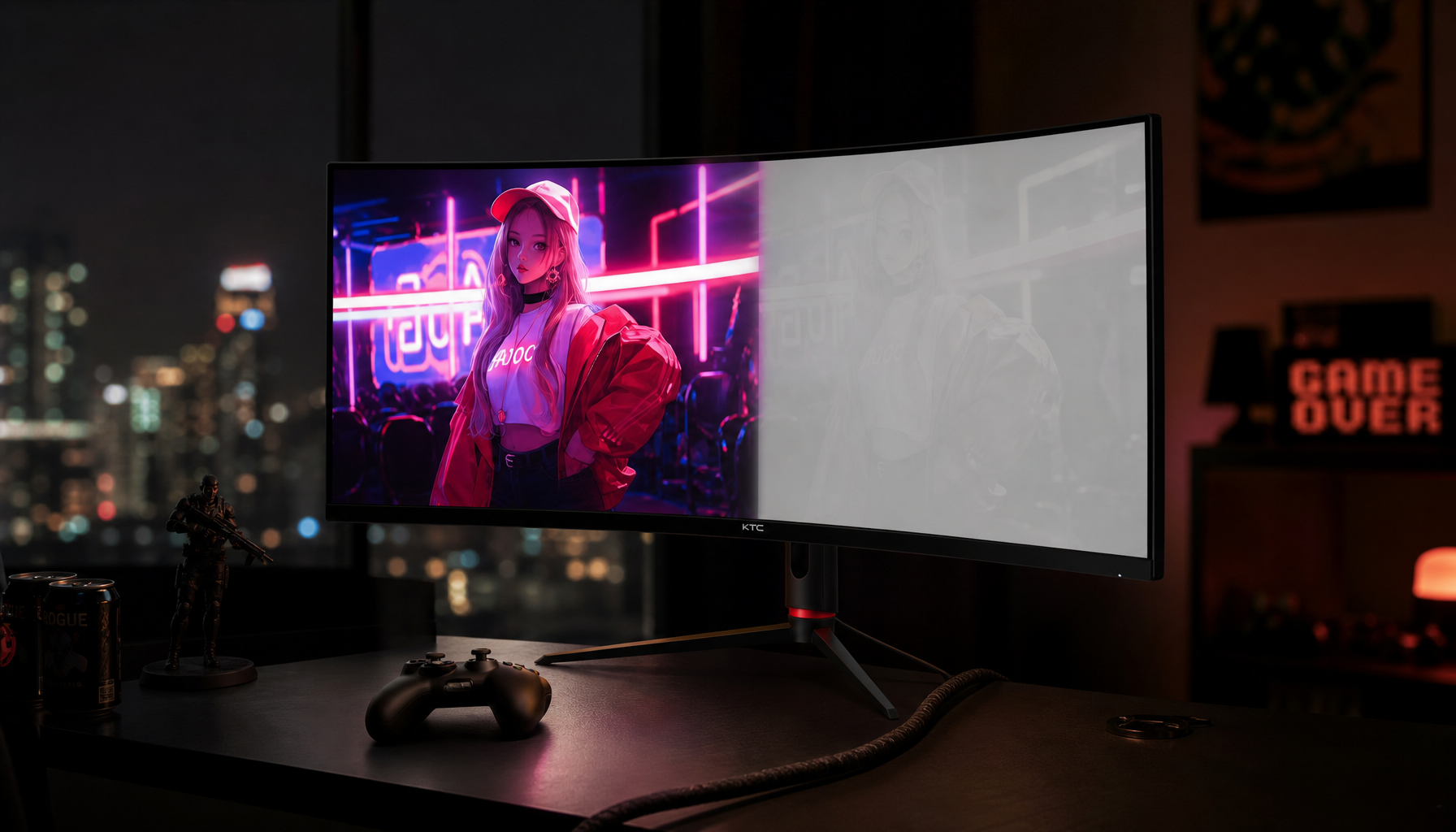
Black levels can vary between sources when the display, graphics output, console, cable, app, and HDR pipeline use different signal ranges, gamma, color modes, or tone mapping. Start by matching the source and display range, then normalize picture mode, HDR, brightness, contrast, and gamma per input.
Does your monitor look rich and deep from a gaming computer, then gray and lifted from a console or streaming stick on the same input? A disciplined five-minute input check can usually separate a real panel limitation from a settings mismatch before you replace cables or recalibrate everything. Here is how to identify the cause, correct it, and decide when the display itself is the bottleneck.
Why One Screen Can Show Different Blacks From Different Sources
A display does not create black levels in isolation. It receives a video signal, interprets that signal through an input mode, applies processing, and lights the panel according to its hardware limits. If any part of that chain changes, the same dark scene can look clean on one source and hazy on another.
The most common cause is a mismatch between Full RGB and Limited RGB. Computer monitors usually expect Full RGB, while TV and video workflows often use Limited RGB, and matching the RGB dynamic range matters because a mismatch can either raise blacks into gray or crush shadow detail into flat darkness. In practical terms, if your computer sends Limited while your monitor expects Full, blacks may look washed out. If your source sends Full while the display expects Limited, shadow detail can disappear.
This is why the same monitor can behave differently with a desktop computer, game console, laptop dock, disc player, or USB-C portable setup. Each device may choose a different output range automatically, and the monitor may store separate settings for HDMI 1, HDMI 2, DisplayPort, and USB-C.
The Main Causes of Black Level Inconsistency
RGB Range Mismatch
RGB range is the first setting to check because it directly affects black and white mapping. Full RGB uses the full signal range expected by most computer monitors. Limited RGB is common in video playback and TV-style devices. Neither is universally better; the correct choice is the one both devices agree on.

For a computer connected to a monitor, Full RGB is usually the right target. For a disc player or TV-style source connected to a display, Limited RGB may be correct. The problem begins when one side assumes Full and the other assumes Limited. That is when black floors rise, gray haze appears, or dark game areas lose detail.
For example, a 27-inch QHD monitor connected to a gaming computer over DisplayPort and a console over HDMI may treat each source differently. The computer may output Full RGB automatically, while the console may default to Limited or Auto. If the monitor’s HDMI black level is set differently from the DisplayPort input, the console image can look flatter even though the panel has not changed.
HDR and Tone Mapping Differences
HDR is another major source of inconsistency. HDR is not simply brighter SDR. It uses a different brightness and contrast system, and lower-end HDR monitors may accept an HDR signal without having the brightness, contrast, or local dimming needed to display convincing blacks. Many entry-level HDR displays peak around 300 to 400 nits and lack meaningful local dimming, so HDR can look washed out compared with well-tuned SDR.

Tone mapping adds another variable. A game, graphics output, operating system, and monitor can each apply its own adjustment to fit HDR content into the display’s actual capability. When those stages stack poorly, midtones can darken, blacks can lift, or shadow detail can vanish. This is especially common when a monitor has an HDR-supported label but limited contrast hardware.
For office work, SDR often looks more stable. For HDR games and movies, enable HDR only when the content is truly HDR, run the operating system’s HDR calibration utility when available, and check the game’s own black level, paper white, and peak brightness controls.
Gamma Settings and Picture Modes
Gamma controls how brightness is distributed between black and white. It affects shadow depth and midtone visibility more than overall backlight brightness. A monitor set near gamma 2.2 usually fits SDR desktop work, web content, productivity apps, and many games. A darker gamma such as 2.4 can look cinematic in a dim room but may hide shadow detail in a bright office.
This matters because many displays store gamma separately by input or picture mode. HDMI may be in Cinema mode, DisplayPort may be in sRGB mode, and USB-C may be in Standard mode. The same black wallpaper can therefore look smoky on one input and dense on another.
For calibration, start from a neutral or standard picture mode, set brightness for your room, keep contrast near default unless clipping appears, then adjust gamma only after the black floor and white level are sane. Basic monitor calibration can improve shadow detail and readability without buying new hardware, especially when brightness and contrast were set aggressively.
Panel Limits, IPS Glow, and Backlight Bleed
Sometimes the source is not the root cause. The panel itself may have limited native contrast, uneven backlighting, or visible glow. IPS monitors are popular because they deliver wide viewing angles and consistent color, but they can show grayish blacks in dark rooms, especially from off-axis viewing positions. VA panels generally produce deeper native blacks, while OLED pixels can turn off individually for near-perfect black.
Backlight bleed and uniformity issues can also make black look inconsistent from one source simply because different sources show different dark patterns. A loading screen, letterboxed movie, or dark game menu may expose corner glow that a desktop background hides. Edge bleed is often visible as brighter corners or borders on a black image, and edge brightness differences can become distracting in low-light viewing.
A simple check is to show a pure black image in a dark room with HDR and dynamic contrast disabled. If the glow stays in the same corners regardless of source, input, or cable, you are looking at panel behavior rather than a signal issue.

Quick Diagnosis Table
Symptom |
Likely Cause |
Practical Fix |
Blacks look gray from console but fine from computer |
RGB range mismatch |
Match console range and monitor HDMI black level |
HDR looks dull or hazy |
Weak HDR hardware or poor tone mapping |
Use SDR for desktop work, and calibrate HDR only for HDR content |
Dark areas lose all detail |
Full/Limited mismatch or black level too low |
Raise black level until near-black steps are barely visible |
Same model monitors look different |
Settings, cable, port, graphics output, or aging |
Reset both displays and test identical ports |
Corners glow on black screens |
IPS glow or backlight bleed |
Lower brightness, improve room lighting, or consider VA, mini-LED, or OLED |
Why Ports, Cables, and Graphics Outputs Matter
Input inconsistency can also come from the computer side. Two ports on the same computer may not behave identically. A laptop’s HDMI output, USB-C dock, and DisplayPort connection can negotiate different color formats, bit depths, refresh rates, and range settings. Graphics software may also store separate color settings for each detected display.
Even identical monitor models can show different output because of settings, cables, graphics outputs, software profiles, or physical aging, and different graphics outputs can produce visibly different color and brightness behavior. The same principle applies to one monitor with several sources. If the inconsistency follows the port or source rather than the panel, the signal chain is the suspect.
For a dual-source workstation, use matching connection types where possible. DisplayPort-to-DisplayPort for the computer and HDMI-to-HDMI for the console is fine, but avoid mixing adapters unless needed. If a USB-C dock is involved, verify that it supports the resolution, refresh rate, and color depth you expect.

A Practical Setup Workflow
Start by resetting the monitor’s picture mode for each input, then choose the same baseline mode where possible. Standard, Custom, Creator, or sRGB modes are usually better starting points than Vivid, Movie, Dynamic, or FPS modes if black level accuracy matters.
Next, match the RGB range. In the operating system or graphics control panel, look for output dynamic range and choose Full RGB for a standard monitor. On a console, compare Auto, Full, and Limited against the monitor’s HDMI black level setting. The correct combination should show deep black while preserving the first few near-black steps in a test pattern.
Then separate SDR from HDR. Tune SDR first because it is the baseline for office work, browsing, spreadsheets, coding, and most desktop applications. If HDR is enabled all day, SDR desktop content may be mapped into HDR space and appear gray or dim. For many productivity displays, the performance-driven choice is to keep SDR active for work and enable HDR only for native HDR games or movies.
Finally, evaluate the panel. Lower the brightness in a dark room, sit directly in front of the display, and compare the center to the corners. If the entire screen improves after range and gamma correction, it was a setup issue. If only the corners remain lifted, the limitation is likely IPS glow or backlight uniformity.
Pros and Cons of Source-Specific Tuning
Source-specific tuning is powerful because each device can get the signal treatment it expects. A computer can run Full RGB in a neutral SDR mode for clean text and accurate interface contrast, while a console can use its own HDR calibration and game mode. This gives better results than forcing every input into one universal preset.
The downside is maintenance. Firmware updates, graphics driver changes, console updates, and dock swaps can silently change output behavior. A monitor used for a gaming computer, work laptop, and streaming device should be checked after major updates or cable changes. This is basic signal hygiene, not excessive calibration.
FAQ
Should I always use Full RGB?
Use Full RGB for a computer connected to a monitor when both sides support it. Do not force Full RGB blindly for video devices or TVs. The right answer is matched range, not maximum range.
Can a cable cause raised blacks?
A damaged or low-quality cable is less likely to subtly raise black level than a range or mode mismatch, but cable type can affect what formats are available. If a cable or adapter prevents the desired resolution, refresh rate, or color depth, the source may fall back to a different output mode.
Is OLED the best fix for inconsistent blacks?
OLED solves backlight bleed because each pixel emits its own light, but it does not automatically fix incorrect RGB range, HDR setup, or source tone mapping. It gives the panel a better black floor; you still need a clean signal.
Calibration Mindset
Black level consistency is not one setting. It is the result of a matched signal chain, sane HDR behavior, stable gamma, and panel hardware that fits your room and use case. Get the source and display speaking the same language first; only then judge whether your monitor is delivering the immersion, control, and reliability you paid for.