Aspect ratio sets the shape of a monitor, while resolution sets how many pixels fill that shape. On a display spec sheet, those two numbers determine how wide your view feels, how sharp text looks, and how hard your GPU has to work.
If you have ever compared a 27-inch 2560x1440 gaming monitor with a 34-inch 3440x1440 ultrawide and wondered why one feels roomier but runs harder, this is the decision you are really making. Moving from 2560x1440 to 3440x1440 adds about 34% more pixels for the GPU to render, which is enough to change frame rate targets and monitor choices. The goal here is to make those tradeoffs easy to read before you buy.
Aspect Ratio vs. Resolution: The Spec Sheet Difference That Matters
Screen shape vs. pixel count
Aspect ratio is the relationship between a monitor’s width and height, written as 16:9, 21:9, or 32:9, while resolution is the pixel count, such as 1920x1080 or 3440x1440. In practice, aspect ratio tells you whether a screen is standard widescreen, ultrawide, or super ultrawide, and resolution tells you how much image detail fits inside that shape.

Resolution is the pixel count shown horizontally and vertically, so 1920x1080 and 2560x1440 can share the same 16:9 shape but deliver very different sharpness. That is why two monitors can look “the same size” in shape yet feel very different on a desktop: one gives you more usable detail, cleaner text, and more room for HUD elements, browser tabs, or editing panels.
Why monitor buyers should care about both
Display aspect ratio affects how content fits on screen, and it also changes the monitor’s real width and height at the same diagonal size. On a 23-inch panel, a 4:3 screen has more total area than a 16:9 screen, while a wider format trades vertical depth for horizontal reach. That matters when choosing between a compact portable monitor, a standard gaming monitor, and a large ultrawide.
List of common display resolutions also shows why pixel numbers alone can be misleading: many modern displays use square pixels, so shape and displayed image match the stored resolution, but non-square pixel formats can change how an image appears without changing raw pixel count. For monitor buying, the practical rule is simple: use the display’s native aspect ratio and native resolution whenever possible to avoid stretching, soft scaling, or black bars.
The Common Monitor Aspect Ratios and the Resolutions They Usually Pair With
The formats most buyers actually see
Most current monitors and TVs use 16:9, which is why 1920x1080, 2560x1440, and 3840x2160 dominate mainstream gaming and general-purpose display shopping. It is the safest choice for broad compatibility, especially if you split time between PC games, streaming video, and console use.
Older and less common monitor formats still matter in niche buying decisions. 16:10 options such as 1920x1200 give you more vertical workspace for coding and documents, 4:3 survives mainly in retro or competitive preferences, and 32:9 formats such as 5120x1440 behave like two 27-inch 1440p screens merged into one uninterrupted panel.

Comparison table: shape, resolution, and buying implications
Aspect-ratio examples across monitor formats make it easier to see that wider formats often keep similar vertical resolution while expanding width. That is why 3440x1440 feels dramatically wider than 2560x1440, even though both share the same 1440-pixel height.
Aspect Ratio |
Common Monitor Resolutions |
Typical Monitor Types |
Best Fit |
Main Tradeoff |
16:9 |
1920x1080, 2560x1440, 3840x2160 |
Standard monitors, gaming monitors, portable monitors |
Best all-around compatibility for PC, console, and media |
Less horizontal workspace than ultrawide |
16:10 |
1920x1200 |
Productivity monitors, some portable monitors |
More vertical room for documents and tools |
Fewer gaming-focused options |
2560x1080, 3440x1440, 3840x1600 |
Ultrawide monitors |
Immersive gaming and side-by-side multitasking |
Higher GPU load and mixed game support |
|
32:9 |
3840x1080, 5120x1440, 7680x2160 |
Super ultrawide monitors |
Sim racing, flight sims, trading, dashboard-heavy work |
Very demanding, physically wide, uneven app support |
4:3 |
1024x768 |
Legacy or specialty use |
Retro gaming and specific competitive habits |
Limited availability and modern content mismatch |
How Aspect Ratio Changes Gaming Performance and Resolution Choices
Wider screens usually mean more pixels to drive
Ultrawide monitors commonly use 21:9 or 32:9, and that wider canvas usually increases total pixel count at the same screen height. A useful real-world example is 2560x1440 versus 3440x1440: both are 1440 pixels tall, but the ultrawide version pushes nearly 5 million pixels instead of about 3.7 million, or roughly 34% more work for the GPU.
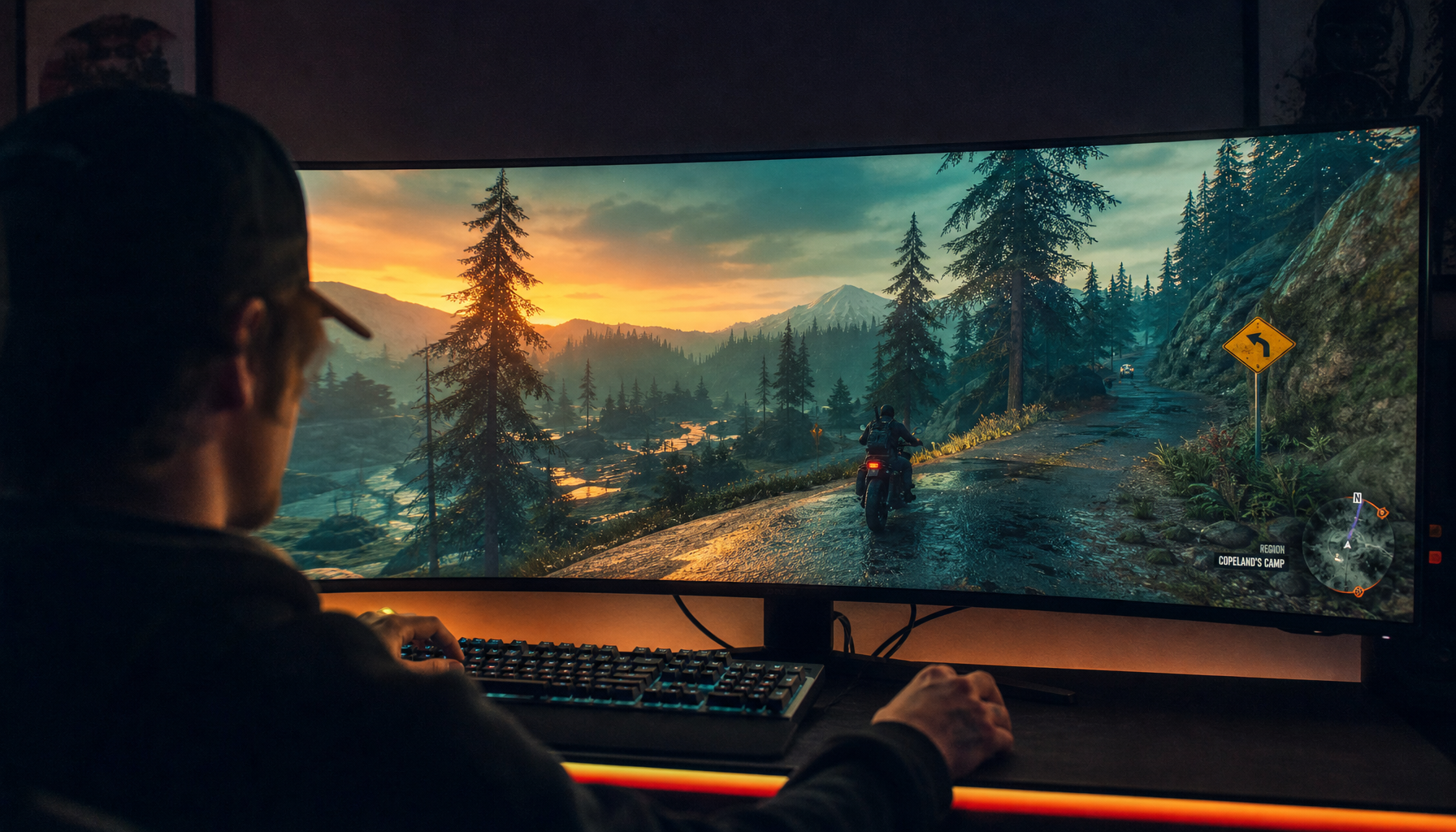
Gaming resolution is always a trade-off between visual detail and frame rate, so the right aspect ratio depends on the kind of games you actually play. For fast competitive shooters, a 24- to 27-inch 16:9 monitor at 1080p or 1440p with high refresh is usually the cleaner choice. For single-player RPGs, racing games, and open-world titles, 21:9 can add visible side detail and a stronger sense of space.
Support and compatibility still matter
Not all PC games support ultrawide mode equally well. When support is weak, you may get black bars on the sides, stretched images, or menus and HUD elements pushed too far toward the edges. Consoles are even simpler here: they still target standard widescreen, so an ultrawide monitor will not automatically turn console play into a wider experience.
Common screen resolution data for April 2026 also helps explain why 1920x1080 remains a safe baseline: it was the top worldwide resolution at 8.57%. The market has moved beyond 1080p for many gaming setups, but broad content support still favors mainstream 16:9 formats, which is why budget buyers and esports players keep landing there.
Which Aspect Ratio Makes Sense for Gaming, Work, and Portable Monitors
Standard gaming monitors and high-refresh displays
Gaming monitor choice depends on size, aspect ratio, refresh rate, and resolution, and 27-inch remains the most common size because it works well with both 1440p and 4K. If you want one recommendation that covers most desktop gamers, a 27-inch 2560x1440 16:9 monitor is still the strongest middle ground for sharpness, desk fit, and high refresh options.
Most modern monitors use a 16:9 aspect ratio, so it also gives the least friction with streaming, console gaming, and competitive titles. In my experience setting up mixed-use desks, this is the format that needs the fewest compromises: no odd scaling, no surprise black bars, and far more choices at 144Hz, 240Hz, and above.
Ultrawide monitors for immersion and multitasking
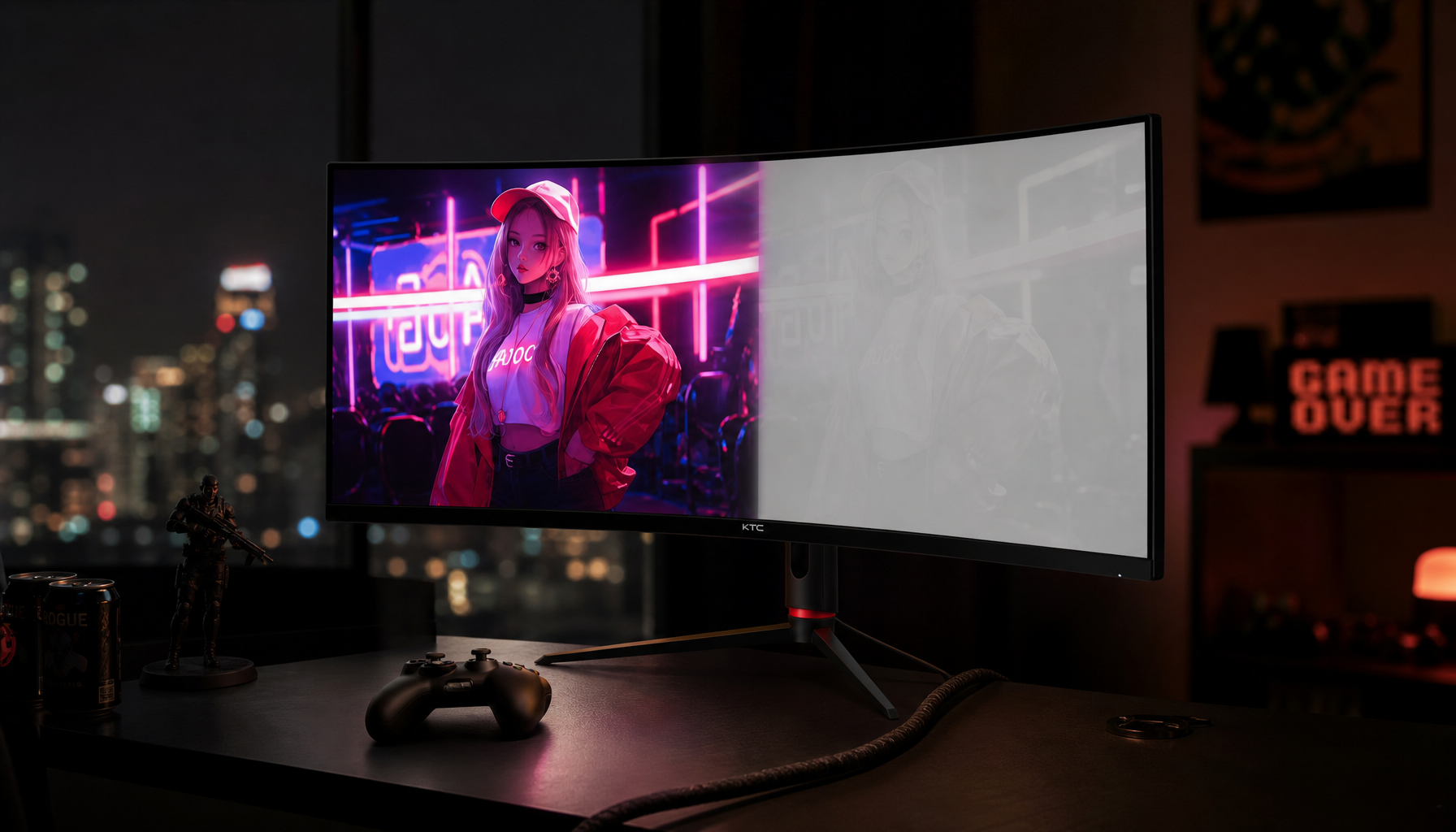
Ultrawide aspect ratios provide more horizontal space, which is why 34-inch 3440x1440 displays are so popular for mixed gaming and productivity. You can keep a game centered, a chat panel open, or a timeline and preview visible without the bezel break of dual monitors.
A 49-inch 32:9 monitor can behave like two 27-inch 1440p panels side by side, which makes sense for sim racing, flight simulation, or heavy dashboard work. The drawback is obvious on day one: these panels are physically huge, more expensive, and much more demanding if you want high refresh at native resolution.
Portable monitors and travel setups
Portable monitors are most commonly found in the 12- to 17-inch range, with 15-inch models often serving as the sweet spot. For travel, hotel-desk work, or a second screen for a gaming laptop, 1080p 16:9 is usually the practical choice because it balances readability, power draw, and price.
Portable monitor resolution options often come down to 1080p versus 4K. In real use, 4K on a small panel is best reserved for color-sensitive editing or sharp asset review, while 1080p is easier on both budget and battery. Unless you know you need extra pixel density, the simpler portable choice is the right one.
How Aspect Ratio Affects Sharpness, Screen Space, and Content Fit
Wider is not automatically sharper
The best monitor resolution is usually the display’s native aspect ratio and resolution, because sharpness depends on how many pixels are packed into the panel and whether the image is shown 1:1. A wider monitor can feel bigger and more cinematic without being sharper than a smaller, denser 16:9 display.
Two traditional 4K monitors can provide higher total pixel density than one 3440x1440 ultrawide, which matters for photo work, dense spreadsheets, or text-heavy tasks. If clarity for tiny UI elements is your priority, compare pixel density and native scaling behavior, not just aspect ratio.
Content fit is where aspect ratio becomes visible
When input resolution does not match the display or capture format, video can be stretched, scaled, or letterboxed. The same thing happens on monitors when games, apps, or videos are built around another format. A 21:9 movie on a 16:9 screen shows bars at the top and bottom; a 16:9 game on an ultrawide may show bars at the sides.
Monitor trends shifted from 4:3 to 16:10 and then to 16:9 because content ecosystems, manufacturing, and user habits moved together. For buyers today, that means the safest fit is still standard widescreen, while ultrawide is best treated as a deliberate upgrade for specific use cases rather than a universal default.
FAQ
Q: Is aspect ratio or resolution more important when buying a gaming monitor?
A: Neither works alone. Aspect ratio decides the screen shape and field of view, while resolution decides detail and GPU load. For most buyers, 16:9 1440p is the most balanced place to start, then move to 21:9 only if you specifically want more horizontal space and your games support it.
Q: Does a wider aspect ratio lower frame rates even at the same refresh rate?
A: Usually, yes. A wider monitor often means more total pixels. For example, 3440x1440 pushes about 34% more pixels than 2560x1440, so your GPU has more work to do before it can hold the same frame rate target.
Q: Are portable monitors better in 16:9 or another ratio?
A: For most travel and laptop-extension use, 16:9 is still the best choice because it is easier to power, easier to match with common devices, and more affordable at 1080p. A different ratio only makes sense if you have a very specific workflow.
Final Takeaway
The simplest way to buy well is to treat aspect ratio as the monitor’s shape and resolution as the workload and detail inside that shape. If you want the safest all-around pick, choose 16:9; if you want immersion and multitasking, consider 21:9; if you want a dual-screen replacement without bezels, look at 32:9 only after checking GPU headroom and software support.
For most shoppers, the strongest default choices are straightforward: 24- to 25-inch 1080p 16:9 for competitive play, 27-inch 1440p 16:9 for balanced gaming and daily work, 34-inch 3440x1440 21:9 for premium ultrawide use, and 15-inch 1080p 16:9 for portable monitors. Start with your use case, then pick the widest format your content, desk, and hardware can actually support.
References
- List of common display resolutions
- Why Gamers Are Switching to Ultrawide Monitors?
- How to choose the best portable monitor for you
- Resolutions, capture rates and aspect ratios
- What monitor resolution is best for gaming?
- Screen Resolution Stats Worldwide
- Aspect Ratio Cheat Sheet
- What Is Aspect Ratio?
- Display aspect ratio
- Monitor size guide
- Monitor aspect ratio
- Ultrawide vs. dual monitors