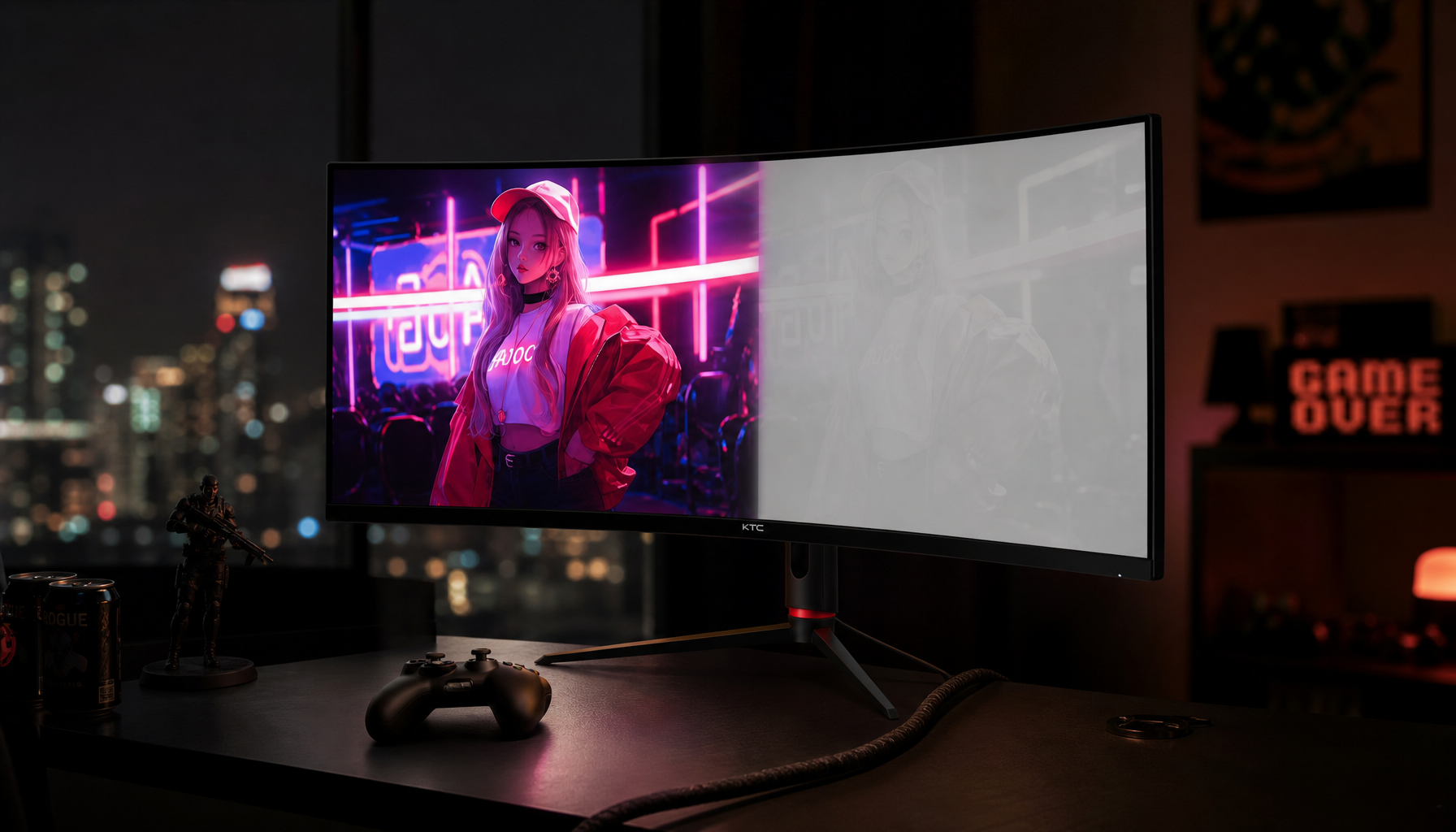
Ambient lighting can make a monitor feel larger and easier on the eyes by softening the visual stop at the bezel. When it is subtle and well placed, it improves comfort and perceived depth without distracting from the screen.
Ambient lighting can make a monitor feel larger by softening the hard stop at the bezel and carrying color into the room. Done well, it improves comfort and perceived depth; done poorly, it becomes visual noise.
Does your screen feel intense in a dark room even when the monitor itself is excellent? Or does a flashy RGB setup pull your eyes away right when you need to track motion or stay focused? In repeated desk tests, a soft rear glow consistently makes long gaming and work sessions feel less harsh than a bare screen in darkness, while overbright reactive lighting does the opposite. The goal is to choose between subtle bias light, dynamic sync effects, and layered room lighting without wasting money or washing out your display.
The Real Job of Ambient Lighting
The main reason monitor lighting changes immersion is that the harsh visual boundary between screen and room is reduced, so your eyes are not constantly jumping from a bright panel to a dark void. That matters in both gaming and productivity. When the wall behind the display carries a controlled halo, the image feels less boxed in, black scenes feel less abrupt at the edges, and the room starts to participate in what is happening on-screen.
Bias lighting is the most useful term here. It means a low-level light placed behind the monitor, aimed at the wall rather than your eyes. Its purpose is not to brighten the room. It is to reduce the contrast gap between the display and its surroundings. In practice, that creates a more relaxed visual field, especially with large ultrawides, bright HDR-capable panels, or long sessions that stretch past sunset.

For productivity, the same principle matters because eye strain, headaches, and fatigue can increase under poor lighting. A sharp 27-inch QHD or 4K monitor already gives you excellent clarity; balanced rear light can make that clarity easier to live with during a full workday. The effect is not magical, and it does not improve pixel response, refresh rate, or color gamut. It improves how your eyes and brain handle the display environment.
Why Immersion Improves When Light Extends Past the Bezel
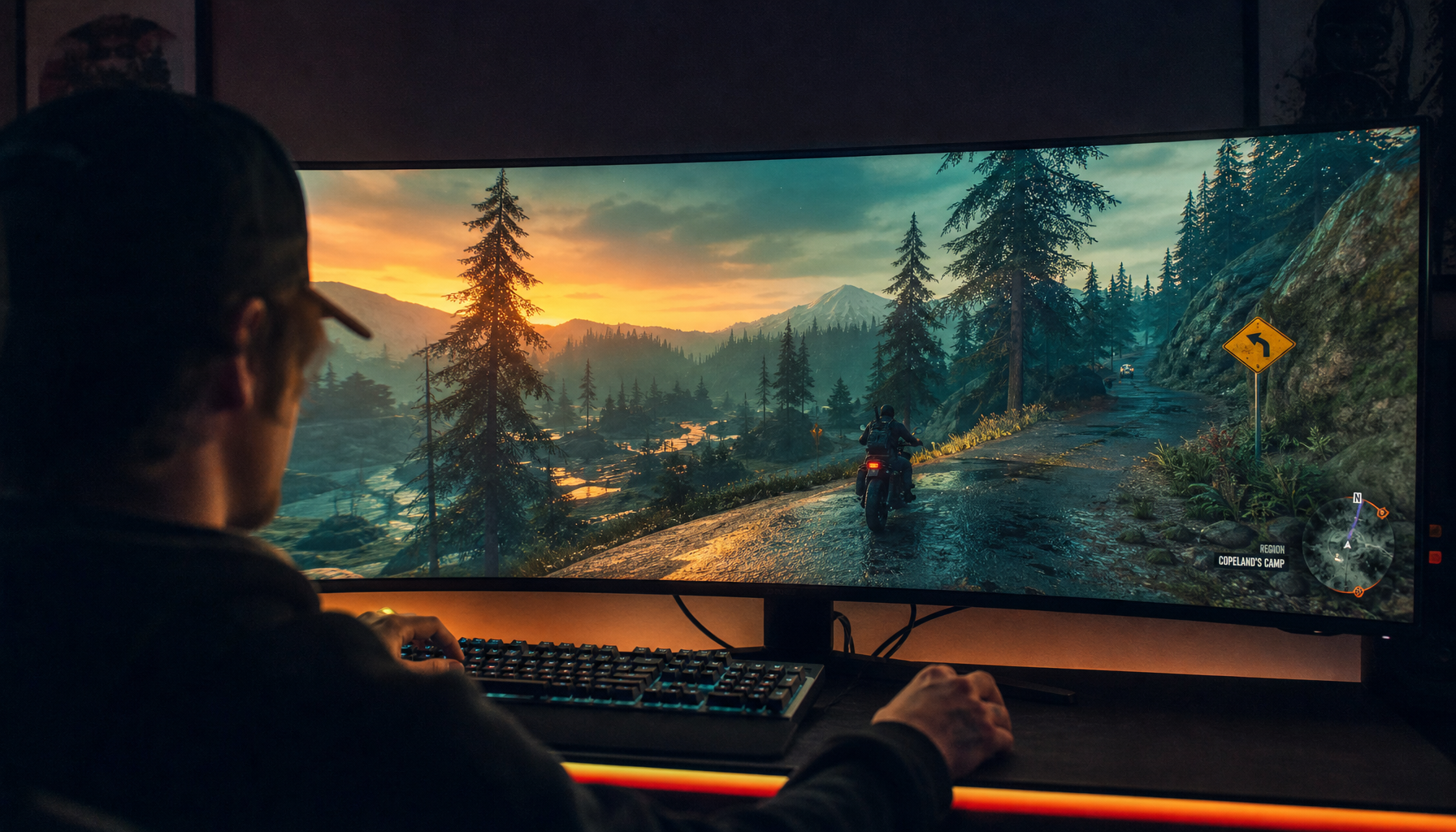
A monitor normally ends at a black frame, and then the room begins. That abrupt cutoff reminds you that you are looking at an object on a desk. When screen-matched or carefully chosen ambient light fills the wall behind it, the image no longer feels trapped inside a rectangle. In fast games, that can make the presentation feel wider and more enveloping. In slower titles, movies, and atmospheric single-player sessions, it makes scenes feel deeper and less clinical.
That is why in-game visuals feel like they extend beyond the monitor. Even a simple color wash based on the dominant screen tone can make a snow map feel colder, a desert map warmer, and a neon city scene more expansive. In practice, the biggest win is not perfect color accuracy. It is that the room stops fighting the image.
There is also a comfort side to immersion. Bias lighting is low-level, stable light placed behind the monitor to reduce the contrast jump, which helps the screen feel less piercing in a dark setup. That reduced harshness is often what users describe as greater immersion, even before they talk about mood or aesthetics. If your eyes are less busy adapting, your attention stays on the content longer.
Static Bias Light vs. Reactive RGB

The better choice depends on what you are doing, not on what looks most dramatic on a product page.
For competitive play, static or slow-changing light usually wins. Aggressive RGB can add visual noise through pulsing effects and rapid color shifts, which can interfere with motion tracking and distract from detail. In real use, this is easy to spot: if you notice the wall more than the crosshair, subtitles, or minimap, the lighting is too active. A neutral white or restrained color theme behind the display supports immersion by fading into the background.
For cinematic gaming, streaming, or casual evening sessions, reactive lighting can be worth it. RGB lighting is most effective when it supports immersion, and that distinction matters. Good reactive lighting follows the mood of the scene. Bad reactive lighting advertises itself. If the effect is too fast, too bright, or too saturated, the room becomes a second display competing for attention.
There is a useful middle ground. Some screen-sync systems let you add transition smoothing, and color changes become more fluid with intentional smoothing. That tradeoff makes sense for flickery content because it reduces visual agitation, but it is less ideal if you want the wall glow to react instantly to explosions or HUD flashes. This is one of the few areas where different sources point to different best settings for good reason: a tournament player, a horror-game fan, and a movie watcher are solving different problems.
Placement and Brightness Matter More Than Features
The fastest way to ruin ambient lighting is to mount bright LEDs where you can see the emitters directly. Placement matters more than color in many setups because exposed light points create glare, reflections, and fatigue. The strip should sit a few inches behind the monitor so the wall glows, not your retinas. On glossy desks or glossy screens, indirect bounce matters even more.

Brightness needs restraint. Main ambient RGB at about 20% to 40% intensity is a practical starting range, with lower levels often working better for desk-edge or floor accents. Think of the monitor as the hero light and the ambient system as support. If the wall glow is bright enough to flatten perceived contrast on a VA or OLED panel, you have gone too far. A simple reality check works well: if a white document or bright loading screen no longer feels much brighter than a well-lit sheet of paper on your desk, the balance is close.
Color temperature matters too, especially if you care about image accuracy while editing photos, reading documents, or switching between work and play. A neutral white near D65, often approximated as 6500K, tends to feel most natural behind modern displays. Warm decorative colors can be great for relaxed gaming, but they are less suitable for color-sensitive work because they tint your visual context.
Gaming, Work, and Portable Screens Need Different Lighting Strategies

Gaming setups benefit most from immersion-first lighting, but not every game wants the same treatment. Reactive gradients and genre-matched palettes suit story-driven or atmospheric games, while stable rear light suits shooters and esports. If your monitor already runs at 144 Hz, 240 Hz, or higher, ambient lighting should support that clean, connected feel rather than distract from it.
For office and hybrid use, balanced, well-positioned illumination reduces shadows and supports visibility. That means a layered setup often beats a single RGB strip. A soft room light, a focused desk lamp, and a mild rear bias light create a workspace that feels calmer and more reliable. On a modern single-cable productivity display with a clean desk, this also preserves the uncluttered look that many buyers want from 27-inch QHD and 34-inch ultrawide monitors.
Portable smart screens are a special case. Their value is mobility, so built-in ambient features are less common and less important than controlling the room around them. If you use one in a hotel, kitchen, or temporary workstation, a small warm lamp off to the side or a dim wall-facing light behind the stand can do more for comfort than a bright reactive accessory clipped to the panel.
The Tradeoffs Most Buyers Notice Too Late
Not every ambient feature is free. Lighting-control software can add about 3% to 7% CPU or GPU usage, which may be irrelevant on a high-end desktop but annoying on a lower-power mini PC or during competitive play, where every frame and background process matters. Hardware ecosystems can also become messy if your monitor light, desk strip, wall bars, and peripherals all use different apps.
Cost is another reality. Retail pages make it easy to chase spectacle, but ambient gaming lights should fit the setup and intended atmosphere, not just maximize brightness or animation count. A modest, high-quality bias light with good diffusion often delivers more real immersion than a cheaper pack of overly bright strips spread all over the room.
The strongest value move is usually simple: start with one rear bias light, tune brightness conservatively, and live with it for a week before adding desk-edge or wall lighting. In practice, that first layer does most of the work.
What to Buy for the Effect You Actually Want
If your goal is visual comfort with a premium productivity feel, choose a neutral-white bias light with stable output and good diffusion. If your goal is cinematic gaming, choose a reactive system with adjustable brightness and smoothing so you can calm it down. If your goal is a full-room statement, add wall or under-desk accents only after the monitor halo is working correctly.
The display still does the heavy lifting. Monitor recommendations in 2026 continue to favor strong panels, ergonomic stands, and single-cable connectivity for good reason, because ambient lighting cannot rescue a weak monitor. It can, however, make a strong monitor feel more immersive, more comfortable, and more intentional.
The best ambient lighting does not steal the show. It makes the screen feel bigger, the room feel calmer, and your sessions feel easier to stay inside.