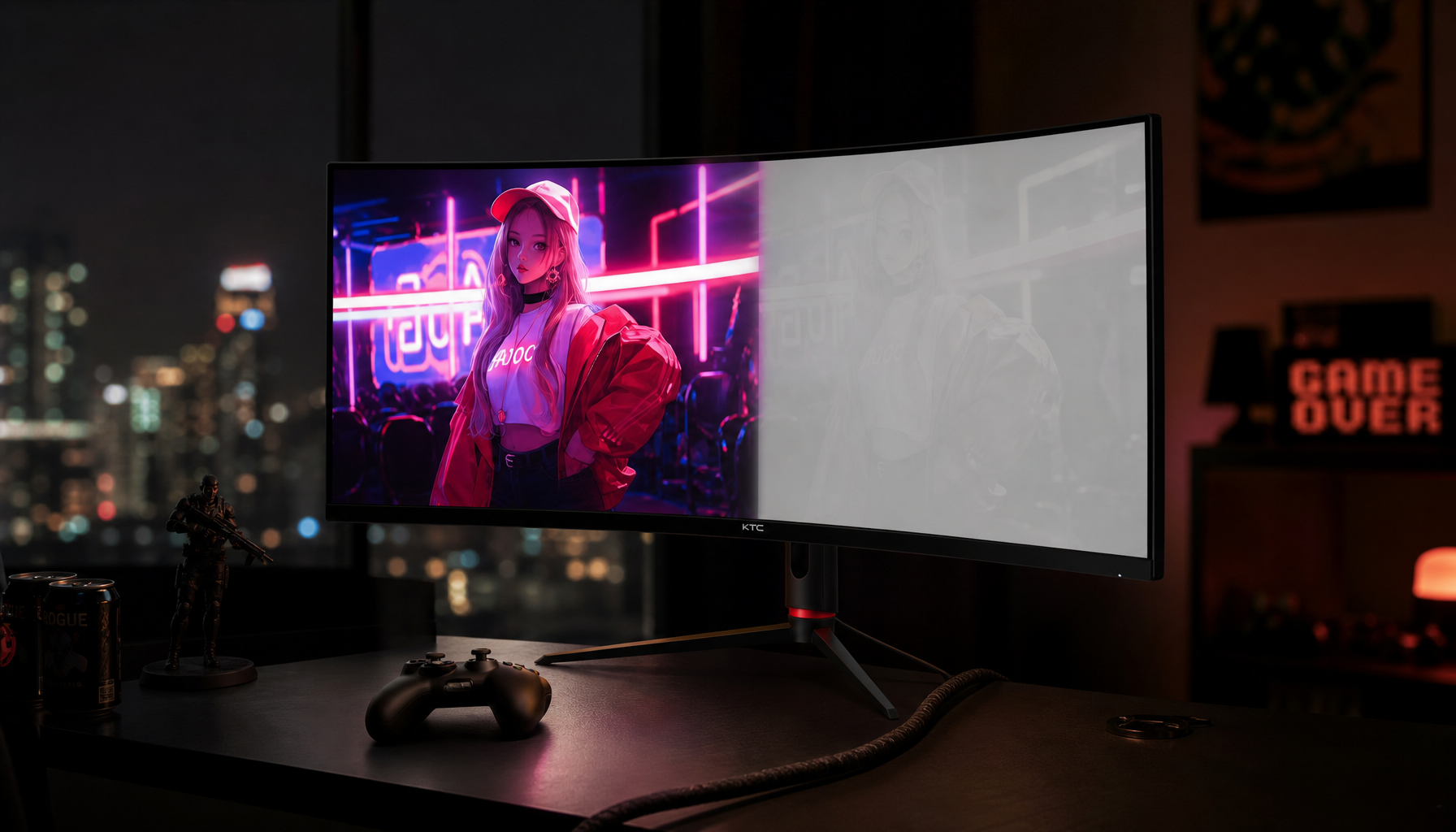
If you are building an RTX 6090 Ti-class 4K HDR setup, the real question is not whether DSC is unusable. It is whether you want the cleanest possible path for 12-bit output, frequent mode changes, and a desktop that may need more than one display to behave well. This 12-bit uncompressed gaming audit examines native UHBR20 versus DSC so buyers can decide with clear trade-offs in mind.

Decision layer: choose native UHBR20 if you want the most direct path for 12-bit HDR and the fewest moving parts. Choose DSC if you are optimizing for practicality and accept that compression can be a reasonable trade-off in many setups. If your priority is absolute signal purity, the extra bandwidth headroom matters. If your priority is general gaming quality, DSC may still be good enough.
Why This Audit Exists
For the enthusiast chasing 2026-era HDR gaming at high refresh, the display link starts to matter once you care about subtle gradients, repeated alt-tabbing, and whether the monitor chain behaves consistently under pressure. DSC is not being framed here as a failure; it is a compromise. For readers comparing paths, the broader RTX 60-Series Display Requirements: Why DP 2.1 UHBR20 is Non-Negotiable is a useful next stop.
12-bit output gives you 4,096 shades per channel, which helps reduce visible banding in smooth HDR transitions. That is why the signal path becomes part of the image-quality conversation rather than just a spec detail. The 12-bit uncompressed gaming audit exists because small handshake or compression differences become noticeable only after you test real workflows.
Gradient and Mode-Switch Examples
- Dark HDR fog scenes often reveal the first signs of banding when compression is active.
- Frequent alt-tabbing between desktop and game can expose extra black-screen delays on DSC links.
- Multi-monitor desks with DLDSR enabled may lose one display head when DSC negotiation consumes resources.
Native UHBR20 Versus DSC
The practical distinction is simple: native UHBR20 keeps the transport path direct, while DSC adds compression into the chain. For most users, DSC can still look very close to transparent. For the most demanding buyers, especially in dark HDR scenes, the question is whether you want to leave compression out of the equation entirely.

| Dimension | Native UHBR20 | DSC Path | Why It Matters For 12-Bit HDR Gaming |
|---|---|---|---|
| Signal path | Direct transport | Compressed transport | A simpler path reduces variables when you are judging image fidelity. |
| Bandwidth headroom | Higher | More constrained by the compressed workflow | Headroom matters when you want to preserve the highest practical modes. |
| Setup complexity | Lower in the best-case chain | Higher because negotiation is part of the experience | More negotiation points can mean more opportunity for inconsistency. |
| Mode-switch stability | Typically cleaner in a well-matched setup | Can involve extra handshake behavior | Frequent alt-tabbing makes this difference more noticeable. |
| Multi-monitor behavior | Better aligned with a no-compromise desk | May introduce trade-offs in more complex setups | Power users often care as much about the whole desktop as about one panel. |
| Future-proofing | Stronger fit for top-end bandwidth needs | Adequate for many current builds | This matters if you expect your next upgrade cycle to push harder. |
At the standards level, DisplayPort 2.1 UHBR20 is the 80Gbps class of link many enthusiasts point to when they want a truly modern high-bandwidth path. The official VESA overview of DisplayPort 2.1 is the cleanest place to verify the transport tier itself. The VESA DSC-ETP200 Whitepaper further explains how compression behaves under constrained bandwidth.
Where Bandwidth Pressure Shows Up
The edge cases are usually not static desktop use. They show up in smooth dark-to-bright gradients, foggy skies, shadow detail, and other transitions where 12-bit output is supposed to help. DSC can remain visually close to lossless for many viewers, but attentive users may still care about those border cases.
Handshake friction is the other practical issue. If you are the kind of user who switches inputs, alt-tabs often, or moves between game and desktop modes repeatedly, even short black-screen delays can become annoying. In some multi-monitor setups, users also report that compression-related behavior can consume more display resources than they expected, which may affect other features depending on the chain.
For a broader category view of high-refresh options, the 4K & 5K High-Refresh Monitors collection is the right browsing path. The 4K Monitor collection offers additional choices when you need to compare resolutions and refresh rates side by side.
How to Audit Your Setup
- Start with a direct cable path and remove adapters, docks, and splitters before judging the result.
- Lock the highest stable mode first, then test HDR and 12-bit behavior after the baseline is steady.
- Check smooth gradients in dark scenes instead of relying only on screenshots.
- Re-test with alternate inputs or cables if switching behavior feels inconsistent.
- Treat cable quality and port matching as part of the setup, not as a magical fix.
Quick Verification Checklist
- Confirm the monitor reports native 12-bit support in its EDID.
- Run a 10-bit gradient test pattern before enabling HDR.
- Measure black-screen duration during input switches with a stopwatch app.
- Verify that DLDSR or additional displays remain available after the primary link is active.
If you are choosing a cable as part of that audit, Premium Display Signal Cables for Gaming & Productivity Monitors are worth checking against your exact bandwidth and connector needs before buying. The UHBR20 Cable Certification: How to Verify DP80 Compliance in 2026 guide walks through length limits and certification checks.
Which Monitor Path Fits the Use Case
If you want the more premium display path for high-contrast HDR scrutiny, a Mini-LED 4K option is the better fit. If you want a practical 4K high-refresh monitor and accept DSC as part of the trade-off, a value-oriented panel can still make sense. The key is matching the monitor to the signal path you are willing to live with.
For shoppers comparing nearby options, the KTC Mini LED 27" 4K 160Hz HDR1400 Gaming Monitor | M27P6 and KTC OLED 27" 2K 240Hz/0.03ms USB-C Gaming Monitor | G27P6 are both relevant checkpoints. Neither link should be read as proof of an uncompressed path; they are simply sensible places to compare display trade-offs. The The 2026 DP 2.1b vs. HDMI 2.2 Audit: Choosing the Best 80Gbps Port for RTX 60-Series blog compares port options when you need to decide between DisplayPort and HDMI.
Final Checks Before You Buy
Before you pay for a high-bandwidth 4K HDR setup, confirm the signal path is direct, the monitor inputs match your target mode, and the desktop layout will not force avoidable compromises. Start with the cleanest chain you can build and only then evaluate whether DSC is acceptable for your use case.
FAQs
Q1. Does DSC ever produce visible artifacts in 12-bit HDR?
DSC is visually lossless for the majority of users but can be interrogated in dark HDR gradients where subtle banding may appear under close inspection.
Q2. Will native UHBR20 reduce mode-switch delays?
Native UHBR20 links typically avoid extra DSC negotiation steps, which can shorten black-screen handshakes during input or resolution changes.
Q3. Can DSC limit multi-monitor or DLDSR use?
Using DSC may consume multiple GPU display heads, potentially limiting DLDSR or multi-monitor setups on some RTX 60-series cards.
Q4. How long should a certified UHBR20 cable be?
Passive DP80 cables are generally limited to 1.2 m to maintain full 80 Gbps signaling; longer runs require active or fiber solutions.
Q5. Is the extra cost of UHBR20 hardware justified for gaming?
The premium is justified only when you regularly use 12-bit HDR, high refresh rates, and frequent mode switches; otherwise DSC remains adequate for most gamers.