A USB-C monitor may advertise 90W Power Delivery but send only 60W if the laptop, cable, port, settings, or shared power budget negotiates a lower level.
Is your laptop slowly draining while plugged into a sleek USB-C monitor that was supposed to replace your charger? A quick check of the cable rating, USB-C port, and monitor power mode can often turn an underpowered setup into a stable one without buying a new display. Here is how to identify the real bottleneck and choose a monitor that actually supports your workflow.
The Short Answer: 90W Is a Capability, Not a Guarantee
When a monitor says “up to 90W USB-C Power Delivery,” that usually means the monitor can offer 90W under the right conditions. It does not mean every connected laptop will always receive 90W. USB-C Power Delivery is negotiated among the monitor, cable, and computer, so the final wattage depends on what all three can safely support.
The USB Power Delivery standard is built around negotiation. The charger advertises available power profiles, the device requests one, and the connection settles on a safe match. If one part of that chain tops out at 60W, your 90W-capable monitor behaves like a 60W charger.

For productivity users, creators, and competitive gamers running performance laptops, this distinction matters. A 60W feed may be fine for a thin office notebook, but it can be marginal for a 14-inch or 16-inch performance laptop during video calls, rendering, gaming, or heavy multitasking.
Why a 90W USB-C Monitor May Only Deliver 60W
Your USB-C Cable May Be the Limiting Factor
The cable is the most common and most overlooked reason. Many USB-C cables look identical, but they are not electrically equal. A basic USB-C cable may support 60W charging, while higher-wattage charging requires a cable designed for higher current and proper electronic identification.

The practical result is simple: your monitor can advertise 90W, your laptop can accept 90W, and the cable can still force the connection down to 60W. This is especially common when the cable came from an older phone charger, a travel adapter, or a random drawer instead of the monitor box.
A real-world test is straightforward. If your laptop reports 60W while connected through one cable but 90W through the monitor’s included cable, the display is not the problem. The cable is. For a clean desk setup, use the manufacturer-supplied USB-C cable first, then replace it only with a clearly rated cable that supports the wattage you need.
The Laptop May Not Request 90W
Some laptops simply do not ask for 90W over USB-C. They may cap USB-C charging at 45W, 60W, 65W, or another level depending on their design. Others reserve full performance for the factory charger or a proprietary high-wattage USB-C adapter.
This is why a monitor specification alone cannot predict charging behavior. Guidance on the broader one-cable promise of display, data, and charging can be useful, but your laptop still determines what it can accept from that connection.
For example, an ultrabook with a 65W factory charger may never draw 90W because it does not need to. A workstation laptop with a 140W power adapter may accept 90W but still discharge slowly under heavy load because 90W is below its peak demand. In both cases, the monitor is not necessarily defective.
The Monitor’s USB-C Port May Not Be the 90W Port
Some displays have more than one USB-C port, and not every port has the same role. One may support upstream video and high-wattage charging, while another may only handle data, accessories, or lower charging power.

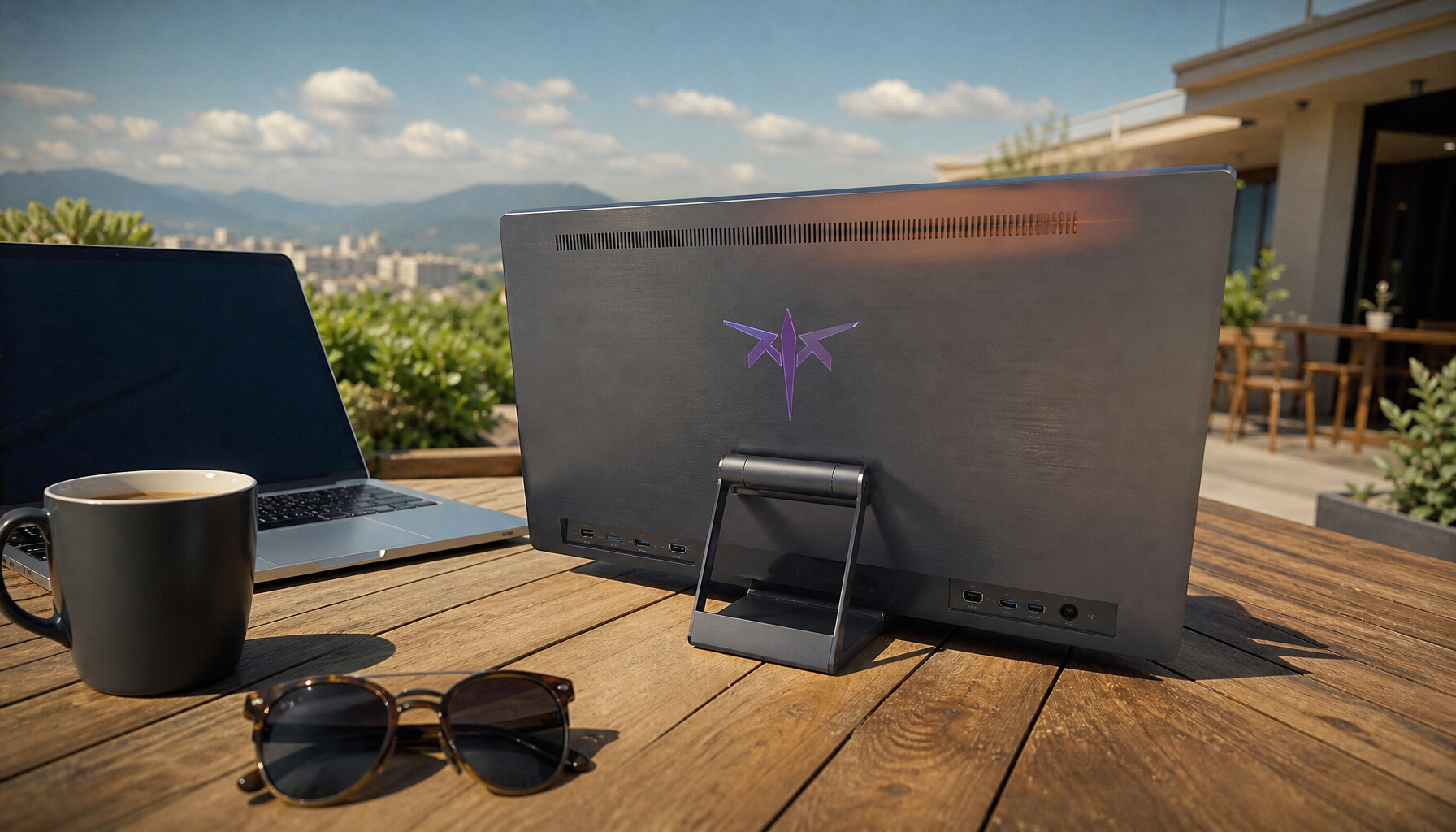
Retail pages for USB Type-C monitors often show broad feature labels, but the decisive detail is usually in the port diagram or manual. Look for wording such as “USB-C upstream,” “Power Delivery,” “PD 90W,” or “USB-C 1.” If the monitor has a rear USB-C input and a side USB-C convenience port, the rear port is often the one intended for laptop docking.
A practical example: connect your laptop to the wrong USB-C port and you may get a picture with limited charging, or charging with no display signal. Move the cable to the marked upstream USB-C port, and the monitor may immediately negotiate the higher power profile.
The Monitor May Reduce Charging When Its USB Hub Is Busy
Many USB-C monitors are not just screens. They also act like docks, powering USB-A ports, Ethernet, speakers, webcams, card readers, KVM switches, or downstream USB-C ports. That power has to come from the monitor’s internal power supply.

This is where the “up to” language becomes important. A monitor may be able to send 90W to a laptop when its hub is lightly loaded, but less when multiple bus-powered devices are connected. External drives, USB lights, capture cards, and charging a cell phone from the monitor can all consume part of the available budget.
Technical guidance on monitor Power Delivery frames charging as part of a larger power design, not an isolated number. In desk terms, a display with a 90W laptop output and several powered accessories is doing more than charging; it is distributing power across the workstation.
Here is the quick field test. Unplug all USB accessories from the monitor, leave only the laptop connected, then check the reported wattage. If the laptop jumps from 60W to a higher value, the hub load or monitor power allocation is likely involved.
60W vs. 90W: What It Means in Daily Use
The right wattage depends on the laptop and workload. For office documents, browser work, spreadsheets, and video calls, 60W can be perfectly usable with many thin laptops. For performance laptops, creator notebooks, and gaming systems, 90W gives more headroom and reduces the chance of battery drain during sustained loads.
Use Case |
60W Monitor Charging |
90W Monitor Charging |
Thin office laptop |
Usually adequate |
More headroom than needed |
13-inch productivity notebook |
Often stable |
Comfortable for heavy multitasking |
14-inch creator laptop |
May drain under load |
Usually better for sustained work |
Gaming laptop |
Often insufficient |
Helpful, but may still trail the factory charger |
Depends on accessories |
Better for one-cable desks |
A simple way to think about it: if your laptop shipped with a 65W charger, a 60W monitor may be close enough for everyday use. If it shipped with a 90W, 100W, 140W, or larger charger, a 60W USB-C feed is more likely to create compromises.
How to Verify the Real Charging Wattage
Start with the laptop’s own power report. Windows laptops often show power behavior in manufacturer utilities. On a Mac, you can check system power information to see the connected charger wattage. Some laptops also display a warning when the attached USB-C power feed is too low.
Next, test with the USB-C cable that came with the monitor. Then test with the laptop closed, no accessories connected, and the monitor set to its normal or high-performance USB-C mode. If your monitor has a power-saving, eco, or USB hub priority setting, review it because some displays reduce charging behavior to meet energy limits or prioritize data bandwidth.
The USB-C Power Delivery process depends on compatible devices agreeing on a voltage and current profile. If the system lands at 60W repeatedly across cables and settings, the laptop or monitor port may be the cap. If wattage changes by cable or accessory load, the setup is negotiable and fixable.
Buying Advice: How to Choose a USB-C Monitor That Actually Fits Your Laptop
Do not buy on the front-page wattage claim alone. Look for the exact USB-C Power Delivery rating, the port map, the included cable, and whether the display has a built-in hub. A monitor promoted for office productivity may prioritize docking convenience, while a display aimed at creators may emphasize color accuracy, resolution, and higher charging output.
Roundups of USB-C monitors commonly separate models by practical strengths such as charging, connectivity, and panel quality. That is the right mindset. The best monitor is not the one with the biggest number on the box; it is the one whose charging, resolution, refresh rate, color performance, and ergonomics match your actual desk.
For a performance-driven setup, pair the monitor’s charging wattage to your laptop’s factory adapter. If your laptop came with a 45W or 65W charger, 60W to 90W is usually enough. If it came with a 100W or larger charger, prioritize a monitor with at least 90W USB-C PD and keep the factory charger nearby for gaming, rendering, or maximum performance modes.
Pros and Cons of Relying on Monitor Power Delivery
The biggest advantage is desk simplicity. One USB-C cable can carry video, data, and power, which makes a laptop feel like a true desktop workstation. This is especially valuable for hybrid work, hot-desking, and portable smart screen setups where speed and repeatability matter.

The tradeoff is that monitor charging is more conditional than a dedicated power adapter. Cable quality, laptop firmware, port selection, hub load, and monitor settings can all change the result. A 90W label is useful, but it is not a universal promise.
For many users, the best configuration is a high-quality USB-C monitor for daily work and the laptop’s dedicated charger for peak-load sessions. That gives you the clean one-cable experience most of the time without forcing the monitor to do a job it was never designed to handle.
FAQ
Is 60W bad for a USB-C monitor?
No. 60W is enough for many ultrabooks and office laptops. It becomes limiting when the laptop’s power demand exceeds what the monitor can provide, especially during gaming, editing, compiling, or multitasking across multiple displays.
Can a USB-C cable really reduce charging from 90W to 60W?
Yes. If the cable is not rated for higher-wattage USB-C Power Delivery, the connection may negotiate a lower safe level. Use the monitor’s included cable or a clearly rated replacement.
Does 90W USB-C charging replace my gaming laptop charger?
Sometimes for light work, rarely for full performance. Many gaming laptops draw more than 90W under load, so USB-C monitor charging may maintain battery during browsing or office work but still drain during gaming.
Should I return a monitor that only gives 60W?
Not immediately. Test the correct USB-C port, the included cable, monitor power settings, and accessory load first. If all of those are correct and the monitor still cannot deliver the advertised wattage to a compatible laptop, then it is reasonable to contact support or consider a return.
A 90W USB-C monitor is a strong foundation for a clean, high-performance desk, but only when the entire chain supports it. Match the monitor, cable, laptop, and workload, and the one-cable setup becomes fast, reliable, and genuinely useful instead of just convenient.