Shared workspace monitors become uncomfortable quickly when they are set for the last user instead of your eyes, posture, laptop, desk depth, and task. A repeatable setup routine around height, distance, glare control, text clarity, and input reach usually matters more than buying a larger screen.
Is your neck tightening before the first meeting ends, even though the monitor looked fine when you sat down? In hot-desk audits, the fastest practical comfort gain is usually a 60-second reset: raise the display, center the primary screen, move it to arm’s length, and remove glare before opening work apps.
The One-Hour Problem Is Usually a Fit Problem

A shared monitor is rarely uncomfortable because one specification is bad. It becomes uncomfortable because the display is locked into someone else’s body geometry. A 6 ft 2 in analyst, a 5 ft 4 in designer, and a laptop-first sales manager should not use the same screen height, viewing distance, chair height, and keyboard reach.
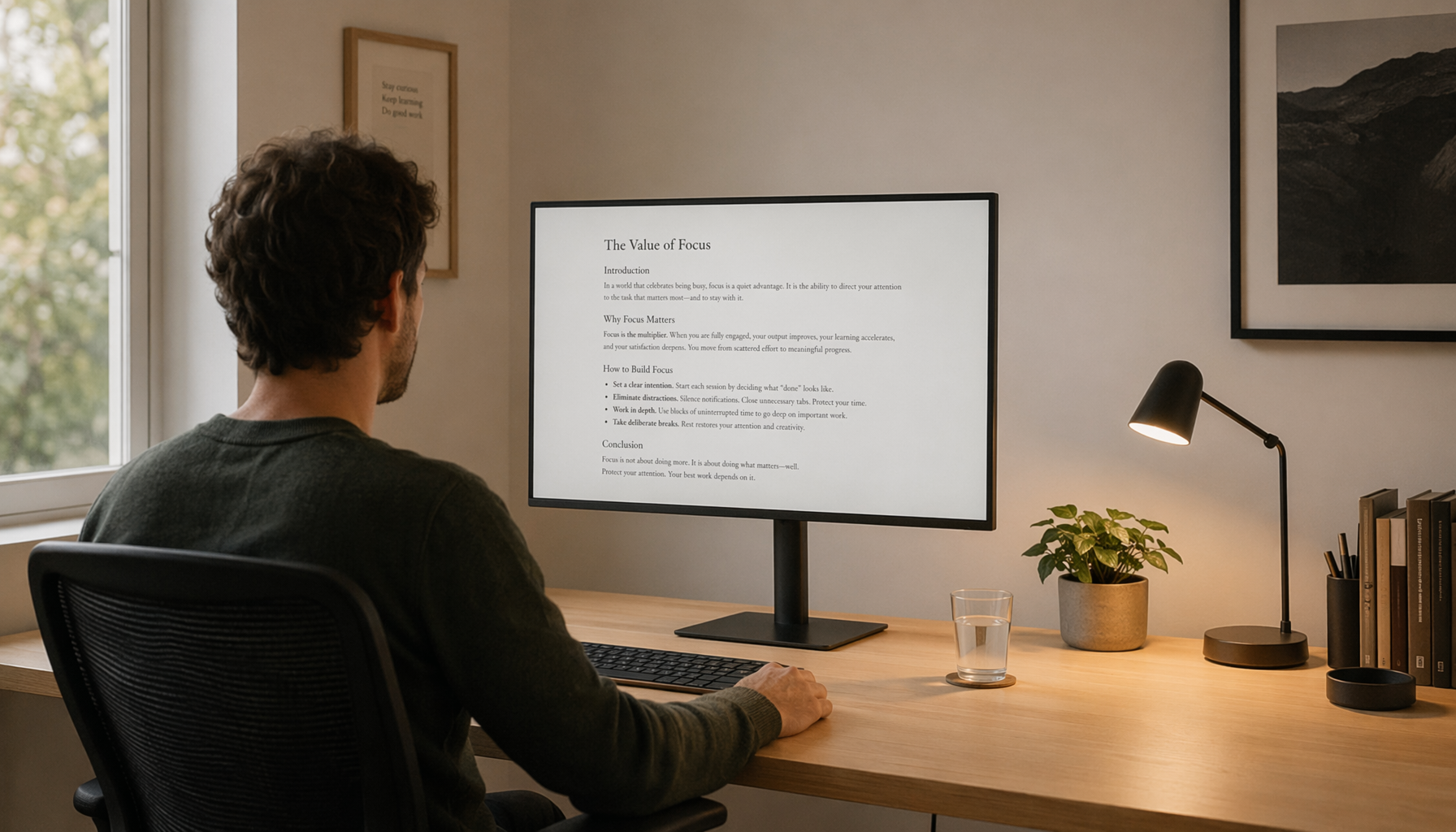
Workstation guidance recommends placing the monitor directly behind the keyboard, about an arm’s length away, with the top of the screen at or slightly below eye level. In a shared workspace, those three basics are often wrong at the same time. The monitor is off-center because someone used it as a secondary display, too low because it sits on a fixed stand, or too far away because the desk has a docking station, phone, notebook, and cable clutter pushing everything back.
After one hour, small errors compound. If the display is too low, you flex your neck. If it is too close, your eyes work harder to scan the panel. If it is too far away, you lean forward. If it is off to the side, you rotate your neck hundreds of times while switching between chat, spreadsheets, dashboards, and video calls.
Monitor Height: The First Comfort Multiplier

The top edge of the screen should usually sit around eye level, with your gaze landing slightly downward into the active work area. Ergonomic display guidance places the user’s eyes 2 to 3 inches below the top edge, which is a practical target for shared desks because it is easy to check without tools.
The common failure is a fixed-height monitor stand. It may look clean on a benching system, but it forces shorter users to tilt their heads up and taller users to collapse downward. A monitor arm or height-adjustable stand turns the screen into a fit tool instead of a fixed object. For hot desks, that matters more than decorative cable channels or a thin bezel.
A simple field test works well: sit fully back, relax your shoulders, and look straight ahead. If your eyes land below the top third of the display, raise the monitor. If your chin lifts to read the browser tabs or menu bar, lower it. If you wear bifocals or progressives, you may need the screen slightly lower than a single-vision user because otherwise you will tip your head back to read through the correct lens zone.
Viewing Distance: Why “Big” Can Feel Worse
Screen size is not automatically comfort. A 32-inch monitor can feel immersive and productive on a deep desk, but it can feel aggressive on a shallow shared bench. Office monitor sizing is best treated as a balance of screen visibility, desk fit, workflow needs, especially for shared displays.
For most office work, 24- to 27-inch monitors are the practical comfort zone because they fit standard desks and still support multitasking. A 24-inch screen often feels best around 20 to 24 inches from the eyes. A 27-inch screen usually wants about 24 to 27 inches. Ultrawide and dual-monitor setups often need roughly 30 to 36 inches so your eyes and neck are not constantly sweeping across the workspace.
Setup |
Comfortable Use Case |
Watch-Out |
24-inch display |
Compact hot desks, email, documents, web apps |
Can cause leaning if text is small or resolution scaling is poor |
27-inch display |
General productivity, spreadsheets, mixed tasks |
Needs enough desk depth to avoid close-range scanning |
32-inch display |
Analytics, design, wide documents |
Can crowd shared desks and push windows outside easy view |
Ultrawide display |
Timeline work, dashboards, side-by-side apps |
Requires careful centering and distance control |
A quick calculation helps. If a 27-inch monitor is only 18 inches from your face because the desk is shallow, you are not using a productivity upgrade; you are sitting too close to a wall of pixels. Move it back, lower brightness if needed, and use operating-system scaling so text stays readable without leaning.
Resolution and Text Clarity Matter More Than People Expect
Many shared monitors are bought in bulk, so price often wins over pixel density. That is why a large 1080p display can feel tiring faster than a smaller, sharper panel. Business monitor guidance calls out higher resolution at a given screen size as a path to sharper text and images, which is exactly what office users notice after long sessions in spreadsheets, browser tabs, and project tools.
For a 24-inch shared monitor, 1080p can still be acceptable if the panel is decent and the viewing distance is right. At 27 inches, QHD often feels like the value sweet spot because text is cleaner without demanding the cost or scaling complexity of 4K. For 32-inch displays, 4K is usually more comfortable for dense work because it keeps text and interface edges crisp.
The catch is that sharper is only better when scaling is set correctly. If a shared workstation leaves a 4K monitor at tiny default scaling, users will lean forward and blame the monitor. A good shared setup should have a standard scaling profile, a clearly adjustable stand, and enough desk depth to use the resolution properly.
Glare, Brightness, and Flicker Can Wear You Down Quietly

Eye fatigue is not always about blue light. In shared spaces, the bigger culprits are window glare, overhead lighting, mismatched brightness, glossy surfaces, and older panels with visible or invisible flicker. Home-working monitor guidance recommends eye-care features such as low blue light and anti-glare treatment, but those features still need a sensible physical setup.
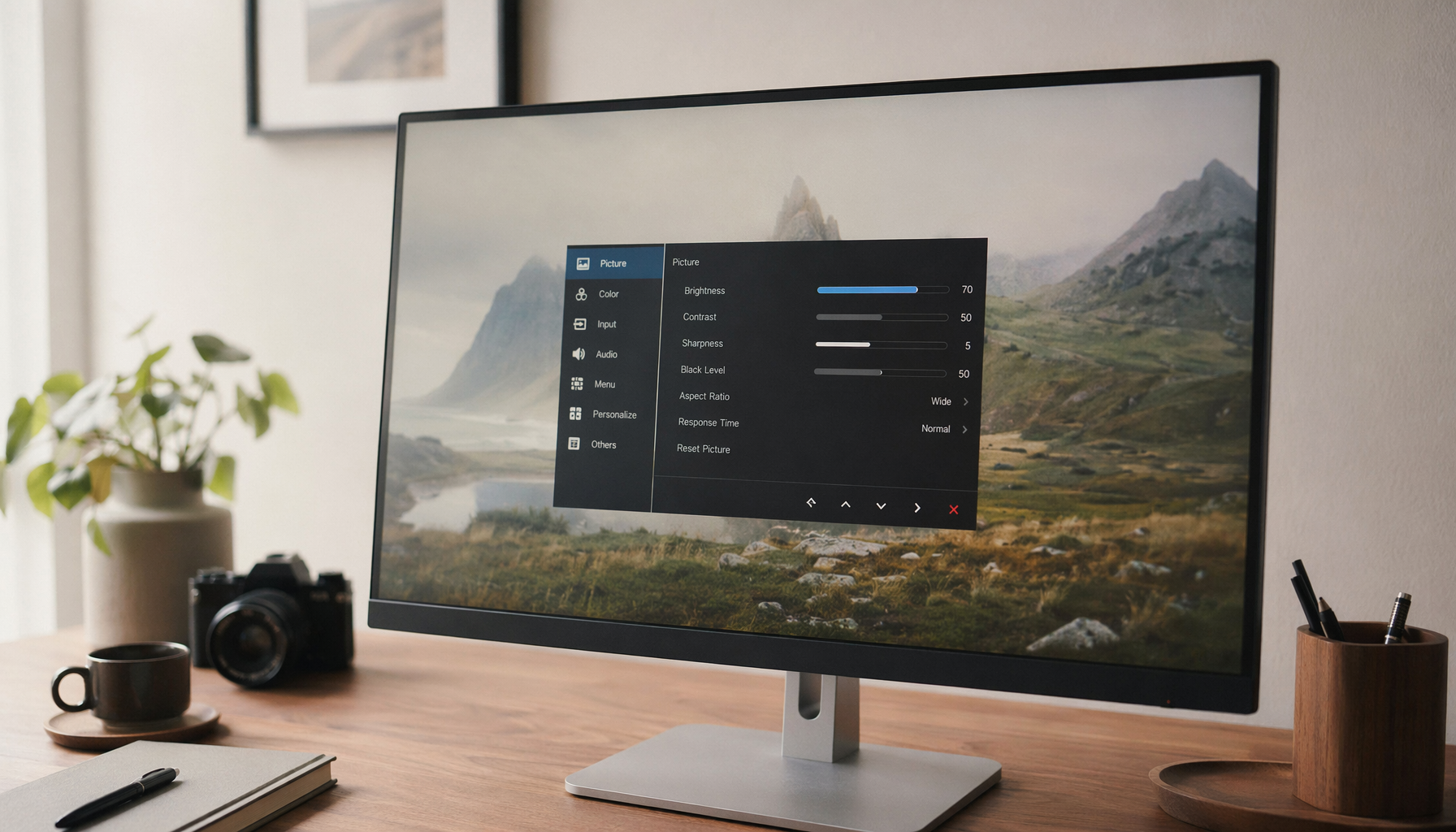
A monitor facing a window may look premium when the desk is empty, then become punishing at 10:00 AM when sunlight hits the panel. A matte coating helps, but it cannot fully rescue a bad angle. Tilt the display slightly backward, turn it away from direct reflections, and match brightness to the room. If the screen looks like a lamp in a dim corner, it is too bright. If white backgrounds look gray and you squint at text, it is too dim.
This is also where business-class monitors earn their keep. Current business monitor testing highlights work displays with adjustable stands, USB-C docking, webcams, and higher refresh rates. Those details matter because a shared screen is part of a full workflow, not just a panel on a desk. A monitor that docks cleanly, wakes reliably, and adjusts quickly reduces friction before discomfort has a chance to build.
Dual Monitors: Productivity Boost or Neck Trap?

Dual screens can be excellent in a shared workspace, but only when one screen is clearly primary. If both monitors are treated as equal and placed flat across the desk, the user ends up twisting left and right all day. That can feel fine for 10 minutes and irritating by the end of the first hour.
The practical rule is simple: put the primary monitor directly in front of your body and the secondary monitor at a slight angle. The main screen should hold the work that gets your eyes most of the time, such as the document, spreadsheet, code editor, CRM, or design canvas. The secondary screen should hold reference material, chat, email, calendar, preview windows, or meeting notes.
For two equal-use monitors, bring the inner edges together and angle both slightly inward, then sit centered between them. For unequal-use monitors, center the primary display on your nose and place the secondary screen on your dominant reference side. The mouse should stay close to the keyboard, not stranded near the far edge of the second display.
The Chair and Desk Still Decide Whether the Monitor Works
A monitor can be perfectly positioned and still feel wrong if the chair forces you into a bad base position. Ergonomic chair guidance notes that shared chairs especially need adjustable lumbar support because it may need height or depth adjustment for different users. That point applies directly to shared monitor comfort: if your pelvis, back, and feet are unsupported, your eyes will chase the screen from a collapsing posture.
Set the chair before the monitor. Your feet should be flat or supported, thighs roughly parallel to the floor, shoulders relaxed, and elbows close to the body. If the desk is too high, raise the chair and use a footrest. If the chair is too low or the armrests force your shoulders up, your neck will carry the load while your eyes try to stay level with the display.
Workspace planning guidance also connects furniture fit with comfort, productivity, and clutter control; a shared desk with poor space planning often leaves users with no clean way to place the monitor, keyboard, mouse, laptop, and personal items. The result is predictable: the screen ends up where the cables allow, not where the body needs it.
A Fast Reset Routine for Any Shared Monitor

Start by sitting all the way back in the chair and setting your feet. Then center the primary monitor behind the keyboard, move it to arm’s length, and adjust height so the top of the screen is at or slightly below eye level. Tilt the display until reflections fade, then set brightness to match the room rather than maxing it out.
Next, check text. Open a document or web app you actually use, not a blank desktop. If you lean forward to read normal body text, increase scaling or move the monitor closer within the comfortable range. If you move your head side to side to scan ordinary work, move the monitor back or reduce the number of full-screen windows.
Finally, clean up the reach zone. Keep the mouse beside the keyboard, not beside the monitor stand. Put the laptop on a stand only if you also use an external keyboard and mouse. If the shared workspace uses USB-C docking, make sure the cable exits naturally without pulling the laptop or forcing the display off-center.
Pros and Cons of Shared Workspace Monitors
Shared monitors are not the enemy. They can reduce laptop hunching, support better multitasking, simplify docking, and make hybrid work feel more consistent. A well-chosen 27-inch QHD monitor with height adjustment, matte finish, USB-C, and VESA support is often a high-value shared-office standard.
The tradeoff is personalization. Shared screens are touched by many users, paired with different laptops, and squeezed into furniture layouts that may prioritize density over comfort. Without monitor arms, stable stands, clear scaling defaults, and enough desk depth, the same display can feel excellent for one person and exhausting for another.
The best shared workspace monitor is not the largest or most expensive one. It is the one a new user can adjust in under a minute, read without leaning, connect without cable friction, and use without fighting glare. Comfort after one hour comes from repeatable control, not guesswork.