A USB-C monitor can drain a closed laptop when the laptop stays awake, the monitor or dock draws power from the laptop, or USB-C power delivery flows the wrong way. Start by confirming sleep behavior, then make the monitor supply power, reduce display load, or disconnect the USB-C path when the lid closes.
Is your laptop closed in your bag or on your desk, yet the battery still drops while your USB-C screen sits beside it? A practical setup check can quickly separate a sleep problem from a power delivery problem, so you know whether to change your power settings, USB-C cable, monitor PD port, or dock. You can usually stop idle drain without giving up a clean one-cable display setup.
Why a Closed Laptop Can Still Lose Battery Through USB-C
USB-C is not just a video cable. One connection can carry DisplayPort Alt Mode video, USB data, and power delivery, which is why a modern monitor can act like a docking station for your laptop, keyboard, mouse, and charging cable. That convenience is also the trap: if the laptop remains awake or the USB-C power direction is unfavorable, the laptop may keep feeding attached hardware instead of sleeping cleanly.

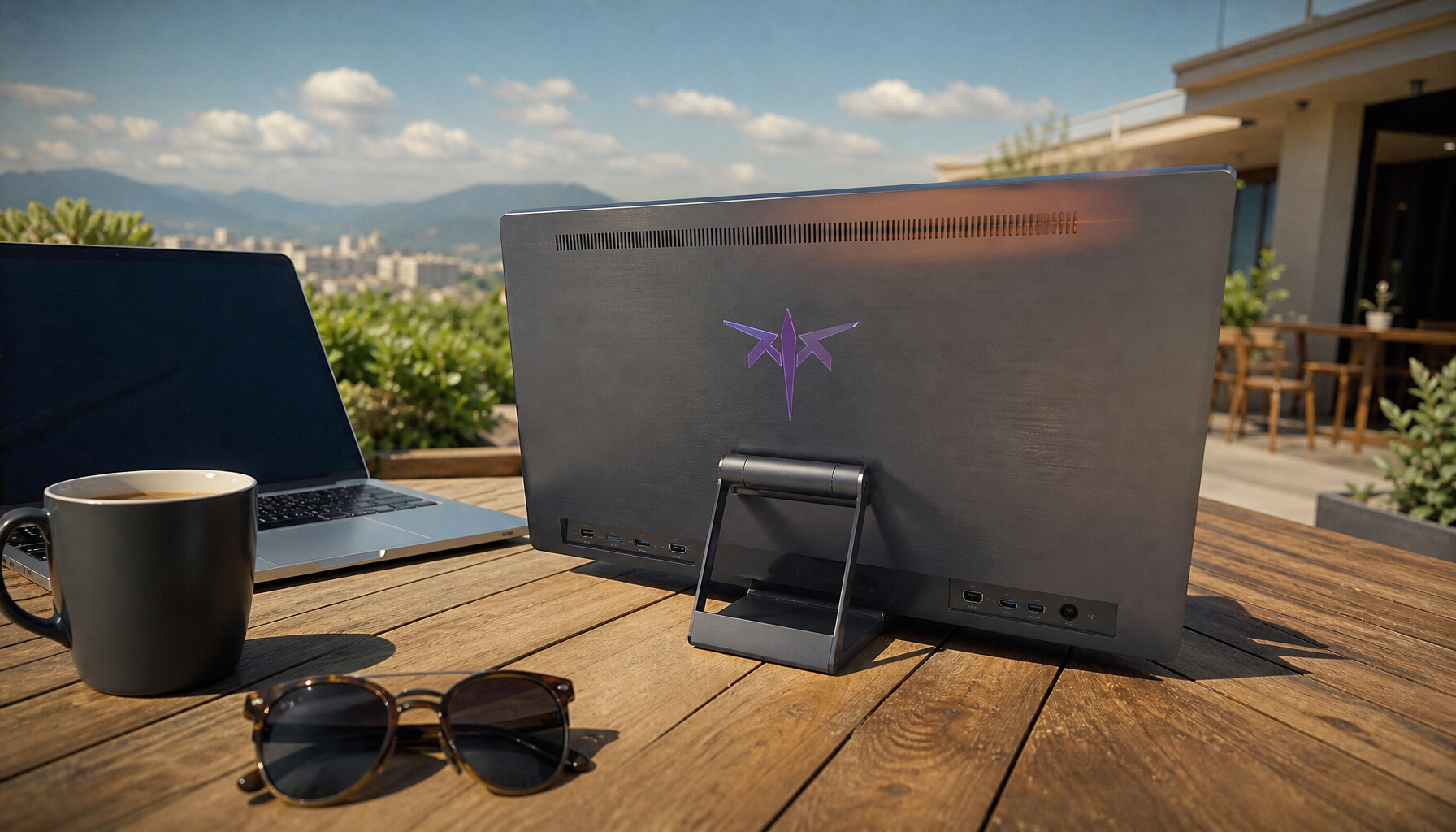
A USB-C monitor can supply power to the laptop, draw power from the laptop, or sit behind a hub or dock that changes the power behavior. A technical overview of USB-C monitors correctly frames USB-C as a single-cable standard for video, data, and power, but the exact wattage depends on the monitor and port. In practice, a 65 W or 90 W USB-C monitor behaves very differently from a portable screen that expects the laptop to power it.
Here is a useful real-world test: close the laptop lid, wait five minutes, then touch the keyboard backlight area or chassis near the hinge. If it is warm and the battery percentage is falling, the machine is likely awake or in a modern standby state. If it is cool but the battery still drops steadily, the USB-C accessory chain may be pulling standby power.
First Confirm Whether the Laptop Is Actually Sleeping
Before replacing cables or blaming the monitor, check whether the laptop is allowed to sleep when the lid closes. On a PC, the lid-close action can be set differently for battery and plugged-in modes. Official battery saving tips emphasize reducing background activity and using power modes to conserve battery, and those same settings matter when an external monitor is connected.
On a PC, open Control Panel, go to Power Options, then choose what closing the lid does. Set “When I close the lid” to Sleep for both battery and plugged-in modes unless you intentionally use clamshell mode. Then check Settings, System, Power & battery, and make sure the device is not configured to stay awake for external display use. A common productivity setup is “Do nothing” while plugged in, which is useful at a desk but bad if your USB-C monitor is attached and the laptop is not receiving enough power.

On a laptop in a closed-display setup, the system can stay awake when connected to an external display, power, and input devices. User discussions around external display battery drain show that this symptom is common enough to be a recurring support topic, especially when users expect a closed lid to mean full sleep. If you want the laptop to sleep, use the system menu and choose Sleep before disconnecting or closing the lid, then confirm the external monitor goes dark instead of staying active.
A simple example makes the diagnosis clear. If your laptop loses 12% overnight with no monitor attached, the monitor is not the root cause. If it loses 1% overnight by itself but 20% with the USB-C monitor connected, the drain is coming from wake behavior, power negotiation, or the monitor chain.
Make the Monitor Charge the Laptop, Not the Other Way Around
The most powerful fix is to ensure the USB-C monitor provides enough Power Delivery for your laptop. A thin office laptop may run comfortably on 45 W to 65 W. A performance laptop with a discrete GPU may need 90 W, 100 W, or more under load, and some gaming laptops still prefer their original high-wattage charger for full performance.

KTC’s support note on monitor power delivery points to the key practical check: confirm the USB-C port supports charging output, not just video input. Many monitors have more than one USB-C port, and only one may provide upstream display plus PD. If you plug into a data-only or low-power port, the monitor may light up while the laptop still runs from battery.
Setup |
What Usually Happens |
Best Use |
USB-C monitor with 65 W PD |
Charges many office laptops while displaying video |
Productivity desk, spreadsheets, coding, browsing |
USB-C monitor with 90 W or higher PD |
Better for premium ultrabooks and some creator laptops |
Heavy multitasking, higher brightness, more peripherals |
Portable USB-C monitor with no charger attached |
Often draws power from the laptop |
Travel use, short sessions, secondary screen |
Dock between laptop and monitor |
Depends on dock wattage and pass-through behavior |
Multi-monitor setups, Ethernet, many USB devices |
Portable smart screens deserve special attention. A discussion of USB-C portable monitor power use highlights the basic reality: a portable display needs energy from somewhere. If that “somewhere” is your laptop’s USB-C port, closing the lid while the screen or USB hub remains active can continue to chip away at the battery.
For a practical calculation, imagine a portable screen and hub together drawing a modest 8 W while your laptop sits in a light standby state. Over eight hours, that is 64 watt-hours of demand, which is enough to heavily drain or empty many ultraportable laptop batteries. You do not need exact lab instrumentation to see the risk; if the screen has its own USB-C power input, use it.
Use the Right Cable and Port
USB-C cables look identical from across a desk, but they do not behave identically. Some carry only charging and USB 2.0 data. Some support high-speed data but limited charging. Others support video, higher wattage, and full-featured USB-C operation. When a monitor randomly drains the laptop, flickers, refuses to wake, or fails to charge consistently, the cable is one of the first parts to audit.
The most reliable setup is a full-featured USB-C cable rated for video and the wattage your monitor provides. If your monitor advertises 90 W PD, use a cable rated for that class of charging. If your setup uses a dock, remember that the dock also has a power budget. A review of a USB-C triple 4K display docking station shows why docks are attractive for multi-display workstations, but every added display and USB device increases the importance of adequate external power.
A fast desk test is to connect the laptop to the monitor with the manufacturer-supplied USB-C cable, plug the monitor into wall power, and check the laptop’s battery icon. It should say charging or show a stable external-power state. If the battery icon says “not charging,” “slow charger,” or continues falling during basic work, the monitor is not supplying enough usable power.
Reduce Display Load Before You Close the Lid
High refresh rate, high brightness, HDR, and multiple external screens can all increase energy demand. An explanation of why a monitor can affect laptop battery life lines up with what display reviewers see daily: resolution, refresh rate, brightness, and connected peripherals all affect drain. That matters even more when the laptop transitions in and out of sleep.
If you use a 144 Hz or 165 Hz USB-C monitor for gaming, switch it to 60 Hz for office mode before closing the lid or leaving the desk. A high-refresh external panel is excellent when you are playing, editing timelines, or tracking fast motion, but it is wasteful when the computer is idle. A battery-life discussion around high refresh rate reinforces the same performance tradeoff: smoother motion costs power.
Brightness is the other easy win. Dropping a portable monitor from maximum brightness to a comfortable indoor level can noticeably reduce drain, especially in hotel rooms, shared offices, or conference setups where you are running on the laptop battery. For a desk monitor, use wall power and let the monitor power the laptop; for a travel monitor, lower brightness before closing the laptop or unplug the display entirely.
Configure Clamshell Mode Intentionally
Clamshell mode is the setup where your laptop lid is closed while an external monitor, keyboard, and mouse keep the computer usable. It is clean, space-efficient, and excellent for a focused desk. It is also one of the most common reasons users think their laptop is sleeping when it is actually running.

If you want clamshell mode, treat the USB-C monitor as part of the power system. Use a monitor with enough PD wattage, keep the monitor plugged into the wall, and avoid running performance-heavy apps when you walk away. A roundup of USB-C monitors shows how common USB-C charging has become in productivity displays, but the right choice depends on whether the monitor’s power output matches your laptop.
If you do not want clamshell mode, make the closed-lid action unambiguous. Set the laptop to sleep when the lid closes, disable wake from unnecessary USB devices where your operating system allows it, and unplug the USB-C monitor before putting the laptop in a bag. A closed laptop that is still driving an external display is not idle; it is just headless from your point of view.
When a Dock or Hub Is the Cause
USB-C hubs and docking stations can keep devices awake because they sit between the laptop and everything else: monitor, Ethernet, storage, keyboard, mouse, webcam, card reader, and charging brick. A discussion of USB-C hub power delivery makes the important point that pass-through power is not magic; the hub consumes part of the available power before the laptop receives the rest.
Here is a practical example. A charger rated at 65 W connected through a hub may not deliver the full 65 W to the laptop after the hub powers USB devices and its own controller. If your laptop needs close to 65 W during normal work, the battery can still decline even while the system appears plugged in. That decline can continue slowly after the lid closes if the hub keeps the laptop awake or keeps peripherals powered.

To isolate the problem, remove the dock and connect the laptop directly to the USB-C monitor. If the drain stops, the dock or one of its attached devices is the trigger. Reconnect devices one at a time, starting with keyboard and mouse, then storage, webcam, Ethernet, and secondary displays. External drives and webcams are especially worth checking because they can draw power or wake the system unexpectedly.
Best Fixes by Scenario
Scenario |
Likely Cause |
Best Fix |
Battery drains overnight with lid closed and monitor attached |
Laptop is awake or in clamshell mode |
Set lid-close action to Sleep and confirm the monitor turns off |
Battery drains while using the monitor |
Monitor or dock does not provide enough PD |
Use a higher-wattage USB-C monitor, dock, or original charger |
Portable monitor drains laptop quickly |
Screen is powered by laptop USB-C |
Power the portable monitor separately or lower brightness |
Battery says “slow charger” |
Cable, port, hub, or monitor wattage is insufficient |
Use a rated USB-C cable and the correct PD port |
Drain happens only with hub attached |
Hub or peripheral power draw |
Test direct USB-C, then reconnect peripherals one by one |
A Reliable Setup for Gaming, Office, and Portable Screens
For a pro gaming monitor, use the laptop’s original high-wattage charger when gaming and let USB-C handle display only if the laptop supports that workflow. Many gaming laptops can display over USB-C, but peak GPU performance often expects a stronger power adapter than a monitor can provide. Closing the lid after a gaming session should include quitting the game first, because background launchers and GPU processes can keep the machine active.
For an office productivity display, the best setup is a USB-C monitor with enough PD wattage to charge your laptop, one full-featured USB-C cable, and sleep settings that match your workflow. If you use the laptop open during the day and closed after hours, set a short sleep timer and verify the monitor enters standby when the lid closes.
For a portable smart screen, assume the screen is a battery accessory unless it has its own power input connected. Use lower brightness, avoid high refresh settings when you are working on documents, and unplug the screen before putting the laptop away. The one-cable setup is elegant, but on the road, power discipline matters more than desk minimalism.
FAQ
Should I unplug my USB-C monitor every time I close the lid?
If your laptop reliably sleeps and the monitor supplies enough power, you should not need to unplug it at a desk. If the laptop is going into a bag, unplugging is the safer move because it prevents accidental wake, heat buildup, and accessory drain.
Can a USB-C monitor charge and drain a laptop at the same time?
Yes. If the monitor or dock supplies less power than the laptop and attached devices consume, the laptop can show external power while the battery still slowly drops. This is common with underpowered hubs, high-brightness displays, and performance laptops.
Is HDMI better than USB-C for battery drain?
HDMI avoids USB-C power negotiation issues, but it does not charge the laptop. USB-C is usually better for a clean desk when the monitor provides adequate PD. HDMI plus the laptop’s original charger can be better for high-performance gaming laptops.
Does closing the lid turn off the external monitor?
Only if the laptop is configured to sleep or shut down when the lid closes. In clamshell mode, the external monitor can remain active while the laptop keeps running.
Final Check
The strongest fix is simple: make sleep behavior intentional, make power flow from the wall-powered monitor to the laptop, and use a cable and port that can actually carry video plus enough charging power. A USB-C display should make your setup cleaner and more immersive, not quietly turn your laptop battery into the monitor’s backup power supply.