A USB-C monitor can lose signal when one cable is forced to carry video, data, and power beyond what the port, cable, hub, or monitor can reliably handle.
Does your screen go black the moment you plug a flash drive into the monitor’s USB hub, even though the laptop and display were working seconds earlier? In real troubleshooting, the fastest win is to isolate the display cable, hub load, and power path one change at a time. That process can show whether the weak point is the cable, the monitor’s USB hub, or the laptop port.
Why One Cable Gets Overloaded
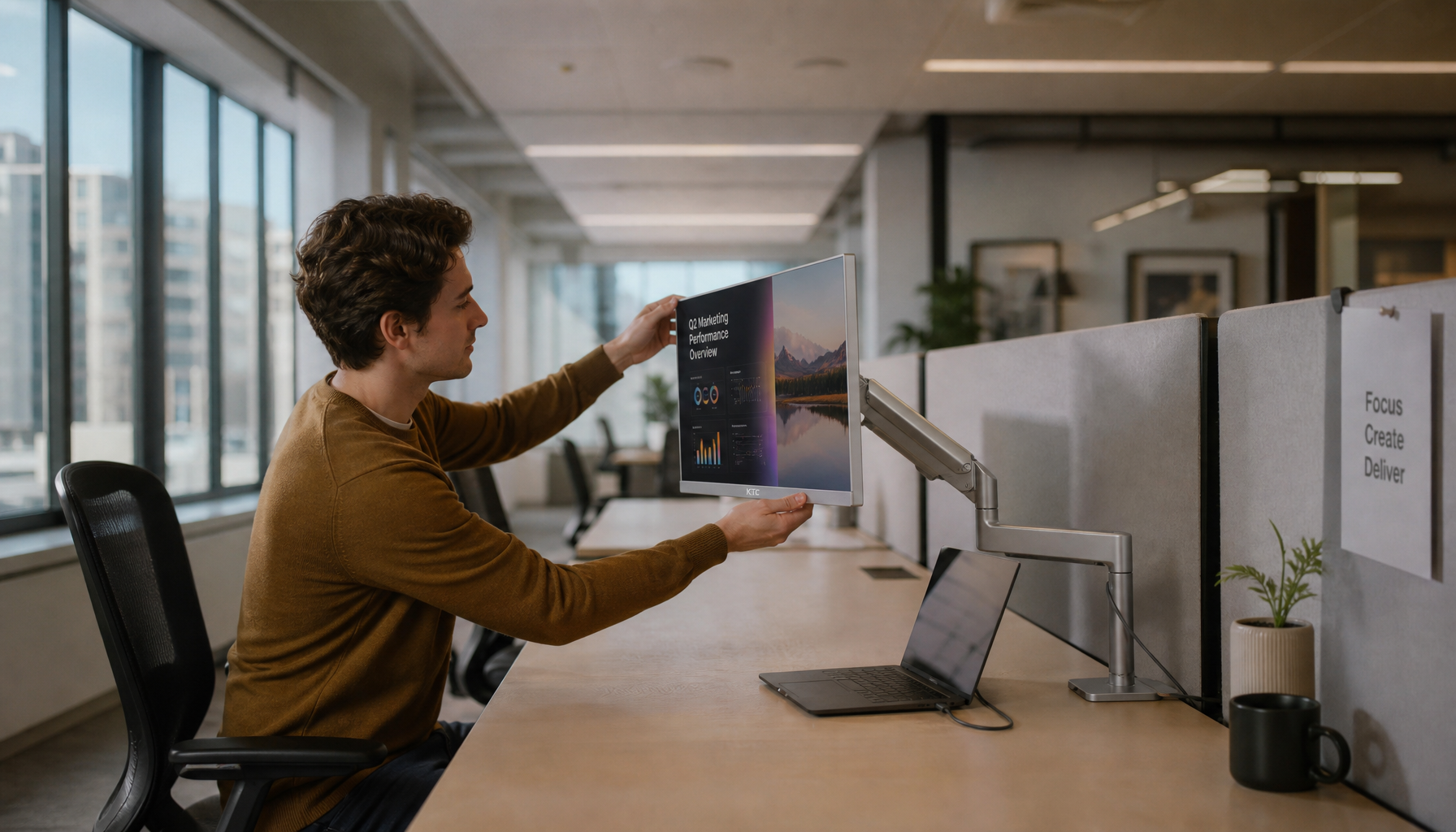
A USB-C monitor is useful because it can carry video, data, audio, and charging through one reversible cable, but that convenience depends on every part of the chain supporting the same workload. A monitor with USB-C docking features may be receiving DisplayPort video from your laptop, sending keyboard and mouse data back, charging the laptop, and trying to enumerate a USB drive through the monitor’s hub.

That extra USB drive can trigger a dropout when the connection is already near its limit. The common causes are bandwidth sharing, insufficient Power Delivery, a cable that is fine for charging but weak for video, a USB-C port that does not fully support display output, or firmware that mishandles device changes during active video output.
The most important definition is simple: USB-C is the connector shape, not a promise of display performance. A port must support video output, often through DisplayPort Alternate Mode, and the cable must be able to carry video as well. USB-C display output works only when the device port, cable, operating system, and monitor input all support the required mode.
Why a USB Drive Can Knock Out the Picture
Bandwidth Gets Reallocated
USB-C display connections often divide high-speed lanes between video and USB data. When the monitor is used only as a screen, the connection may stay stable because most of the available lanes are serving video. When you plug in a USB drive, the monitor’s internal hub asks the laptop for data bandwidth, and some setups renegotiate the link.

That renegotiation can interrupt the video signal. On a 4K productivity monitor at 60 Hz, the link may already be carrying a demanding image. On a gaming monitor running at a high refresh rate, the margin is even tighter. If the system is also using the monitor’s USB-A ports for a webcam, headset receiver, keyboard, mouse, and flash drive, the single USB-C path can become the bottleneck.
This is why the symptom often appears only when you add storage, not when you add a low-bandwidth mouse. A USB flash drive can demand more active data throughput than a keyboard, especially during file transfers.
Power Delivery May Be Marginal
Power is the second pressure point. Many USB-C monitors provide enough charging for thin productivity laptops, but gaming laptops and mobile workstations may need more than the monitor can supply under load. USB-C docking stations can also disconnect when power is insufficient, and insufficient power is a common reason multi-port setups become unstable.

Here is the real-world pattern: your laptop is charging through the monitor, the monitor is acting as a USB hub, and the USB drive draws additional power from that hub. The moment the drive starts writing data, the monitor hub or laptop USB controller may reset. To you, it looks like a display failure. Electrically, the whole USB-C link may have briefly dropped and reconnected.
A simple check is to plug the laptop’s original charger into the laptop while keeping the monitor connected for video. If the signal becomes stable when the laptop is no longer relying on monitor charging, you have strong evidence of a Power Delivery limit.
The Cable May Not Be Full-Featured
A USB-C cable can look premium and still be the wrong tool. Some cables are built mainly for charging. Some carry USB data but not stable high-resolution video. Some work at 1080p but fail at 4K, ultrawide, 10-bit color, or high refresh rates. Community troubleshooting often points to cable quality and display communication errors as likely causes when monitors repeatedly disconnect, especially with demanding display settings and longer cables.

For performance displays, cable quality is not cosmetic. A short, certified USB-C or USB4 cable gives the connection more electrical margin. That matters when a USB drive forces the link to handle display and data at the same time. Poor-quality or incompatible cables can cause flickering, color problems, limited resolution, or unstable output.
If your monitor came with a basic USB-C cable, test a known full-featured cable before blaming the monitor. For a high-refresh gaming display or a 4K office monitor, use a cable explicitly rated for video and Power Delivery, not one marketed only as a fast-charging cable.
How to Diagnose It Without Guessing
Start With Direct Video
Connect the laptop directly to the monitor with one USB-C cable. Remove the dock, hub, adapters, USB drive, webcam, Ethernet adapter, card reader, and any extra peripherals. Set the monitor input manually to USB-C if it does not auto-detect. A powered monitor that shows “No Signal” usually means the panel is on but not receiving a valid video feed, so troubleshooting should start with the full video chain: source, port, cable, adapter, input, and display mode.

If the monitor is stable with nothing attached, the display path itself is probably functional. Then reconnect one peripheral at a time through the monitor’s USB hub. Plug in the USB drive last. If the dropout returns only when the drive is added, you have narrowed the issue to hub load, power, or bandwidth sharing rather than a dead display.
Reduce the Display Demand
Lower the monitor to 1080p at 60 Hz for testing, or reduce a 4K panel from a high-refresh mode to 60 Hz. If you are using 10-bit color, switch to 8-bit temporarily. This is not the final performance target; it is a diagnostic move. If the USB drive stops killing the signal at lower settings, the connection is running out of bandwidth or signal margin at your preferred mode.
For example, a 27-inch 4K monitor used for sharp text and color work is much more demanding than a basic 1080p office screen. A high-refresh gaming monitor is more demanding again. The more pixels and frames you push, the less room remains for hub data over a shared USB-C link.
Test Power Separately
Run the laptop from its original charger while the monitor remains connected over USB-C. Then plug the USB drive into the monitor. If the signal stays stable, the monitor’s charging output may be too low for your laptop plus peripherals.
This is especially common with powerful laptops. A monitor that can charge a thin productivity laptop may not keep up with a gaming laptop under GPU load. If the laptop shipped with a high-wattage charger, do not assume the monitor’s USB-C Power Delivery is an equal replacement. USB-C monitors with power delivery can clean up a desk, but their charging capacity still has to match the computer’s needs.
What the Symptoms Usually Mean
Symptom |
Most Likely Cause |
Practical Fix |
Screen goes black only when a USB drive is inserted |
Hub bandwidth or power spike |
Use the laptop charger, lower the refresh rate, or plug the drive into the laptop instead |
Monitor works over HDMI but not USB-C |
USB-C port, cable, or DP Alt Mode issue |
Verify that the USB-C port supports video and use a full-featured cable |
Signal drops during file transfers |
Data traffic competing with video |
Move storage to another port or use a USB4 dock |
Flicker appears at 4K or high refresh |
Cable or bandwidth limit |
Try a shorter certified cable and reduce color depth or refresh rate |
Laptop charges slowly and display disconnects |
Power Delivery mismatch |
Use the original charger or a monitor/dock with higher Power Delivery output |
The Best Fixes for Gaming, Office, and Portable Setups
For Gaming Monitors
Prioritize the display signal over hub convenience. If you are running high refresh, adaptive sync, ultrawide resolution, or 10-bit color, avoid connecting storage devices to the monitor’s USB hub during play. Plug the USB drive into the laptop, desktop, or a separate powered hub.
If your monitor supports DisplayPort separately, a dedicated DisplayPort cable for video plus a separate USB upstream cable for hub functions can be more reliable than one overloaded USB-C cable. The desk is less minimal, but the gaming experience is steadier.
For Office Productivity Displays
USB-C docking monitors are excellent for keyboards, mice, Ethernet, and light storage, but they still need a clean power and bandwidth plan. If the display drops only when a USB drive is connected, keep the monitor as your display and charging path, then move heavier storage to the laptop’s second USB-C port or a powered desktop hub.
For a laptop that needs more power than the monitor supplies, use the original charger at the desk. That one change often stabilizes the entire setup because the monitor no longer has to charge the computer while running its USB hub.
For Portable Smart Screens
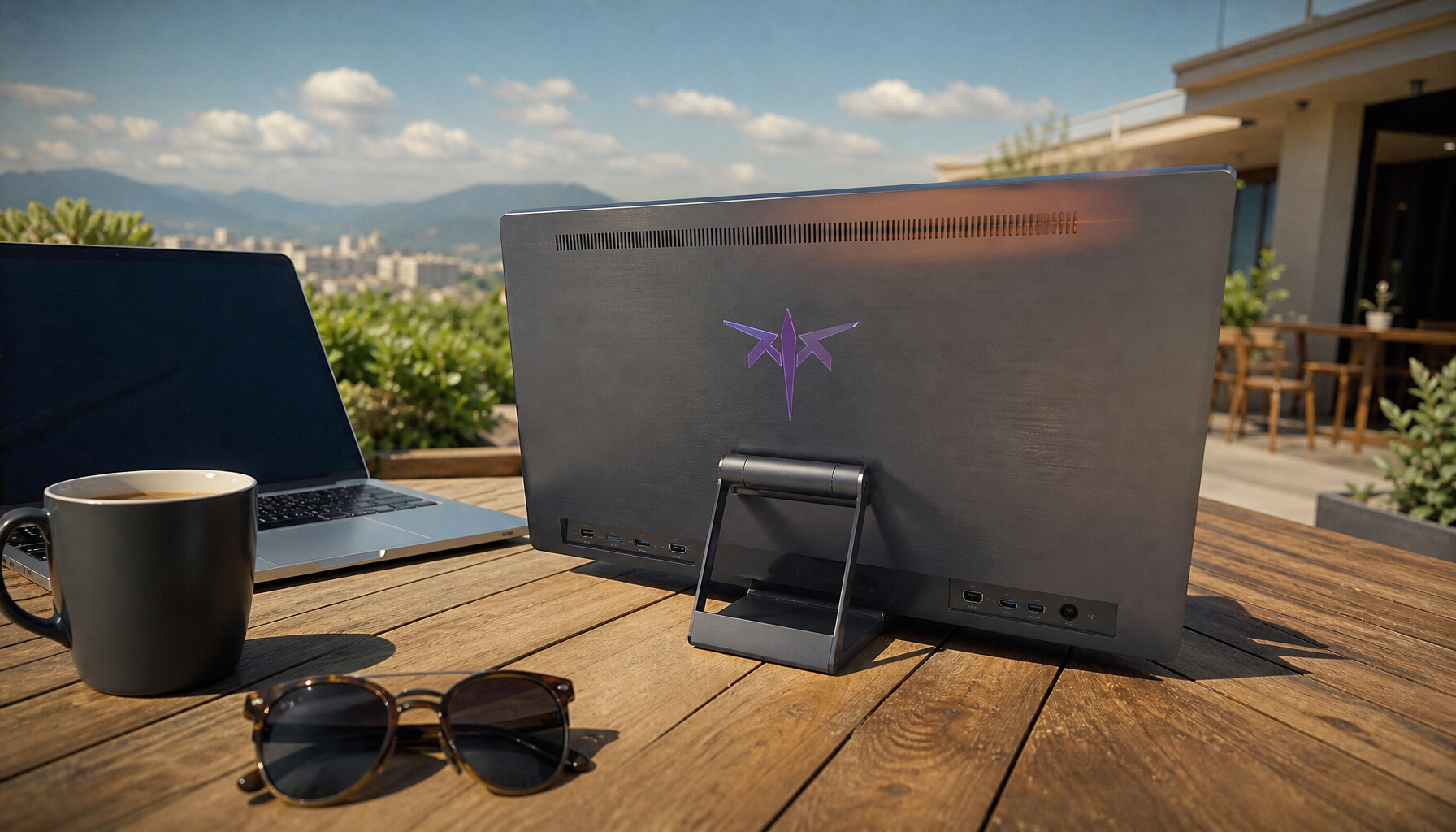
Portable monitors are more sensitive because power and video may come from the same laptop port. Some portable displays also have separate USB-C ports for power and video, and using the wrong one can produce a powered screen with no signal. If plugging in a USB drive causes a portable screen to blank, give the monitor separate wall power or switch to HDMI for video with USB-C used only for power.
This is less elegant than a single cable, but it is a strong field setup for travel, client demos, and temporary workstations where reliability matters more than cable minimalism.
When Firmware and Drivers Matter
If the hardware checks out, update the laptop graphics driver, chipset driver, USB controller driver, BIOS or UEFI firmware, and the monitor firmware if the manufacturer provides it. Display detection issues over USB-C can involve graphics and USB-C-related drivers, and manufacturer-specific driver packages are usually more reliable than generic updates for stubborn external display problems.
Repeated disconnects can be tied to how the system validates monitor communication over the display link. A monitor may also appear to work until a dock or hub event forces rediscovery. The practical lesson is the same: if the issue began after an operating system update, driver change, or new monitor firmware, test with a different cable and simpler settings first, then update or roll back drivers deliberately.
Should You Replace the Monitor?
Not first. Replace the monitor only after the same failure happens across multiple known-good video cables, multiple source devices, direct USB-C without a dock, and HDMI or DisplayPort alternatives. If the USB-C port feels loose, the connector wiggles, the display drops when the cable is touched, or the monitor fails with every device, then hardware service becomes more likely.
For buying decisions, look for a monitor with clear USB-C specifications: DisplayPort Alt Mode support, enough Power Delivery for your laptop, a USB hub mode that matches your refresh-rate needs, and USB4 support if you plan to run high-resolution displays plus fast storage from one cable. USB-C monitor features vary by model, including power delivery, hub size, USB4 support, and KVM capability, so treat the spec sheet as part of the performance system rather than a footnote.
FAQ
Can a USB drive really make a monitor lose signal?
Yes. If the drive is connected through the monitor’s USB hub, it can trigger a power draw, bandwidth shift, or USB-C renegotiation that interrupts video. The drive is not breaking the monitor; it is exposing a weak point in the shared connection.
Is HDMI more reliable than USB-C?
HDMI is often simpler because it carries video without also handling laptop charging and USB hub traffic. USB-C is cleaner and more powerful when properly matched, but HDMI plus separate power can be the better diagnostic setup.
Do I need USB4?
Not always. For a single office monitor, a good DP Alt Mode USB-C connection may be enough. For high-refresh displays, multiple monitors, fast external storage, and charging through one cable, USB4 gives more headroom.
A USB-C monitor should feel like a command center, not a fragile compromise. Treat the connection as a performance chain: prove the cable, protect the power path, reduce unnecessary hub load, and give high-resolution video the bandwidth it deserves.