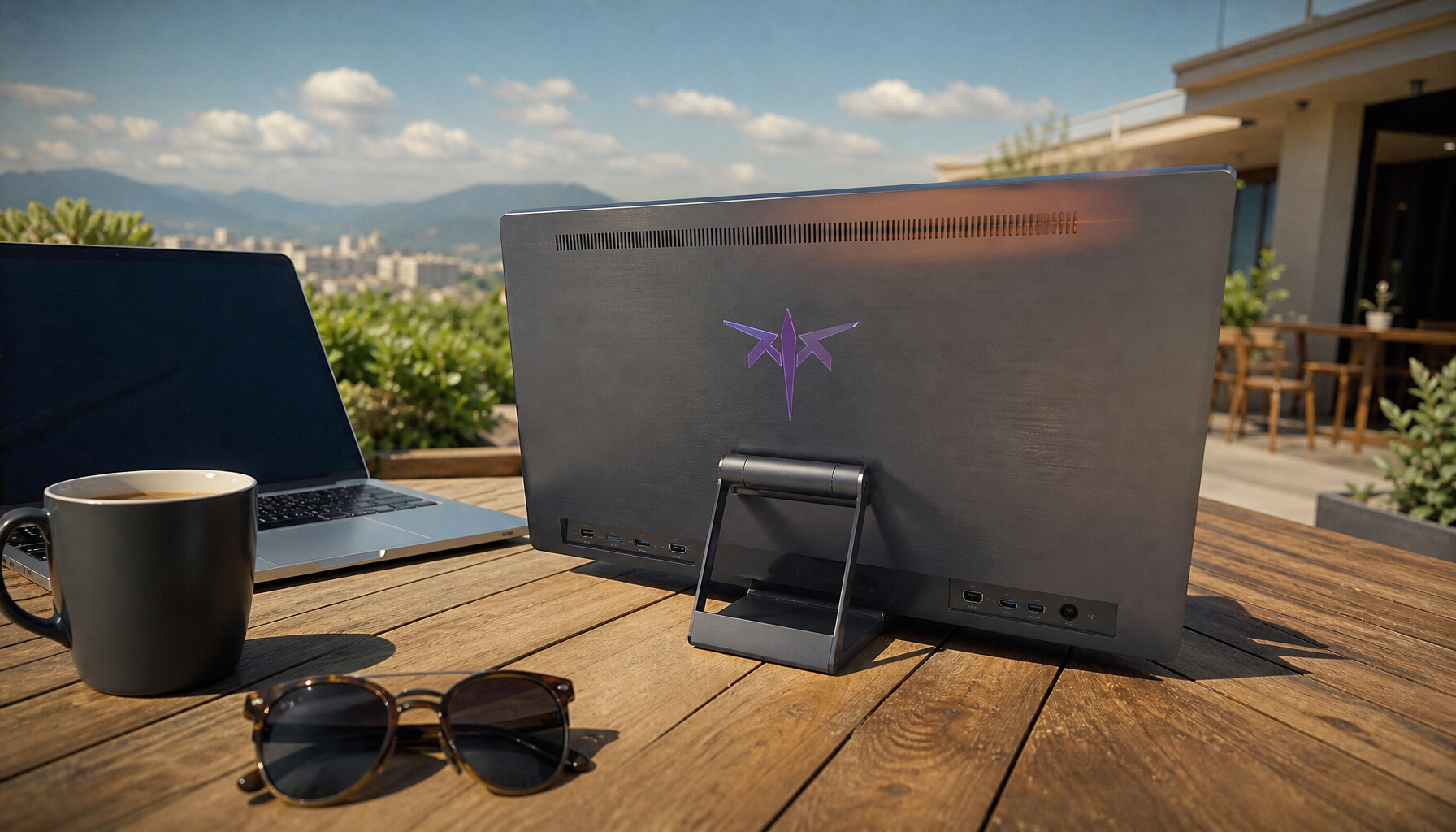
The first signs are persistent flicker, random blackouts, dead or spreading pixels, faded color, uneven brightness, overheating, slow startup, and connection failures that remain after cable, input, and driver checks.
Is your screen flashing mid-match, dimming during a spreadsheet marathon, or showing colors that no longer match your work? A 10-minute isolation check can often tell you whether the display is aging or whether the issue is a simple cable, power, or settings problem. You’ll learn which symptoms matter, how to test them, and when repair no longer makes financial or performance sense.
Why Monitor End of Life Usually Starts Quietly
Most monitors do not fail in one dramatic moment. They tend to drift out of reliability through small, repeatable symptoms: a flicker that appears only after warm-up, a corner that looks dimmer than the rest of the panel, or a “no signal” message that vanishes when you wiggle the cable. For gaming, this costs reaction confidence. For office work, it costs focus and accuracy. For a portable smart screen, it can turn a flexible setup into a fragile one.
Aging is not the same as a temporary display issue. A loose video cable, incorrect input source, outdated graphics driver, or wrong refresh-rate setting can mimic hardware failure. The key difference is persistence. When the same problem follows the monitor across cables, power outlets, and source devices, the display itself becomes the leading suspect.
The Earliest Visual Warnings
Persistent Flicker and Random Blackouts

Flicker is one of the strongest early warnings because it points toward instability in the backlight, power delivery, panel electronics, or signal path. A screen that flickers once after waking may not be dying. A screen that flickers every session, especially after 20 to 30 minutes of use, deserves attention.
For a quick test, lower the refresh rate to a standard setting, swap the display cable, and plug the monitor into a different power outlet. If the flicker remains, the issue is less likely to be your computer or dock. Persistent flickering and intermittent blackouts are widely treated as replacement-level warning signs when they continue after basic checks, because they can indicate failing backlights or internal connections persistent flickering.
Dead Pixels, Dark Spots, and Spreading Pixel Clusters

A dead pixel is a tiny point that no longer displays properly. One isolated pixel may be annoying but tolerable, especially on a large 4K productivity monitor where it is hard to notice. A cluster is different. Several dead pixels grouped together, a spreading dark patch, or a stain-like area near an edge suggests panel damage or layer separation.
For gaming, clusters near the center of the screen can hide crosshair detail or enemy movement. For design, color grading, and data dashboards, they reduce trust in what you are seeing. In industrial or high-use environments, clustered defects are often treated more seriously than a few isolated pixels because vibration, shock, heat, and panel separation can make the damage expand clustered defects.
Faded Color and Uneven Brightness
Color drift is easy to dismiss because it often happens gradually. White backgrounds start looking yellow. Dark scenes look gray instead of deep. A once-balanced dual-monitor setup now has one display that looks washed out no matter how you calibrate it.
Uneven brightness is especially telling when it appears around corners or edges. Backlight degradation and panel wear can show up as dim zones, cloudy patches, or brightness that changes after the monitor warms up. If resetting picture modes and checking the source device does not fix it, the panel may be aging past dependable use.
Performance Symptoms That Feel Like Lag But May Be Hardware Aging
Slow Startup and Delayed Controls
A healthy monitor should wake, detect input, and respond to menu controls predictably. If it takes longer to show an image, misses input on startup, or hesitates when changing brightness and contrast, the control board or power circuitry may be wearing down.
This matters more than it sounds. In an office, a slow-waking monitor wastes time every morning and after meetings. In competitive games, inconsistent initialization can break a high-refresh setup, forcing you to recheck settings before play. If the delay appears on multiple computers and cables, treat it as a monitor symptom rather than a computer symptom.
Touch Lag, Ghost Touches, and Dead Zones
For portable smart screens, kiosk displays, and touch-enabled productivity monitors, touch behavior is part of the display’s health. Ghost touches are inputs that happen when you did not touch the screen. Dead zones are areas that no longer respond. Latency is the delay between touch and action.
Touchscreen aging is often tied to heat, moisture, dust, unstable power, or sensor wear. Modern projected capacitive touch panels generally resist wear better than older pressure-based resistive designs, but they still degrade when airflow is poor or the screen is used in harsh environments. Signs such as ghost touches, increased latency, dead zones, dimming, discoloration, and flicker are common late-stage clues that the display is moving beyond routine maintenance.
Heat, Power, and Environment

Heat is a silent accelerator. A monitor that becomes unusually hot around the edges or back panel may be stressing internal components. Sudden shutdowns, fan noise on industrial units, or repeated warm-up failures are also warning signs.
High brightness, HDR, local dimming, and poor ventilation can raise thermal stress, especially on premium OLED and Mini-LED displays. OLED panels also need their built-in protection routines, such as pixel refresh and compensation cycles, to run properly. Cutting power completely every night can interfere with those background routines on some models, while leaving static UI elements visible for long periods raises burn-in risk. Maintenance guidance for high-end OLED and Mini-LED monitors recommends dark mode, auto-hidden taskbars, screen savers after short idle periods, and at least 2 inches of rear ventilation clearance OLED and Mini-LED.
For a real-world example, think about a 32-inch Mini-LED monitor used for spreadsheets all day and HDR gaming at night. If HDR and local dimming stay enabled during static office work, the panel is doing extra heat-intensive work with little visual benefit. Switching to an SDR productivity mode during the day and saving HDR for games or media lowers stress without sacrificing the premium experience when it matters.
Is It the Monitor, the Cable, or the Computer?
Before calling a display end-of-life, isolate the fault. Start with the simplest variables: power, input, cable, source device, and monitor settings. A “no signal” warning can come from a bad cable, a wrong input selection, a sleeping laptop, a dock problem, or a graphics issue.
A practical bench check is straightforward. Use a known-good power cable and outlet, then test a known-good video cable. Connect the monitor to another computer or console. If the issue disappears, the monitor may be fine. If the same flicker, blackout, color shift, or startup delay follows the monitor, the evidence points back to the display.
This distinction is especially important in workplaces. Monitoring software, remote tools, or background screen-capture systems can also cause slowdowns, freezes, or unusual system behavior, but those are computer-side clues rather than panel failure. Unknown processes, unexpected CPU or bandwidth use, repeated screenshots, and unexplained software updates are better handled through IT policy review and device diagnostics, not monitor replacement unexpected CPU or bandwidth use.
Repair or Replace: The Value-Oriented Decision
A monitor is worth repairing when the fault is external, the screen is premium, the warranty is active, or the fix is a low-cost board, cable, power adapter, or port issue. Replacement makes more sense when the panel itself is failing, the symptoms recur after repair, or the upgrade would meaningfully improve your daily work or play.
Symptom |
First Action |
Replace When |
Flicker or blackouts |
Test cable, outlet, input, and source device |
It persists across devices and power sources |
Dead pixels |
Run a solid-color screen check |
Clusters spread or appear near the center |
Faded color |
Reset picture mode and recalibrate |
Color remains uneven or unreliable |
Overheating |
Improve airflow and lower brightness |
Shutdowns or heat return under normal use |
Touch errors |
Clean safely and retest input zones |
Ghost touches or dead zones remain |
The strongest replacement trigger is not age alone. It is a pattern of repeatable failure plus lost value. If a 27-inch office display forces daily restarts, causes eye strain, and no longer wakes cleanly from sleep, it is already costing productivity. If a 144Hz gaming monitor flickers during motion and cannot hold stable refresh behavior, it is undermining the reason you bought a performance display in the first place.
How to Extend the Useful Life Before It Fails
Good maintenance does not make a worn panel new, but it can slow avoidable damage. Use a clean microfiber cloth and avoid spraying liquid directly on the screen. Keep vents open, avoid direct sunlight, and give the rear panel breathing room. Do not run maximum brightness all day unless your environment demands it.
For OLED, vary content and let pixel-care features run. For Mini-LED, reserve HDR and aggressive local dimming for content that benefits from them. For office monitors, set the native resolution and a stable refresh rate, use sleep mode during breaks, and keep cables strain-free. For portable screens, protect the ports and avoid twisting the display while connected, because compact display ports and charging jacks are often the first physical weak points.
When the Upgrade Is More Than a Replacement

End of life can also be an opportunity to move into a display that better matches how you work now. A failing 24-inch 1080p panel may be replaced by a sharper 27-inch QHD screen for clearer text, a 32-inch 4K display for dense productivity, or a high-refresh OLED for faster gaming and stronger contrast. The point is not to chase every spec. The point is to remove friction.
For gaming, prioritize stable refresh behavior, low motion blur, adaptive sync support, and enough brightness for your room. For office productivity, prioritize text clarity, ergonomic adjustment, modern connectivity, and eye-comfort features. For portable smart screens, prioritize durable ports, stable power behavior, touch reliability, and a case that protects the panel during travel.
Final Screen Check
A monitor approaching end of life usually tells you before it fails: flicker, blackouts, dead pixels, dim edges, heat, slow wake, and repeated connection trouble are the signals to respect. Test the basics first, document repeatable symptoms, and replace when the display no longer delivers reliable performance, comfort, or confidence.