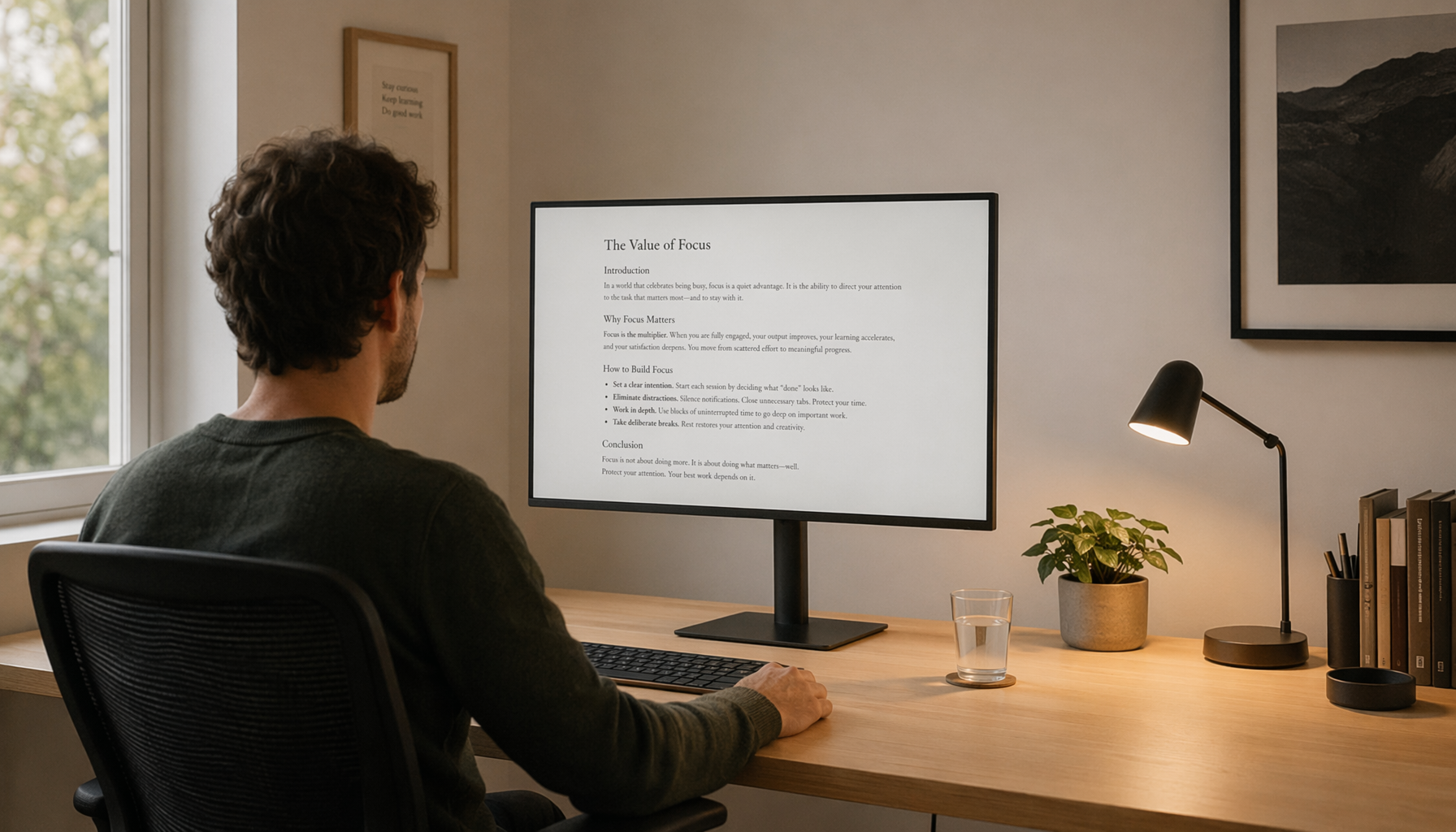
OLED burn-in is the main anxiety for mixed-use owners, but the practical goal is not to stop using OLED for work. It is to limit how long bright, fixed elements like taskbars, browser chrome, app toolbars, and game HUDs stay in the same place. When the screen shifts between productivity and gaming, the risk comes from repeated exposure, not from a single normal day.

The Real Burn-In Risk for Mixed Use
Static UI elements matter because OLED pixels are wearing individually. If the same bright zones stay visible for long stretches, they can age unevenly over time, which is the basic mechanism behind burn-in. An official burn-in overview explains this pattern clearly: the issue is repetitive fixed imagery, not casual use by itself.
For mixed-use owners, the risk often shows up in two places. First, daytime work keeps the same taskbar, menus, and window chrome on-screen for hours. Second, evening gaming can put HUDs, minimaps, and health bars in similar areas again and again. That does not mean OLED is a bad fit. It means the panel needs a routine that avoids one bright layout staying frozen all day.
Temporary image retention and burn-in are not the same thing. Short-lived retention can fade after a while, while burn-in is longer-term wear that does not just disappear when the screen changes. The useful decision is simple: if your day includes many unchanged desktop hours, you should treat OLED as a panel that needs habits, not a panel that needs fear.
A good first filter is this: if you regularly leave the same bright app layout open for most of the workday, OLED needs more care. If your work shifts across documents, browser tabs, calls, and games, the risk is easier to manage.
Taskbar and Tab Retention Risks
Set Up Daily Protection
The first line of protection is to reduce static exposure every day, before you worry about advanced panel behavior. If you want a safe OLED productivity setup, start with the settings that remove bright fixed objects from the screen most often.

- Turn on taskbar auto-hide if your operating system supports it, so the brightest fixed strip is not sitting there all day.
- Use dark or subdued wallpapers, especially if your desktop stays visible during long work blocks.
- Let system sleep and screen-off timers kick in sooner during breaks, meetings, and lunch.
- Keep app toolbars, docks, and launchers from staying pinned in the same position for every work session.
- Make the routine automatic, because protection that depends on memory tends to fail on busy days.
Tandem OLED Lifespan Audit is a useful follow-up if you want a broader lifespan perspective, but the daily logic stays the same: reduce how long fixed elements remain bright and unchanged. For coding, spreadsheets, and editing timelines, that usually matters more than trying to micromanage every single app.
A practical rule is this: if you can make the desktop look less static without hurting productivity, do it. If a setting creates more friction than it removes, move to habit changes such as shorter idle time and more frequent full-screen breaks.
Tune Movement and Refresh Behavior
Pixel shift and screen move features help by gently repositioning the image over time, which spreads wear across slightly different pixels instead of hammering the exact same ones. That does not make OLED burn-in impossible, but it does reduce how predictable the fixed zones are during long desk sessions.
As this OLED burn-in explainer notes, pixel shift and similar movement features are meant to distribute wear, so they are worth leaving enabled unless they create a visible annoyance for you. If you barely notice the motion, that is a good sign the feature is doing its job without getting in the way.
Refresh-rate behavior matters too, but not because high refresh rate itself causes burn-in. The more useful habit is consistency. Keep the signal path stable, avoid random overclocking experiments during desk work, and do not assume that a higher refresh mode cancels out static exposure. Motion-heavy gaming and static productivity are different use cases, so they should not be treated the same way.
What this means in practice is simple. During work, the screen may sit on one interface for a long time, so movement features and auto-hide settings help most. During gaming, the display content changes more often, so the main risk shifts toward repeated HUD placement rather than the whole desktop.
Control Brightness, HDR, and Sleep
Lower average brightness is one of the easiest habits to keep in place during long desktop use. The point is not to run the screen dimmed all day, but to avoid max brightness when you are mostly reading, writing, coding, or watching browser content. In many setups, that one habit reduces wear pressure more than obsessing over a single menu setting.
HDR should usually be treated as a mode for games and media, not a default desktop state. Leaving HDR on all day can make the desktop look unnecessarily intense, especially with static white UI on a dark panel. Use HDR when it adds value, then switch back for productivity.
Sleep timers and display-off periods matter because they cut the total time static imagery stays visible during idle gaps. That is a heuristic, but it is a strong one: lunch breaks, phone calls, meetings, and short away-from-desk moments add up fast over a week. The more often the screen goes dark when you are not using it, the less cumulative exposure the fixed elements get.
A good day-to-day rhythm is: moderate brightness for work, brighter modes only when you need them, and short idle timers that do not let the monitor sit there glowing while you are away. That pattern is usually more helpful than making dramatic changes once and forgetting about them.
Choose the Right Panel for Your Schedule
The right panel depends on how often your screen sits on static desktop content versus motion-heavy content. If your job keeps the same documents, code windows, or dashboards open for most of the day, a non-OLED option may be the safer fit. If your routine mixes work and games and you are willing to use hiding, sleep, and brightness habits, OLED can still make sense.
For buyers who want a simpler comparison, the trade-off usually looks like this: OLED gives you excellent contrast and great gaming motion, but it asks for more discipline around fixed UI. Mini-LED and other LCD options are more forgiving when spreadsheets, browsers, and status bars stay on-screen for long stretches. That is why the best choice flips based on schedule, not preference alone.
| Buyer Pattern | OLED Fit | Better Fit When… |
|---|---|---|
| Long static workdays | Cautious | You keep code, docs, or dashboards open for most of the day |
| Split work-and-play days | Stronger | You can auto-hide, sleep sooner, and vary what stays on screen |
| Mostly gaming use | Strong | Gaming dominates and desktop exposure stays limited |
| Bright office desktop all day | Mixed | You want the most forgiving panel for static UI |
If you want a browsing path rather than a verdict, the All-OLED Monitor collection is the natural place to compare current OLED options. For buyers who decide that static-heavy work comes first, the All-Mini-LED Monitors collection is the cleaner starting point because it avoids OLED-style burn-in anxiety entirely.
Mixed-Use Burn-In Checklist
- Is taskbar auto-hide turned on, or is the same bright strip visible for most of the day?
- Do your screen sleep and display-off timers activate during real idle gaps, not just overnight?
- Are pixel shift or screen move settings enabled, and do they run without being disabled for convenience?
- Does your workday include long unchanged windows that stay on one layout for hours at a time?
- Is desktop brightness kept comfortable instead of pushed to the maximum all day?
- Do you reserve HDR and the brightest modes for games or media instead of static productivity?
- If you want an OLED gaming monitor, does the rest of your routine actually support it?
If your answer to most of those checks is yes, OLED is a reasonable mixed-use choice. If not, you may be forcing the wrong panel into a static-heavy workflow.
KTC OLED 27" 2K 240Hz/0.03ms USB-C Gaming Monitor | G27P6 is worth checking only if your setup already fits the mixed-use pattern above, because its real value comes from gaming-first performance with disciplined desktop habits. If your day is mostly static work, it is better to compare it against a less burn-in-sensitive category first.
Related Resources
FAQs
Q1. How Should I Set My Taskbar for OLED Use?
Auto-hide is the easiest first move because it removes one of the brightest fixed elements from the screen for most of the day. If you prefer a visible taskbar, at least keep it dark and avoid leaving it on the same desktop view for every work block.
Q2. Can Sleep Timers Actually Help With Burn-In?
Yes, because they reduce the total time a static image sits on the panel during lunch breaks, meetings, and other idle periods. A shorter timer is especially helpful if you tend to step away without remembering to lock the screen.
Q3. What Brightness Is Safer for Daily Desktop Work?
Use the lowest brightness that still feels comfortable in your room, then stop there instead of chasing a brighter desktop. Comfort should guide the setting, but the key habit is avoiding max brightness for text-heavy work that stays on-screen for hours.
Q4. Why Does Game HUD Placement Matter?
HUDs and minimaps can keep the same screen zones busy for long sessions, so the wear pattern can become concentrated if you play one title repeatedly. If a game lets you move or simplify the HUD, that is worth doing for long-term panel health.
Q5. What Mixed-Use Schedule Is Most OLED-Friendly?
The easiest schedule is one with lower-brightness productivity blocks, short idle gaps, varied app layouts, and gaming sessions that do not repeat the same static interface all week. OLED fits best when the motion-heavy part of the day is meaningful enough to offset the static work time.
What to Do Before You Commit
If you already own OLED, keep the habits simple: hide the taskbar, let the screen sleep sooner, leave movement features on, and keep desktop brightness moderate. If you are still shopping, compare your real workday against your gaming time instead of buying on contrast alone. OLED burn-in risk is manageable for mixed use, but only when the workflow matches the panel.