Many professionals hesitate to buy gaming monitors for office work, assuming they are too bright, too specialized, or simply overkill for spreadsheets, documents, and video calls. In reality, modern gaming monitors with high refresh rates, Mini-LED backlighting, and strong connectivity often deliver tangible advantages for productivity while still excelling at entertainment. The key is matching the right specs to your workflow rather than dismissing the category outright.

Myth vs. Reality: Why Gaming Tech Isn't 'Overkill' for Your Desk
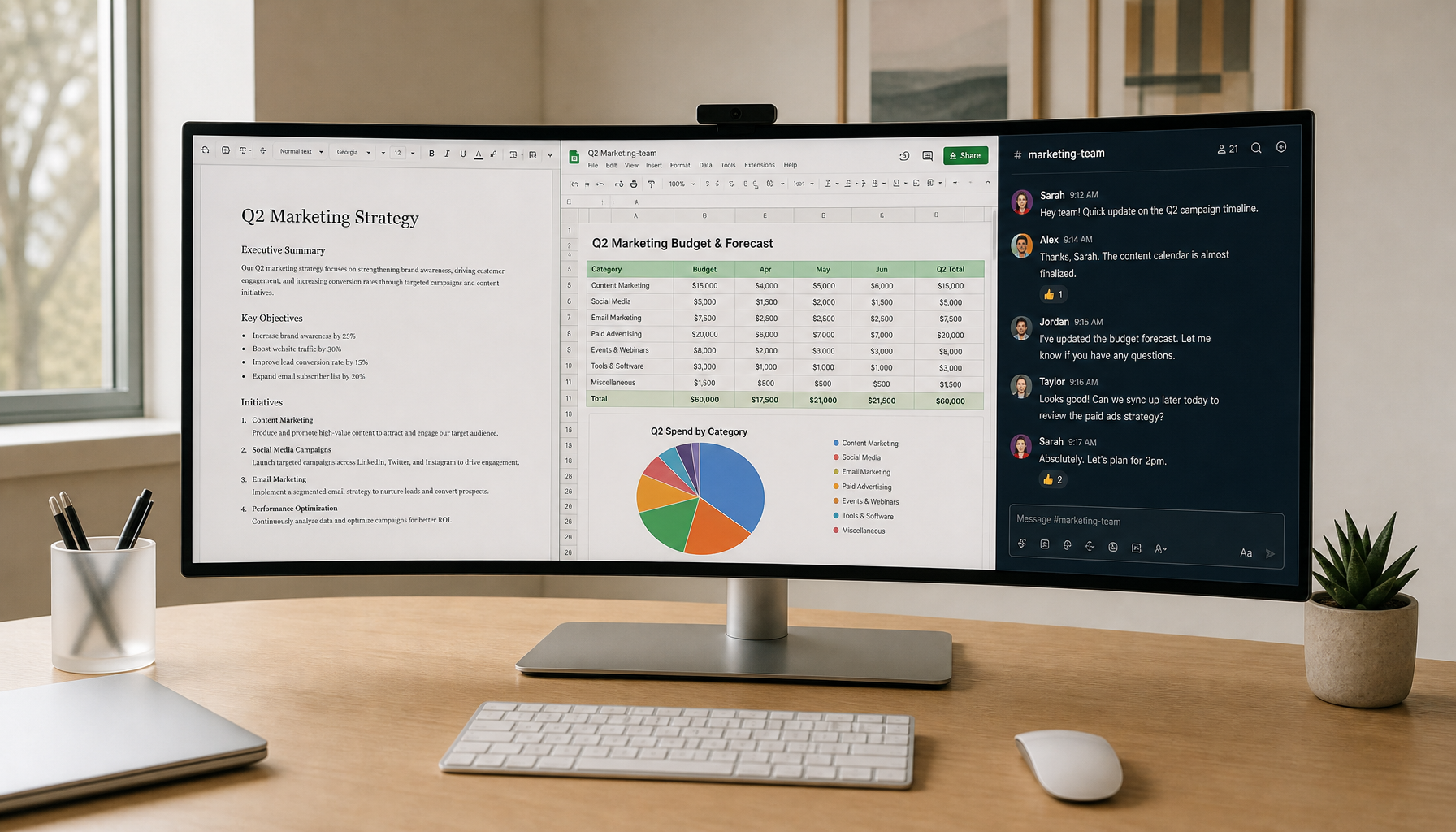
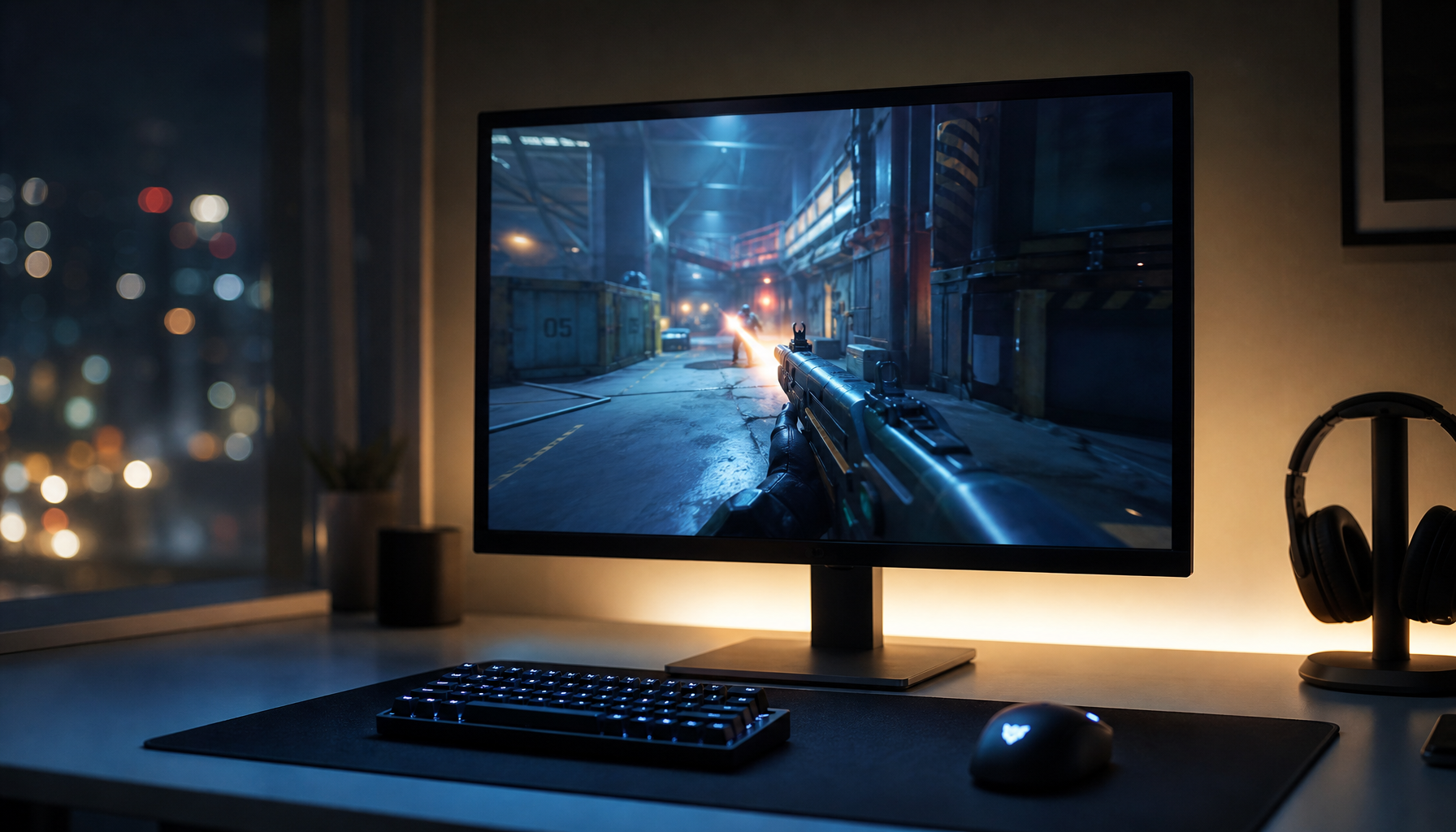
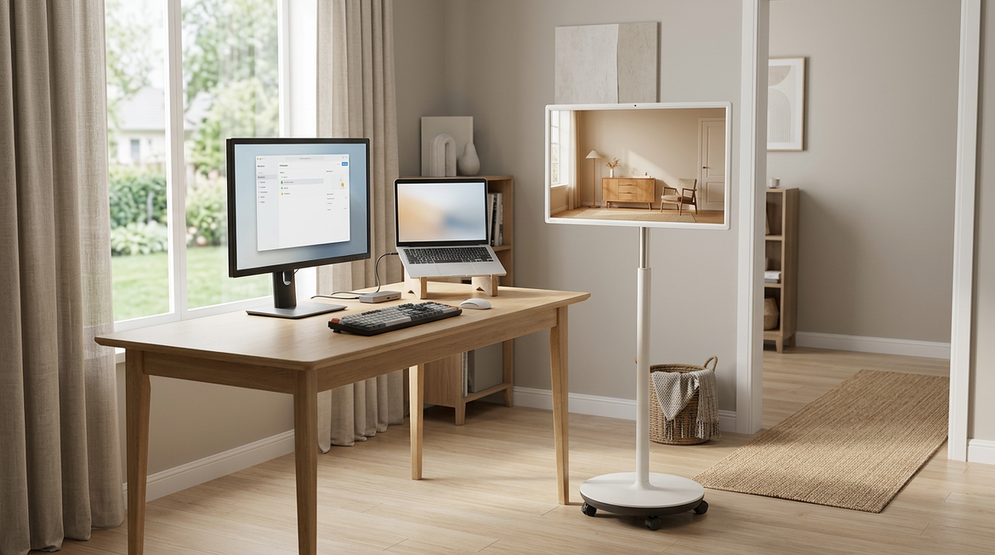
The common assumption that gaming monitors are only for gamers overlooks how their core technologies address everyday office challenges. High refresh rates improve motion legibility—the clarity of text and UI elements while scrolling or moving the cursor—which directly benefits document navigation and multitasking. Mini-LED panels provide higher sustained brightness that helps maintain contrast in sunlit home offices or rooms with large windows, often called "glass-box" environments.
Rather than buying separate displays, many remote workers and freelancers find a single hybrid monitor reduces desk clutter and simplifies setups. This dual-purpose approach works particularly well when your workday mixes data analysis, writing, calls, and occasional entertainment. The decision hinges on checking your primary room lighting and main applications first, not on marketing labels.
The Productivity Power of High Refresh Rates
A high refresh rate, such as 120Hz or above, updates the image more frequently than the standard 60Hz found on many basic office monitors. In practice this means smoother scrolling through long spreadsheets or PDFs, where rows stay legible instead of blurring during fast movement. Research on motion perception shows that higher refresh rates can reduce perceived stutter and improve the experience of tracking data during rapid navigation (Effect of multi-refresh-rate method on user experience).
For video calls and multimedia presentations, smoother frame delivery helps avoid micro-jitter that can distract during important meetings. VESA MediaSync certification, available on many gaming-oriented panels, enforces tighter timing standards to maintain consistent playback across broadcast formats. What this means for most users is that a 120Hz+ monitor can serve as a professional baseline for document-heavy roles rather than remaining a luxury reserved for gaming.
Gaming Monitors at Office Work: Refresh Rate and Mini-LED Comfort by Scenario
Grouped comparison of office-work comfort and visual smoothness under typical document-heavy use. The chart shows relative utility, not a measured lab score.
View chart data
| Category | Relative comfort / utility |
|---|---|
| Document work: 60Hz | 55.0 |
| Document work: 120Hz+ | 75.0 |
| Mini-LED in Light Mode | 85.0 |
| Mini-LED in Dark Mode | 60.0 |
This chart helps visualize how utility changes across refresh rates and lighting conditions in typical office tasks. Higher values indicate greater relative comfort and smoothness based on the described patterns.
Mini-LED for the Office: A Game-Changer for Bright Workspaces
Mini-LED technology uses hundreds or thousands of tiny LEDs for precise local dimming, delivering higher peak brightness and better contrast than standard IPS panels. In bright home offices with windows, this sustained luminance helps combat glare and keeps colors vivid without washing out. For users working primarily in Light Mode—white backgrounds in Word, Excel, or web apps—blooming (the halo effect around dark objects) is typically invisible because the background luminance masks any stray light.
The situation flips in Dark Mode applications such as code editors or creative software with black interfaces. Here local dimming zones can become noticeable around bright text or UI elements, sometimes requiring a quick OSD toggle to disable dimming for SDR content. This "toggle tax" represents a repeatable but minor friction point mainly for night owls or dark-themed users. Overall, Mini-LED shifts from a gaming-only feature to a strong choice for professionals in well-lit spaces.
Beyond Gaming: Official Standards for Professional Smoothness
Gaming monitors frequently meet or exceed professional media standards that basic office displays often ignore. VESA MediaSync certification, for example, ensures jitter-free playback by supporting a wide range of video formats and preventing frame drops (VESA Updates Adaptive-Sync Display Standard with Tighter Specifications). This matters for high-stakes video calls, screen sharing, or light video editing where consistent timing improves perceived professionalism.
Positioning gaming monitors this way shows they often deliver higher performance floors than entry-level office models. When evaluating a potential purchase, confirming MediaSync or equivalent adaptive-sync support provides a quick proxy for reliable media handling in productivity contexts.
Myth-Busting: Does Gaming Tech Hurt Text Clarity?
One persistent concern is that gaming panels produce blurry or fringed text unsuitable for long reading sessions. In many cases this stems from subpixel layout differences—particularly BGR arrangements common on some high-refresh panels—rather than the refresh rate or panel type itself. Windows users can often mitigate fringing through ClearType tuning or by selecting sharper fonts, turning the issue into a solvable configuration step rather than a permanent hardware limitation.
Mac users should check panel specifications carefully, as macOS subpixel rendering is optimized for RGB layouts and handles BGR less gracefully. The sharpness trap occurs when the smoothness of high refresh rates is undermined by fuzzy text; verifying subpixel layout before buying avoids this mismatch. For most hybrid users the fix is straightforward and does not require advanced technical knowledge.

Gaming Monitor vs. Office Monitor: The Ultimate Productivity Comparison
Standard 60Hz office monitors excel at basic tasks at a lower price point but often lack the motion smoothness, color gamut, and ergonomic flexibility of modern gaming or hybrid models. A 144Hz+ panel typically offers better color accuracy for light creative work and more adjustable stands that reduce neck strain during long days. The one-cable USB-C experience—delivering video, data, and up to 90W power delivery—dramatically cuts desk clutter, though Mac users may occasionally encounter wake-from-sleep handshake issues that require a simple reconnect.
Gaming monitors therefore suit professionals who want future-proofing and entertainment capability in one device. Dedicated office monitors remain preferable for strict budget buyers or those whose work never involves motion-intensive tasks. The comparison ultimately turns on whether your workflow includes scrolling, multitasking, or variable lighting.
Practical Evaluation: How to Choose Your Hybrid Workspace Display
Start with your dominant use cases and room conditions. For Mac-heavy setups prioritize 4K resolution and confirm RGB subpixel layout or acceptable BGR handling. Aim for at least 120Hz refresh rate if you frequently scroll large documents or datasets. IPS panels deliver the best viewing angles for collaborative or multi-position desks, while Mini-LED adds value in bright environments.
Connectivity should include 65W–90W USB-C Power Delivery to eliminate the laptop charger for most ultrabooks. Check ergonomics—height, tilt, and swivel adjustment—to maintain comfortable posture across an 8+ hour workday. Finally, test in your actual lighting: a monitor that looks excellent in a dark store may bloom differently under office fluorescents.
Who should choose a gaming-spec hybrid? Data analysts, content creators, and hybrid workers who value smooth motion and one-cable simplicity. Who should stick with traditional office monitors? Users on tight budgets, those in very dark rooms where blooming would be prominent, or setups where text clarity is the absolute top priority without willingness to tweak settings.
A quick self-check list includes: Does your room have windows or strong ambient light? Do you scroll frequently or use dark themes? Will one cable replace multiple adapters? Answering these helps filter options before comparing specific models.
Frequently Asked Questions
Are high refresh rates actually helpful for spreadsheets and documents? Yes, 120Hz and above often make row tracking and page flipping feel more fluid, especially in large datasets. The benefit appears in reduced visual stutter rather than dramatic speed increases, and it pairs well with VESA standards for consistent performance.
Does Mini-LED cause problems with text in office apps? Blooming is generally invisible on white document backgrounds but can appear around bright elements on dark interfaces. Many users simply disable local dimming for SDR work, creating a minor but repeatable extra step for dark-mode workflows.
Will a gaming monitor work well with a MacBook? Most modern gaming monitors with USB-C Power Delivery simplify the setup, but some Mac users report occasional wake-from-sleep friction. Checking firmware updates and using the correct cable usually resolves the majority of issues.
Is text clarity worse on gaming monitors than on standard office displays? Only if the panel uses a BGR subpixel layout and no tuning is applied. Windows ClearType or font adjustments typically resolve fringing, while Mac users should verify layout compatibility in advance.
Should I buy a dedicated office monitor instead of a gaming one? Choose a standard office monitor if your budget is limited and your work involves almost no scrolling or entertainment. Otherwise a properly chosen gaming or hybrid model often provides better long-term versatility and motion performance.
What is the most important spec to check first for productivity? Room lighting and primary applications should guide the choice between high brightness Mini-LED and standard IPS. After that, confirm refresh rate, USB-C power delivery, and subpixel layout to avoid post-purchase surprises.