Choosing between a fixed premium monitor like the Apple Studio Display and a mobile smart screen like the KTC MEGAPAD depends on whether your productivity needs a static precision anchor or the freedom to move your workspace throughout the home. For deep-focus workers who stay at one desk, the Studio Display's high pixel density supports hours of comfortable text work. For agile professionals who shift between rooms for meetings and collaboration, the MEGAPAD's built-in battery and rolling stand enable a fluid workflow that a traditional monitor cannot match.
Static Desk vs. Fluid Workspace: Why Your Workflow Architecture Matters
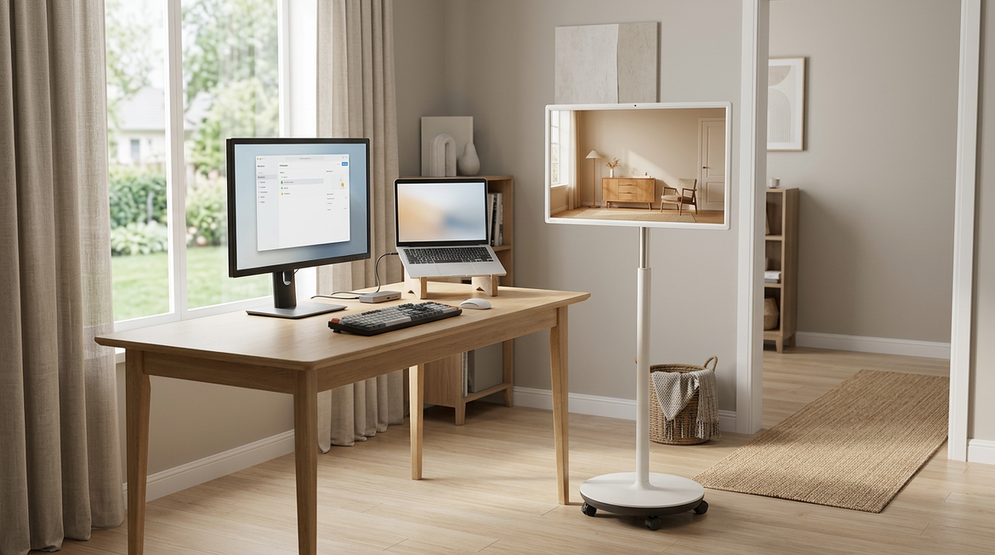
The traditional static desk setup maximizes concentration but confines you to one location. A fixed monitor like the Studio Display delivers consistent performance in a dedicated workspace, yet it requires you to remain tethered to that spot for power and connectivity.
In contrast, the fluid workspace approach treats your entire home as potential office space. The KTC MEGAPAD features a rolling pedestal stand and built-in battery, letting you roll the screen from office to kitchen or living room without setup hassles. This physical mobility can deliver a mental reset that simply switching browser tabs cannot replicate.
Many remote workers in small apartments or shared homes find that being able to change environments reduces afternoon fatigue. However, if your role demands absolute focus without interruptions, the static precision of a fixed display may better suit your needs. Check your typical day: do you spend most time at one desk, or do you move between rooms for different tasks?
The 2026 Hardware Face-Off: Precision vs. Versatility
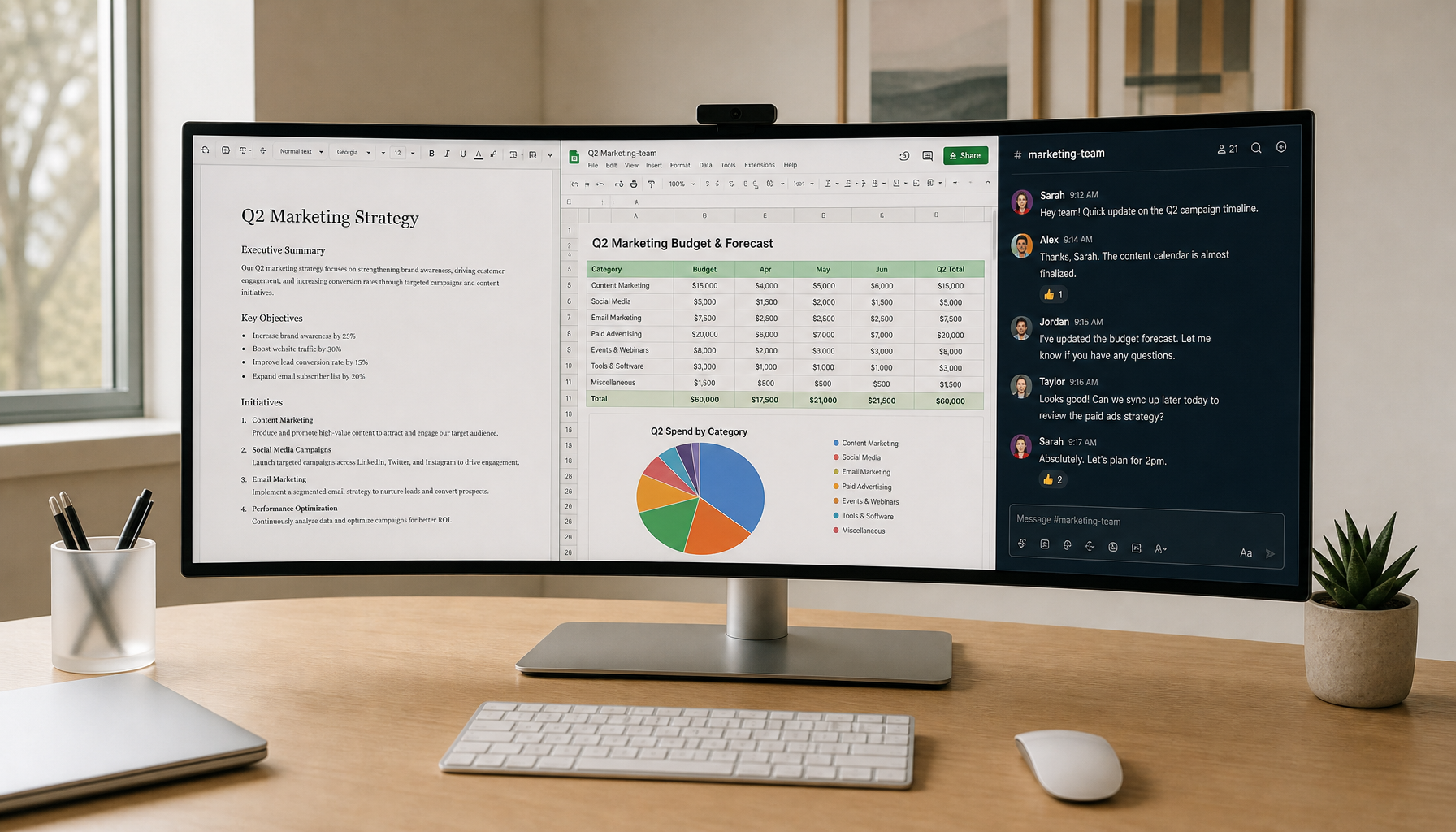
The Apple Studio Display offers a 27-inch 5K Retina panel with 5120 x 2880 resolution and approximately 218 pixels per inch (PPI). This high density produces exceptionally sharp text that many users find reduces eye strain during long coding or writing sessions, as detailed in this PCMag review of the Studio Display.
The KTC MEGAPAD provides a larger 32-inch 4K VA touchscreen with roughly 140 PPI. While the lower density is noticeable on small fonts, the extra screen real estate benefits dashboard viewing, multitasking, and touch-based navigation. As this Ars Technica article on mobile large-format displays explains, such devices prioritize versatile placement over maximum sharpness.
Other differences include the Studio Display's Thunderbolt 5 connectivity and upgraded webcam optimized for Mac users, versus the MEGAPAD's Android 14 system and battery that supports up to 6 hours of use. Note that real-world battery duration varies with brightness and apps; treat the 6-hour figure as a manufacturer estimate for typical productivity tasks.
Primary Work Mode Fit: KTC MEGAPAD vs Apple Studio Display
A tiered comparison of which display better fits mobile, standalone, or desk-bound productivity workflows.
View chart data
| Category | KTC MEGAPAD | Apple Studio Display |
|---|---|---|
| Deep Worker | 3.0 | 1.0 |
| Agile Lead | 1.0 | 3.0 |
This chart clarifies the likely fit based on your dominant work style rather than claiming exact performance scores.
Android Smart Screen for Productivity: Standalone vs. Connected Workflows
The KTC MEGAPAD functions as a standalone computer thanks to its Google EDLA-certified Android 14 system. You can run Zoom, Slack, Microsoft Teams, and other productivity apps directly from the Play Store without connecting a laptop or Mac, as confirmed on the product page for the MEGAPAD.
The Apple Studio Display operates as a passive monitor. It requires a host computer to function and excels within the Mac ecosystem with features like Center Stage and Spatial Audio, but offers no independent computing capability.
Touch interaction on the MEGAPAD accelerates navigation in spreadsheets, whiteboarding during calls, or adjusting dashboards. However, Android app performance for complex multitasking may not match the polished integration many Mac users expect. The MEGAPAD works well as a secondary communications hub that avoids draining your laptop battery.
For hybrid workers who attend meetings across rooms, this standalone capability removes friction. Fixed-monitor users rarely experience the same flexibility but gain deeper ecosystem tools when staying desk-bound.

Choosing Your Productivity Anchor: The Deep Worker vs. The Agile Lead
Deep workers such as coders, writers, and video editors generally benefit from the Studio Display's superior text clarity and Mac integration. The higher PPI helps maintain focus during extended sessions and reduces eye strain, making it a strong choice if you rarely leave your desk.
Agile leads, project managers, and consultants often gain more from the MEGAPAD's mobility and standalone operation. Being able to roll the screen to different locations supports dynamic workflows involving frequent calls and collaboration without laptop tethering.
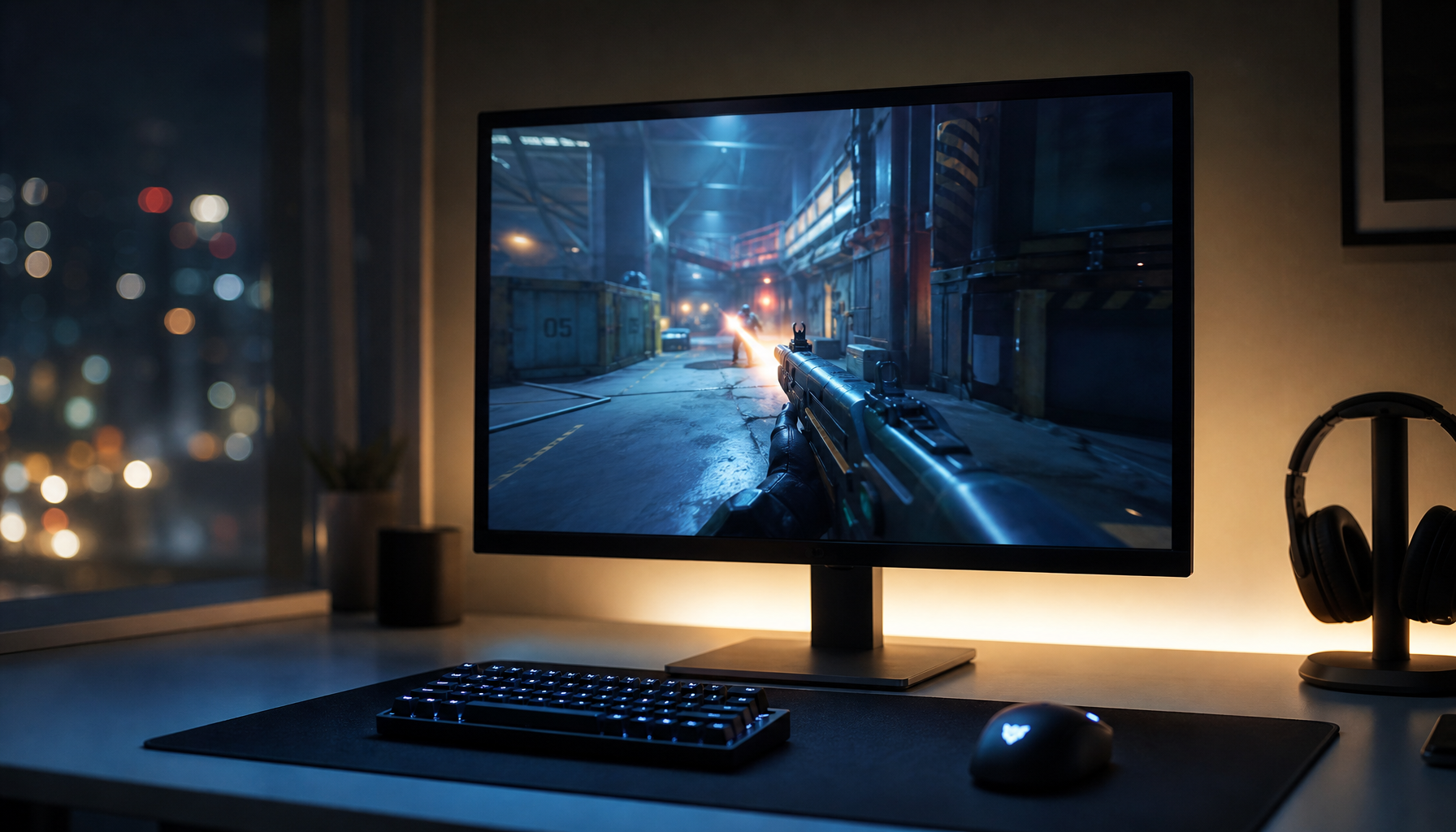
Do not choose the MEGAPAD for color-critical creative work, as its panel does not target professional-grade accuracy. Similarly, avoid the Studio Display if you dislike being anchored to one location or need independent screen functionality.
Consider your weekly routine: if over half your time involves moving between spaces or running standalone video tools, the MEGAPAD aligns better. If your work is predominantly text-heavy and desk-centered, the Studio Display remains the precision choice. Test the setup that matches your actual movement patterns rather than marketing promises.
Our vertical vs horizontal dual monitor productivity guide explores complementary setups that pair either device with a secondary screen. For those building a flexible office, the home office ergonomic monitor selection guide offers additional positioning tip.
If portability appeals, explore the full KTC MEGAPAD 32" 4K Android 14 Google EDLA Smart Touch Monitor with 8550mAh Battery or browse the mobile touch screen collection. Users seeking classic fixed performance may also review broader office monitor options.
FAQs
Can the KTC MEGAPAD fully replace a Mac Studio Display for professional creative work?
No. The MEGAPAD prioritizes mobility and standalone use but lacks the pixel density and color accuracy needed for studio-grade editing. Reserve it for communication-heavy or agile roles instead.
How long does the MEGAPAD battery actually last during productivity tasks?
Manufacturer estimates reach up to 6 hours under moderate use, but high brightness or demanding apps reduce runtime. Test in your real workflow, as battery life varies.
Does the MegPad support touch input while connected to a laptop?
Yes, the capacitive touchscreen remains active in extended desktop mode, enabling direct interaction with windows and apps from the host computer.
Is the Apple Studio Display suitable for non-Mac computers?
It works with Windows PCs via compatible ports, but many advanced features like Center Stage and optimal scaling are designed specifically for macOS.
What should I check first when deciding between mobility and fixed precision?
Assess how often you change locations during the workday. More than 50% movement favors the MegPad; mostly stationary deep work favors the Studio Display.
Are there eye strain risks when using the MegPad for long coding sessions?
The lower PPI on the 32-inch panel can cause more noticeable aliasing on small text than a 5K Retina display. Take breaks and adjust font sizes if you notice discomfort.