If you shop by specs alone, the choice is easy to overcomplicate. For most buyers, mini-LED is the safer pick for bright rooms, mixed work-and-play desks, and longer daily sessions with static UI, while OLED is the stronger fit when you care most about deep blacks, contrast, and fast-feeling motion in dimmer setups.

What Changes in Real Use
The better panel depends less on the label and more on how you actually use the screen. Room lighting, content mix, and how long the display stays on each day matter more than a single headline spec.
Mini-LED tends to make life easier on desks near windows or under strong overhead light because it can sustain higher peak brightness and use local dimming to improve contrast. OLED often looks more dramatic in darker rooms because each pixel is self-emissive, which helps black levels and perceived depth. The tradeoff is straightforward: one type is usually better for visibility in brighter spaces, while the other usually wins on contrast and dark-scene impact.
For a productivity-first angle, Mini-LED productivity and longevity reinforces the same practical idea: the best choice is the one that matches your desk conditions first.
Mini-LED and OLED at a Glance
Mini-LED is an LCD-based approach with a dense backlight and many local dimming zones. That usually helps it deliver strong brightness and better HDR visibility than standard edge-lit LCDs. OLED is self-emissive, so each pixel turns on or off by itself. That is why OLED can produce very deep blacks and a fast, clean motion feel.

Observed results still depend on the specific monitor, not just the panel type. Brightness tuning, local dimming behavior, coating choice, and firmware all affect what you actually see.
A practical shorthand is this: mini-LED leans toward bright-room usability, while OLED leans toward contrast-first image quality. If text-heavy work is a major part of your day, it also helps to read OLED text clarity before deciding.
Where Mini-LED Usually Wins
Bright Rooms and Window Light
Mini-LED is often the safer choice when your desk sits near a window or under strong lighting. In those environments, higher brightness headroom can matter more than perfect blacks because it helps the image stay readable and less washed out. RTINGS' mini-LED vs OLED monitor comparison also notes that mini-LED models commonly sustain higher peak brightness than typical OLED monitors, which is exactly why they tend to feel more comfortable in brighter rooms.
Mixed Productivity and Gaming
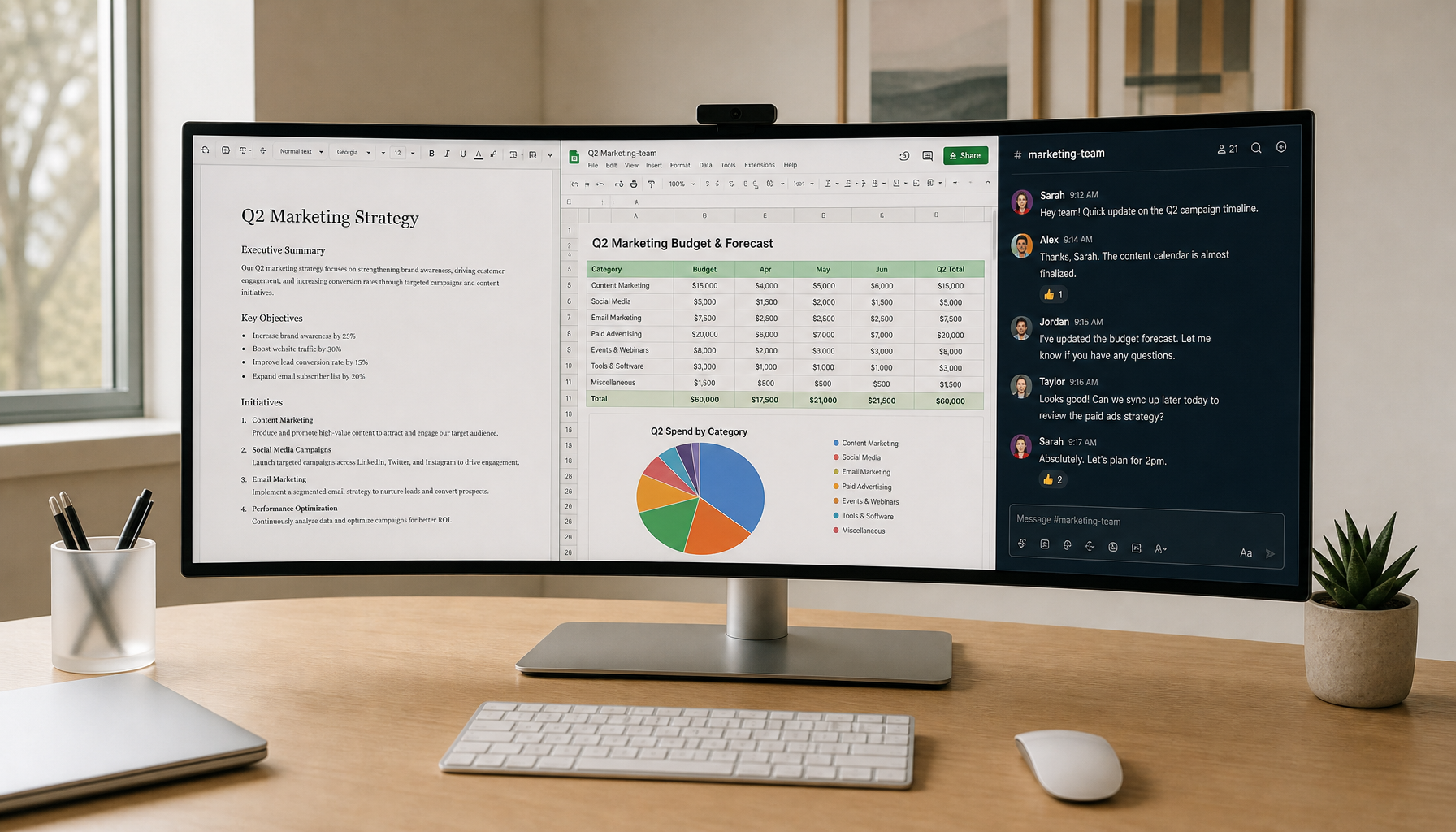
If your day is split between spreadsheets, browser windows, documents, and evening gaming, mini-LED is often easier to justify. The panel can handle static UI well, and the brighter presentation can help in mixed light. That does not make it automatically better for every game, but it often makes it the less fussy choice for hybrid desks.
Longevity Mindset for Daily Use
For buyers who keep the same taskbar, launcher, HUD, or app layout on screen for hours, mini-LED can feel more reassuring. OLED burn-in risk is usage-dependent rather than guaranteed, but long static patterns can increase concern over time. Tom's Hardware has documented this as a real usage pattern issue in its OLED monitor reporting, not as a certainty for every owner.
If you want to browse options in this lane, the All-Mini-LED Monitors collection is the cleanest category starting point.
Where OLED Still Shines
Darker Rooms and Contrast-First Viewing
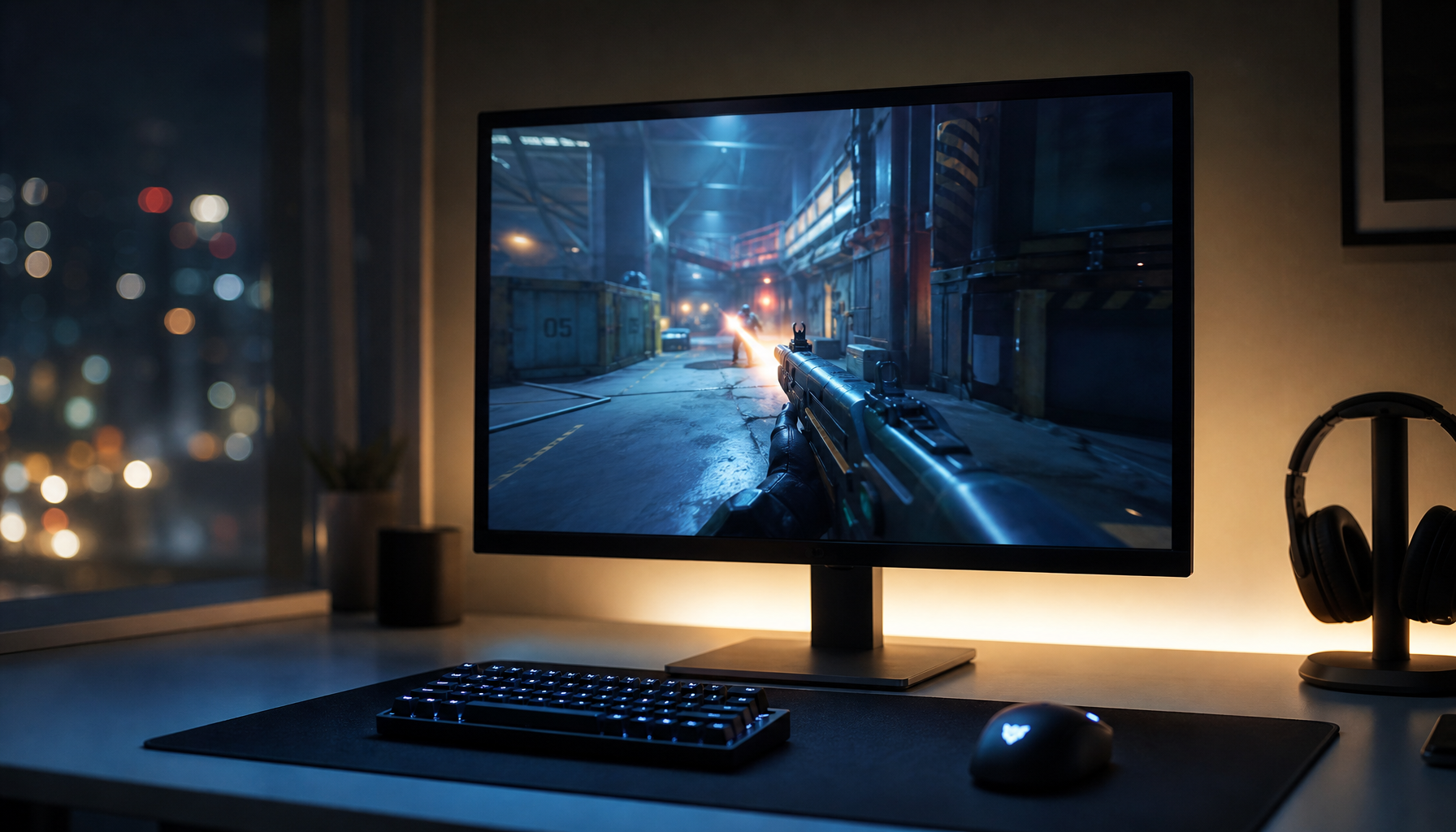
OLED remains compelling when your room is darker and your priority is image depth. Because each pixel is self-emissive, OLED can produce very strong black levels and a vivid sense of contrast. That is especially noticeable in movies, cinematic games, and other content where shadow detail and scene separation matter more than raw brightness.
Motion and Fast-Feeling Gameplay
OLED is also attractive for motion clarity and the immediate feel of fast gameplay. Its fast pixel response can make movement look cleaner, especially in twitchy games where you notice blur or smearing quickly. In practice, that makes OLED a strong fit for players who care more about speed and visual punch than about all-day office comfort.
Media-Heavy or Gaming-Heavy Use
OLED tends to make more sense if the screen spends most of its life on entertainment rather than documents. If your use is mostly single-player gaming, streaming, or media viewing in a controlled lighting setup, the contrast advantage can outweigh its limitations.
The All-OLED Monitor collection is the most natural place to start if that sounds like your setup.
A Practical Decision Framework
Use this order instead of chasing specs in isolation:
- Check room lighting first. Bright windows and overhead lights push the decision toward mini-LED.
- Check your content mix second. Static productivity and HUD-heavy gaming lean mini-LED; movies and cinematic play lean OLED.
- Check your longevity tolerance third. If you want the least worrying option for years of daily static UI, mini-LED is the easier fit.
- Check budget last. Value is not just the sticker price; it is how well the panel matches your actual use.
A simple rule of thumb: if the screen spends most of its day in a bright room with lots of windows and work apps, mini-LED is usually the better decision. If the screen lives in a darker setup and your priority is contrast and motion, OLED is usually more compelling.
Models That Match Each Choice
If you want a concrete mini-LED example, the KTC Mini LED 27" 4K 160Hz HDR1400 Gaming Monitor | M27P6 is a clear fit for buyers who want a bright-room-friendly 27-inch option. Its published facts include 1,152 dimming zones, HDR1400 brightness, 4K at 160Hz, and FHD at 320Hz dual-mode support. That combination lines up well with mixed work, play, and high-light desk setups.
The M27P6 also sits inside the All-Mini-LED Monitors collection, which makes it easier to compare similar mini-LED alternatives in one place.
For OLED buyers, the KTC OLED 27" 2K 240Hz/0.03ms USB-C Gaming Monitor | G27P6 is the first model to look at. Its published facts point to a 27-inch OLED panel, 240Hz refresh, 0.03ms response time, 1,500,000:1 contrast, and 450 nits peak brightness. That makes it a stronger match for contrast-first gaming and darker-room setups than for bright, always-on office desks.
You can also compare it against the broader All-OLED Monitor collection if you want to verify whether another OLED layout, port mix, or price point fits better.
Final Checks Before You Buy
Before you check out, confirm these four things:
- Your desk lighting, especially if there is a window nearby.
- Your main workload, especially if you spend hours in spreadsheets or static interfaces.
- Your tolerance for long-term static content on screen.
- The exact model spec sheet, because panel behavior depends on the whole monitor, not just the panel type.
If you want the simplest answer, choose mini-LED for bright rooms and mixed work, and choose OLED for darker rooms and contrast-first gaming. That is the most reliable way to avoid buyer's remorse.