Mini-LED monitor for photo editing vs OLED is really a workflow choice, not a prestige choice. If your desk is bright, your editing days are long, or you also live in menus and spreadsheets, Mini-LED is usually the safer default. If you can control lighting and want the deepest blacks for image review, OLED can be the better fit.

Mini-LED vs. OLED for Photo Editing
Photo editors are choosing between two very different ways to balance image quality and desk comfort. The question is not just which panel looks better in a demo. It is which one stays useful when you are retouching, comparing proofs, checking exports, and keeping toolbars open for hours.
That is why a Mini-LED monitor often makes more sense for mixed-light rooms, while an OLED monitor can be the stronger contrast-first choice in controlled lighting. Neither is automatically better for every editor, and that is the point. The right answer depends on your room, your session length, and how much of your day is image review versus desktop work.
If you want a technical refresher on why OLED text can look different from LCD-based panels, pixel layout and color rendering is worth a quick look before you buy.
How the Panels Behave in Real Editing Work
For most photo buyers, the practical difference shows up in how the screen behaves under real desk conditions, not in a spec sheet headline.
Contrast, Blacks, and Shadow Detail
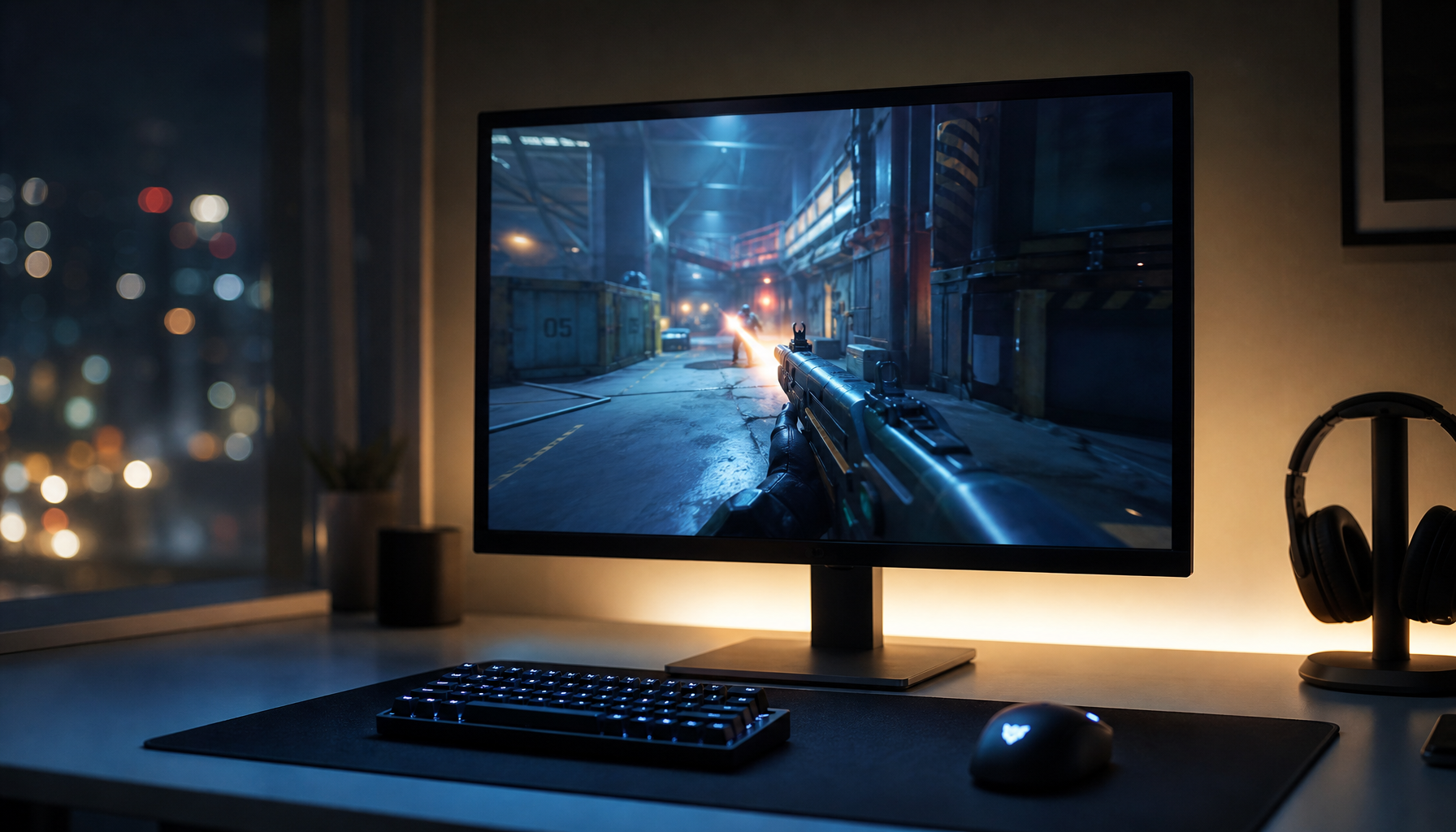
OLED's main advantage is simple to understand: each pixel produces its own light, so blacks can look extremely deep. RTINGS' Mini-LED versus OLED comparison notes that OLED can deliver near-infinite contrast, while Mini-LED depends on local dimming zones that can show blooming around bright objects. For shadow-heavy portraits or dark artistic work, that can make OLED feel more convincing.
Mini-LED is not weak here, though. A good Mini-LED can still give you strong contrast and useful shadow visibility, especially if you are not staring at black backgrounds all day. The trade-off is that local dimming behavior can sometimes make small bright details glow a bit around the edges. For photo editing, that is less about perfection and more about whether the effect will distract you while judging tones.
Brightness, HDR, and Bright-Room Use
Brightness matters more than many buyers expect. In a bright room or a workspace with daylight and overhead light, a monitor that holds up under real-world glare is often easier to live with. RTINGS' display HDR guide notes that Mini-LED models generally have the edge in bright-room usability because they can reach much higher peak brightness than OLED.
That does not mean OLED is dim in every setup. It means OLED's strengths are easier to enjoy in controlled lighting. If your editing desk faces a window, or if you keep the monitor doing double duty for documents and general desktop use, Mini-LED usually gives you more headroom. HDR preview work also tends to benefit from that brightness cushion, especially when you are checking highlight detail rather than just watching a glossy demo clip.
The VESA DisplayHDR certification guide is a helpful reference if you want to interpret HDR labels without overreading them. It is also a reminder that HDR performance is not one number. Peak brightness, black level behavior, and implementation details all matter.
Color Gamut, Calibration, and Soft Proofing
Color gamut is not the same thing as color accuracy. A wide-gamut monitor can still be poorly tuned, and a more modest panel can still be very usable if it is calibrated well. For photo work, the real question is whether the monitor gives you a believable starting point for edits and proofing.
That is why a good Mini-LED or OLED monitor should be judged as a full product, not just as a panel type. If you need a dependable color workflow, check the factory calibration claim, color space coverage, and the consistency of the specific model before you decide. The panel technology matters, but the implementation often matters more.

Text, UI, and Desk Comfort
This is the section where many buyers change their minds. A monitor can look incredible in a photo, then feel tiring after three hours of filenames, sliders, and layer stacks.
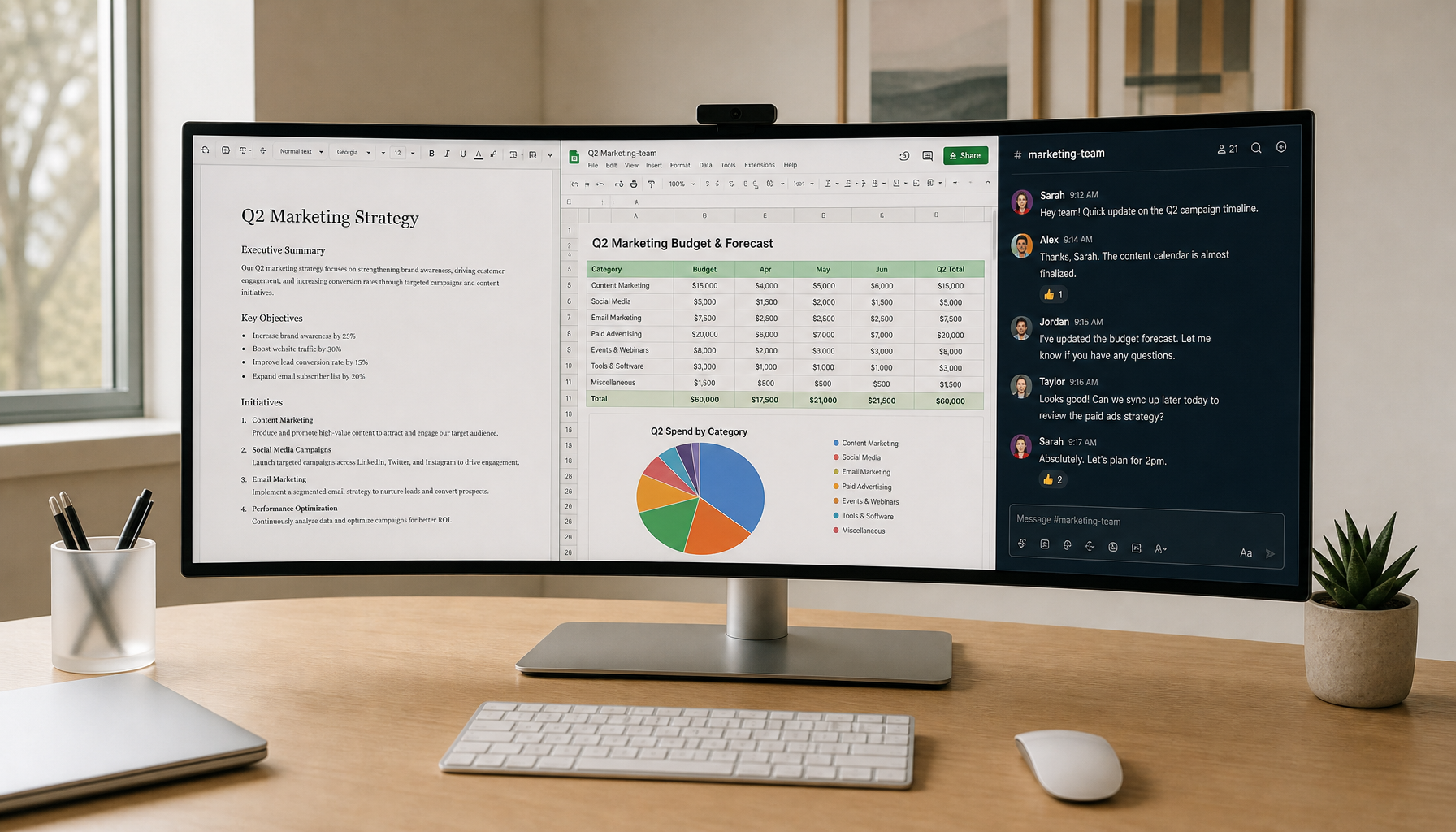
- If you spend a lot of time reading menus, spreadsheet cells, or asset lists, Mini-LED is usually the easier default because it behaves more like a familiar LCD desktop display.
- If you care most about contrast but rarely keep static UI on screen all day, OLED can still work well.
- If your editor setup uses a dark theme, close viewing distance, or unusual scaling, text clarity deserves a test drive before you commit.
- If you want a deeper explanation of why some OLED panels show fringing, OLED text clarity for office work and Mini-LED versus OLED text clarity both cover the practical side of the issue.
- If you want a broader background on the subpixel side of the problem, display pixel substructure is the clearest explainer in the set.
The key point is that text clarity is not just a spec. Distance, scaling, and the software you use can change the experience enough that the same panel feels fine for one buyer and annoying for another. That is why the Mini-LED monitor for photo editing vs OLED debate often turns into a workflow debate once the buyer gets serious about the desk.
Which Use Cases Favor Each Panel
The table below is the quickest way to separate the two technologies by real buying scenario.
| Buyer scenario | Mini-LED fit | OLED fit | What changes the decision |
|---|---|---|---|
| Bright-room editing | Stronger default | Usable, but less forgiving | Brightness headroom and glare resistance matter more than deep blacks |
| Mixed photo plus office work | Usually the safer pick | Good if you accept UI tradeoffs | Static windows, toolbars, and text reading become part of the value test |
| Shadow-critical retouching | Very good | Often the contrast favorite | Dark detail and black level perception matter more than brightness |
| HDR preview work | Strong fit | Strong contrast, but more room-sensitive | HDR usefulness depends on how the monitor handles highlights in your actual lighting |
| Long desktop sessions | Easier to recommend | Better only if you accept more care | Burn-in caution and UI endurance matter more over time |
| Value-focused creator desk | Usually the practical choice | Worth it only if you truly want contrast-first viewing | Avoid paying for a visual effect you cannot use fully |
For a concrete browsing path, the KTC M27T6 is the kind of model that shows why Mini-LED can work for creator desks: it combines Mini-LED backlighting, HDR1400-class brightness, full ergonomic adjustment, and support for photo/video editing scenarios in the product facts. The KTC G27P6 is the clearer contrast-first example, with OLED blacks, wide color coverage, and USB-C convenience that may appeal to buyers who can manage the panel more carefully.
Picking a Monitor for Your Editing Desk
Use this simple sequence if you are still comparing carts.
- Check your room light first. If the monitor will live in a bright or mixed-light room, Mini-LED is usually the safer starting point.
- Decide how much of your day is actual image work versus desktop work. If toolbars, documents, and file management dominate, favor the panel that is easier to read and less fussy over time.
- Think about your tolerance for static UI exposure. If you want the least maintenance, Mini-LED is easier to live with.
- Decide whether contrast is a want or a need. If you truly judge shadow detail all day, OLED becomes more attractive.
- Verify the real product facts before you buy, including color coverage, stand ergonomics, return policy, and warranty.
If you want a non-panel shortcut for narrowing creator displays, the KTC H27P3 is a useful reference point for buyers who care more about sharp desktop work and calibrated color than about OLED-style contrast. For broader browsing, the 4K and 5K monitor range can also help you compare resolution tiers without changing the basic workflow question.
Final Buyer Checklist
Mini-LED is usually the better all-around answer for a photo editing desk. OLED is the better contrast-first answer when you can control the room and accept a little more care. Before you buy, check your lighting, your session length, your need for text comfort, and the exact product facts, then use Deals & Offers only after the panel choice already makes sense.
FAQs
How Should I Choose Between Mini-LED and OLED for Photo Editing?
Start with your room and your routine. If you edit in bright light or use the monitor for long desktop sessions, Mini-LED is usually the easier fit. If you work in controlled lighting and care most about contrast and blacks, OLED becomes more appealing.
Is Mini-LED Better for Bright Rooms?
Usually, yes. Mini-LED's brightness headroom makes it easier to use in daylight or mixed-light rooms, especially when the screen also has to show palettes, menus, and other static UI. OLED can still work, but it is less forgiving when the room itself is bright.
Does OLED Cause Text Clarity Problems for Photo Work?
It can, depending on the panel and how close you sit. Some OLED layouts make text look less clean than you might expect on a desktop monitor. If your workflow involves lots of menus, file browsing, and office apps, check this carefully before buying.
Can a Mini-LED Monitor Be Good Enough for Creator Work Without Overspending?
Yes. If you do not need OLED's black-level advantage, a well-specced Mini-LED can be the more practical creator buy. It often gives you better room flexibility, easier desktop use, and fewer maintenance concerns for the money.
What Should I Check Before Buying a Monitor for Retouching?
Confirm the monitor's color coverage, calibration claims, stand adjustment, and return policy. Then ask whether your room lighting and workflow actually favor contrast-first viewing. If the answer is no, a Mini-LED option is often the safer purchase.