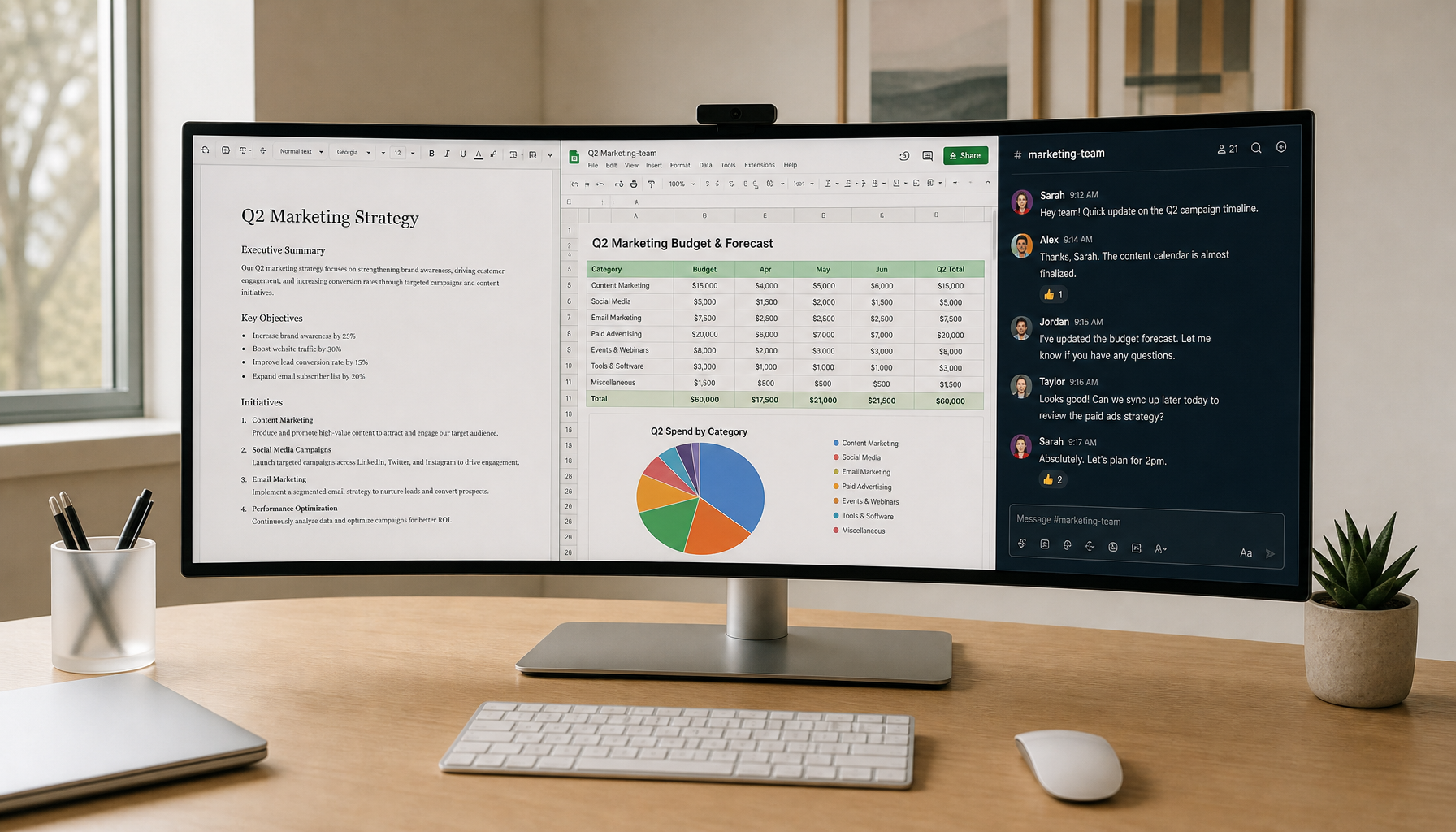
Mini-LED vs OLED color accuracy comes down to workflow fit, not a universal winner. For design work, the safer choice is the panel family that gives you predictable whites, stable calibration behavior, and the least friction in your room and software setup. If you mainly do print matching or client review, keep the whole display chain in view, not just the panel type. A mini-led monitor can be a strong starting point, but only if the rest of the setup supports it.
What Color-Accurate Design Work Needs
For color-critical work, the baseline is broader than most spec sheets suggest. Professional monitors for color proofing are expected to follow ISO 12646 requirements for softproof monitors, and soft proofing itself depends on the whole display system and viewing environment, not just the panel. That is why Mini-LED vs OLED color accuracy should be judged by repeatability first, then by panel behavior.
The practical question is simple: will the monitor show the same file the same way tomorrow, in the same room, with the same preset? Display color drift over time can happen as light output, white point, and gamma shift with heat, aging, and settings. Color temperature changes white balance because it changes the white point your eyes adapt to. That means the first check is not "Which panel looks richer?" It is "Which setup is easiest to keep neutral?"
If your work depends on repeatable print matching, favor the monitor that is easiest to calibrate and keep stable. If your desk has changing light or shared viewing, favor the monitor that stays predictable across sessions. If a display only looks impressive in a showroom preset, it is usually not the safest design monitor.
Mini-LED and OLED Behave Differently
Mini-LED and OLED can both look excellent, but they reach that result in different ways. OLED's self-emissive pixels can produce very deep blacks, while Mini-LED uses a backlight with local dimming zones to manage contrast. For designers, that difference matters because a dramatic image is not the same thing as a trustworthy one.
In practice, Mini-LED often feels more controlled in brighter rooms because it has more brightness headroom, while OLED can feel more uniform in dark scenes and controlled lighting. That does not make either family automatically more accurate for design. It just changes what you notice first when you are editing a layout, proofing an image, or comparing neutrals on a white canvas.
Consistency matters just as much as contrast. A display can have strong blacks and still be annoying for brand work if the image changes across the screen or across seats. For shared review or layout work, the better panel is the one that keeps edges, whites, and midtones more predictable in your actual viewing position. All-Mini-LED Monitors can be a useful browse path if you are comparing that family against OLED options.

Specs That Matter for Design Buyers
When you compare Mini-LED vs OLED color accuracy, treat specs as clues, not proof. A spec can narrow the field, but it cannot tell you whether the monitor will stay neutral in your workflow.
| Spec | Why It Matters | What To Check Before Buying |
|---|---|---|
| ΔE / calibrated color error | Lower error can indicate closer color rendering for professional work. | Check whether the value is factory-calibrated or only quoted in a best-case mode. |
| Gamut coverage | Shows how much of a color space the monitor can display. | Make sure the claimed gamut matches your app and output needs. |
| Gamut volume | Can suggest how far colors may extend beyond a reference space. | Wider is not automatically better if your workflow is not color-managed. |
| Brightness | Helps in brighter rooms and under overhead lighting. | Verify whether the brightness claim is typical, peak, or tied to HDR mode. |
| Contrast | Affects perceived depth and shadow separation. | Do not treat higher contrast as proof of better design accuracy. |
| White point / color temperature | Strongly affects how neutral whites and grays appear. | Confirm the preset you will actually use, not just the factory mode. |
| Stand adjustability | Helps you keep a consistent eye line and viewing angle. | Check height, tilt, and swivel if you review work with others. |
A useful rule of thumb is that wide-gamut displays need more workflow discipline, not less. Wide color gamut challenges can show up if software, presets, and export settings are not managed carefully. So when a monitor advertises strong color coverage, ask what that means for your actual apps, not just for the spec table.
How Mini-LED and OLED Fit Creator Workflows
The safest panel choice changes with the job. Soft proofing certified systems are evaluated as a monitor, calibration software, and viewing environment together, which is a good reminder that panel type is only one variable. That matters a lot when you compare creator workflows.
For print matching and soft proofing, a Mini-LED monitor can be a practical fit when you work in a controlled room and keep calibration habits consistent. A good example is the KTC H27P3, which is factory-calibrated to ΔE<2 and lists 100% sRGB, 99% DCI-P3, and 99% Adobe RGB. Those facts make it a useful creator reference point, but they do not replace your own workflow checks. The real question is whether your preset, software, and room stay stable.
For shared client review, either panel family can work if the model stays consistent at your seating distance and lighting. This is where Mini-LED often feels calmer: it can offer more brightness headroom for rooms with daylight or overhead lighting, which may help when several people are viewing the same screen. OLED can still be strong in controlled lighting, but it is more sensitive to how the desk is used.
For mixed-use desks, OLED deserves more caution. OLED burn-in risk matters more on mixed setups because static toolbars, menus, timelines, and long UI exposure raise the practical risk. That does not mean OLED is a bad design monitor. It means the safer choice depends on how often your workspace stays on the same screen for hours.
If your day includes static interfaces and long sessions, this is the clearest break point: choose Mini-LED if you want the more conservative fit, and only choose OLED if you are comfortable managing habits, dimming behavior, and screen care. If you mostly do short creative sessions in a controlled studio, OLED can be reasonable; if the desk is part design station and part all-day utility monitor, Mini-LED is usually the calmer option.

A Practical Choice Framework
Use this checklist before you buy a design monitor.
- Define the main job. If it is print matching or client review, prioritize stability, white point control, and calibration support.
- Check the room. Bright rooms and shared viewing tend to favor the panel that stays more usable without constant adjustment.
- Look at static content. If toolbars, menus, or timelines stay on-screen most of the day, treat OLED more cautiously.
- Verify preset control. Make sure you can use the color mode you actually plan to keep, not just a demo preset.
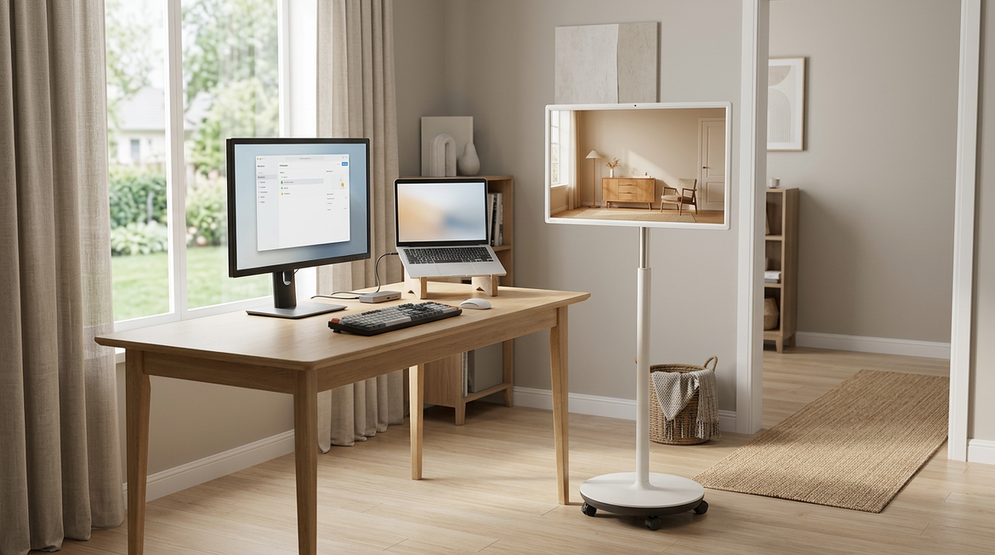
- Confirm the physical setup. Stand adjustability, connectivity, and desk fit matter because poor positioning can make any panel look less consistent.
If you want a browsing shortcut, start with office monitors for creators or compare Mini-LED options first. For many designers, the right answer is not "Mini-LED or OLED always." It is "Which one is easier to keep predictable for my actual workflow?"
FAQs
Can Mini-LED Be Accurate Enough for Print Matching?
Yes, if the exact model supports stable calibration and you keep the workflow controlled. Mini-LED can be a solid fit for print matching when you care about repeatable whites, consistent presets, and a room that does not change much. The monitor still needs validation in your own software chain.
Does OLED Always Look More Color Accurate to Designers?
No. OLED can look very vivid and strong in contrast, but that does not automatically make it more accurate for design work. White point, calibration, and the exact implementation still matter more than the panel family alone.
How Often Should a Color-Critical Monitor Be Recalibrated?
Recalibrate periodically rather than treating the first setup as permanent. The safe habit is to check stability over time, because color can drift as the display ages, warms up, and changes settings. The exact interval depends on your workload and how strict your output needs are. If you want a deeper refresher, panel color drift over time explains why a screen can look neutral at first and change later.
What Matters More Than Gamut Coverage for Design Work?
Usually consistency does. Gamut is useful, but it is only one part of the picture. White point, calibration discipline, viewing environment, and how the software manages color often matter just as much for day-to-day accuracy.
Can a Mixed Work-And-Play Desk Still Use OLED Safely?
It can, but it needs more care. If your desk shows static interfaces for long periods, OLED demands better habits than Mini-LED. If you want a lower-maintenance setup, especially for a primary work monitor, Mini-LED is usually the more conservative pick. For more context, OLED burn-in risk is worth reading before you choose.
Final Takeaway
Mini-LED vs OLED color accuracy for design work is really a choice about control. If you need the calmer, lower-friction path for mixed use, bright rooms, or long static UI sessions, Mini-LED is usually the safer bet. If you work in a controlled environment and can manage calibration and screen habits carefully, OLED can still be a good fit. Pick the panel family that is easiest to keep predictable, not just the one that looks most dramatic in a demo.