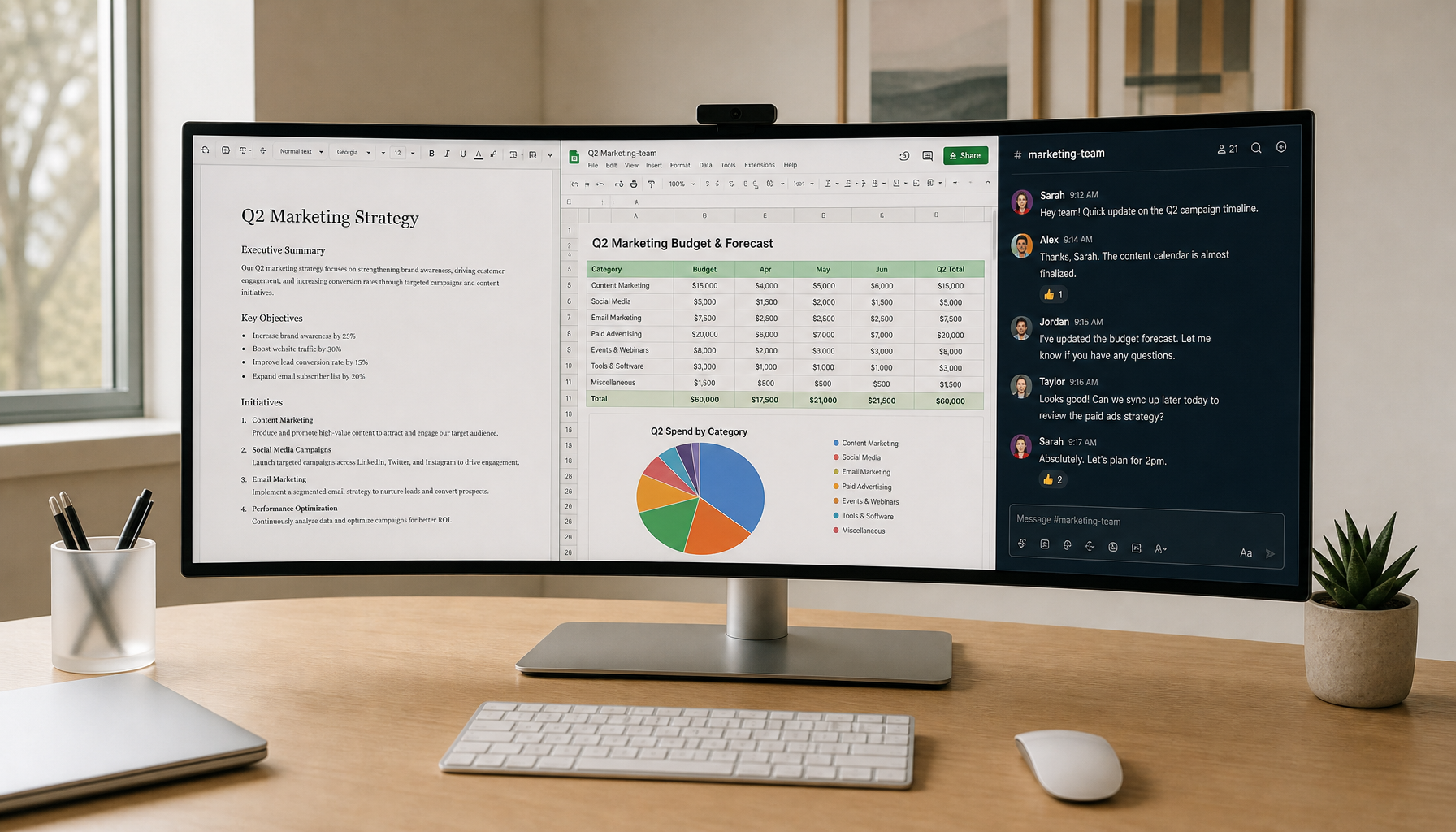
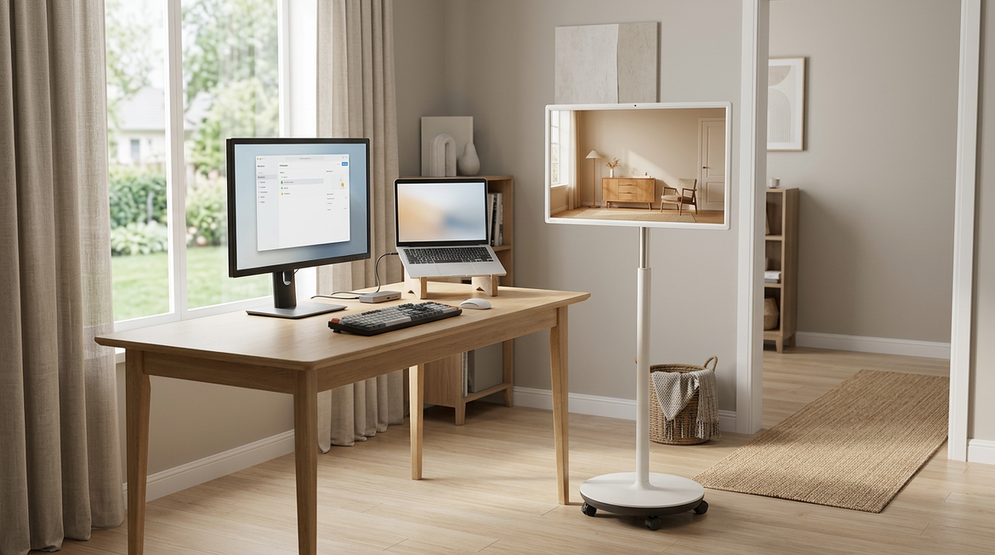
A Matter 2.0 smart display hub is most useful when the screen needs to follow the household, not stay locked to one wall. If your control point has to move between rooms for cameras, energy checks, and appliance control, a rolling display is the better fit. If one spot works for almost everything, a wall tablet is usually simpler.
Why a Rolling Hub Changes Daily Control
The main difference is not the screen itself, but where control happens. A rolling display can move to the kitchen, living room, or home office, so the dashboard follows the routine instead of interrupting it. A wall tablet stays ready in one place, which is useful when the home already has a fixed command point.
For most households, the rolling format matters most when the same screen has to support different tasks through the day. That can make quick checks feel less awkward, because the screen is near the person making the decision. Matter is an interoperability standard for smart home devices across ecosystems, but that does not mean every display behaves the same in a real home setup. Devices can connect directly without brand-specific hubs in supported ecosystems.
The decision sentence is simple: if your home control naturally shifts between rooms, a mobile dashboard is usually the better fit; if your control habit is anchored to one wall, mobility adds less value. That boundary matters more than the label on the box.

Rolling Hubs vs. Wall Tablets
The trade-off is mobility versus permanence. A rolling hub is easier to bring to the place where the decision is happening. A wall tablet is easier to leave alone and ignore once installed.

| Format | Mobility | Setup Friction | Power Routine | Best Fit | When It Breaks Down |
|---|---|---|---|---|---|
| Rolling hub | High | Lower than wall mounting | Needs charging or power planning | Shared spaces, room-to-room control, temporary work zones | If it rarely leaves one room, the mobility is wasted |
| Wall tablet | Low | Higher if mounting or cable routing is involved | Usually simpler once installed | Fixed entry points, always-ready control, stable viewing spot | If the household wants flexibility across rooms |
That table is easiest to use as a filter. Choose the wall tablet if you want a set-and-forget location and do not want to think about charging. Choose the rolling hub if the screen should travel with the task. The Matter monitor integration guide is useful background if you are still deciding whether your home-control setup should stay fixed or move with you.
The hidden trade-off is that mobility reduces wall-installation commitment, but it also adds power management. In other words, the convenience of moving the display comes with one more thing to remember.
Where the Rolling Hub Fits Best
A rolling hub fits homes where the control screen is shared, moved, and glanced at in different contexts. It is less about living with a big display and more about using one interface in the right room at the right time.
Kitchen and Meal-Time Oversight
In the kitchen, a movable dashboard is helpful when you want to check timers, cameras, or appliance status without walking back to a fixed wall panel. That does not make it essential, but it can reduce repeated app switching during busy routines.
Living Room and Family Sharing
Shared living spaces are often the clearest fit. A rolling screen can move close to the couch for family controls, then roll away when the room shifts back to entertainment. That works best when several people need to see the same information at a glance.
Home Office and Temporary Work Zones
A movable display also helps when the office is not permanent. If a desk area changes through the day, the screen can move with the workspace instead of forcing the workspace to adapt to the screen.
Energy, Security, and Appliance Check-Ins
These categories benefit from context. If the home is discussing solar output, checking door cameras, or reviewing appliance status, a screen nearby is easier to share than an app hidden on a phone. That is where a rolling command center can feel more natural than a fixed tablet.
If you want a product path rather than a general category, the Mobile Touch Screen collection is the most direct browsing starting point. For a larger screen that moves well in shared spaces, the KTC MEGAPAD 32" 4K Android 14 Google EDLA Smart Touch Monitor with 8550mAh Battery is the closest match to that room-to-room use pattern. Use it as a navigation target, then verify whether the size and power routine suit your rooms.
A rolling hub is a better fit when the screen moves at least a few times a day or when multiple rooms need occasional access. If it mostly stays put, you are paying for flexibility you may never use.
Power, Connectivity, and Reliability Checks
Before buying a battery-powered command center, check the ownership friction, not just the spec sheet. The battery, network, and room layout all affect whether the device feels convenient or annoying.
- Confirm the charging routine first. A rolling screen still needs a dependable place to recharge, and that is usually what determines whether it stays in use.
- Check the room coverage where you plan to roll it. If the Wi-Fi is weak in one area, the screen may be mobile but not reliably connected.
- Verify the home-control apps and ecosystem support you actually need. Matter support can reduce brand lock-in in supported setups, but device behavior still depends on the wider system.
- Match the display size to the rooms, not just the product page. A screen that looks perfect on paper can feel oversized in a narrow hallway or too small across a larger living room.
- Decide whether wired input matters. Some households mainly use apps; others want HDMI or USB-C for mirrors, media, or shared work.
The battery claims on MegPad-class devices show why this check matters. The 32-inch 4K Android 14 model lists a built-in 8550mAh battery, while the 27-inch FHD model lists a 9500mAh battery and built-in wheels for room-to-room use. Those features support mobility, but they do not replace a good charging plan.
A practical rule of thumb: if you need the screen to stay active for long stretches in different rooms, battery-backed flexibility helps; if the screen lives near one outlet most of the time, a fixed panel may be less hassle.
Choosing the Right Form Factor
Start with routine, not hardware. The best form factor is the one that fits how the home actually works.
- Decide where the main control point belongs. If one room already serves as the household hub, a wall tablet may be enough.
- Check whether the screen must move. If it should follow people between rooms, a rolling hub makes more sense.
- Match the power model to usage. Battery-backed mobility solves a different problem from always-on convenience.
- Weigh installation tolerance. If wall drilling, cable routing, or permanent placement feels like a burden, a rolling display removes that hurdle.
- Check viewing distance and angle. A larger screen is not automatically better if the room layout makes it awkward to use.
The right decision sentence is this: choose the rolling form factor when the screen has to move with the day, and choose the wall tablet when the screen should disappear into the background after setup. The recommendation flips only when the household uses one room as a consistent command center.
For readers comparing formats, the Smart Monitor collection is a useful contrast point because it represents the fixed, 4K smart-monitor side of the decision. That comparison helps clarify whether you want a permanent display or a mobile one.
If you are still unsure, ask a simple self-check question: would you actually carry the screen to another room more than once a day? If the answer is no, the rolling option is probably more novelty than utility.
A Simple Setup Checklist
- Pick the primary room and a secondary room before purchase, so the display has a clear path instead of becoming a floating object with no home.
- Decide which dashboards deserve priority, such as cameras, energy views, or family controls, so the home screen stays useful.
- Confirm the charging spot before the first week ends, because a mobile display without a charging habit becomes dead weight.
- Keep the interface simple enough that anyone in the house can read it at a glance.
- Revisit whether a wall tablet would have been simpler if the screen rarely leaves one room.
A rolling command center works best when the home already has a routine for it. If the device needs to invent that routine for you, the wall option is usually the calmer choice. For a closer look at one supported mobile model, the KTC MEGAPAD 25" FHD Google EDLA Portable Touch Monitor built in Camera is a compact navigation option, while the KTC MEGAPAD 32" 4K Android 13 Google EDLA Smart Touch Monitor with 9500mAh Battery is a larger room-to-room option.
FAQs
Q1. How Does a Rolling Smart Display Differ From a Wall Tablet?
A rolling smart display moves with the household, so it can follow daily routines across rooms. A wall tablet stays in one location and is easier to treat as a fixed control point. The biggest difference is not the interface, but whether the screen is meant to travel or stay put.
Q2. What Should I Check Before Buying a Matter 2.0 Smart Display Hub?
Check ecosystem support, charging habits, room coverage, and whether the display will move often enough to justify mobility. Do not assume every device behaves the same just because it fits the Matter category. The wider home setup still determines how useful the screen feels day to day.
Q3. Can a Battery-Powered Display Replace a Fixed Control Panel?
It can, but only if the display is easy to charge, visible in the rooms you care about, and used often enough to justify the added mobility. If it stays in one place most of the time, a fixed panel may be simpler and less demanding.
Q4. Why Does Room-To-Room Movement Matter for Smart Home Control?
Room-to-room movement matters because it lets the screen sit near the place where decisions are being made. That makes it easier to check cameras, energy data, or appliance status in context. In shared homes, that convenience often matters more than another app layer.
Q5. Can I Use One Dashboard for Energy, Security, and Appliances?
Yes, one dashboard can be useful for all three, but the real question is whether your devices and apps are actually supported. A single screen only helps if it gathers the controls you already use. If it adds app juggling, it stops being a shortcut.
When a Wall Tablet Is the Better Call
A wall tablet is the better choice when the home already has a stable control spot, when no one wants to think about charging, and when wall mounting is acceptable. The rolling hub wins on flexibility, but that is not always the goal. If your routine is fixed, the fixed solution is often the better one.
Consider these checks before committing: confirm the primary viewing angle stays comfortable after mounting, verify that cable routing will not cross doorways, and test whether family members actually glance at a fixed screen during daily movement. A wall tablet also suits households that prefer zero daily maintenance and already rely on voice commands or phones for most adjustments.
A Matter 2.0 smart display hub decision ultimately comes down to whether mobility adds daily value or simply extra steps.