HDR can feel more comfortable when it is calibrated, matched to room lighting, and used for the right content, but it can feel harsher than standard brightness when bright highlights, dark rooms, or always-on HDR force your eyes to keep adapting.
Do your eyes feel fine during spreadsheets, then tense up when a game cuts from a dark tunnel to a glowing skybox? A practical fix is simple and testable: keep desktop work near a comfortable SDR brightness, then enable calibrated HDR only for HDR movies, games, and creative review. You’ll learn when HDR helps, when it hurts, and how to tune your screen so immersion does not come at the cost of eye comfort.
HDR vs. Standard Brightness: What Actually Changes?
Standard brightness usually refers to SDR, or Standard Dynamic Range, the display mode used by most office apps, web pages, documents, spreadsheets, and older games. HDR, or High Dynamic Range, expands the visible distance between dark shadows and bright highlights, so reflections, fire, sunlight, neon, and explosions can look more realistic and dimensional.
That wider range is the point of HDR. Professional display guidance treats HDR displays as tools that need measured luminance, black level, contrast, color tracking, and calibration, with prosumer HDR displays starting at 600 nits peak luminance and reference workflows calling for at least 1,000 nits peak luminance in controlled evaluation conditions via measured luminance. That does not mean your whole screen should blast at 1,000 nits all day. It means the display can reserve extra brightness for short highlight moments.

The comfort difference comes from adaptation. In SDR productivity work, your eyes usually handle a steadier brightness range: white document backgrounds, gray app panels, and relatively predictable contrast. In HDR, your pupils and visual system may be asked to jump between near-black scenes and sharp highlights. That is visually exciting for a racing game at night or a cinematic movie, but it can be fatiguing during long sessions if the room is dark or the HDR tone mapping is aggressive.
Why HDR Can Feel Harsher on the Eyes
HDR does not automatically damage your eyes, and brightness alone is not the full story. The common discomfort pattern is repeated contrast shock. A dark game scene followed by a white HUD flash, subtitle, muzzle flare, or sunlit doorway can feel more intense than the same scene in SDR because HDR preserves more highlight energy.
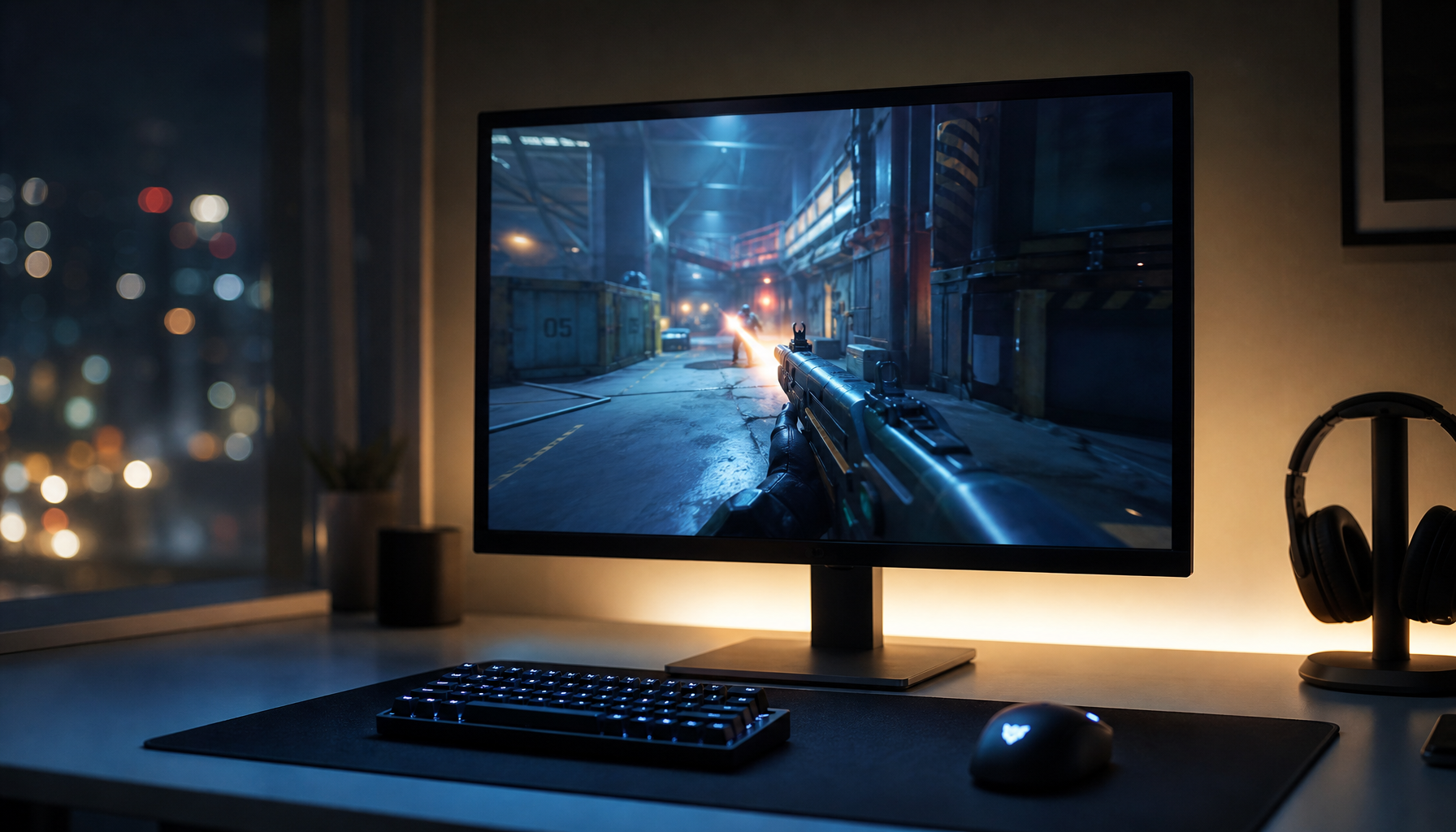
Dark rooms amplify the problem. When the room is dim, your pupils open wider, so bright HDR elements hit harder. Eye-care workstation guidance consistently warns against using a bright screen as the only light source because the eyes work harder when the display and room are badly mismatched; balanced room lighting and reduced glare are central recommendations in balanced room lighting. For a practical example, a 27-inch monitor in a dark bedroom showing a black game menu with a bright white logo can feel more uncomfortable than the same screen in a softly lit room, even with identical monitor settings.

HDR can also expose weak setup choices. A monitor left in a showroom-style preset may push high brightness and punchy contrast because it looked impressive on a shelf, not because it supports eight hours of coding or document work. For productivity, standard brightness often wins because it is easier to keep steady, readable, and predictable.
Use Case |
HDR Comfort Result |
Better Default |
Long writing, spreadsheets, coding |
Often harsher if whites are too bright or tone mapping looks odd |
SDR with matched room brightness |
HDR movies and story games |
Often more immersive when calibrated |
HDR with controlled ambient light |
Competitive gaming |
Mixed; visibility and response usually matter more |
SDR or tuned HDR, based on title |
Photo or video review |
Useful when the content is HDR |
Calibrated HDR with known targets |
Portable smart screen use at night |
Can feel intense in a dark room |
Lower brightness, warmer tone, soft room light |
When HDR Can Improve Comfort
HDR can improve comfort when contrast is used for clarity instead of raw intensity. Better shadow detail can reduce squinting in dark scenes, and controlled highlights can make images feel more natural. Accessibility guidance notes that HDR is not a resolution standard; it is a display capability that can show a wider range of brightness, tones, and colors, which may improve perceived contrast for some users through more tonal variation.
The key phrase is “for some users.” A person who runs SDR at 10% brightness may find HDR uncomfortable even at modest settings, while another person may prefer HDR because it gives clearer depth and less muddy shadow detail. Discussions around HDR eye strain repeatedly show this split: some users enjoy the realism, while brightness-sensitive users report discomfort when HDR content or system behavior pushes highlights too hard.
A good real-world test is a dark HDR game with a calibration screen. Set the black point so near-black detail is barely visible, then lower peak brightness until clouds, snow, lamps, or UI panels keep detail instead of turning into flat white glare. If the picture loses drama but your eyes relax within a few minutes, your previous setting was built for impact, not comfort.
The Best Settings for Office Work, Gaming, and Smart Screens
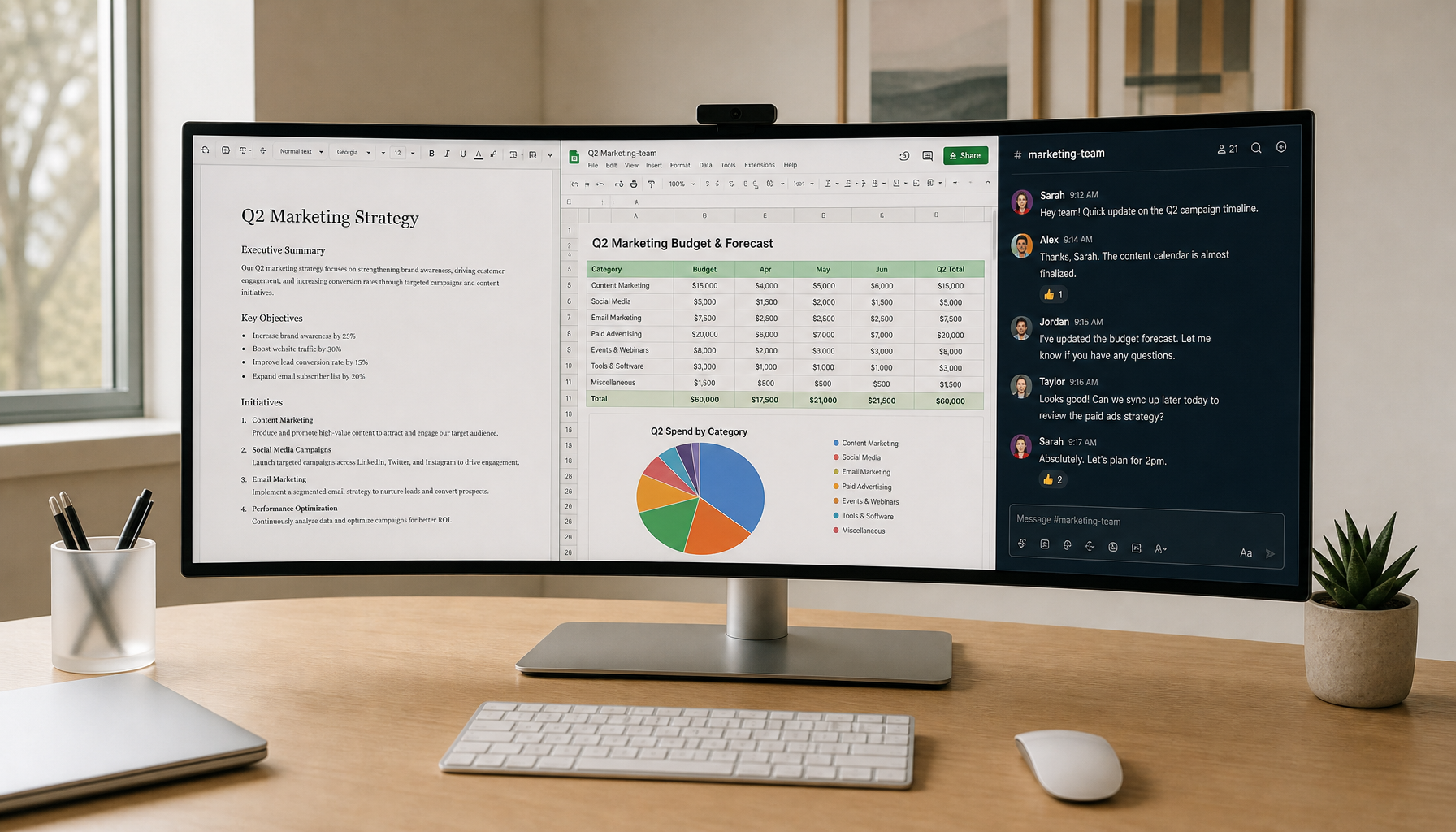
For office productivity displays, keep SDR as the default unless you are reviewing HDR media. The most reliable comfort target is not “maximum brightness,” but brightness that visually matches the room. Workstation recommendations commonly place the monitor about 20 to 28 inches from the face, with the top of the screen at or slightly below eye level, which reduces both visual and posture strain through 20 to 28 inches.
For a typical home office, use the paper test. Place a white sheet of paper beside a white document on screen. If the screen looks like it is glowing compared with the paper, lower brightness. If it looks dull gray and hard to read, raise it. This is not lab calibration, but it is a fast comfort check that works across gaming monitors, office displays, and portable screens.

For HDR gaming, do not treat the monitor’s peak brightness number as a comfort target. A 1,000-nit-capable Mini-LED or OLED monitor is valuable because it can render brief highlights, not because every menu, subtitle, and desktop window should feel like a flashlight. Run the in-game HDR calibration, avoid clipping white detail, and consider lowering HUD brightness or subtitle brightness when the game offers those controls.
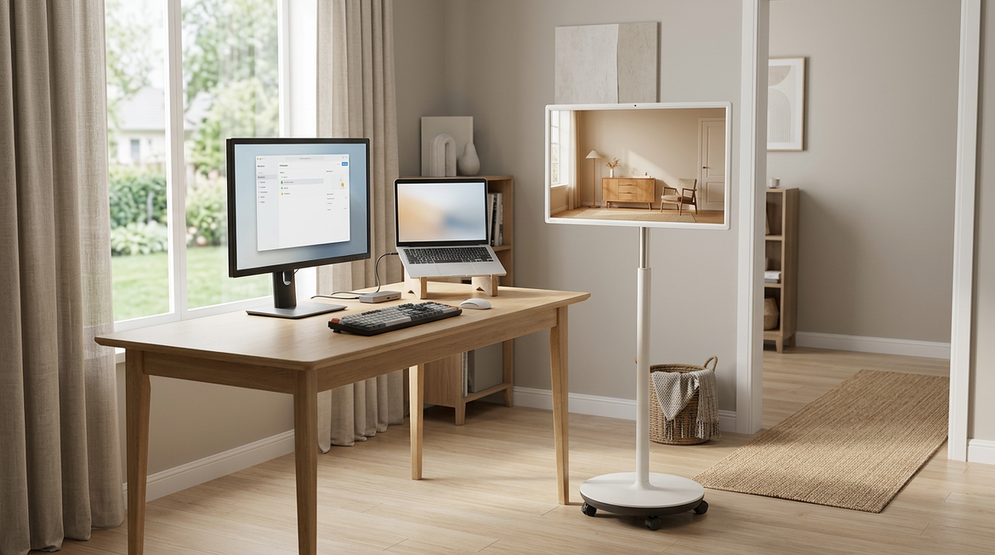
For portable smart screens, the room changes constantly, so comfort settings must change too. A screen that looks balanced in a bright kitchen can feel piercing on a nightstand. Use lower brightness at night, warmer color temperature when color accuracy is not critical, and avoid placing the screen where it reflects lamps or windows.
Don’t Ignore Flicker, Glare, and Breaks
HDR gets the blame for many comfort issues, but the real cause may be glare, flicker, dry eyes, or viewing distance. Eye comfort evaluations often look at factors such as blue light filtering, flicker perception, brightness behavior, and color consistency, which is a useful reminder that display comfort is multi-factor, not just an HDR on/off decision through blue light filtering.
Flicker sensitivity matters because some displays dim using pulse-width modulation, which rapidly modulates the backlight or pixels. Even when you do not consciously see flicker, it can contribute to fatigue for sensitive users. If your eyes hurt at low brightness but feel better at medium brightness, flicker behavior could be part of the issue.
Breaks still matter on premium displays. The 20-20-20 rule remains a practical baseline: every 20 minutes, look about 20 feet away for at least 20 seconds. That habit relaxes close-focus demand, which HDR calibration cannot solve. If you are deep into ranked play or a long editing timeline, pair the rule with natural pauses such as match queues, render previews, or meeting transitions.

Pros and Cons of HDR for Eye Comfort
HDR’s biggest comfort advantage is better visual separation when it is tuned well. Dark areas can retain detail, bright effects can look less flat, and cinematic content can feel more natural. For gaming and media, that can reduce the urge to squint into crushed shadows or over-brightened SDR scenes.
The downside is volatility. HDR can create larger brightness swings, make dark-room highlights feel aggressive, and cause desktop SDR content to look strange when HDR is left on all the time. HDR behavior also varies by display, laptop, cable path, graphics driver, and content app. Setup guidance notes that HDR and SDR brightness balance behaves differently on laptops versus external displays, and room lighting should guide brightness choices through HDR and SDR brightness balance.
The practical answer is selective HDR. Use SDR for reading, writing, spreadsheets, coding, email, dashboards, and most office workflows. Use HDR for HDR-native games, movies, console play, and creative review. That gives you immersion where it pays off and stability where your eyes need endurance.
FAQ
Is HDR always worse for eye comfort than SDR?
No. HDR is not automatically worse. It becomes uncomfortable when peak brightness, contrast swings, room darkness, glare, or poor calibration overload your visual comfort. A calibrated HDR movie in a softly lit room can feel better than an over-bright SDR display in a dark room.
Should I leave HDR on all day?
For most people, no. Always-on HDR can make normal desktop content feel too bright, oddly toned, or inconsistent. SDR is usually the better daily driver for productivity, while HDR should be enabled intentionally for content that was made for it.
What is the fastest comfort fix?
Lower desktop brightness until white screens no longer glow against your room, add soft ambient lighting behind or around the monitor, and keep the screen roughly 20 to 28 inches away. For HDR games, rerun the HDR calibration and reduce peak brightness until bright detail is visible without making you tense up.
HDR is a performance feature, not a comfort guarantee. Treat it as a setting to match with the content, room, and task: powerful when those pieces line up, tiring when it runs at full intensity for the wrong job. For the best mix of immersion and endurance, keep SDR stable for work and let calibrated HDR shine only when the scene deserves it.