Edge-lit backlighting favors thin, efficient, lower-cost displays, while direct-lit backlighting usually improves brightness uniformity, dark-scene control, and HDR impact. The right choice depends less on the label and more on screen size, dimming design, room lighting, and the work or games you run most.
Ever notice a bright glow along the edge of a monitor during a dark game, or a gray patch across a spreadsheet that should look clean white? A few simple checks, such as viewing a black screen in a dim room and a full-white document in normal office lighting, can reveal backlight weaknesses before they become daily annoyances. This guide explains what each backlight type changes, where each one wins, and how to choose without overpaying for the wrong spec.
The Core Difference: Where the LEDs Sit
An LCD monitor does not create light at the pixel level the way OLED does. It needs a separate backlight to shine through the liquid crystal layer, and that backlight choice affects brightness, clarity, energy use, color consistency, durability, and overall display performance. A practical definition is simple: an LCD backlight is the light source behind or beside the panel that makes the image visible.

Edge-lit displays place LEDs along one or more edges of the screen. A light guide plate and optical films spread that light across the panel. This is why edge-lit monitors can be impressively slim and light, especially in office displays, portable screens, and wall-mounted setups.
Direct-lit displays place LEDs behind the screen in an array. A diffuser spreads the light forward through the LCD panel. Because light starts from behind the image area instead of traveling inward from the edges, direct-lit designs often have a stronger foundation for even illumination. Direct LED displays are not automatically premium, though; LED placement is only one part of the performance story.
Brightness Uniformity: The First Thing You Notice
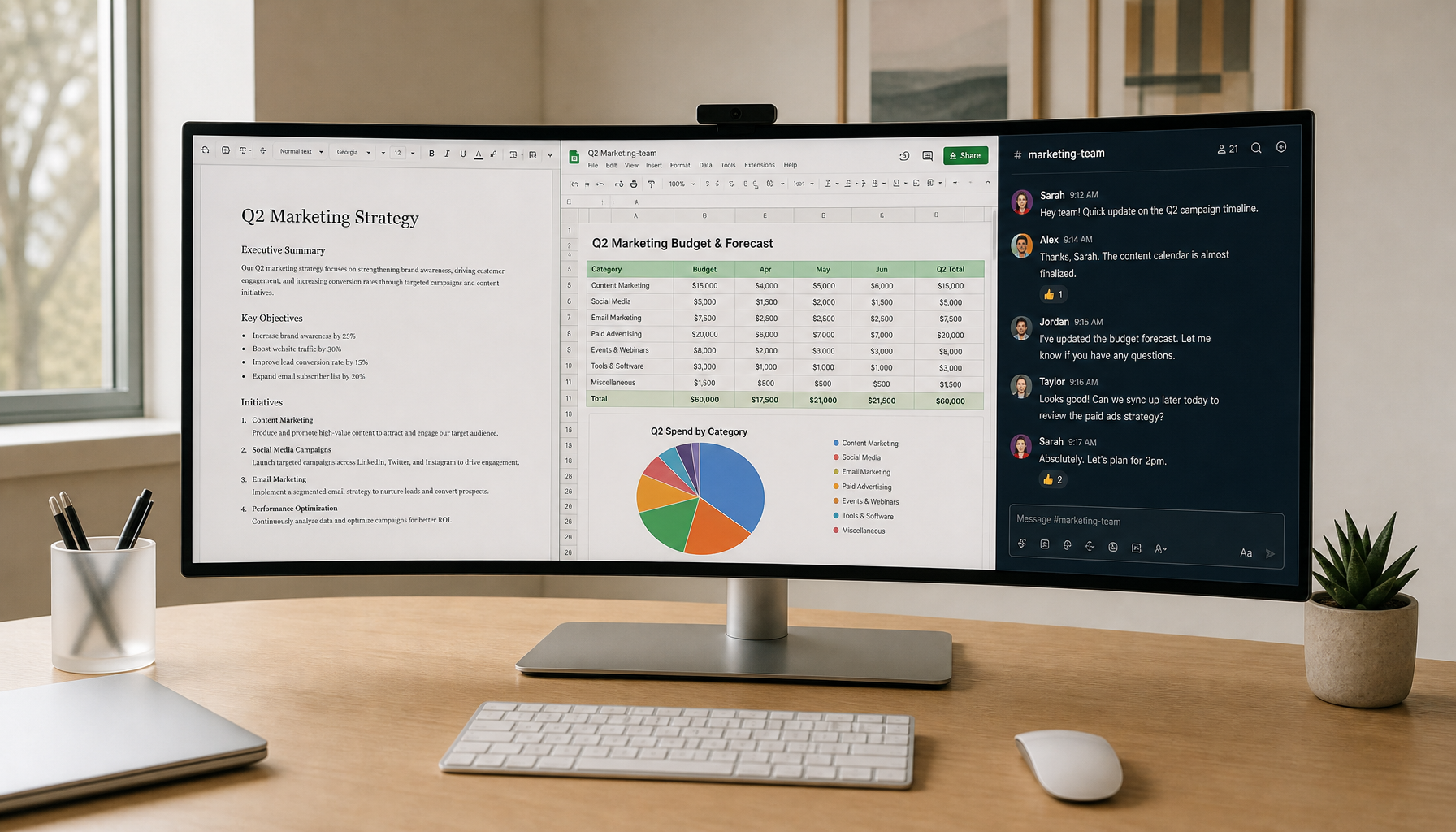
Uniformity is where direct-lit backlighting often shows its value. On a 32-inch productivity monitor, a direct-lit backlight can make a white spreadsheet, code editor, or CAD canvas look more consistent from corner to corner. That matters because uneven brightness quietly changes how your eyes track text, grids, and fine interface details across the screen.
Edge-lit monitors can look excellent in bright rooms, but they are more vulnerable to edge glow, cloudy patches, or a slightly dimmer center because the light has to travel across the panel. The impact grows with size. A 24-inch edge-lit office monitor may look perfectly acceptable, while a 43-inch edge-lit display used as a workstation can reveal uneven illumination more clearly.
For buyers comparing displays in a store or return window, the fastest test is a blank white document at your normal working brightness. If one side looks warmer, dimmer, or blotchier, the backlight system and optical stack are not distributing light evenly enough for precision work. Back-lit LEDs are generally associated with more uniform brightness, while edge-lit LEDs are better suited to thin designs.

Performance Factor |
Edge-Lit Backlight |
Direct-Lit Backlight |
Thickness |
Usually slimmer |
Usually thicker |
Weight |
Usually lighter |
Usually heavier |
Brightness uniformity |
More model-dependent |
Often stronger |
Dark-room black levels |
Often weaker |
Often better, especially with dimming |
Power use |
Often lower |
Often higher |
Best fit |
Office, portable, budget, bright-room use |
Immersive gaming, HDR, large screens, visual work |
Contrast, Black Levels, and HDR Impact
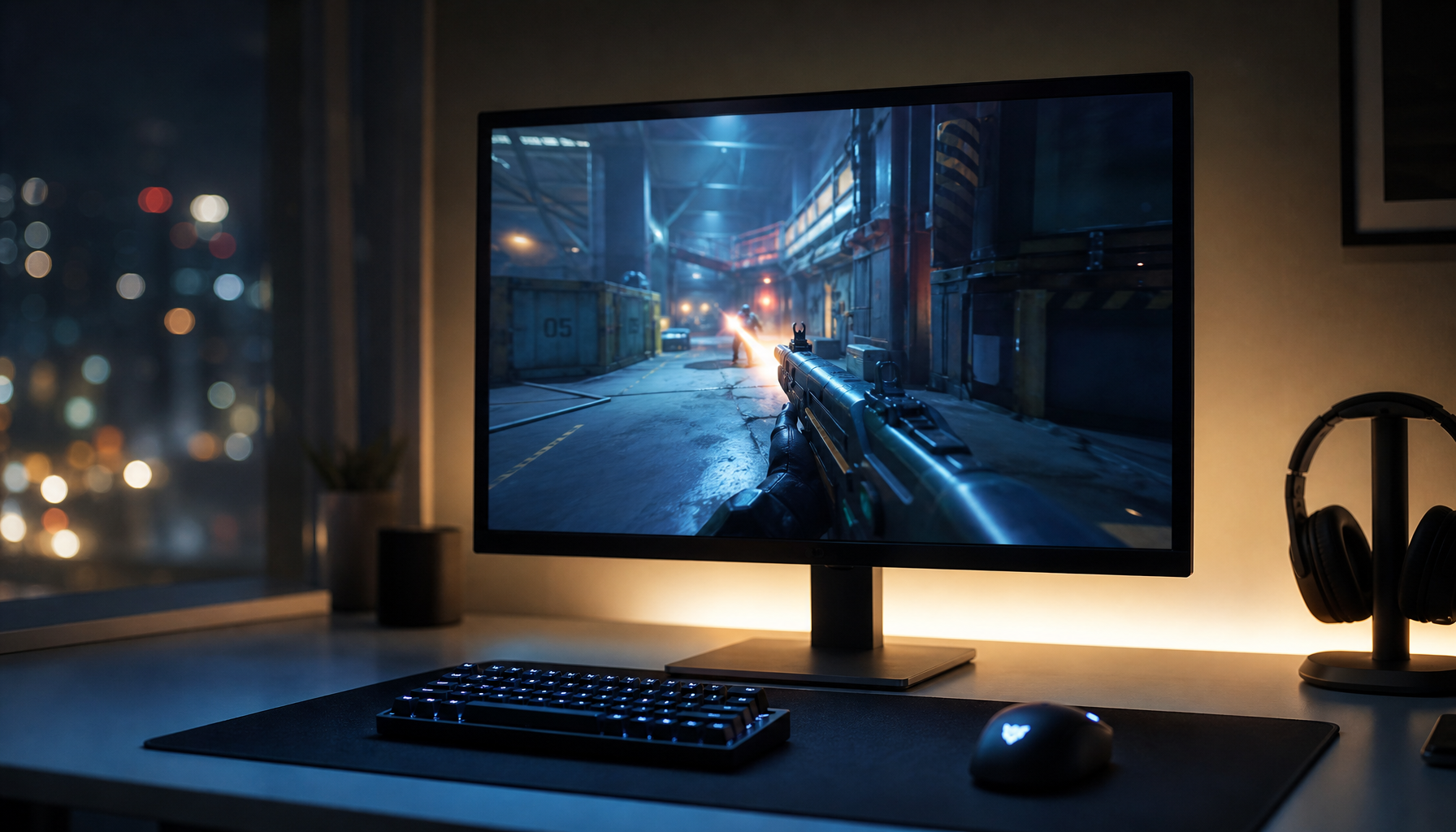
Dark-scene performance is where the gap becomes more visible. In a horror game, space sim, or HDR movie, an edge-lit display may brighten larger areas than intended because the light comes from the sides and spreads broadly. Blacks can look washed out, and bright objects on dark backgrounds may create visible glow.
Direct-lit backlighting gives manufacturers more control because LEDs sit behind the panel. That control becomes much more powerful when the display includes full-array local dimming. Full-array local dimming is a premium form of direct LED design, but not every direct-lit monitor has it. A basic direct-lit display without local dimming may be more uniform than an edge-lit model, yet still deliver only modest black levels.
Mini LED pushes this idea further by using smaller, denser LEDs and more dimming zones. That can make highlights brighter while keeping surrounding dark areas deeper, which is especially useful for HDR gaming and cinematic console play. Still, zone count is not magic. Poor dimming algorithms can cause blooming, pulsing, or distracting transitions, so real-world reviews and hands-on checks matter.

A useful gaming example is a night scene with a bright HUD, torch, or moonlit skyline. On a weaker edge-lit display, the entire lower or side region may lift into gray. On a well-tuned direct-lit or Mini LED display, the bright object can pop while the surrounding shadow keeps depth.
Power, Heat, and Reliability
Edge-lit backlights often use fewer LEDs, which can reduce power draw, heat, and chassis thickness. That makes them valuable for portable smart screens, USB-C travel monitors, and office displays that stay on for eight or more hours a day. In a multi-monitor workstation, even small efficiency gains can matter because heat and power stack up across the desk.
Direct-lit displays may consume more power because they use more LEDs and more diffusion space. They can also run warmer, particularly in high-brightness or HDR modes. Good thermal design matters because LED brightness and lifespan are tied to operating temperature. In demanding display environments, constant-current drivers help maintain stable brightness as LED voltage changes with temperature and manufacturing variation.
The broader LED advantage is strong. LED backlights commonly outlast older lighting methods and avoid some of the fragility and environmental issues associated with CCFL systems. The medical display market is a useful stress test here: portable monitors and emergency devices demand battery efficiency, shock resistance, reliable brightness, and wide operating tolerance, which is why LED systems have become so important in professional hardware.
Color Accuracy and Visual Consistency
Backlight layout does not single-handedly determine color accuracy, but it influences the consistency of what you see. A display can have a wide color gamut and still feel uneven if the backlight has hot spots, corner dimming, or visible clouding. For photo editing, video timelines, and UI design, consistent illumination can be as important as peak brightness.
Optical films and light guides do a lot of the hidden work. Brightness enhancement films redirect recycled backlight toward the viewer, while reflector films improve brightness and energy efficiency by pushing stray light forward. These layers explain why two edge-lit monitors with the same basic LED placement can perform very differently.
For creators, the practical advice is to avoid buying by “edge-lit” or “direct-lit” alone. Look for measured uniformity, color accuracy reports, local dimming behavior, and brightness stability over time. A high-quality edge-lit office display can outperform a cheap direct-lit panel with poor optics, weak calibration, or aggressive dimming artifacts.
Gaming: Refresh Rate Still Matters
For esports, backlight type is not the first spec to chase. Refresh rate, input lag, pixel response, overdrive tuning, and motion clarity often matter more than whether the LEDs sit at the edge or behind the panel. A fast 240 Hz or 360 Hz edge-lit monitor can be a better competitive tool than a slower direct-lit screen with prettier blacks.
For immersive gaming, the priority shifts. RPGs, racing sims, horror games, flight sims, and HDR console titles benefit more from uniformity, highlight control, and darker blacks. That is where direct-lit, full-array, and Mini LED designs become more compelling.
Eye comfort deserves nuance. A forum discussion notes that direct-lit versus edge-lit can correlate with other variables, including LED formulation, anti-glare coating, gloss finish, and polarization behavior. The useful conclusion is not that one backlight type automatically prevents strain; backlight position is only one variable in a larger comfort stack.
Office Productivity and Portable Smart Screens
For office work, edge-lit is often the value winner. Documents, dashboards, email, spreadsheets, and browser-based tools rarely need deep HDR blacks. Slimness, lower heat, lower cost, and efficient brightness are more valuable in everyday productivity than local dimming zones.

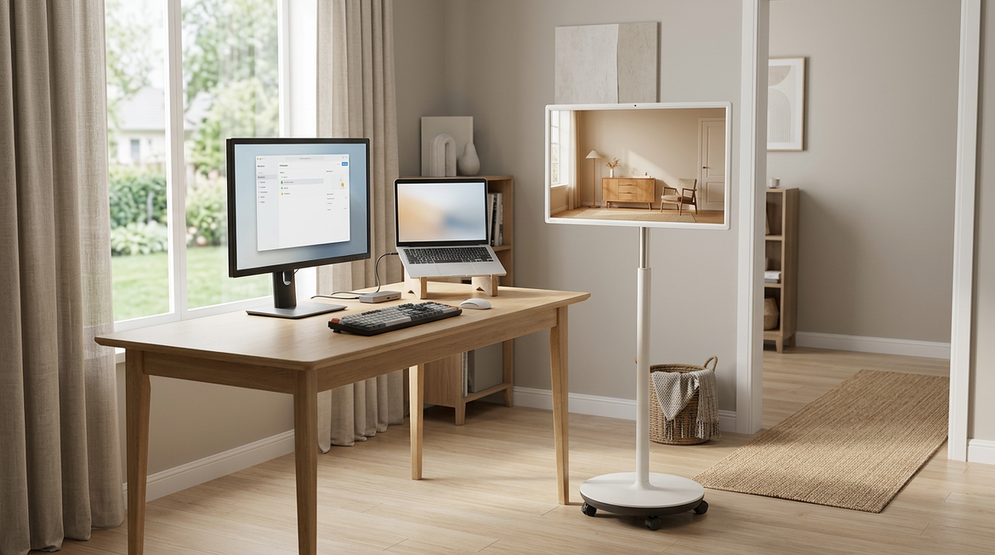
Portable smart screens also lean naturally toward edge-lit designs because weight and thickness matter. A travel monitor that fits beside a laptop should be bright enough for an apartment desk, conference room, or hotel workspace without draining power aggressively. Edge-lit construction helps hit that balance.
Direct-lit becomes more attractive when the screen gets larger or the workspace depends on visual consistency. A 34-inch ultrawide, 32-inch 4K productivity display, or shared office dashboard benefits from stronger uniformity because your eyes scan across a wider surface all day.
How to Choose Without Getting Trapped by Marketing
The most reliable decision starts with use case. If you want a slim, affordable, efficient monitor for office productivity, coding, browsing, and casual gaming, edge-lit is usually a smart buy. If you want stronger dark-scene depth, better large-screen uniformity, and more convincing HDR, direct-lit is the better direction, especially when full-array local dimming or Mini LED is specified.
Be careful with the word “direct-lit.” It means the LEDs are behind the panel, not that the display has premium local dimming. All FALD displays are direct LED displays, but not all direct LED displays include FALD. That distinction matters because a basic direct-lit monitor may improve uniformity without delivering the dramatic contrast people expect from high-end HDR screens.
For a practical buying check, use three real scenes. Test a black image in a dim room to reveal clouding and edge glow. Open a full-white page at your normal work brightness to judge uniformity. Run a dark game or movie scene with bright highlights to see whether the backlight lifts shadows, blooms around objects, or crushes detail.
Pros and Cons in Plain English
Edge-lit is best when the display needs to be thin, light, affordable, and efficient. It is a reliable fit for mainstream office monitors, portable displays, and bright-room setups where black depth is less critical. Its weaknesses are most visible on large screens, dark backgrounds, and HDR content.
Direct-lit is best when you care about uniformity, brightness consistency, dark-scene performance, and a more immersive screen. It is a stronger fit for large monitors, serious entertainment, creative review, signage, and premium gaming. Its tradeoffs are thickness, weight, heat, power use, and price.
The performance-driven answer is simple: buy edge-lit for efficient value and clean daily work; buy direct-lit when image control is worth extra size and cost. For the strongest HDR experience, look beyond “direct-lit” and prioritize full-array local dimming, Mini LED quality, and credible real-world measurements.