Professionals in architecture and video editing often face a trade-off when choosing between curved and flat monitors. While curved screens promise immersion and reduced eye strain through uniform focal distance, they can introduce geometric distortion that affects straight-line accuracy in CAD work or color judgment during final grading. For most architects relying on precise 2D drafting, flat or gently curved (1800R) monitors are the safer choice, while video editors may benefit from ultrawide curved displays for timeline assembly but should pair them with a flat reference monitor for color-critical tasks.
The Curvature Paradox: Why Professional Precision Challenges Curved Displays
The debate around curved monitors for professional work stems from their growing popularity in creative studios. Ultrawide formats in 21:9 and 32:9 ratios have become common for managing expansive timelines and complex project views. Curvature is measured in "R" values, where lower numbers indicate more aggressive curves: 1000R is highly curved, 1500R is moderate, and 1800R is gentle. This creates a core tension between the natural curvature of the human eye and the flat, planar nature of camera sensors and architectural grids used in software like AutoCAD or Revit.
In 2026, advancements in Mini-LED and OLED technology have made curved displays more prevalent, yet they add complexity for precision tasks. The eye's focal plane works best when distances remain consistent, but CAD and editing software assume perfectly flat geometry. This mismatch can lead to subtle perceptual issues that professionals must weigh against productivity gains.
Evaluating Geometric Distortion: When Does Curvature Break Architectural Accuracy?
Architects and drafters frequently ask whether they can trust a curved monitor for CAD and architectural drafting. Technical feedback from professional drafting communities, including Autodesk forums, indicates that aggressive monitor curvature can lead to the perception of 'bowed' lines and distorted 90-degree angles. This potentially compromises visual verification of geometric accuracy in CAD software.
The 1500R to 1000R trade-off reveals a geometric breaking point for 2D drafting. Aggressive curves like 1000R on 49-inch super-ultrawides push screen edges deeper into peripheral vision, heightening the fish-eye risk compared to smaller 34-inch panels. As highlighted in our architectural geometric threshold, 1800R serves as a professional standard for CAD, offering ergonomic focal uniformity without noticeably distorting grid-based work.
This visualization helps clarify the pattern:
Curved Monitor Risk for Precision CAD Work
Risk levels reflect task-fit guidance for 2D drafting and architectural accuracy, using coarse planning tiers rather than measured distortion scores.
View chart data
| Category | 2D Drafting Risk | General CAD / Review Risk |
|---|---|---|
| 1000R | 3 | 2 |
| 1500R | 2 | 2 |
| 1800R | 1 | 1 |
| Flat | 1 | 1 |
Mitigation often involves relying more on coordinate readouts and snap-to-grid tools rather than pure visual estimation. Many professionals adapt over time, but individual sensitivity to distortion varies. This creates a visual trust gap for some users in 2D plan views.

Color, Gamma, and the 'Sweet Spot': Impact on Professional Video Editing
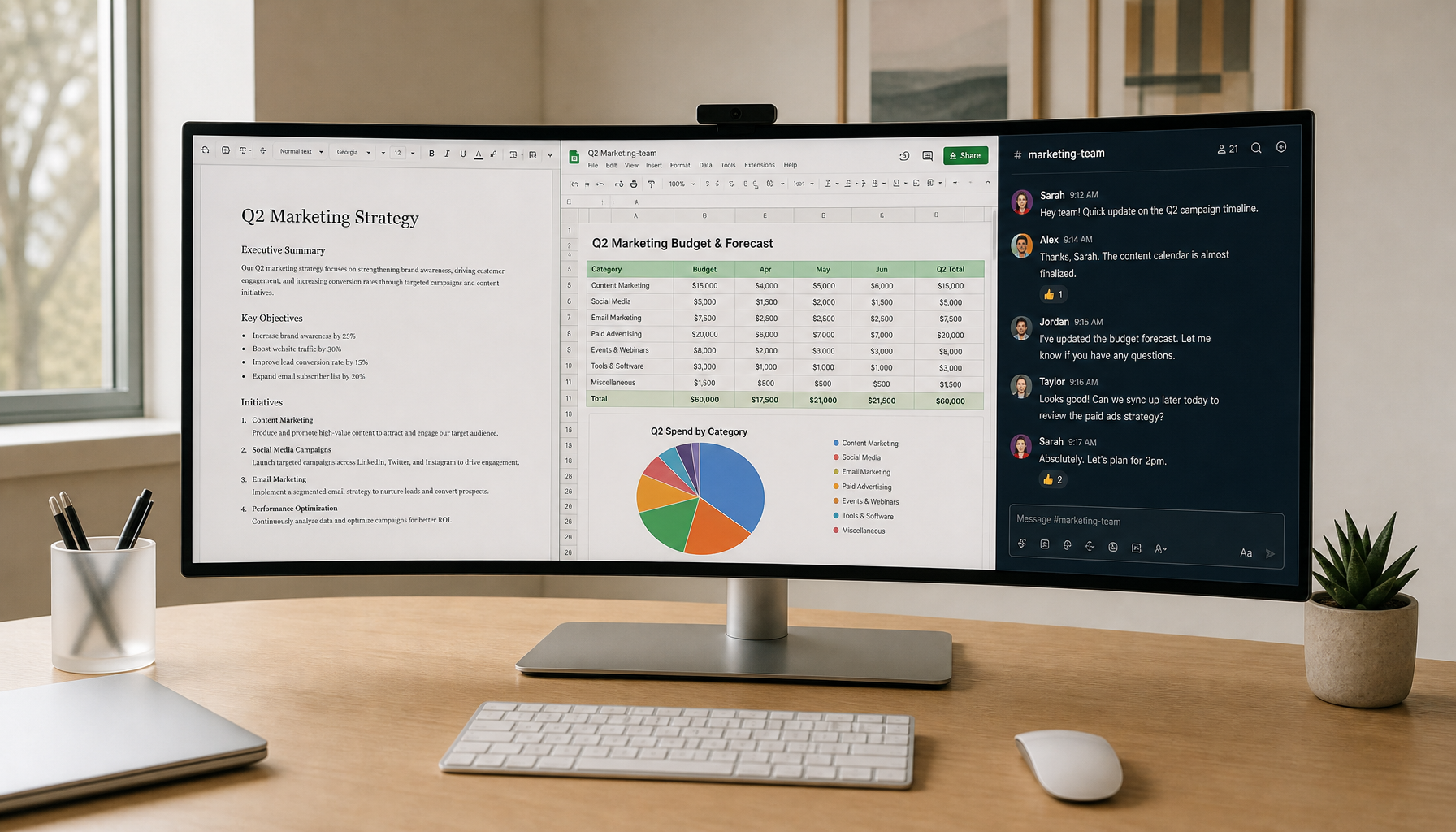
Video editors commonly wonder if a curved monitor suits professional color grading and video editing. Timeline efficiency improves with the extra real estate of curved ultrawides, yet the program monitor demands accuracy. Curvature helps with assembly and multitasking but can introduce perspective-induced shifts that affect final grading.
Curved displays are highly sensitive to the sweet spot. Off-center viewing causes perceived perspective shifts and color inconsistencies, according to professional editor feedback on setups like those discussed in 4K Shooters. VA panels, common in many curved models, have narrower viewing angles that can exacerbate edge saturation issues compared to IPS panels. This creates a perspective tax on skin tones and exposure judgment at frame edges.
For client reviews, curved screens often create friction in multi-person studio sessions, as side viewers see a different color profile. Editors should prioritize IPS or OLED curved options for color-critical work, but many opt for a hybrid setup: curved ultrawide for timeline management paired with a flat reference monitor for grading. Our guide on IPS vs VA panels explores these panel differences further.
Ergonomic Efficiency and Eye Comfort: The Hidden Pro of Curvature
Many professionals ask whether curved monitors actually reduce eye strain during long sessions. Research supports that curvature maintains a uniform focal distance, minimizing the constant refocusing effort required by the eye when scanning a wide workspace, as detailed in a PubMed study on curved versus flat monitors. A related ScienceDirect study on display curvature and visual fatigue confirms benefits for legibility and reduced fatigue during extended use.
This proves particularly valuable for 10+ hour architectural reviews or editing marathons. Curvature also mitigates the washed-out look at the edges of large flat panels by better aligning with the natural field of vision, per analysis from RTINGS. Text-heavy elements within creative workflows, such as code or spreadsheets, often feel more legible.
However, these ergonomic gains depend on proper viewing distance matching the curve radius. Sitting at the optimal distance maximizes benefits while minimizing any distortion trade-offs.
Choosing Your Setup: A Workflow-Based Recommendation for 2026
Determining the right monitor setup requires matching your dominant workflow. The hybrid approach often delivers the best balance: use a curved ultrawide for primary UI and timeline work, then switch to a flat IPS or high-accuracy display for reference and final checks.
For architects spending significant time in 2D plan views, prioritize 1800R gentle curves or flat panels to maintain geometric integrity. Video editors focused on assembly gain productivity from curved ultrawides, but color grading still benefits from a flat secondary monitor.
Check your workflow split first. If over 50% of your time involves precision 2D drafting or client-facing color reviews, lean toward flat or 1800R options. For immersive 3D modeling or timeline-heavy editing, a curved model can enhance efficiency when paired correctly.
Consider these KTC options as starting points aligned with different needs:
- The KTC 49" DQHD 180Hz 1000R Curved Gaming monitor H49S66 offers massive real estate for multitasking but requires caution for precision CAD due to its aggressive curve.
- For color-critical reference work, the KTC 27" 5K@60Hz 2K@120Hz Home&Office Monitor H27P3 provides flat, high-resolution accuracy with excellent color performance.
- A balanced curved choice like the KTC 34" 2K 180Hz/1ms 1500R Curved Gaming Monitor H34S18S suits many creative professionals seeking moderate curvature.
Review your room setup, primary software, and time allocation across task types before deciding. Test in person when possible, as personal sensitivity to curvature varies. Explore more options in our Curved Monitors collection or Office Monitor collection to match your specific requirements.
Frequently Asked Questions
Does Monitor Curvature Affect Color Grading Accuracy? Curvature itself does not directly alter the monitor's color gamut or calibration, but off-center viewing angles on curved displays can cause perceived gamma and saturation shifts. For final color grading, use a flat reference monitor calibrated to industry standards, reserving curved screens for timeline assembly where the productivity gains outweigh minor edge variations.
Are Curved Monitors Suitable for CAD and Revit Work? Gentle curves (1800R) work well for many CAD users by reducing eye strain during long sessions, but aggressive 1000R curves often introduce noticeable line bowing that undermines visual confidence in 2D layouts. Rely on snap tools and coordinates rather than visual alignment when using curved displays for architectural drafting.
What Curvature Radius Is Best for Video Editing? For video editing, 1500R to 1800R offers a practical middle ground that expands timeline visibility while limiting excessive distortion. Avoid using the main curved display as your sole grading monitor; instead, incorporate a secondary flat IPS panel for client reviews and final color decisions.
How Does Viewing Distance Influence Curved Monitor Distortion? Sitting at the exact radius distance for your monitor (roughly 1 meter for 1000R) minimizes perceived distortion. Deviating from this sweet spot increases bowing effects in CAD or color inconsistencies in editing. Measure your typical seating position before selecting curvature strength.
Should Architects Choose Curved or Flat Monitors in 2026? Most architects benefit from flat or 1800R monitors for core 2D and BIM work to preserve geometric trust. Curved ultrawides can supplement 3D rendering or review sessions, but they should not replace flat displays where straight-line accuracy remains paramount.
Can Curved Ultrawide Screens Replace Multiple Flat Monitors? Yes for timeline management and general productivity, where the continuous curve reduces bezel interruptions. However, they cannot fully replace dedicated flat reference monitors for precision tasks like color grading or detailed drafting due to the sweet-spot limitations and potential edge shifts.