For most monitor buyers, 2K-class 1440p looks meaningfully sharper than 1080p, but the gain is easiest to see on the right screen size at normal desk distance, not in every setup.
If you have ever looked at a 27-inch monitor and wondered why one screen makes text look crisp while another looks slightly soft, this is usually the question underneath it. The jump from 1080p to 1440p adds about 78% more pixels, which can clean up text, edges, and desktop detail, but it also raises GPU load and can change which gaming monitor or work monitor makes sense for your desk. What follows will show where the sharpness gain is obvious, where it is modest, and when 1080p is still the smarter buy.
What “2K” Usually Means in Monitor Buying
In monitor shopping, 1440p is commonly sold as 2K, QHD, or Quad HD, while 1080p is Full HD at 1920 x 1080. In practical buying terms, that means you are usually comparing 2,073,600 pixels on a 1080p panel against 3,686,400 pixels on a 1440p panel.
The part that matters in real use is not the resolution label alone. Perceived sharpness depends on pixel density, screen size, and viewing distance, which is why a smaller 1080p gaming monitor can still look acceptably clean, while a larger 1080p monitor can start to show rough edges in text and UI.
For monitor buyers, this is the key reset: 1440p is not magically sharper in every situation. It becomes visibly better when the screen is large enough, or close enough, for your eyes to resolve the extra detail.
Where the Sharpness Difference Becomes Easy to See
Pixel density numbers make the real-world gap much clearer: a 24-inch 1080p monitor sits around 93 PPI, a 27-inch 1080p monitor around 82 PPI, a 24-inch 1440p monitor around 123 PPI, and a 27-inch 1440p monitor around 109 PPI. That is why 27-inch 1440p monitors are such a common sweet spot for gaming monitors and mixed-use desktop displays.
Viewing distance changes how visible that extra sharpness feels. Guidance from a platform cited there targets roughly 24 to 36 inches for 27-inch screens, and workplace-style desktop guidance lands around 20 to 40 inches. At those distances, the jump from 1080p to 1440p is usually easy to notice in text edges, game HUD elements, browser tabs, and diagonal lines.
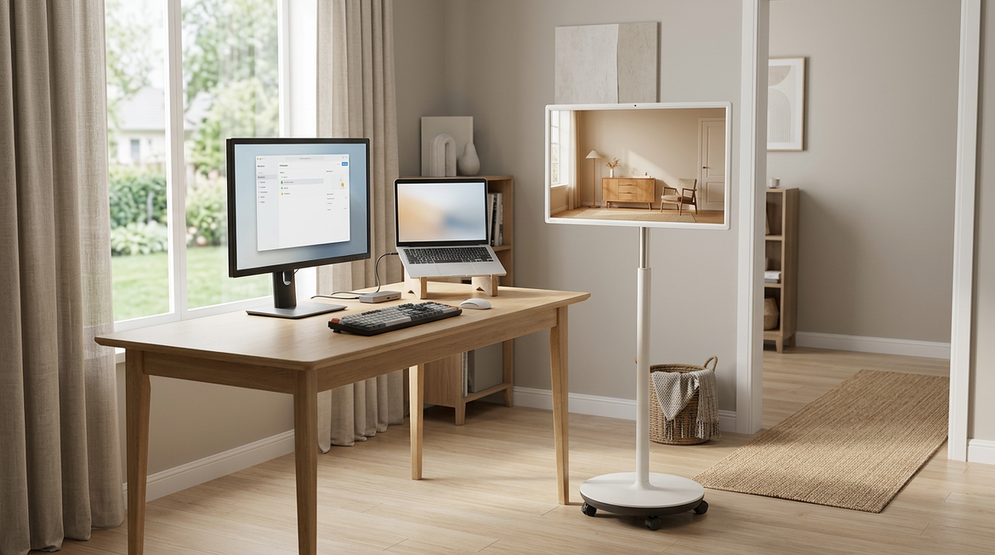
A simple desk example helps. On a desk about 30 inches deep, a 24-inch 1080p monitor can still look solid for general use, especially if you sit a bit farther back. On that same desk, a 27-inch 1080p panel tends to stretch the same pixel count over more area, so softness becomes more obvious. A 27-inch 1440p panel, including a typical option like a brand’s 27-inch 2K 100Hz/120Hz home and office monitor, usually fixes that without forcing the OS scaling compromises that often come with 27-inch 4K displays.

How 1440p Changes Everyday Use on Work and Portable Monitors
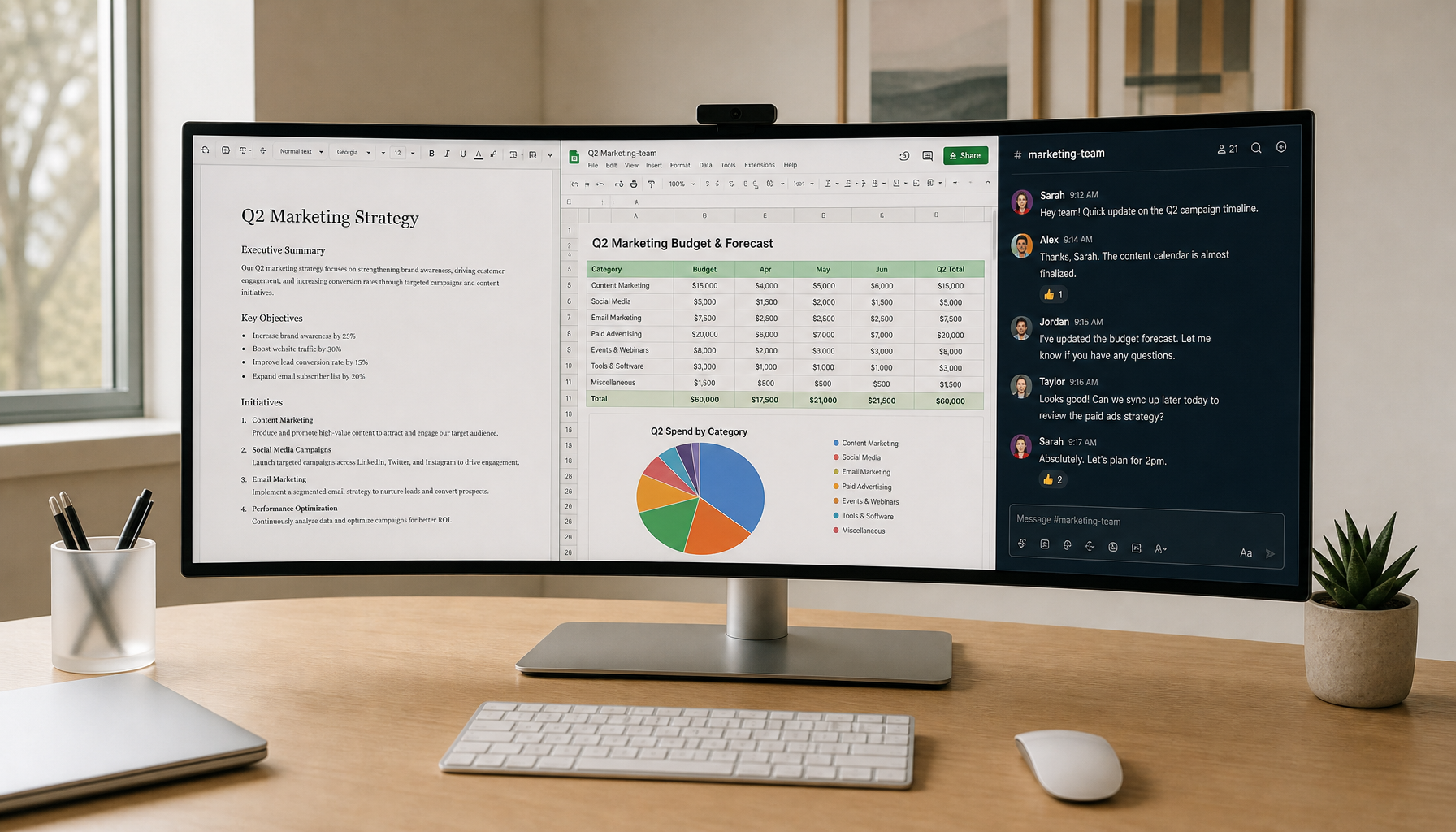
Higher resolution improves text clarity and image sharpness most consistently in productivity work. That matters more than marketing language when you spend hours reading spreadsheets, editing documents, comparing browser windows, or managing multiple apps on one screen.

A company’s monitor guidance also ties sharper images to higher PPI rather than resolution alone. In practice, that means 1440p is often a stronger upgrade for office monitors and portable monitors than buyers expect, because the benefit shows up every minute in reading comfort, cleaner fonts, and less visible jaggedness around icons and UI elements.
There is a tradeoff, though. Higher resolutions make text and icons smaller and may require OS scaling. On a portable monitor or compact 24-inch 1440p display, that can be great if you want denser detail, but it can also make menus and text feel cramped if you prefer large UI elements. For many buyers, 27-inch 1440p ends up feeling more natural than 24-inch 1440p for all-day desktop use.
The Gaming Tradeoff: Better Image Detail, Less Frame-Rate Headroom
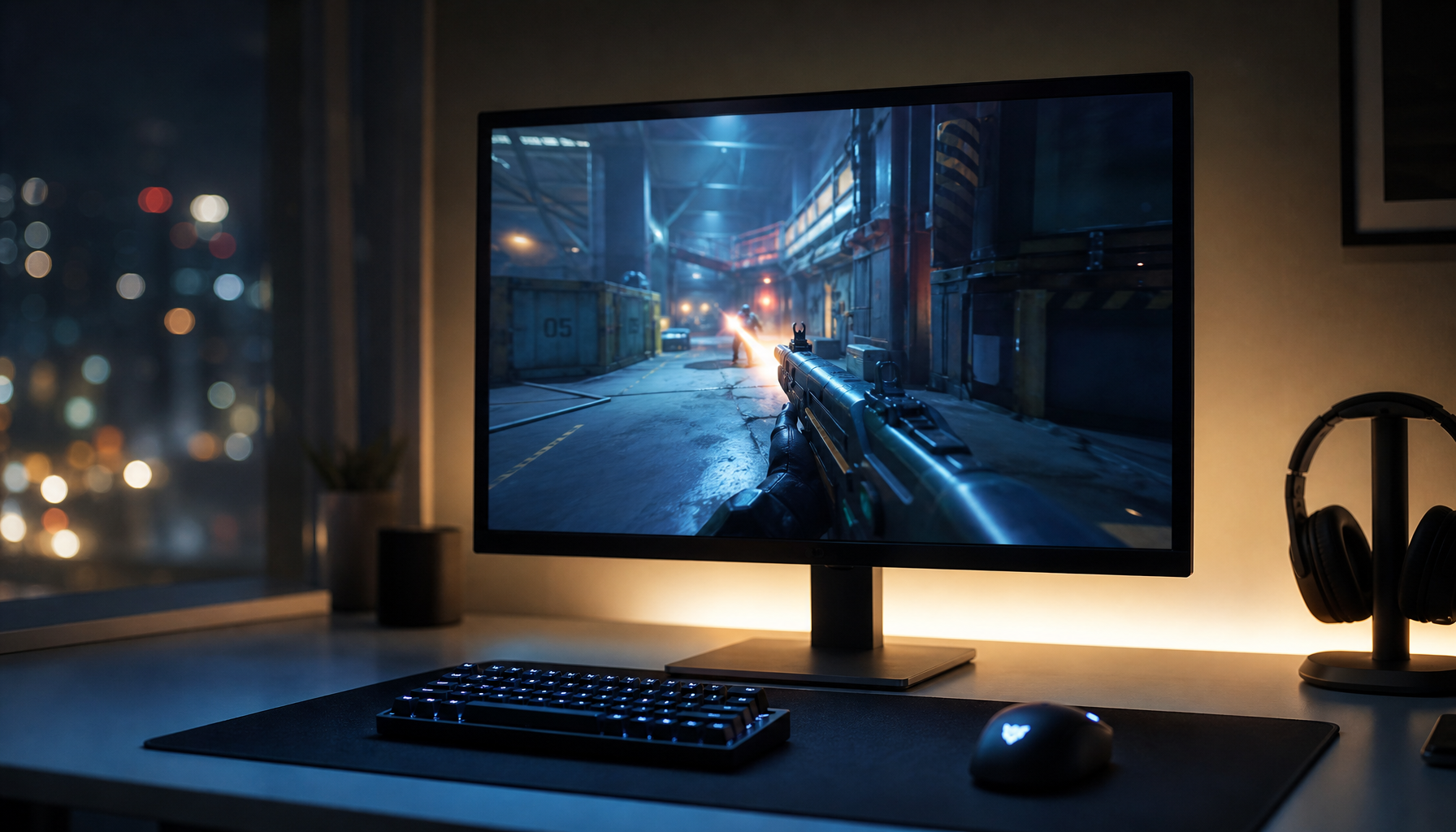
1440p puts a heavier load on the GPU than 1080p, and this is where the monitor decision gets practical fast. A sharper image is valuable, but on high-refresh-rate gaming monitors, the real question is whether your system can still feed the panel at the frame rates you bought it for.

A real-world downgrade back to 1080p made 100+ fps easier to reach and kept some games closer to 60 fps on older hardware. That matters if you are pairing a midrange or aging GPU with a 144 Hz, 240 Hz, or even 360 Hz esports monitor. Lower resolution often means more stable frame pacing, easier streaming, and less compromise in graphics settings.
For esports-focused buyers, 1080p still makes sense more often than enthusiasts like to admit. For single-player and mixed-use gaming monitors, 1440p usually gives the more premium image. The sharpness gain is real, but the cost is not only dollars. It is also frame-rate headroom, power draw, and sometimes the need for a stronger graphics card and higher-bandwidth display connection.
Ultrawide and Large-Screen Setups Change the Equation
Screen size and shape can matter as much as raw resolution. A 34-inch ultrawide is wider than a 27-inch 16:9 monitor but roughly the same height, which is why many ultrawide buyers find 1440p-class resolutions easier to justify there than they do on smaller screens.

The benefit of higher resolution gets more noticeable as screens get larger or you sit closer. On ultrawide monitors, that usually means extra desktop room and cleaner fine detail feel more valuable than they do on a compact 24-inch screen. It is also why 1080p is less appealing once a monitor gets physically large.
That said, large panels do not automatically guarantee sharpness. A lower-PPI large display can still look softer than a smaller, lower-resolution screen. For buyers comparing ultrawide monitors, portable monitors, and standard gaming monitors, the safest question is not “Which has more pixels?” but “How dense are those pixels at the size I will actually use?”
1080p vs 1440p at Common Monitor Sizes
Monitor setup |
Resolution |
Approx. PPI |
Real-world sharpness |
Best fit |
24-inch standard monitor |
1080p |
93 |
Good enough for everyday use, decent text clarity |
Budget work setups, esports, dual-monitor desks |
27-inch standard monitor |
1080p |
82 |
Softest of the group, pixel structure easier to notice |
Budget-only large-screen buyers |
24-inch standard monitor |
1440p |
123 |
Very crisp, but UI may feel small without scaling |
Dense workspaces, detail-focused users |
27-inch standard monitor |
1440p |
109 |
Clear upgrade over 1080p, balanced for desk use |
Best all-around gaming and productivity choice |
34-inch ultrawide |
1440p-class ultrawide |
Varies |
Usually a worthwhile clarity step over lower-res wide panels |
Multitasking, sim gaming, immersive mixed use |
Action Checklist
- Measure your normal viewing distance before buying; around 24 to 36 inches is where 27-inch 1440p usually pays off.
- Choose 24-inch 1080p if you prioritize price, competitive frame rates, or a compact dual-monitor setup.
- Choose 27-inch 1440p if you want the clearest all-around upgrade for gaming, work, and everyday desktop use.
- Avoid 27-inch 1080p unless budget matters more than text sharpness.
- Check whether your GPU can realistically drive your target refresh rate at 1440p before paying for a high-refresh panel.
- Expect some OS scaling adjustments on denser displays, especially smaller 1440p and 4K monitors.
FAQ
Q: Is 1440p actually much sharper than 1080p on a monitor?
A: Usually yes, but mostly when screen size and viewing distance make the pixel density gap visible. On a 27-inch monitor at normal desk distance, 1440p is a clear upgrade. On a smaller 24-inch display, 1080p can still look respectable.
Q: Is 1080p better for high-refresh-rate gaming monitors?
A: It often is if your priority is maximum frame rate. 1080p is easier to drive at 144 Hz, 240 Hz, and above, especially on midrange hardware or older GPUs.
Q: Does 1440p make more sense for work monitors than for gaming?
A: In many cases, yes. The improvement in text clarity, UI sharpness, and desktop workspace tends to show up all day in office and creative work, while gaming gains depend more heavily on whether your GPU can keep up.
Final Takeaway
The sharpness jump from 1080p to 2K-class 1440p is real, but it is not equally valuable on every monitor. If you are buying a 27-inch display for mixed use, 1440p is usually the sweet spot because it improves text clarity, cleans up game detail, and still feels comfortable at normal desk distance. If you are buying a compact esports monitor, a portable monitor, or a budget secondary display, 24-inch 1080p remains a practical choice because it preserves frame-rate headroom and still looks decent at typical viewing distances.
For most buyers, the simplest rule is this: buy 1080p for speed and value, buy 1440p for balance and clarity, and judge both by screen size and how far you actually sit from the panel.
References
- A company: How to Evaluate the Best Size 4k Monitor for Different Needs
- A company: Choosing the Right Monitor Resolution: What to Know
- A publication: I downgraded from a 1440p to a 1080p monitor — here’s what happened
- A platform: The Best Portable Monitors for a CLI Workflow (2026)
- A platform discussion with compiled monitor size and PPI figures
- A calculator summary citing a platform and viewing-distance guidance