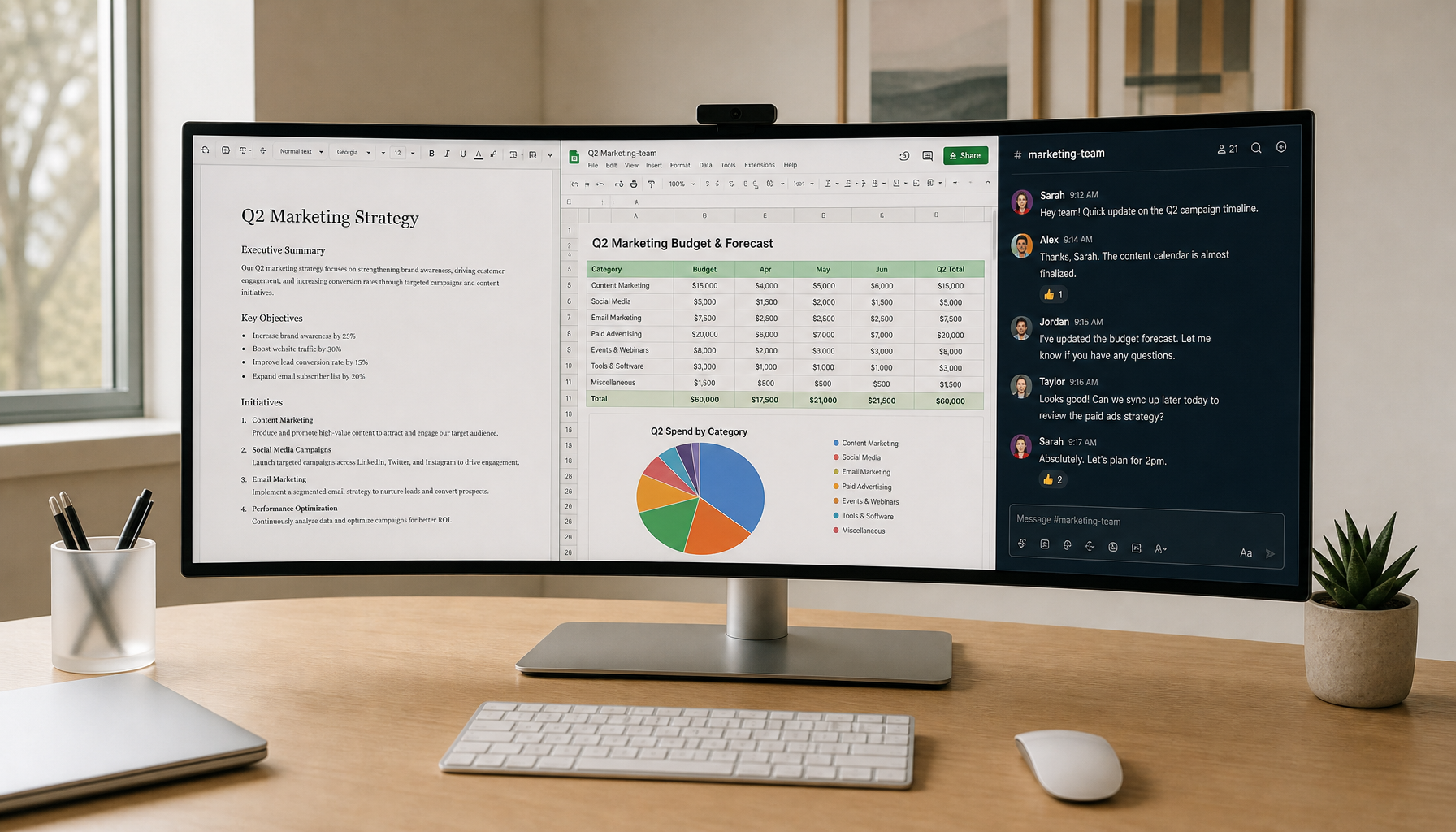
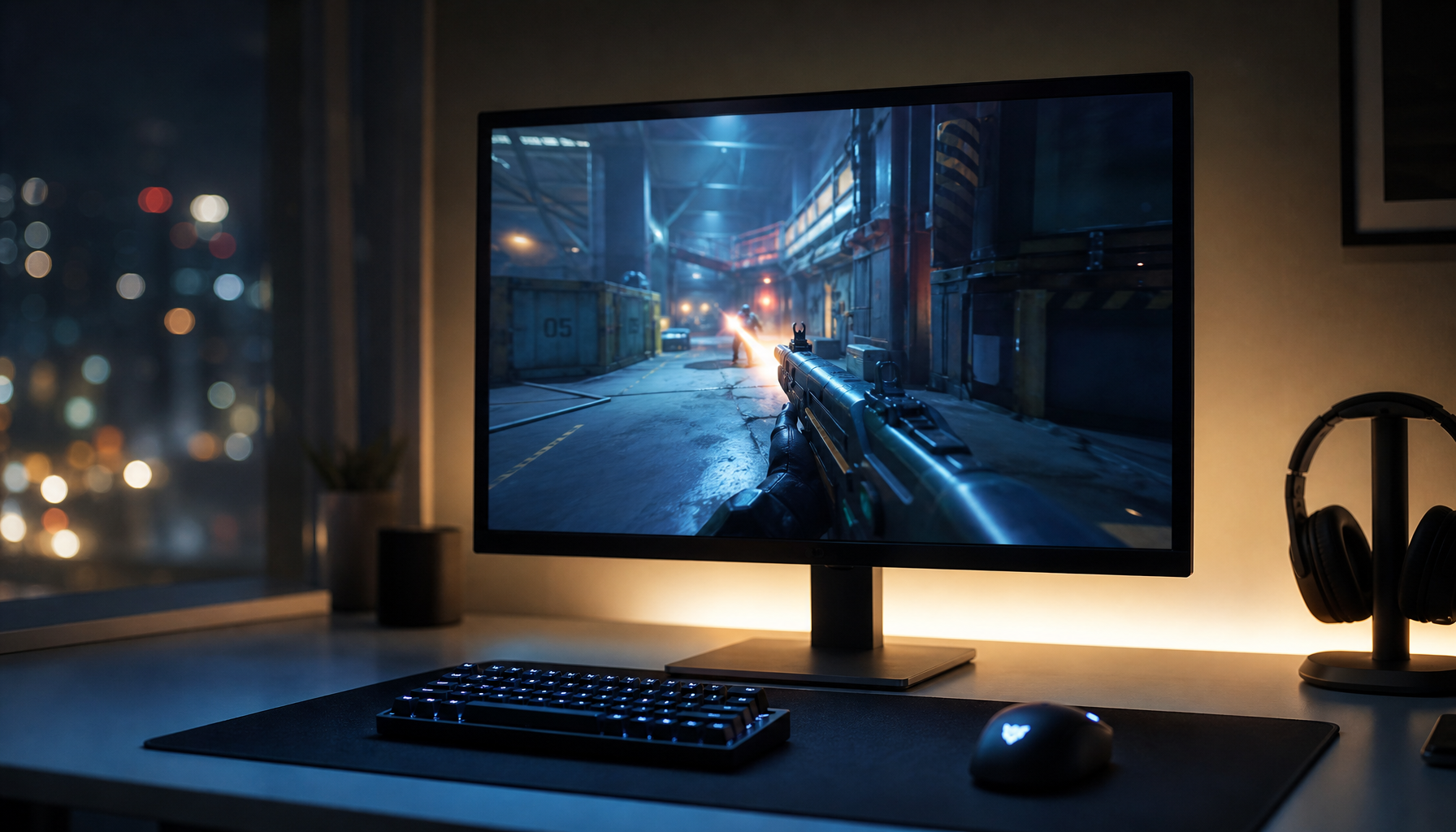
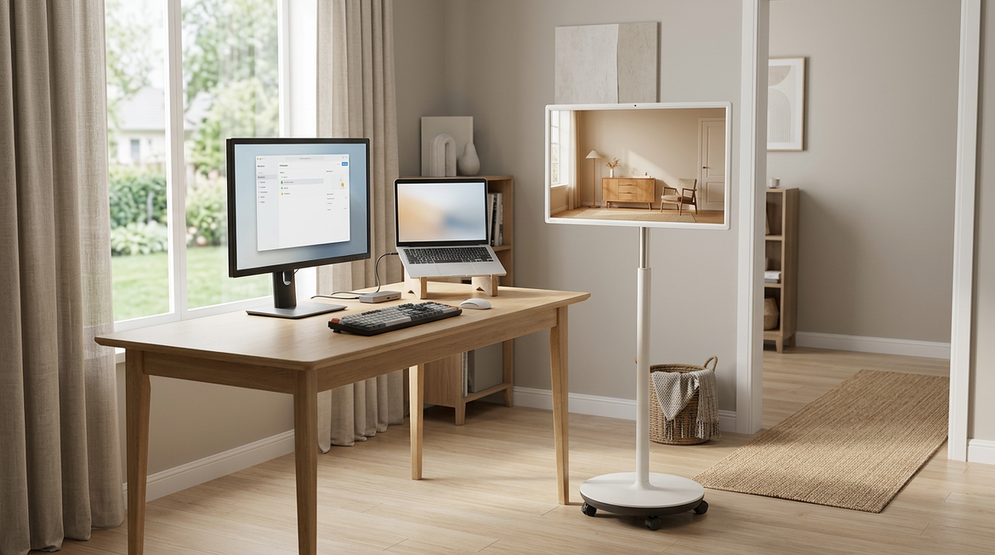
At 27 inches, a 5K monitor delivers noticeably higher pixel density than 4K—218 PPI versus 163 PPI—which can produce sharper text and finer details in close-up work. However, whether that difference justifies the typical price premium, 60 Hz refresh limit, and potential scaling friction depends heavily on your viewing distance, operating system, and whether your workflow prioritizes text clarity or dynamic range, contrast, and motion.
For many prosumers sitting beyond about 25 inches or mixing productivity with video and light gaming, a high-quality 4K panel, especially one with Mini-LED backlighting, often delivers more practical value than chasing the extra pixels of 5K.

The PPI Gap: Why 218 Matters for 27 Inches
Pixel density, measured in pixels per inch (PPI), determines how tightly packed the pixels are on a screen. Higher PPI generally translates to sharper-looking images and text because individual pixels become harder for the eye to distinguish.
A 27-inch 5K display runs at a native resolution of 5120×2880, producing approximately 218 PPI. In contrast, a 27-inch 4K panel uses 3840×2160 and delivers roughly 163 PPI. This gap is most noticeable at typical desk distances when viewing fine text, intricate UI elements, or detailed design work. As this Apple Studio Display technical overview confirms, the higher density enables the crisp “Retina” look many creative professionals seek.
That said, 163 PPI on a 4K monitor is already sharp for everyday use. It is not “blurry”; rather, it sits in the near-Retina range for many users. The real question is whether the jump to 218 PPI changes your experience enough to offset other trade-offs in cost, refresh rate, and panel technology.
KTC offers both options in its lineup. The H27P3 27-inch 5K office monitor targets users who want maximum text clarity, while models like the H27P27 4K office monitor or the Mini-LED M27P6 focus on balanced performance and value.
OS Scaling: How macOS and Windows Handle Extra Pixels
Operating systems render the desktop differently on high-density displays, which directly affects both sharpness and usable workspace.
macOS strongly prefers integer scaling. On a native 5K panel, 2× scaling maps each interface element to exactly four physical pixels, delivering the cleanest possible text and UI without interpolation artifacts. A 4K panel on macOS often requires fractional scaling (for example, making the desktop “look like” 2560×1440 while rendering at a higher internal resolution). This can introduce subtle shimmering or softness on thin fonts and lines, sometimes called sampling blur. According to Apple’s own guidance, the effect is often minor on modern hardware, but typography-focused users may still notice it in long coding or design sessions. See this detailed explanation of macOS display scaling.
Windows 11 takes a more flexible, vector-based approach. You can choose scaling percentages such as 150% on a 4K monitor to achieve a comfortable interface size while retaining good sharpness. Legacy applications can sometimes look blocky at 200% on a 5K panel, but most modern creative and productivity apps scale cleanly. This comparison of Windows versus macOS scaling highlights why many PC users find 4K monitors easier to live with day to day.
In practice, macOS users who sit close and prioritize flawless text often prefer 5K. Windows users or those on mixed setups frequently get better results and more screen real estate from a well-tuned 4K display.
Sharpness vs. Depth: The 5K/60Hz vs. 4K Mini-LED Trade-off
More pixels are not automatically better pixels. The practical choice often comes down to what your eyes and workflow value most: absolute text sharpness or superior contrast, brightness uniformity, and motion clarity.
5K panels at 27 inches are typically limited to 60 Hz. While perfectly fine for static office work, this ceiling can produce visible motion judder during UI animations, scrolling, or casual gaming—especially noticeable in 2026 when many interfaces assume higher refresh rates. In contrast, many 4K panels reach 160 Hz or more and pair with Mini-LED backlighting that delivers hundreds or thousands of local dimming zones. The result is HDR1400-level peak brightness, dramatically better black levels, and a sense of depth that flat IPS 5K panels rarely match.
The insight that changes many buying decisions is the viewing-distance split. At desk depths under roughly 24 inches, the extra 55 PPI of 5K can feel meaningful for text purists on macOS. Beyond 25–30 inches, the human eye has difficulty resolving the difference between 163 PPI and 218 PPI. At those distances a high-spec 4K Mini-LED monitor often feels more “retina-like” overall because its contrast and color pop outweigh the modest sharpness gain. Optical heuristics and practical testing consistently support this distance-dependent behavior.

This chart helps visualize the pattern across common scenarios:
27-inch 4K vs 5K: Where the Extra Sharpness Matters
At typical desk distances, 5K is most useful for close text-first work; 4K is often sufficient once viewing distance moves back or when HDR and motion matter more.
View chart data
| Scenario | Close (<22 in) | Standard (22-28 in) | Deep (>28 in) |
|---|---|---|---|
| Text-first / macOS | 2.0 | 1.0 | 0.0 |
| Dynamic creator / HDR / motion | 1.0 | 2.0 | 2.0 |
For text-heavy macOS workflows at close range, the KTC H27P3 provides that native Retina experience. For creators who edit video, grade HDR content, or want smoother scrolling and deeper blacks, the Mini-LED M27P6 or fast IPS H27P22S frequently feel like the stronger daily driver.
The 'Brand Tax' Reality: Value Beyond the Resolution Label
Mainstream 5K monitors often carry a significant premium tied to brand recognition rather than panel performance alone. Factory-direct options can deliver the same core 5K resolution and color accuracy at a noticeably lower price point.
When you factor in real-world performance, the value picture shifts further. A 4K Mini-LED panel can provide higher peak brightness, vastly better contrast through local dimming, and a 160 Hz refresh rate—all for less money than many entry-level 5K displays. That combination frequently translates into more “information gain” for mixed creative and entertainment use.
A practical self-check is your desk depth. If you normally sit under 24 inches and do precision design or long-form coding on macOS, the extra PPI of 5K is more likely to justify its cost. Once your seating distance exceeds 25 inches—or if you value HDR grading, smoother motion, or future-proof refresh rates—a high-spec 4K monitor is typically the better value.
Check the work monitor buying guide for broader ergonomic and productivity considerations, or explore the full range of 27 inch monitors and 4K monitors to match your exact needs. The complete guide to matching a monitor to your graphics card can also help ensure the panel you choose performs well with your GPU.
How Does Subpixel Layout Affect Text Clarity on 4K and 5K Monitors?
Subpixel layout (RGB versus other arrangements) influences how crisp fonts appear, especially at high densities. On both 4K and 5K panels, an RGB layout generally delivers the cleanest text without additional tuning. Some 4K monitors use alternative layouts that can make syntax highlighting or thin fonts look slightly washed out unless ClearType or macOS font smoothing is carefully adjusted. The difference is usually smaller on 5K because the higher base density masks minor rendering imperfections. For detailed guidance, see our explanation of what subpixel layout is and why RGB and RGBW panels look different.
Is 5K Overkill for Most 27-Inch Productivity Setups?
For pure office work, web browsing, and spreadsheets at normal desk distances, 5K is often more than needed. A well-calibrated 4K panel paired with proper scaling already looks excellent and leaves more GPU headroom for multitasking or light creative apps. The extra resolution mainly benefits users who sit very close, work with extremely fine detail, or require perfect integer scaling on macOS. Beyond that, the added cost and 60 Hz limitation make 5K feel like overkill for the majority of productivity users.
How Much Does Viewing Distance Really Change the 4K vs 5K Decision?
Viewing distance is one of the strongest practical filters. At less than 22 inches, the 218 PPI of 5K can deliver visibly sharper text and UI elements. Between 22 and 28 inches—the most common desk range—most people find 163 PPI on 4K functionally “Retina” for everyday tasks. Past 28 inches the difference becomes difficult to detect without a direct side-by-side comparison. If your setup places you farther back, invest in better contrast, color volume, or refresh rate instead of chasing additional pixels.
Does macOS Fractional Scaling Make 4K Monitors Unusable?
No, but it does introduce a subjective compromise for some users. Fractional scaling on 4K renders the desktop at a higher resolution then downsamples, which can create slight shimmer on fine lines or small text. On current M-series Macs the performance cost is negligible—typically under 2 % GPU load. Many users never notice the effect, while typography purists who compare directly to native 5K may prefer the latter. Adjusting macOS font smoothing or choosing “Looks like 2880×1620” can reduce the shimmer for most workflows.
When Should You Choose a 4K Mini-LED Monitor Over a 5K IPS Panel?
Choose 4K Mini-LED when your work includes video editing, photo retouching with HDR, or any content where contrast and brightness uniformity matter. The local dimming zones produce deeper blacks and brighter highlights that a standard 5K IPS panel cannot match, and the higher refresh rate improves scrolling and light gaming. The KTC M27P6 is a strong example in this category. Reserve 5K for workflows where maximum text sharpness at close range on macOS is the single highest priority and motion or HDR are secondary.