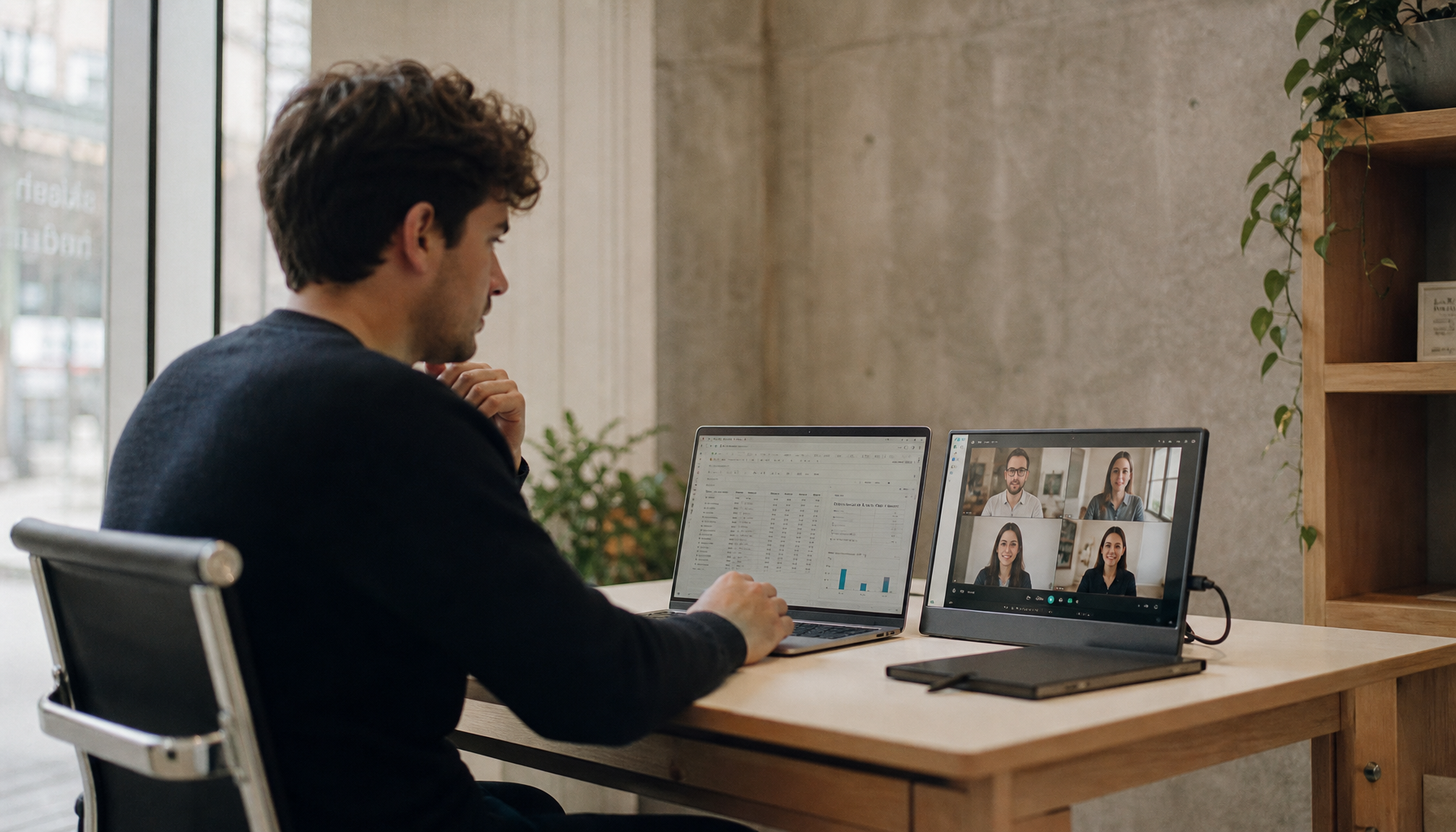
A vertical video studio helps when your biggest problem is not editing skill, but repeated re-setup. If you move between rooms or shoot on location, a rolling 4K hub can keep preview, framing, and review in one place, so you spend less time rebuilding the station and more time recording.

Why a Vertical Studio Works Better
For short-form creators, the main advantage is simple: you stop treating each shoot like a new workstation build. A setup built around vertical video workflow is usually easier to manage when the final output is already in portrait orientation, because you are not constantly translating a wide desktop into a tall phone frame.
That does not mean every creator needs a mobile display. If you film once a week from a fixed desk, a normal monitor can be enough. But if you record TikToks, Reels, or tutorial clips several times a week, the setup starts to break down when you must move cables, re-angle the screen, and re-check framing every time you change rooms.
A better mental model is this: the studio should follow the creator, not the other way around. Freestanding rolling displays are useful here because they let you move between rooms without permanent mounting or desk reruns, which is exactly where fixed setups usually slow people down.
Build the Rolling 4K Hub

Start with the physical structure, not the apps. The most useful vertical video studio is one that rolls cleanly, rotates without a struggle, and still leaves enough space for a phone mount, mic, or small light.
A 32-inch class mobile display makes sense when you want a larger preview area for framing, script review, and composition checks. The trade-off is movement: in smaller apartments, a bigger screen can be harder to turn through doorways or around tight furniture. If your space is cramped, a 27-inch unit is usually easier to reposition even though the preview area is smaller.
The KTC MEGAPAD 32-inch 4K mobile touch screen is a natural fit when you want a mobile touch screen that combines room-to-room movement, portrait rotation, and battery power in one device. Its product details list wheels, a 9500mAh battery, and a 32-inch 4K panel, which makes it better suited to a rolling creator station than a fixed desk replacement.
If you want a lighter-weight browsing path, the broader 4K Monitor collection helps you compare 4K options by scenario. That is useful when you want the extra detail of 4K but are still deciding whether mobility, brightness, or price matters more.
When this setup breaks down: if you never move the station and do not need battery power, a fixed monitor can be simpler and cheaper. The mobile format starts to pay off when the room changes often enough that setup friction becomes a real creative tax.
Set Up the Vertical Workflow
A good workflow keeps framing, capture, and review close together. That is the part most creators underestimate. The studio should reduce context switching, not just look neat in a corner.
- Frame first, record second. Set the screen to the same portrait orientation you want in the final post so you can judge headroom, captions, and object placement before you hit record.
- Keep notes visible. Place shot lists, hooks, and script prompts next to the preview area so you are not jumping between devices.
- Review immediately. Check the clip on the same screen you used to frame it, which makes it easier to spot cropped text, awkward hand positions, or a background that looks busier than it felt in the moment.
- Export without rebuilding. If your station stays in place, you can move from filming to light editing without re-docking a laptop or moving to a second desk.
A creator workflow article from NYU’s video best practices describes video work as a sequence of preproduction, production, and postproduction. That matters here because a mobile screen can compress those steps into one location, which is helpful when you are producing three to seven clips a week.
If you already use a laptop-assisted flow, the transition is easier than it sounds. The mobile display becomes the preview-and-review hub, while the laptop can stay parked for editing, upload, or asset management. If you are working alone, that separation is often the difference between a smooth session and a cluttered one.
For readers who want another way to think about the layout, the mobile office cart guide is a useful follow-up. It covers the same kind of mobility problem from a broader workspace angle.
Choose a Monitor for Creator Work
Choose the display by the job it has to do most often. For vertical content, three traits matter more than flashy marketing claims: how easy it is to move, how clearly it shows detail, and how much desk or floor space it consumes.
| Creator Need | Better Match | Why It Matters |
|---|---|---|
| Frequent room-to-room use | Rolling 32-inch 4K display | Better for a mobile studio that still needs a larger preview area |
| Quick apartment setup | Rolling 27-inch FHD display | Easier to move through tight spaces and faster to park near a shoot |
| Fixed desk with occasional mobility | Standard desk monitor | Simpler when battery power and rolling movement are not essential |
| Detail-heavy framing review | 4K display | Makes text overlays, cropping, and composition easier to inspect |
| Lowest setup friction | Fixed monitor | Fewer moving parts when the station rarely changes location |
The key trade-off is this: bigger screens improve review comfort, but they also add turning radius and moving weight. A 32-inch mobile unit is best when your room can handle it. A 27-inch mobile unit is better when you need to fit through tighter spaces or keep the whole station visually lighter.
If you want a compact option to compare against the larger model, the KTC MEGAPAD 27-inch FHD mobile touch screen is the more space-conscious sibling. Its product facts show built-in wheels, a 9500mAh battery, and a 27-inch FHD screen, so it works better when portability matters more than extra 4K detail.
For readers comparing horizontal versus portrait use more generally, the monitor orientation guide is a useful background read. It is especially helpful if you are deciding whether portrait mode should be your main workflow or just a secondary position.
A smaller fixed-office alternative from the 27 inch Monitors collection is worth checking if you want creator-adjacent clarity without a battery-powered mobile base. That is the better choice when you work mostly at one desk and only occasionally need to preview vertical content.
Keep the Setup Ready for 2026
The best 2026 setup is the one that still feels useful after the novelty wears off. That means checking the boring details now: cable routing, charging routine, and whether the station can still work when your workflow changes.
- Keep the layout device-agnostic so it can handle phone-first, laptop-assisted, or client-side shooting.
- Leave enough space to roll the display between rooms without dismantling the rest of the setup.
- Make sure the screen can still do two jobs, vertical framing and general review, because creators usually need both on the same day.
- Plan for charging and storage so the display does not slowly become a decorative object in the corner.
If you are deciding between a mobile and a fixed setup, this is the point to ask one honest question: will you actually move it? If the answer is no, buy for stability. If the answer is yes, buy for rolling convenience and accept the extra weight that comes with it.
The KTC MEGAPAD 32-inch 4K Android 14 model is another browsing option if you want to compare battery-powered 32-inch mobile screens by size and feature set. The Mobile Touch Screen collection also helps if you want to scan the category before choosing a specific model.
For most creators, the right answer is not “largest” or “fastest.” It is the setup that keeps you filming with the least friction in the room you actually use.
FAQs
Q1. How Do You Set Up a Vertical Video Studio in a Small Room?
Start by clearing one rolling lane and one shooting lane. Keep the display close enough for framing, but leave enough space to move the stand without bumping a wall, bed, or table.
Q2. What Makes a Rolling 4K Hub Better for Reels and TikTok?
It reduces re-setup and makes detail checks easier, especially when you need to inspect text overlays or crop edges before posting. The benefit is biggest when you shoot several clips a week and move between rooms often.
Q3. Can a Battery-Powered Display Replace a Fixed Desk Monitor for Creators?
Sometimes, yes. It works best when mobility matters more than absolute desk simplicity, but a fixed monitor still makes more sense if your setup rarely moves and you do not need a battery in daily use.
Q4. What Should You Check Before Buying a Mobile Studio Display?
Check the screen size, battery runtime under your real brightness habits, wheel stability, and whether the stand can rotate without forcing a cable reset. If you film mostly in one room, a lighter fixed monitor may be the safer buy.
Q5. Why Does Vertical Orientation Matter for Short-Form Video Production?
It keeps preview, framing, and final output aligned, so you are not constantly rethinking composition for a portrait screen. That usually saves time during both shooting and review, especially for solo creators.
The Best Fit Depends on How Often You Move
A vertical video studio only earns its place if it removes friction from your actual workflow. If your shoots happen in different rooms or off-site, the rolling 4K format is easy to justify. If you stay at one desk, the simpler fixed route may be better.
Quick scenario checks
- Apartment with daily room changes? Prioritize wheels and battery runtime.
- Mostly fixed corner with weekly tweaks? A lighter 27-inch rolling unit often suffices.
- On-location shoots with long sessions? Verify 6-plus hours of real-world battery life before purchase.
The right choice is the one that keeps you filming consistently, not the one that looks most impressive on day one.
Creator Setup Comparison
| Scenario | 32-inch 4K Rolling | 27-inch FHD Rolling | Fixed Desk Monitor |
|---|---|---|---|
| Apartment, frequent move | Strong match | Good match | Weak match |
| Apartment, mostly fixed | Moderate match | Strong match | Moderate match |
| On location, quick setup | Moderate match | Strong match | Moderate match |
| On location, long battery | Moderate match | Good match | Strong match |