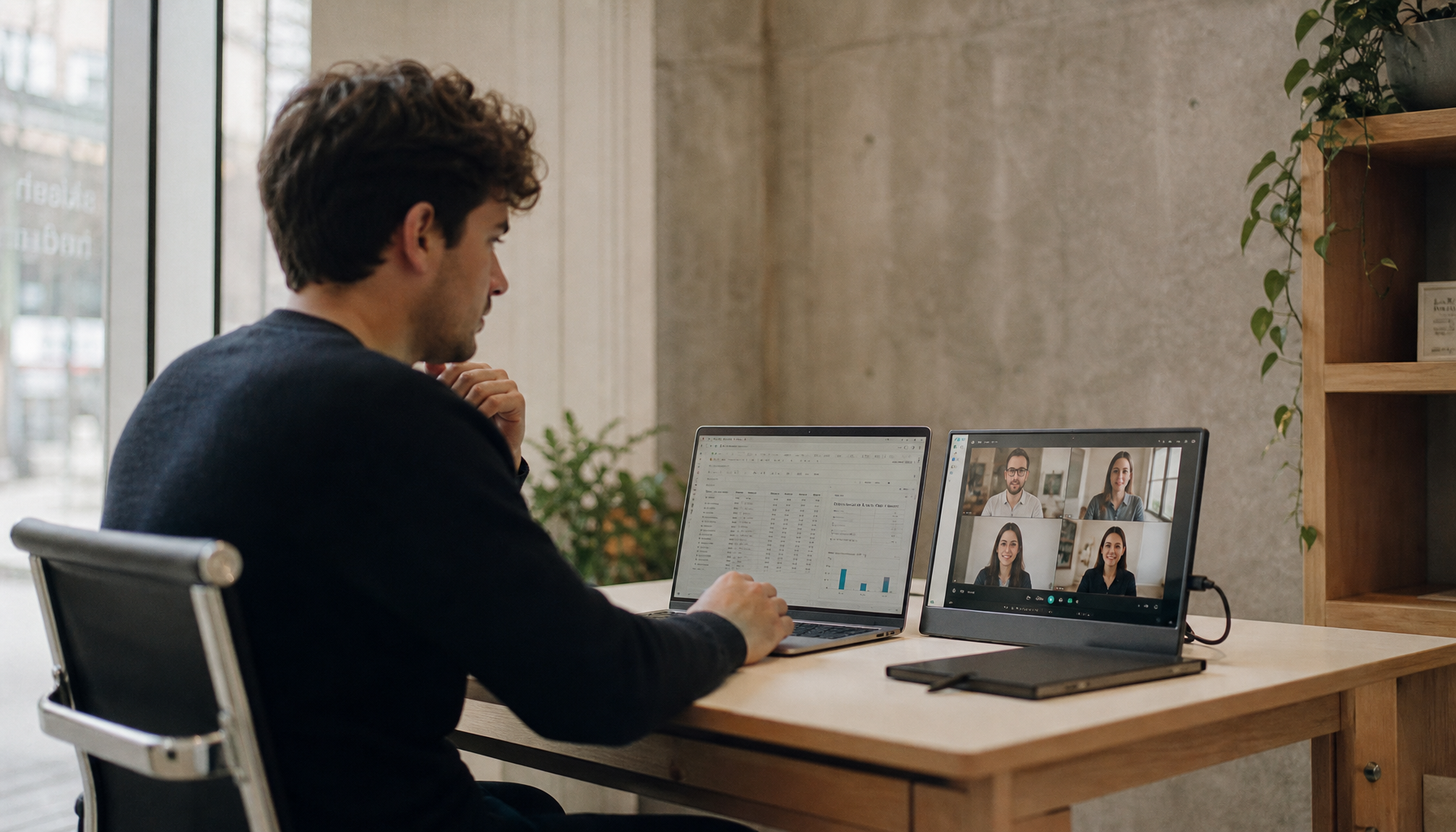
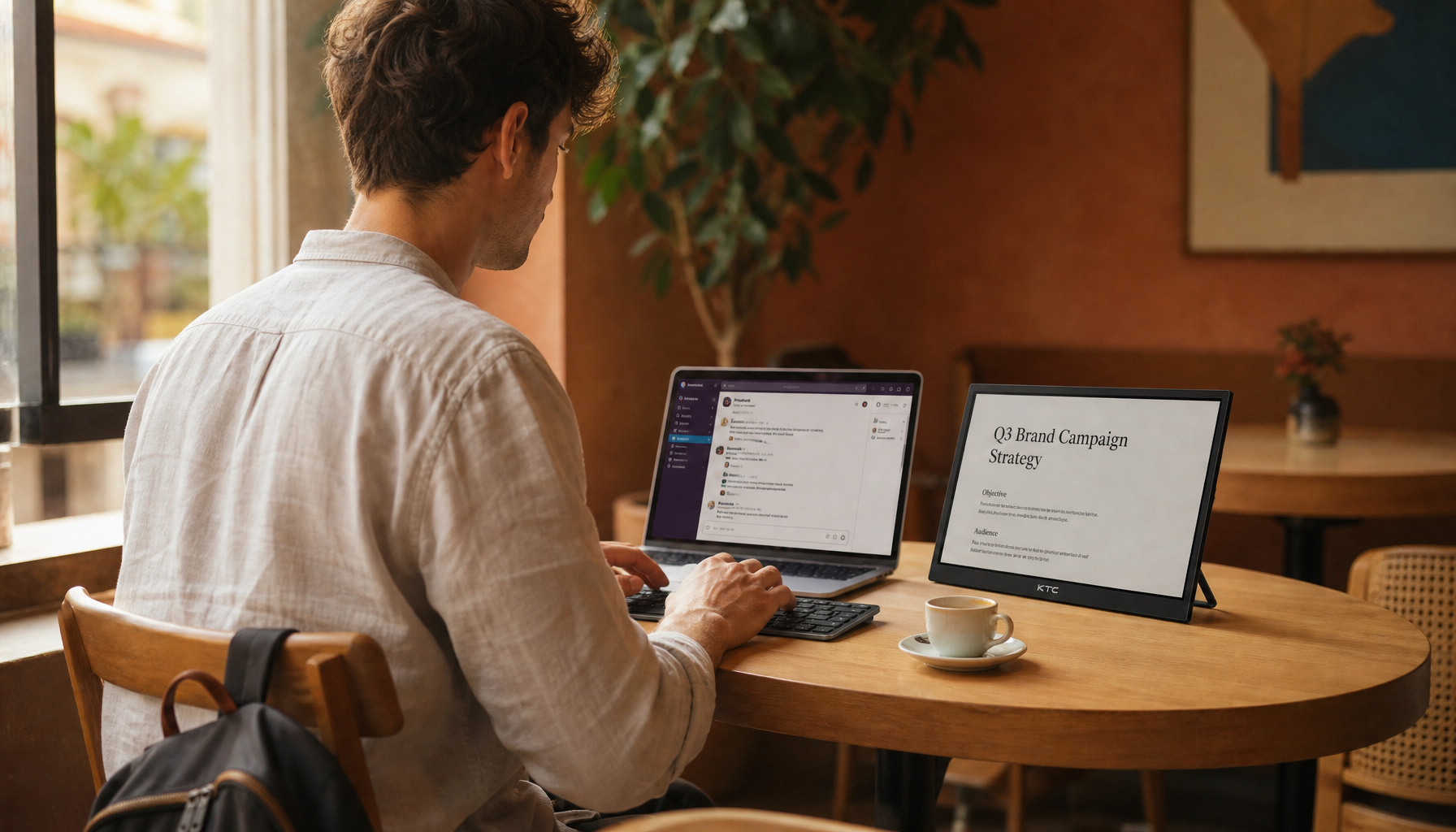
The cleanest second-screen setup uses fewer wall plugs: choose USB-C power delivery, a dock, a daisy-chain-capable monitor, or a low-power portable display. Build around one reliable power path first, then arrange the screens for comfort and performance.
Start With a One-Plug Display Plan
If outlets are scarce, avoid giving every device its own adapter. A USB-C monitor with power delivery can send video, data, and charging through one cable, while a dock can centralize your monitor, keyboard, mouse, and laptop connection.

For a laptop-first desk, check whether your computer and dock support dual displays before buying cables. A proper docking station should match your laptop’s USB-C or Thunderbolt output and the monitor ports you plan to use, such as HDMI or DisplayPort, as noted in this dual-monitor laptop setup.
A USB-C monitor with power delivery can let one wall plug power both the screen and laptop. A powered dock can feed displays and peripherals from one hub, while DisplayPort daisy chaining can let one display output drive multiple screens. If you cannot add another AC adapter, a portable USB-C monitor is often the simplest outlet-saving choice.
Choose the Right Second Screen for Low Power
A second display does not need to be oversized to be effective. For office work, a 24-inch or 27-inch efficient LED monitor is often the value sweet spot; for travel desks or apartments, a 14- to 16-inch portable monitor can add real workspace without demanding a permanent outlet.
Portable monitors are especially useful when your only open outlet is already feeding the laptop. Many can run over USB-C, but direct laptop power can reduce battery life, so a model with USB-C passthrough is better for long sessions.
If you want one premium screen instead of two separate monitors, an ultrawide can reduce cable count, adapter clutter, and power-strip pressure. Current monitor buying guidance often separates displays by workflow, with portable monitor options serving users who need extra screen space without a fixed desk build.
Use Daisy Chaining or a Dock to Cut Cable Clutter
Daisy chaining is the performance-minded way to reduce wall and desk congestion. With compatible DisplayPort hardware, your computer connects to the first monitor, then the first monitor connects to the second.
That matters in a tight home office because it can reduce the number of video cables running back to your laptop. Some USB-C conference monitors can even power the laptop while passing video onward; one setup connects the laptop to the primary screen by USB-C, then links the second monitor through DisplayPort multistreaming.
If your monitors do not support daisy chaining, use a dock instead. Prioritize a dock with enough power delivery for your laptop, dual video outputs, and the resolution and refresh-rate support your screens need.
HDMI splitters usually duplicate one image, while true extended desktops need operating system and hardware support for multiple independent displays.
Arrange the Setup So It Feels Fast, Not Cramped
Limited outlets often come with limited desk space, so treat screen placement as part of the power plan. A monitor arm can free surface area, hide cables, and keep the second display closer without crowding your keyboard zone.
For compact desks, use one primary landscape monitor and one portrait secondary monitor. This gives you a wide main workspace for gaming, editing, or spreadsheets, plus a tall side panel for chat, code, notes, or documents. Small-desk advice often favors monitor arms because they remove bulky stands and improve positioning on a dual-monitor computer desk.

Keep the main display centered. Angle the second display slightly inward, keep both screens near eye level, and route power through one surge-protected strip if the wall outlet is hard to reach.
Configure and Verify Before You Call It Done
Once connected, your operating system should detect the second display automatically. If it does not, open display settings, confirm the cable is secure, and use the detection option under multiple displays. Then choose Extend so the second screen expands your workspace instead of mirroring it; official help describes this as spreading the desktop across screens.
Final steps:
- Set each display to its native resolution.
- Drag display icons to match the physical layout.
- Test cursor movement between screens.
- Lower brightness if the monitor is too bright or power draw matters.
- Use a plug-in power meter if you want real wattage numbers.

For the most reliable limited-outlet setup, run laptop charging, display output, and desk peripherals through one high-quality USB-C monitor or dock, then use the second screen only where it improves speed, focus, or immersion.