When your chair cannot move, make the monitor, desk surface, and foot support do the adjusting. Aim to keep your eyes slightly above the screen center, your neck neutral, and the full display visible without leaning.
Start With Your Fixed Sitting Height
Sit all the way back in the chair you already own. If your feet do not rest flat, add a firm footrest, box, or stacked books until your thighs feel supported and your knees sit roughly level with or slightly below your hips.

That lower-body base matters because monitor placement cannot fix a collapsed posture. A slightly open hip angle can reduce strain during desk work, especially when the back is supported and the shoulders stay relaxed, as shown in ergonomic sitting advice on key joint angles.
Now check your desk height. If your shoulders rise while typing, your keyboard is too high for your fixed chair. Lower the keyboard with a tray if possible, or use a slimmer keyboard and keep the mouse on the same level.
Set Monitor Height From Your Eyes, Not the Desk
Look straight ahead while sitting naturally. The top edge of the monitor should land at eye level or slightly below, so your gaze drops gently into the screen instead of forcing your chin up or down.

A strong target is to place your eyes about 2–3 inches below the top of the monitor casing, with the screen center below your horizontal line of sight; this supports the ergonomic viewing zone.
Quick setup steps:
- Too low: raise the monitor with a stand, arm, riser, or stable books.
- Too high: remove risers, lower the stand, or tilt the display slightly back.
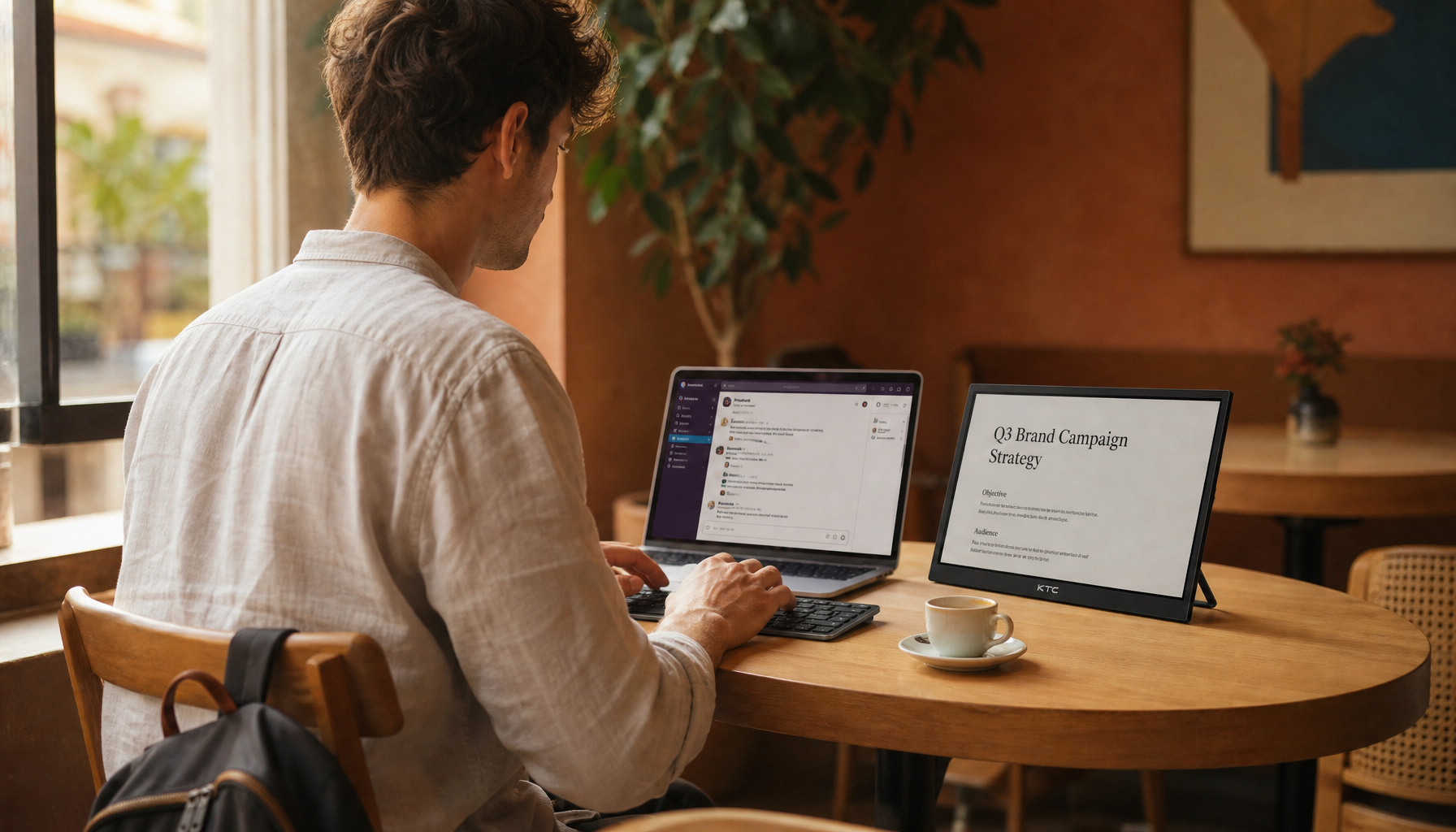
- Laptop only: raise the laptop screen and use an external keyboard and mouse.
- Progressive lenses: set the screen a little lower to avoid tipping your head back.
If you use a very tall or portrait display, do not let the top of the screen climb above eye level just to center the panel.
Dial In Distance and Tilt for Clarity
Start with the screen at arm’s length, usually about 20–30 inches for common home office displays. You should see the whole screen without turning your head, leaning forward, or squinting.

For a 24-inch monitor, a tighter desk can work well. A 27-inch display usually feels better farther back, especially for split-screen work or immersive gaming, and a 27-inch QHD panel gives sharper text than 1080p at that size.
Tilt the monitor slightly upward or backward, around 10–20 degrees, so the panel faces your eyes cleanly. If text looks small at the correct distance, increase system scaling instead of pulling the monitor closer.
Control Glare Before You Blame the Monitor
Place the monitor perpendicular to windows when possible. Bright light behind the screen creates contrast fatigue; bright light behind you can reflect directly into your eyes.

Glare often pushes people into bad posture without them noticing. A slightly repositioned lamp, side lighting, or soft bias light behind the display can reduce squinting and help maintain a neutral head position, especially during long sessions or evening play.
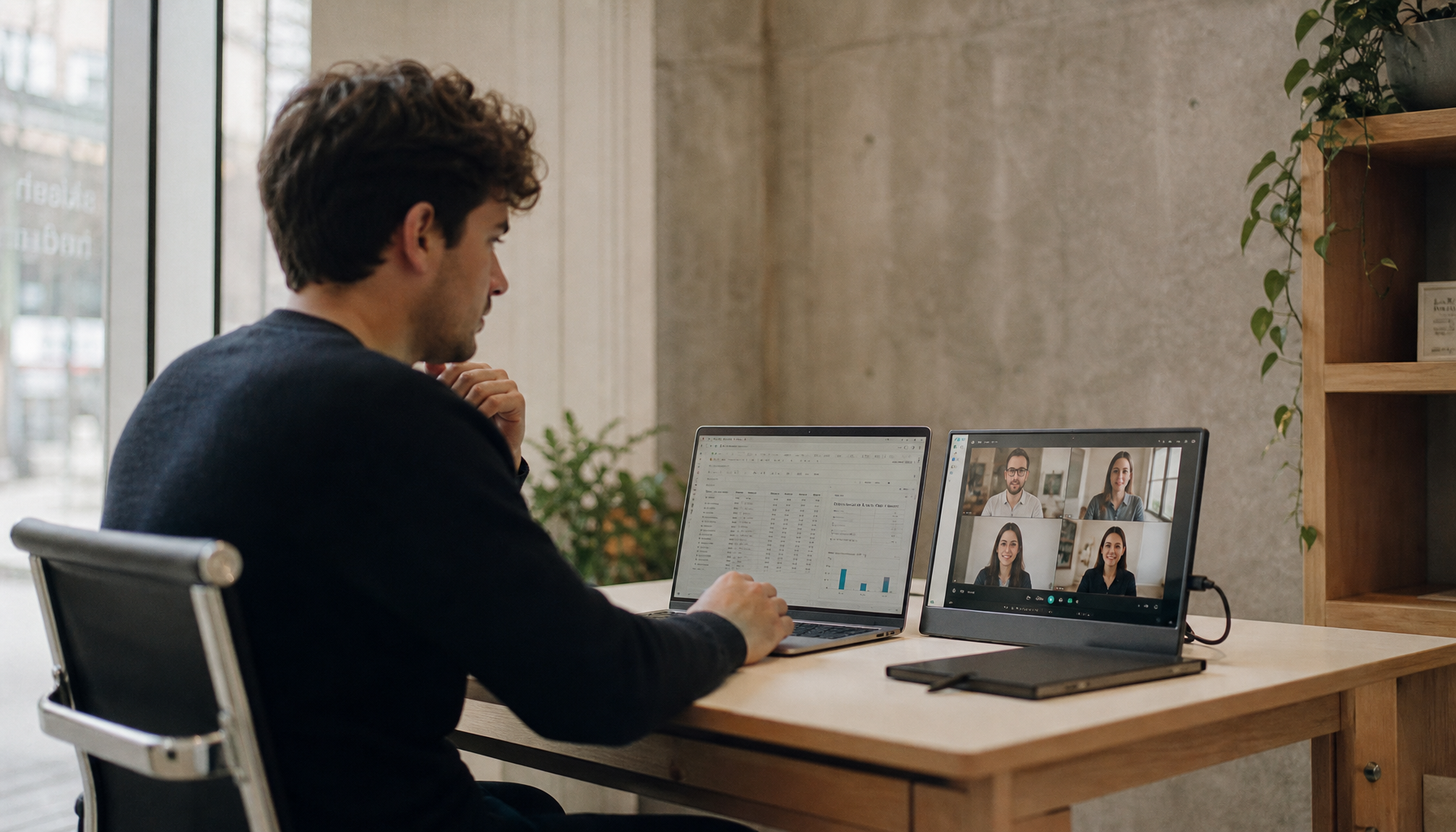
For dual monitors, keep the primary screen directly in front. Angle the secondary screen inward, and keep both displays at similar height so your neck is not doing extra work.
Low-Cost Fixes That Actually Work
You do not need a premium chair to build a high-performance workstation. You need stable height, clean sightlines, and repeatable posture.
A monitor riser is often the fastest fix for a low screen. An adjustable monitor arm helps when you need to change height, depth, and angle throughout the day. A footrest is essential when the chair is too tall, and an external keyboard and mouse are necessary when you raise a laptop screen. If text feels small at the right viewing distance, increase text scaling instead of leaning toward the display.
If your home office chair is fixed, treat your monitor like the adjustable part of the system. Once the display meets your eyes, your chair becomes less of a limitation and your screen becomes the command center it should be.