A value monitor buying framework should answer one simple question: will this monitor improve the way you actually work or play enough to justify the price? If the answer is only "the spec sheet looks better," the safer move is usually to keep shopping. The best value comes from verified fit, fewer frustrations, and lower ownership risk, not from chasing the biggest number on the page.

What Actually Makes a Monitor Good Value
For skeptical buyers, value is closer to total cost of ownership than to sticker price. A display can look cheap up front and still cost more once you add the time, accessories, returns, or desk changes it creates. That is why a monitor buying framework should start with price-to-use fit, not with the headline refresh rate or panel label. A useful baseline is the Total Cost of Ownership (TCO), which reminds buyers to count the hidden costs around setup and use, not just the checkout total.
The practical test is simple. If a feature changes a task you do often, it can be worth paying for. If it only sounds impressive on the product page, it usually is not. That is the difference between a useful upgrade and a spec bundle that inflates cost without changing daily value.
Worth-it also depends on what you will not need to fix later. A monitor with the right stand, ports, and return policy can save money because it avoids extra purchases and hassle. A cheaper model with a poor stand or awkward port layout can quietly become the more expensive option.
If you want a budget-first perspective on that tradeoff, the no-brand-tax setup approach is a helpful way to think about monitor value without treating brand name as a proxy for quality.
The Core Criteria That Matter Most
A good value monitor is not the one with the longest spec list. It is the one whose specs match the job. For most mixed-use buyers, resolution and refresh rate matter differently than they do for fast gaming. A 27-inch 1440p monitor is widely treated as a strong value middle ground because it balances sharpness and performance without pushing every system as hard as 4K, but that is a planning rule, not a universal law.
Performance Specs That Match the Job
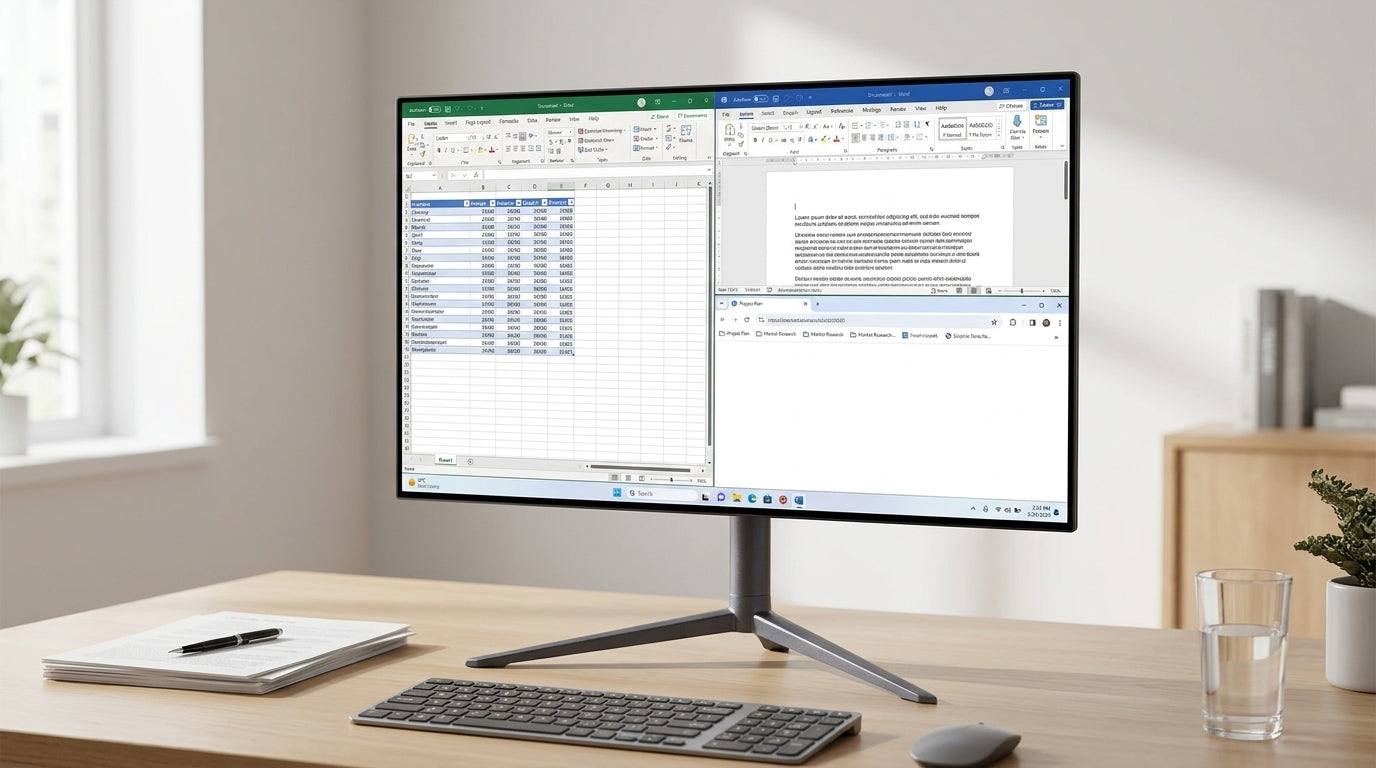
Match resolution and refresh rate to your main use case first. If you mainly play fast-moving games, higher refresh can be worth paying for because it affects how the screen feels in motion. If you mostly work in office apps, browse, or do light creative work, the value bar is higher because the same premium may not change your day very much.
That is why the panel-sourcing audit matters as a research habit: buyers should verify what the panel and panel family actually mean before they overvalue a marketing label.
Response time, which is the screen's pace when changing from one image to another, matters most when you notice motion blur or ghosting in fast games. In plain terms, it is a motion comfort spec, not a magic quality score. Adaptive sync is similar: useful when your game frame rate varies, less important if your use is mostly static text.
Image Quality Signals Worth Paying For
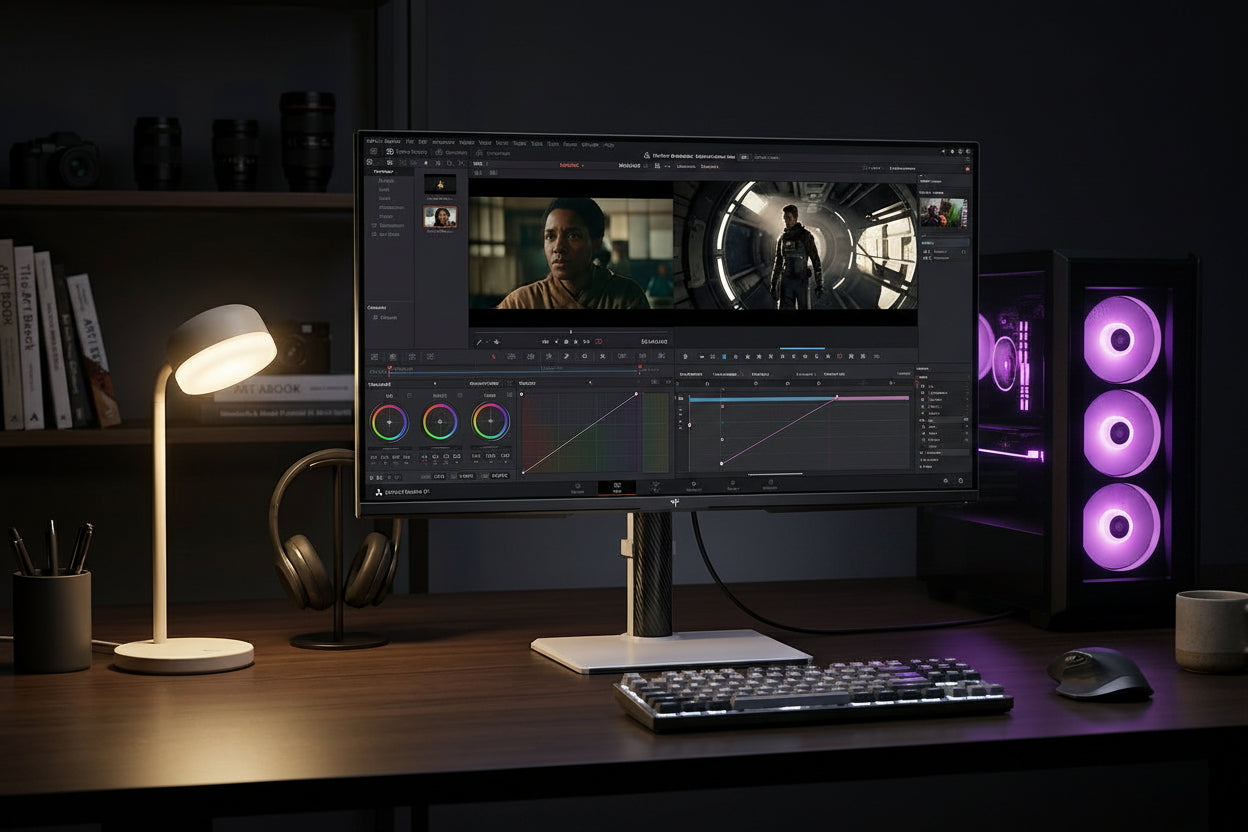
Color gamut, brightness, and contrast can add real value, but only when your use case needs them. A wider gamut can help creative work or richer-looking games, yet it does not automatically mean better everyday accuracy. HDR deserves even more caution. The label alone does not tell you how convincing the image will look in practice, so it should stay model-specific rather than treated as a universal upgrade.
If your work depends on color confidence, the safest move is to verify the model's actual color claims and calibration behavior. A factory calibration checklist can help you separate a promising listing from a monitor that still needs checking after it arrives.
Ergonomics and Setup Flexibility
Ergonomics often look like a small detail until you use the monitor every day. OSHA's monitor placement guidance recommends keeping the top of the screen near eye level and tilting the display to support a neutral neck posture. That makes height adjustment, tilt, swivel, and pivot genuinely valuable for long desk sessions.
This is where value engineering becomes practical. A fixed stand may be fine on a simple desk, but an adjustable stand can be worth the extra cost if it prevents a monitor arm purchase or reduces neck strain from an awkward viewing angle. Quick-release mounting and easy assembly are convenience features, not substitutes for real ergonomic adjustment.
Connectivity and Future-Proofing
Check the ports against your actual devices before you care about the rest of the spec sheet. HDMI, DisplayPort, and USB-C only create value when they match the laptop, console, or PC you already use. If a monitor saves you from buying a dock, adapter, or extra cable, that is real value. If it adds ports you will never touch, it is mostly marketing clutter.
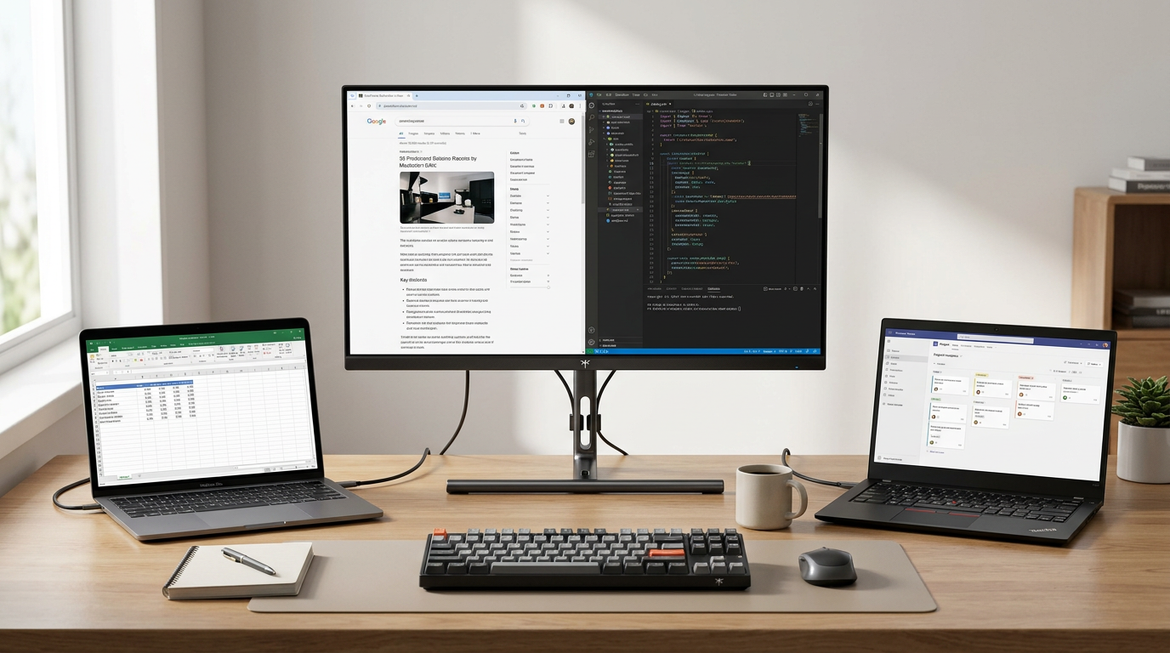
For mixed-use buyers, the best monitor is often the one that reduces friction across more than one device. For a single-device desk, the right ports still matter, but the value bar is easier to clear because the setup is simpler.

How to Compare Monitors Without Getting Tricked by Specs
The easiest way to misjudge a monitor is to compare specs in isolation. A number that sounds higher is not always better value. A 4K panel can be a great buy for some desks, but if it forces you to give up speed, desk space, or budget for the rest of the setup, the tradeoff may not be worth it. The same is true in reverse: a very fast monitor can be a poor fit if you mostly need sharp text or a larger work canvas.
| Compare This | Best Fit | Value Question | Watch-Out |
|---|---|---|---|
| 4K vs. higher refresh | Mixed-use, creators, console play vs. fast PC gaming | Which task do you do more often? | Paying for sharpness when motion speed matters more, or paying for speed when you mainly read text |
| Larger screen vs. desk space | Immersive gaming and multitasking vs. compact desks | Will the added size improve your daily layout? | A larger panel can cost more in space and arm/stand needs |
| Fixed stand vs. adjustable stand | Simple desks vs. long sessions or shared workspaces | Do you need height, swivel, or portrait control? | A cheap fixed stand can trigger arm costs later |
| Extra ports vs. basic connectivity | Multiple devices and laptop docking | Will the ports replace accessories? | Paying for ports you never use |
| HDR label vs. verified image quality | Buyers who care about contrast and peak brightness | Is the claim supported by the actual model details? | Treating the label as proof of a better image |
This is also where budget collections can help with browsing discipline. If your target price range is under control, a category like $100 to $200 monitors makes it easier to compare like with like instead of drifting upward just because a product page is persuasive.
For shoppers focused on gaming-first browsing, the broader gaming monitor category is a more natural path than bouncing between unrelated models with different use-case assumptions.
The table above is not a ranking. It is a filter. If two monitors look close on paper, ask which one removes more friction in your actual setup. If one only wins on a feature you will rarely notice, it is probably not the better value choice.
Where a Real Product Can Fit the Framework
A value monitor buying framework becomes useful when you test it against real models, not just theory. For speed-first gaming, the KTC 32" 2K 240Hz 1000R Curved Gaming Monitor is a clear illustrative fit because it combines 2560x1440 resolution, a 240Hz refresh rate, and a 1000R curve. That makes sense if motion smoothness and immersion matter more to you than maximizing pixel density for desktop work.
The boundary is just as important. If your desk time is mostly spreadsheets, writing, or content work, this kind of monitor is less compelling than it looks on a spec sheet. A fast panel can still be a solid buy, but only when the higher refresh rate and curved format match your actual routine.
For mixed-use buyers, the KTC 27" 4K 160Hz/1ms HDR400 Gaming Monitor is the more balanced example. Its 4K resolution and full adjustable stand fit buyers who split time between work and play and want a sharper desktop with better setup flexibility. It is a stronger illustrative fit for mixed-use value than for pure budget gaming, where a lower-cost model may cover the same daily needs.
The key point is not that these are universal winners. It is that each one fits a different value definition. The right product is the one that solves your main problem at a cost you are comfortable owning, not just buying.
Ownership Costs and Hidden Tradeoffs
Hidden costs are where many monitor purchases stop being good value. A fixed stand can be fine on day one, but if you later need a monitor arm, you may give back a meaningful part of the savings. That is why stand quality should be treated as part of the price, not as an accessory detail.
Common value leaks include:
- A basic stand that pushes you toward a VESA arm or a new desk setup.
- Ports that do not match your laptop, console, or GPU, which can mean adapters or cables you did not budget for.
- A return process that is annoying enough to make you keep the wrong monitor.
- A warranty that looks fine until you actually need support.
For US shoppers, those last two matter more than they often get credit for. Warranty clarity, return window, and shipping speed affect the real risk of the purchase. FTC consumer guidance on warranties and support terms is a useful reminder that a lower purchase price can lose its edge if repair or replacement becomes difficult.
This is also where a monitor can look like a bargain and still lose the value test. If you need extra gear, if the desk layout becomes awkward, or if the policy terms are too weak for your comfort, the cheaper monitor may no longer be cheaper.
Final Buy or Pass Checklist
Use this quick test before you checkout:
- Name the main job. Is this monitor for gaming, office work, mixed use, or creator tasks?
- Check the spec that matters most for that job, not the one that looks flashiest.
- Ask whether the stand, ports, and size fit your desk without extra purchases.
- Compare the total cost, including likely accessories or an arm.
- Verify the listing for warranty, return terms, and shipping before you buy.
Buy when the monitor changes a daily task or lowers ownership risk enough to justify the premium. Wait when you are paying mostly for specs you will not use.
FAQs
How Do I Know If a Monitor Is Actually Worth the Price?
A monitor is worth the price when it improves a task you do often, not when it only looks better on paper. Check the total ownership picture too, because a cheaper monitor that needs extra accessories or has awkward policies can end up costing more in practice.
What Specs Matter Most in a Value Monitor Buying Framework?
Start with resolution and refresh rate, then check ergonomics, connectivity, and image-quality claims. The order changes by use case: fast gaming leans more on refresh, while office and mixed-use buyers usually care more about sharpness, stand flexibility, and device compatibility.
When Is a Higher-Price Monitor Worth It?
A higher price is easier to justify when the upgrade changes a repeated daily habit, such as smoother gaming, better desk posture, or fewer adapters and cables. If the premium only buys a spec you will rarely notice, the lower tier is usually the cleaner value choice.
Can a Budget Monitor Still Be Good Value for Gaming or Work?
Yes, if the verified specs fit the job and you accept the tradeoffs. Budget models can be strong value when they match your main use, but fixed stands, limited ports, and lower-end image claims are the first places to check before you buy.
Why Should I Check Warranty, Returns, and Shipping Before Buying?
Those terms affect both risk and real cost. A monitor that is hard to return, slow to replace, or unclear on support can be a worse buy even if the price looks good. For US shoppers, policy clarity is part of value, not an afterthought.